
 Shakespeare: The World as Stage
Quotes from the Book
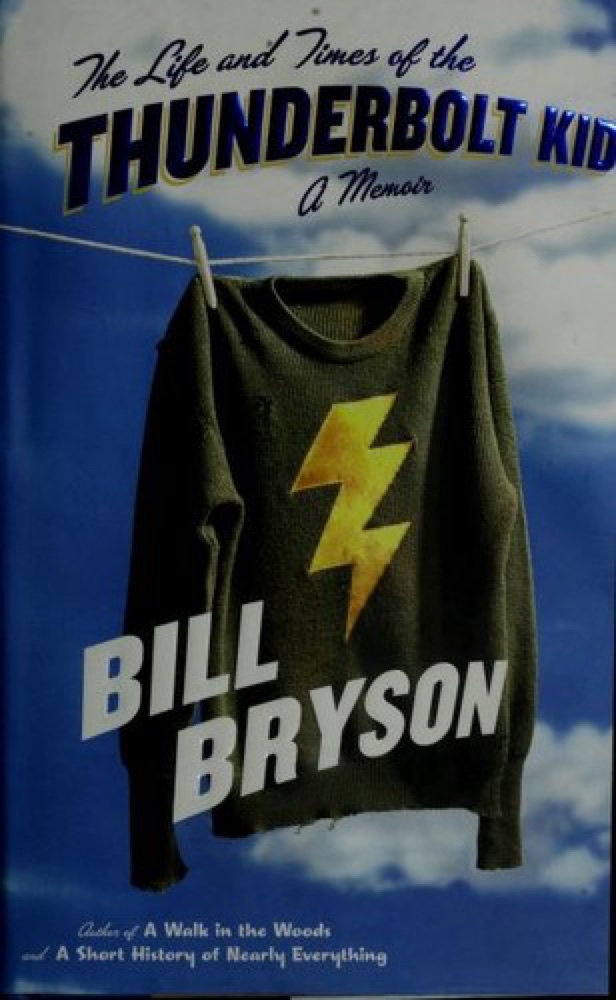
I come from Des Moines. Somebody had to.
It was an especially wonderful time to be a noisy moron.
It’s a bit burned,” my mother would say apologetically at every meal, presenting you with a piece of meat that looked like something — a much-loved pet perhaps — salvaged from a tragic house fire. “But I think I scraped off most of the burned part,” she would add, overlooking that this included every bit of it that had once been flesh. Happily, all this suited my father. His palate only responded to two tastes - burned and ice cream — so everything suited him so long as it was sufficiently dark and not too startlingly flavorful. Theirs truly was a marriage made in heaven, for no one could burn food like my mother or eat it like my dad.
I used to give X-ray vision a lot of thought because I couldn’t see how it could work. I mean, if you could see through people’s clothing, then surely you would also see through their skin and right into their bodies. You would see blood vessels, pulsing organs, food being digested and pushed through coils of bowel, and much else of a gross and undesirable nature. Even if you could somehow confine your X-rays to rosy epidermis, any body you gazed at wouldn’t be in an appealing natural state, but would be compressed and distorted by unseen foundation garments. The breasts, for one thing, would be oddly constrained and hefted, basketed within an unseen bra, rather than relaxed and nicely jiggly. It wouldn’t be satisfactory at all—or at least not nearly satisfactory enough. Which is why it was necessary to perfect ThunderVision™, a laserlike gaze that allowed me to strip away undergarments without damaging skin or outer clothing. That ThunderVision, stepped up a grade and focused more intensely, could also be used as a powerful weapon to vaporize irritating people was a pleasing but entirely incidental benefit.
They talk about big skies in the western United States, and they may indeed have them, but you have never seen such lofty clouds, such towering anvils, as in Iowa in July.
How do migrating birds know which one to follow? What if the lead bird just wants to be alone?
As a rule, you knew it was time to eat when you could hear potatoes exploding in the oven. Happily, all this suited my father. His palate only responded to two tastes - burned and ice cream - so everything suited him so long as it was sufficiently dark and not startlingly flavorful. Theirs truly was a marriage made in heaven, for no one could burn food like my mother or eat it like my Dad.
Imagine having a city full of things that no other city had.
They were Republicans, Nixon Republicans, and so didn't subscribe to the notion that laws are supposed to apply to all people equally.
IT WASN’T THAT MY MOTHER AND FATHER were indifferent to their children’s physical well-being by any means. It was just that they seemed to believe that everything would be fine in the end and they were always right.
It's hard for people now to remember just how enormous the world was back then for everybody, and how far away even fairly nearby places were. When we called my grandparents long distance on the telephone in Winfield, something we hardly ever did, it sounded as if they were speaking to us from a distant star. We had to shout to be heard and plug a finger in an ear to catch their faint, tinny voices in return. They were only about a hundred miles away, but that was a pretty considerable distance even well into the 1950s. Anything farther - beyond Chicago or Kansas City, say - quickly became almost foreign. It wasn't just that Iowa was far from everywhere. Everywhere was far from everywhere.
Mr. Schlubb, the pear-shaped PE teacher, sent us all out to run half a dozen laps around a preposterously enormous cinder track. For the Greenwood kids—all of us white, marshmallowy, innately unphysical, squinting unfamiliarly in the bright sunshine—it was a shock to the system of an unprecedented order.
canvas tarpaulin, and a piece of old carpet. I’m not sure that they didn’t lay an old wardrobe on top of that, just to
And when you got to the Trestle or the Vacant Lot or the Pond there would already be six hundred kids there. There were always six hundred kids everywhere except where two or more neighbourhoods met – at the Park, for instance – where the numbers would grow into the thousands. I once took part in an ice hockey game at the lagoon in Greenwood Park that involved four thousand kids, all slashing away violently with sticks, and went on for at least three quarters of an hour before anyone realized that we didn’t have a puck.
Watch on YouTube
About Bill Bryson
We have collected 358 quotes from 13 books by Bill Bryson on BookQuoters.
More about the author →More by Bill Bryson
Shakespeare: The World as Stage
 A Short History of Nearly Everything
 At Home: A Short History of Private Life
 The Mother Tongue: English and How It Got That Way
Book details
- Author
- Bill Bryson
- Genre
- Nonfiction
- Goodreads rating
- 3.94 (69k ratings) →
Keep reading
 Universal Harvester
 World's Fair
 The Discomfort Zone: A Personal History
 Welcome to Braggsville
 A Map of Days
 The Fortress of Solitude
 The Crow Road
 The Glass Castle
 O Pioneers!
 Little Fires Everywhere
 A Thousand Acres
 Roughing It
 The Big Over Easy
 Grasshopper Jungle
 Bluebeard's Egg
 State of Wonder
 TransAtlantic
 Sag Harbor
 Jailbird
 Table for Two
 Hush
Hush
 When We Were Animals
 Orient
 The Complete Saki
 The Round House
 Timebound
 The Shipping News
 Out of Oz
 Skinny Legs and All
 Eve's Hollywood
 Galápagos
 My Family and Other Animals
 Kids of Appetite
 South of Broad
 There but for the
 Sometimes a Great Notion
 The Lost Continent: Travels in Small Town America
 Fifth Business
 Miss Peregrine’s Home for Peculiar Children
 Middlesex
 Essays of E.B. White
 Speaking from Among the Bones
 Needful Things
 The Gone-Away World
 Notes on Your Sudden Disappearance
 The Bonfire of the Vanities
 Hattie Big Sky
 Nation
 Generation X: Tales for an Accelerated Culture
 The World's Largest Man
 One Summer: America, 1927
 Boy's Life
 A Children's Bible
 A Bend in the River
 The Door Into Summer
 The Last Continent
 Tigerman
 The Vast Fields of Ordinary
 The Cat's Table
 Apt Pupil