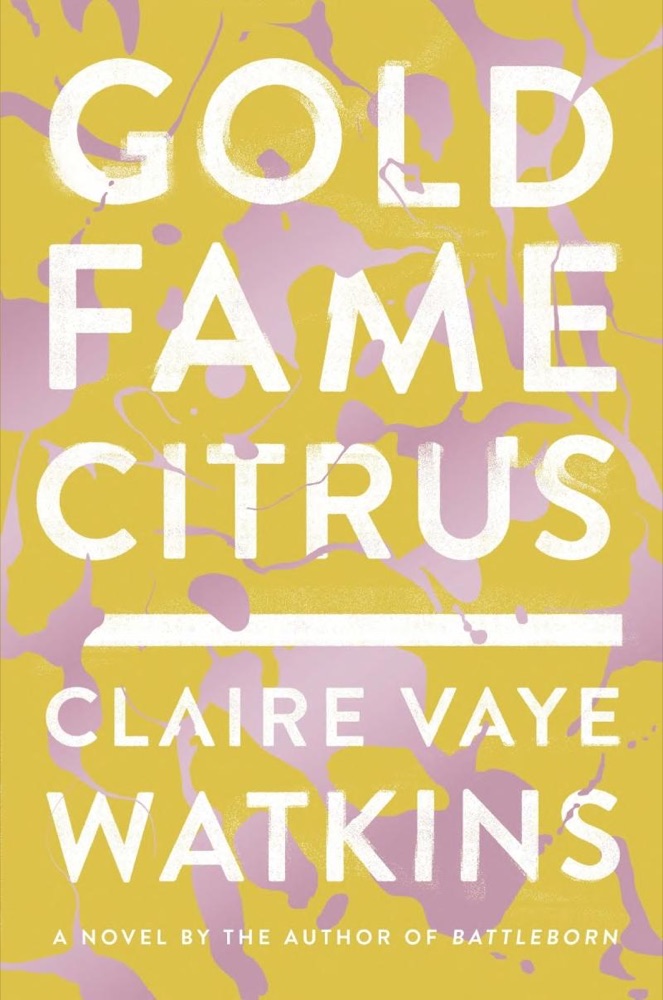
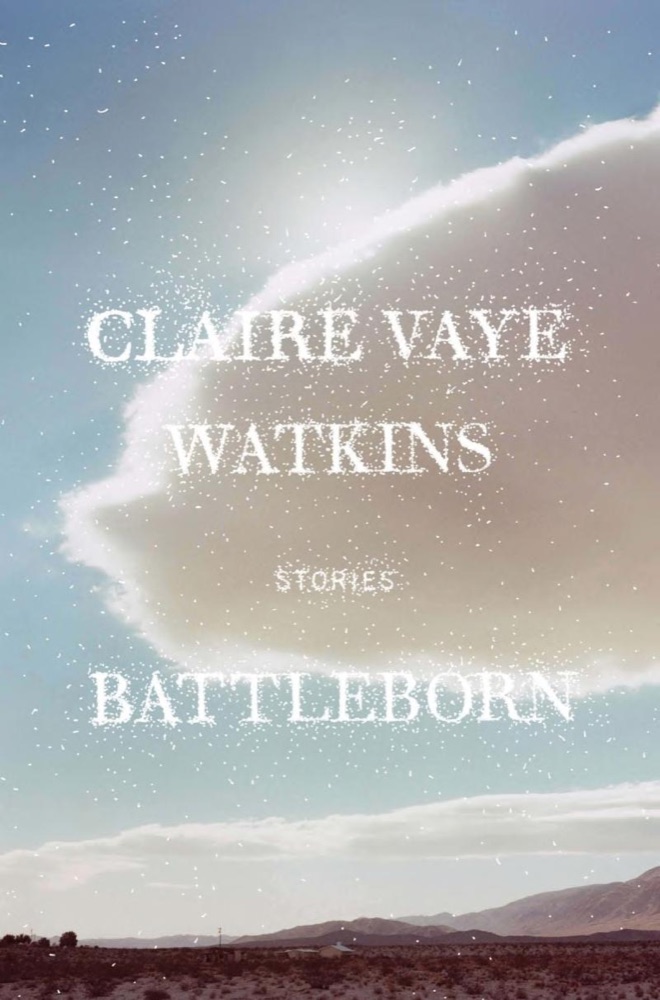
 Battleborn
Quotes from the Book
Luz, we all have an obligation to the people who love us. They've given us this gift whether we want it or not and it is our duty to stand up and be worthy. We are not loved in proportion to our deserving, and thank God for that, for unworthies like you and me would find that life a bitch. We're loved to the level we ought to rise, and even in returning it we are obligated to be gentle.
11
Now, I've made mistakes. I've lost people. But you've thrown them away. There is an important difference.
6
Hoosiers aren't quitters. California people are quitters. No offense. It's just you've got restlessness in your blood." "I don't," she said, but he went on. "Your people came here looking for something better. Gold, fame, citrus. Mirage. They were feckless, yeah? Schemers. That's why no one wants them now. Mojavs.
6
What was attraction if not a form of telepathy? The wild luck of two people feeling the exact same thing at the exact same time. That word again: purpose.
4
[W]hile our souls are meager, nature has surplus. Yet something of the mechanism's subject was indeed dissolved in that silver chloride, flattened then minted as those promiscuous postcards we saw now, which we could not now unsee, for we had accepted unawares a bit of the Canyon each time we saw a photograph of it, and those pieces, filtered and diluted, had accumulated in us, so that we never saw anything for the first time. Perhaps the ugliest of our impulses, to shove the sublime through a pinhole.
4
I don't know, maybe it's easier to be lost than found. At least there's energy in lostness. Something to be done.
3
Luz’s father had had it; it was how he kept himself atop everyone around him. He believed harder in stupider things, and there was somehow authority in this.
3
Everyone there pretended to be so bohemian and radical but really they were all worried about offending everyone else and she was fucking sick of it.
2
Sal was young and undeniably stupid, though his stupidity was of the rare variety that provoked envy in the more intelligent, rather than contempt, for it would surely leave the boy content for all his days.
1
There was always some savior out in the wilderness, some senator, some patent, some institute, some cell.
1
Cute is the worst way to be. Cute is an act of erasure. Cute is gynophobia writ large.
She saw for the first time the way we fill our homes with macabre altars to the live things we’ve murdered—the floral print of the twin mattress in her childhood bedroom, stripped of its sheets when she soiled them; ferns on throw pillows coated in formaldehyde; poppies on petrochemical dinner plates; boxes and bags of bulk pulpstuffs emblazoned with plant imagery the way milk cartons are emblazoned with children. A rock on a window ledge, cut flowers stabbed in a vase, wreath of sprigs nailed to the front door—every house a mausoleum, every house a wax museum.
There are three ways to learn about a character: What he says. What he does. What other characters say about him.
In the pixel promises of satellites it could be the Grand Canyon, its awesome chasms and spires, its photogenic strata, our great empty, where so many of us once stood feeling so compressed against all that vastness, so dense, wondering if there wasn’t a way to breathe some room between the bits of us, where we once stood feeling the expected smallness a little, but also a headache where our eyeballs scraped against the limits of our vision, or rather of our imagination, because it was a painting we were seeing though we stood at the sanctioned rim of the real deal. Instead we saw a photograph, blue mist hanging in the foreground, snow collars around the thick rusty trestles. Motel art, and it made us wonder finally how we could have been so cavalier with photography, how we managed a scoff when warned that the cloaked box would swallow a part of the soul. Although in this instance the trouble was not, strictly speaking, the filching of the subject’s soul, for while our souls are meager, nature has surplus. Yet something of the mechanism’s subject was indeed dissolved in that silver chloride, flattened then minted as those promiscuous postcards we saw now, which we could not now unsee, for we had accepted unawares a bit of the Canyon each time we saw a photograph of it, and those pieces, filtered and diluted, had accumulated in us, so that we never saw anything for the first time. Perhaps the ugliest of our impulses, to shove the sublime through a pinhole.
Luz studied the mountains ahead, watched the sunset coloring them as the things gone from them: lilac, plum, lavender, orchid, mulberry, violet. Pomegranate, one of the last to go. John Muir had written how when we try to pick out anything by itself we find it hitched to everything else in the universe. Above those spoilt purple mountains materialized a glowing wedge of light, whiter than the sun, thin, blurred, and radiant. Snow, Luz thought, unable to stop herself. She’d seen snow only once, from a train skirting the Italian Alps, but she had never touched it and already she was zigging up there, ramming her fingers into the cool blue bank until they stung, crunching the puffs of sparkling crystals in her teeth, falling backward to make angels in the airy drifts. But there was nothing cool or blue or airy about this calcium-colored crust capping the range. It throbbed with heat, glowed radioactive with light. Luz said, “What is that?” just as the answer came to her. Ray said it. “The dune sea. The Amargosa.” “It’s that close?” They were barely beyond the city. Ray shook his head. “It’s that big.” This knocked Luz off balance: The dune was not atop the empurpled range before them but beyond it, beyond it by miles and miles. The white was not a rind of ice, not a snowcap, but sand piling up inland where the Mojave had been. They watched this sandsnow mirage, hypnotized by fertilizer dust and saline particulate and the pulverized bones of ancient sea creatures, though they did not know it. Did not know but felt this magnetic incandescence working the way the moon did, tugging at the iron in their blood. Knew only that it left them not breathless but with their breaths exactly synchronized. Ray reached for Luz, took her hand as though he’d never before touched her. They went on, silently transfixed by the immaculate flaxen range looming before them.
THE GIRLS: ...He dowses with his hands, rather than a rod. The phallus would defile the process. Men have wagged their rods at the Earth plenty. JIMMER: The kids call them vision quests. I call it listening. He uses his hands because he can't find branches. When was the last time you saw a tree? DALLAS: For Levi, using a tree branch to find a river would be like using a severed arm to find a shallow grave.
I beg your pardon, dune sea, but I am just here to get my girls. If you would kindly. This is not my first desert, you see. I am not done with my life—I’d say I’m about halfway through. I don’t think that’s an exaggeration. I am a young white man in America and we typically do quite well here. So if you will excuse me.
Intuition enters the mind in a way Western science has yet to explain. Moses was a dowser, probably Jesus too. Though they did not have the benefit of dune buggies.
There's too much hurt in this world to be avoided. More than enough for everyone.
He would, he realized, find them or spend the rest of his life looking, and this might not take so long. So be it. All he had ever needed, in that desert or this, was some say in how it went, some reassurance that he would go doing something worthwhile. A sappy idea, but not therefore false.
There could be some comfort in at last getting what was expected and deserved.
Watch on YouTube
About Claire Vaye Watkins
We have collected 41 quotes from 2 books by Claire Vaye Watkins on BookQuoters.
More about the author →More by Claire Vaye Watkins
Battleborn
About the book
In a parched southern California of the near future, Luz, once the poster child for the country’s conservation movement, and Ray, an army deserter turned surfer, are squatting in a starlet’s abandoned mansion. Most “Mojavs,” prevented by armed vigilantes from freely crossing borders to lusher regions, have allowed themselves to be evacuated to encampments in the east. Holdouts like Ray and Luz subsist on rationed cola and water, and whatever they can loot, scavenge, and improvise.
For the moment, the couple’s fragile love, which somehow blooms in this arid place, seems enough. But when they cross paths with a mysterious child, the thirst for a better future begins.
Immensely moving, profoundly disquieting, and mind-blowingly original, Watkins’s novel explores the myths we believe about others and tell about ourselves, the double-edged power of our most cherished relationships, and
Book details
- First published
- 2015
- Author
- Claire Vaye Watkins
- Genre
- Fiction
- Goodreads rating
- 3.30 (10k ratings)
The buzz
- The New York TimesReview in The New York Timesprofessional review (via Book Marks)
- The Washington PostReview in The Washington Postprofessional review (via Book Marks)
- The Wall Street JournalReview in The Wall Street Journalprofessional review (via Book Marks)
- The GuardianReview in The Guardianprofessional review (via Book Marks)
- NPRReview in NPRprofessional review (via Book Marks)
- Los Angeles TimesReview in Los Angeles Timesprofessional review (via Book Marks)
Keep reading
 The Long Way to a Small, Angry Planet
 The Quick and the Dead
 The Emperor of Gladness
 Sometimes a Great Notion
 The Cat's Table
 Skinny Legs and All
 Out of Oz
 State of Wonder
 The Gone-Away World
 We Are All the Same in the Dark
 The Water Knife
 Tiamat's Wrath
 Purity
 Senlin Ascends
 Ohio
Ohio
 Leviathan Falls
 The Fall of Babel
 The Post-Birthday World
 The Book of Love
 Ninth House
 The Naked and the Dead
 The Ground Beneath Her Feet
 Demon Copperhead
 White Teeth
 A Visit from the Goon Squad
 The Story of the Lost Child
 Moth Smoke
 I Cheerfully Refuse
 Where Things Come Back
 Henderson the Rain King
 The Kite Runner
 Dream Count
 The Bedlam Stacks
 The Volcano Lover: A Romance
 The Hour I First Believed
 This Is Where the World Ends
 Creation Lake
 The Brothers K
 The Probability of Miracles
 Gravity's Rainbow
 Libra
Libra
 The Etched City
 Sexing the Cherry
 Welcome to Braggsville
 Sixty Stories
 The Likeness
 Flight Behavior
 The Atlas Complex
 Tar Baby
 Still Life
 The Keep
 The Color Master: Stories
 Travels with Charley: In Search of America
 Cities of the Plain
 Sign Here
 The Adventures of Augie March
 The Wolf Gift
 Villa Incognito
 Varina