 Look Homeward, Angel
Quotes from the Book
Coyotes have the gift of seldom being seen; they keep to the edge of vision and beyond, loping in and out of cover on the plains and highlands. And at night, when the whole world belongs to them, they parley at the river with the dogs, their higher, sharper voices full of authority and rebuke. They are an old council of clowns, and they are listened to.
43
They have assumed the names and gestures of their enemies, but have held on to their own, secret souls; and in this there is a resistance and an overcoming, a long outwaiting.
35
There was only the dark infinity in which nothing was. And something happened. At the distance of a star something happened, and everything began. The Word did not come into being, but it was. It did not break upon the silence, but it was older than the silence and the silence was made of it.
19
In the white man's world, language, too -- and the way which the white man thinks of it--has undergone a process of change. The white man takes such things as words and literatures for granted, as indeed he must, for nothing in his world is so commonplace. On every side of him there are words by the millions, an unending succession of pamphlets and papers, letters and books, bills and bulletins, commentaries and conversations. He has diluted and multiplied the Word, and words have begun to close in on him. He is sated and insensitive; his regard for language -- for the Word itself -- as an instrument of creation has diminished nearly to the point of no return. It may be that he will perish by the Word.
18
He wondered what his sorrow was and could not remember.
11
In the beginning was the Word'. I have taken as my text this evening the almighty Word itself. Now get this: 'There was a man sent from God, whose name was John. The same came for a witness, to bear witness of the Light, that all men through him might believe.' Amen, brothers and sisters, Amen. And the riddle of the Word, 'In the beginning was the Word....' Now what do you suppose old John meant by that? That cat was a preacher, and, well, you know how it is with preachers; he had something big on his mind. Oh my, it was big; it was the Truth, and it was heavy, and old John hurried to set it down. And in his hurry he said too much. 'In the beginning was the Word, and the Word was with God, and the Word was God.' It was the Truth, all right, but it was more than the Truth. The Truth was overgrown with fat, and the fat was God. The fat was John's God, and God stood between John and the Truth. Old John, see, he got up one morning and caught sight of the Truth. It must have been like a bolt of lightning, and the sight of it made him blind. And for a moment the vision burned on the back of his eyes, and he knew what it was. In that instant he saw something he had never seen before and would never see again. That was the instant of revelation, inspiration, Truth. And old John, he must have fallen down on his knees. Man, he must have been shaking and laughing and crying and yelling and praying - all at the same time - and he must have been drunk and delirious with the Truth. You see, he had lived all his life waiting for that one moment, and it came, and it took him by surprise, and it was gone. And he said, 'In the beginning was the Word....' And man, right then and there he should have stopped. There was nothing more to say, but he went on. He had said all there was to say, everything, but he went on. 'In the beginning was the Word....' Brothers and sisters, that was the Truth, the whole of it, the essential and eternal Truth, the bone and blood and muscle of the Truth. But he went on, old John, because he was a preacher. The perfect vision faded from his mind, and he went on. The instant passed, and then he had nothing but a memory. He was desperate and confused, and in his confusion he stumbled and went on. 'In the beginning was the Word, and the Word was with God, and the Word was God.' He went on to talk about Jews and Jerusalem, Levites and Pharisees, Moses and Philip and Andrew and Peter. Don't you see? Old John had to go on. That cat had a whole lot at stake. He couldn't let the Truth alone. He couldn't see that he had come to the end of the Truth, and he went on. He tried to make it bigger and better than it was, but instead he only demeaned and encumbered it. He made it soft and big with fat. He was a preacher, and he made a complex sentence of the Truth, two sentences, three, a paragraph. He made a sermon and theology of the Truth. He imposed his idea of God upon the everlasting Truth. 'In the beginning was the Word....' And that is all there was, and it was enough.
9
The people of the town have little need. They do not hanker after progress and have never changed their essential way of life. Their invaders were a long time in conquering them; and now, after four centuries of Christianity, they still pray in Tanoan to the old deities of the earth and sky and make their living from the things that are and have always been within their reach; while in the discrimination of pride they acquire from their conquerors only the luxury of example. They have assumed the names and gestures of their enemies, but have held on to their own, secret souls; and in this there is a resistance and an overcoming; a long outwaiting.
6
The canyon is a ladder to the plain. The valley is pale in the end of July, when the corn and melons come of age and slowly the fields are made ready for the yield, and a faint, false air of autumn—an illusion still in the land—rises somewhere away in the high north country, a vague suspicion of red and yellow on the farthest summits. And the town lies out like a scattering of bones in the heart of the land, low in the valley, where the earth is a kiln and the soil is carried here and there in the wind and all harvests are a poor survival of the seed. It is a remote place, and divided from the rest of the world by a great forked range of mountains on the north and west; by wasteland on the south and east, a region of dunes and thorns and burning columns of air; and more than these by time and silence.
5
Abel,' she said after a moment, 'do you think that I am beautiful?' She had gone to the opposite wall and turned. She leaned back with her hands behind her, throwing her head a little in order to replace a lock of hair that had fallen across her brow. She sucked at her cheeks, musing. 'No, not beautiful,' he said.
4
I prayed. He was going home, and I wanted to pray. Look out for me, I said; look out each day and listen for me. And we were going together on horses to the hills. We were going to ride out in the first light to the hills. We were going to see how it was, and always was, how the sun came up with a little wind and the light ran out upon the land. We were going to get drunk, I said. We were going to be all alone, and we were going to get drunk and sing. We were going to sing about the way it always was. And it was going to be right and beautiful. It was going to be the last time. And he was going home.
4
María Delgado confesses 9 mortal & 32 venial sins! & wonders exceedingly at the 9 as if they had been miracles.
3
Far below, the breeze ran upon the shining blades of corn, and they heard the footsteps running. It was faint at first and far away, but it rose and drew near, steadily, a hundred men running, two hundred, three, not fast, but running easily and forever, the one sound of a hundred men running. “Listen,” he said. “It is the race of the dead, and it happens here.
2
the old men running after evil, their white leggings holding in motion like smoke above the ground. They passed in the night, full of tranquillity, certitude. There was no sound of breathing or sign of effort about them. They ran as water runs. There was a burning at his eyes.
1
The other, latecoming things—the beasts of burden and of trade, the horse and the sheep, the dog and the cat—these have an alien and inferior aspect, a poverty of vision and instinct, by which they are estranged from the wild land, and made tentative. They are born and die upon the land, but then they are gone away from it as if they had never been. Their dust is borne away in the wind, and their cries have no echo in the rain and the river, the commotion of wings, the return of boughs bent by the passing of dark shapes in the dawn and dusk.
1
To say “beyond the mountain,” and to mean it, to mean, simply, beyond everything for which the mountain stands, of which it signifies the being. Somewhere, if only she could see it, there was neither nothing nor anything. And there, just there, that was the last reality.
1
His mane is made of short rainbows.
1
And the simple act of listening is crucial to the concept of language, more crucial even than reading and writing, and language in turn is crucial to human society.
1
It was simply that they were grave, distant, intent upon something that she could not see. Their eyes were held upon some vision out of range, something away in the end of distance, some reality that she did not know, or even suspect. What was it that they saw? Probably they saw nothing after all, nothing at all. But then that was the trick, wasn’t it? To see nothing at all, nothing in the absolute. To see beyond the landscape, beyond every shape and shadow and color, that was to see nothing. That was to be free and finished, complete, spiritual. To see nothing slowly and by degrees, at last; to see first the pure, bright colors of near things, then all pollutions of color, all things blended and vague and dim in the distance, to see finally beyond the clouds and the pale wash of the sky—the none and nothing beyond that. To say “beyond the mountain,” and to mean it, to mean, simply, beyond everything for which the mountain stands, of which it signifies the being. Somewhere, if only she could see it, there was neither nothing nor anything. And there, just there, that was the last reality. Even so, in the same attitude of non-being, Abel had cut the wood. She had not seen into his eyes until it was too late, until they had returned upon everything.
1
She had been in Los Angeles four years, and in all that time she had not talked to anyone. There were people all around; she knew them, worked with them- sometimes they would not leave her alone- but she did not talk to them, tell them anything that mattered in the least. She greeted them and joked with them and wished them well, and then she withdrew and lived her life. No one knew what she thought or felt or who she was.
He was alone and running on. . . . He could see. . . . He was running, and under his breath he began to sing. . . . He had only the words of a song. And he went running on the rise of the song.
Where language touches the earth there is the holy.” —N. SCOTT MOMADAY
She was the child of a witch. She was wild like her mother, that old Pecos woman whom he feared, whom everyone feared because she had long white hair about her mouth and she hated them and kept to herself. But the girl was young and beautiful, and her name was Porcingula. The women of the town talked about her behind her back, but she only laughed; she had her way with their sons, and her eyes blazed and gave them back their scorn.
And he did not want to break the stillness of the night, for it was holy and profound; it was rest and restoration, the hunter’s offering of death and the sad watch of the hunted, waiting somewhere away in the cold darkness and breathing easily of its life, brooding around at last to forgiveness and consent; the silence was essential to them both, and it lay out like a bond between them, ancient and inviolable.
These things he told to his grandsons carefully, slowly and at length, because they were old and true, and they could be lost forever as easily as one generation is lost to the next, as easily as one old man might lose his voice, having spoken not enough or not at all.
They must know the long journey of the sun on the black mesa, how it rode in the seasons and the years, and they must live according to the sun appearing, for only then could they reckon where they were, where all things were, in time.
you imagine there is nothing within, and indeed there are many ghosts, bones given up to the land. They stand here and there against the sky, and you approach them for a longer time than you expect. They belong in the distance; it is their domain.
It is said that hawks, when they have nothing to fear in the open land, dance upon the warm carnage of their kills.
I did not always understand her prayers; I believe they were made of an older language than that of ordinary speech. There was something inherently sad in the sound, some slight hesitation upon the syllables of sorrow. She began in a high and descending pitch, exhausting her breath to silence; then again and again—and always the same intensity of effort, of something that is, and is not, like urgency in the human voice. Transported so in the dim and dancing light among the shadows of her room, she seemed beyond the reach of time, as if age could not lay hold of her.
Now that I can have her only in memory, I see my grandmother in the several postures that were peculiar to her:
Watch on YouTube
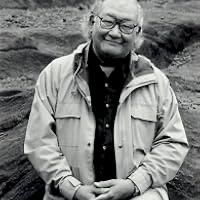
About N. Scott Momaday
We have collected 29 quotes from 1 book by N. Scott Momaday on BookQuoters.
More about the author →About the book
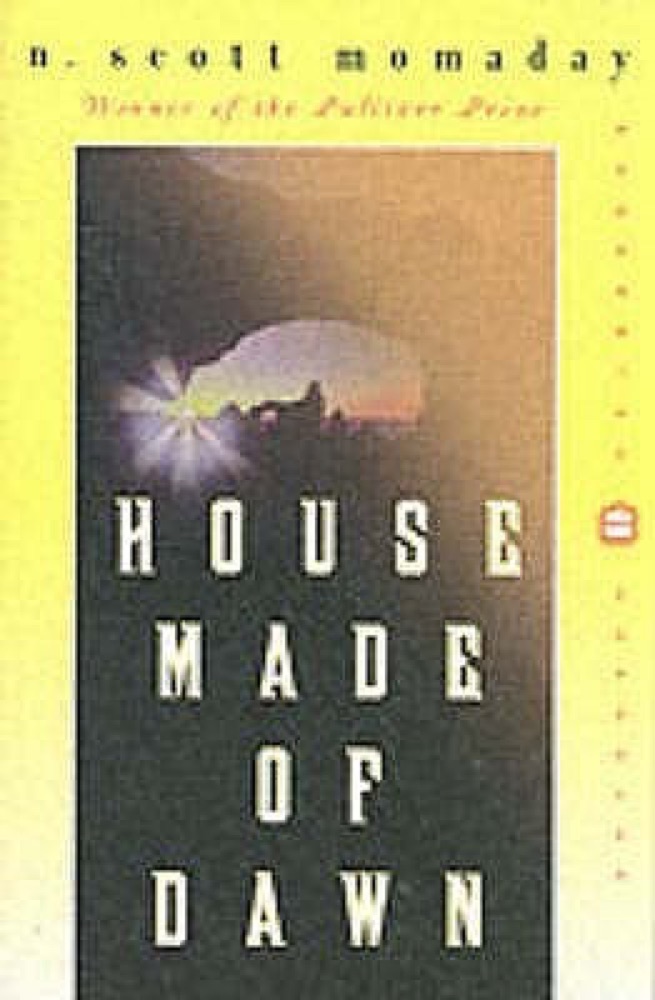
The magnificent Pulitzer Prize-winning novel of a stranger in his native land“Both a masterpiece about the universal human condition and a masterpiece of Native American literature. . . . A book everyone should read for the joy and emotion of the language it contains.” – The Paris ReviewA young Native American, Abel has come home from war to find himself caught between two worlds. The first is the world of his father’s, wedding him to the rhythm of the seasons, the harsh beauty of the land, and the ancient rites and traditions of his people. But the other world—modern, industrial America—pulls at Abel, demanding his loyalty, trying to claim his soul, and goading him into a destructive, compulsive cycle of depravity and disgust.
Book details
- First published
- 1968
- Author
- N. Scott Momaday
- Genre
- Fiction
- Goodreads rating
- 3.61 (11k ratings)
Keep reading
Look Homeward, Angel
 Independent People
 The Night Watchman
 The Last Report on the Miracles at Little No Horse
 The Collected Poems
 Birdsong
 Absalom, Absalom!
 The Collected Stories
 The Hollow Hills
 The Enchantress of Florence
 Plainwater: Essays and Poetry
 The Vorrh
 Wind, Sand and Stars
 Omensetter's Luck
 Shadow Country
 Green Dolphin Street
 One for the Blackbird, One for the Crow
 You Can't Go Home Again
 One of Ours
 The Telling
 The Narrow Road to the Deep North
 The Brutal Telling
 Always Coming Home
 The Crossing
 Provinces of Night
 Autobiography of Red
 Out of the Silent Planet
 A Stranger in Olondria
 Blood Meridian: Or the Evening Redness in the West
 Where Late the Sweet Birds Sang
 Sword & Citadel
 The Adventures of China Iron
 Blood Meridian, or the Evening Redness in the West
 Weaveworld
 In the Distance
 Winter's Tale
 The Blind Man's Garden
 The Quick and the Dead
 The Tunnel
 The Passage
 Ceremony
 The Fishermen
 Something Wicked This Way Comes
 Four Souls
 The Ministry of Utmost Happiness
 Little, Big
 Titus Groan
 Selected Poems
 Light in August
 The Pox Party
 The Dean's Watch
 Tortilla Flat
 The Prophets
 Light Years
 Tinkers
 Bradbury Stories: 100 of His Most Celebrated Tales
 West with the Night
 She
She
 Phantastes
 Dubliners