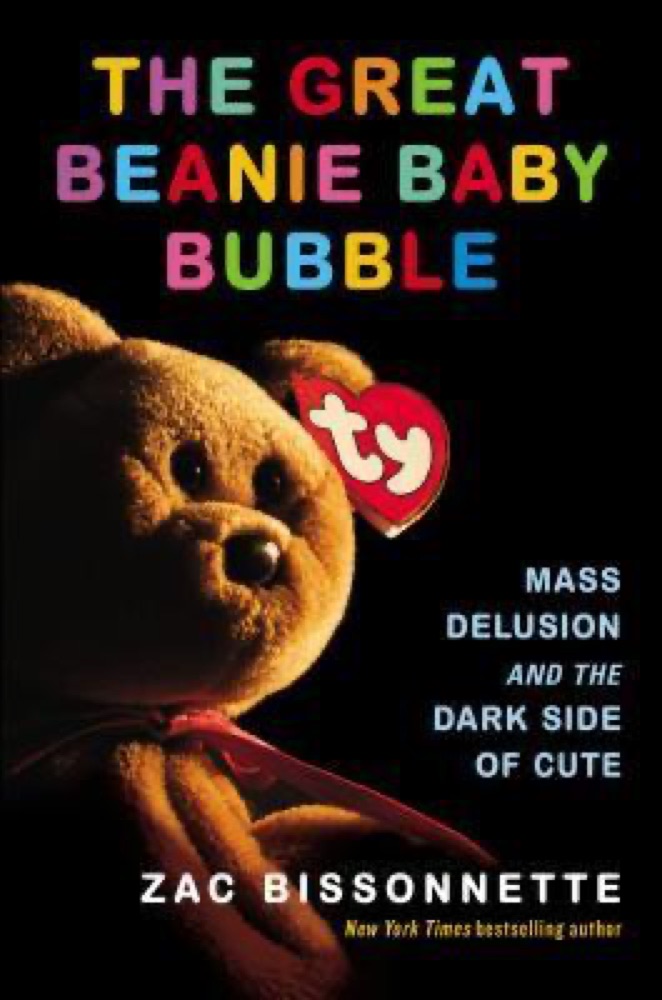
 The Snowball: Warren Buffett and the Business of Life
Quotes from the Book
The donations are usually anonymous, because while philanthropy is a source of pride, philanthropy as the exit strategy of last resort from a comically bad investment isn’t.
2
It is often said of the gold rush that the people who got rich were the shovel dealers who profited from the greed of the forty-niners. With Beanie Babies, most of the lasting personal fortunes came from selling books and tag protectors, not from speculating in plush.
2
Unless Ty Warner suddenly gets interested in his estate planning, his mostly estranged younger sister, now sixty-five and relying on aid to the indigent for medical bills and part-time jobs to feed her half-dozen adopted animals, will be the sole heir to the largest fortune in the history of stuffed animals.
1
You can make a lot of money with a good cat." -Ty Warner
1
Charles Kindleberger explained the self-perpetuating feeding frenzy that develops when speculators start making money: 'There is nothing so disturbing to one’s well-being and judgment as to see a friend get rich'.
1
Ty Inc.'s 1989 catalog had this on the back cover: "Warning: If anyone dare copy our creative designs and patents without written permission, ownership of your eternal soul passes to us and we have the right to negotiate the sale of said soul. Furthermore, our attorneys will see to it that life on Earth, as you know it, is not worth living.
1
The speculative boom for Beanie Babies has resulted in an unsurpassed volume of high-quality, perfectly preserved, monetarily worthless plush animals for children most in need of the comfort of something soft.
Kids who grew up in Naperville remember trading them in the first half of 1995, close to a year before the rest of the country had heard of them, and a few teachers had banned Beanies from their classrooms because they'd become a distraction.
But I was struck by the drama he created and his personal flair. His unique presence and obvious intelligence started to suck me into his drama, almost as if I were auditioning for a part.
Like the Velveteen Rabbit of Margery Williams's perennially best-selling children's book, plush makers are animated by the prospect of their creations becoming the first thing a child loves and values.
A teddy bear, to me . . . is endless and unconditional love.
The Bradford Exchange—a knockoff of [Joseph] Segel’s [Franklin Mint] business—created a murky secondary market for its collector plates, complete with advertisements featuring its “brokers” hovering over computers, tracking plate prices. To underscore the idea of these mass-produced tchotchkes as upmarket, sophisticated investments, the company deployed some of its most aggressive ads (which later led to lawsuits) in magazines like Kiplinger’s Personal Finance and Architectural Digest. A 1986 sales pitch offered “The Sound of Music,” the first plate in a new series from the Edwin M. Knowles China Company, at a price of $19.50. Yet the ad copy didn’t emphasize the plate itself. Rather, bold type introduced two so-called facts: “Fact: ‘Scarlett,’ the 1976 first issue in Edwin M. Knowles’ landmark series of collector’s plates inspired by the classic film Gone With the Wind, cost $21.60 when it was issued. It recently traded at $245.00—an increase of 1,040% in just seven years.” And “Fact: ‘The Sound of Music,’ the first issue in Knowles’ The Sound of Music series, inspired by the classic film of the same name, is now available for $19.50.” Later the ad advised that “it’s likely to increase in value.” Currently, those plates can be had on eBay for less than $5 each. In 1993 U.S. direct mail sales of collectibles totaled $1.7 billion
[Peggy Gallagher] was also appearing once a month for two hours on WGN Radio [...] During one summer show, a caller asked, 'Do you think there is a seasonal cycle for Beanie Babies?' 'It’s not different than any other kind of investment—the stock market or the commodities market,' was Gallagher’s reply. Then she explained that she used to be a trader on the Chicago Mercantile Exchange. 'There are peaks and valleys. It’s an investment for people. There’s nobody as big as the market. The Hunt [brothers] tried to do it with the silver market. There is nobody bigger than the market. The prices have stabilized a bit right now, but now they’re starting to get more active. So it’s just like any other type of investment'.
Warner once offered to take their five-year-old daughter out for ice cream, but when he pulled up in his Rolls-Royce, he asked her if she had any money.
Watch on YouTube
About Zac Bissonnette
About the book
A bestselling journalist delivers the never-before-told story of the plush animal craze that became the tulip mania of the 1990s
In the annals of consumer crazes, nothing compares to Beanie Babies. In just three years, collectors who saw the toys as a means of speculation made creator Ty Warner, an eccentric college dropout, a billionaire--without advertising or big-box distribution. Beanie Babies were ten percent of eBay's sales in its early days, with an average selling price of $30--six times the retail price. At the peak of the bubble in 1999, Warner reported a personal income of $662 million--more than Hasbro and Mattel combined. The end of the craze was swift and devastating, with "rare" Beanie Babies deemed worthless as quickly as they'd once been deemed priceless. Bissonnette draws on hundreds of interviews (including a visit to a man who lives with his 40,000 Ty products and an
Book details
- First published
- 2014
- Author
- Zac Bissonnette
- Genre
- Nonfiction
- Goodreads rating
- 3.91 (3k ratings)
Keep reading
The Snowball: Warren Buffett and the Business of Life
 A Short History of Financial Euphoria
 Liar's Poker
 Berkshire Hathaway Letters to Shareholders
 The Wolf of Wall Street
 The Big Over Easy
 I Survived Capitalism and All I Got Was This Lousy T-Shirt: Everything I Wish I Never Had to Learn About Money
 Charlie and the Chocolate Factory
 Crazy Rich Asians
 Secondhand: Travels in the New Global Garage Sale
 Flash Boys: A Wall Street Revolt
 Counterfeit
 Everything's Eventual
 While Mortals Sleep: Unpublished Short Fiction
 Selected Stories of Philip K. Dick
 No Logo
 Everything's Eventual
 Rabbit Is Rich
 The Art of Spending Money: Simple Choices for a Richer Life
 Broken Monsters
 Talking to My Daughter About the Economy: or, How Capitalism Works—and How It Fails
 Trump: The Art of the Deal
 The Big Short: Inside the Doomsday Machine
 The Mark and the Void
 Bitcoin Billionaires: A True Story of Genius, Betrayal, and Redemption
 Half Asleep in Frog Pajamas
 The Creature from Jekyll Island: A Second Look at the Federal Reserve
 Freakonomics: A Rogue Economist Explores the Hidden Side of Everything
 God Bless You, Mr. Rosewater
 The Everything Store: Jeff Bezos and the Age of Amazon
 Lake Success
 Strong Motion
 Chaos Monkeys: Obscene Fortune and Random Failure in Silicon Valley
 The Prize: The Epic Quest for Oil, Money, and Power
 Jeneration X: One Reluctant Adult's Attempt to Unarrest Her Arrested Development; Or, Why It's Never Too Late for Her Dumb Ass to Learn Why Froot Loops Are Not for Dinner
 The Bone Clocks
 One Fifth Avenue
 The Mandibles: A Family, 2029–2047
 Practical Demonkeeping
 Needful Things
 Griftopia: Bubble Machines, Vampire Squids, and the Long Con That Is Breaking America
 The Partly Cloudy Patriot
 Generation X: Tales for an Accelerated Culture
 High Tide in Tucson
 The $100 Startup: Reinvent the Way You Make a Living, Do What You Love, and Create a New Future
 American Colossus: The Triumph of Capitalism, 1865-1900
 Tibetan Peach Pie
 Cold Cereal
 Bluebeard
 Murder Must Advertise
 Stay Hungry Stay Foolish
 Timebound
 The Westing Game
 Hard Times
 The Escape Room
 Blueprints Of The Afterlife
 Hocus Pocus
 In an Absent Dream
 The Rise & Fall of Great Powers