
 The Information
Quotes from the Book
And meanwhile time goes about its immemorial work of making everyone look and feel like shit.
242
You know how it is when two souls meet in a burst of ecstatic volubility, with hearts tickling to hear and to tell, to know everything, to reveal everything, the shared reverence for the other's otherness, a feeling of solitude radiantly snapped by full *contact* - all that?
37
Love is blind; but it makes you see the blind man; teetering on the roadside . . .
36
Because we are all poets or babies in the middle of the night, struggling with being.
31
People? People are chaotic quiddities living in one cave each. They pass the hours in amorous grudge and playback and thought experiment. At the campfire they put the usual fraction on exhibit, and listen to their own silent gibber about how they're feeling and how they're going down. We've been there. Death helps. Death gives us something to do. Because it's a fulltime job looking the other way.
28
The only writer who gives me unfeigned pleasure is P.G. Wodehouse. And even him I find a bit heavy. He takes a lot out of me. Scratching my hair, with soft whistles, with lips aquiver, I frown over Sunset at Blandings.
17
Of all the forces, love is the strongest...Love can make a woman pick up a bus, or it can crush a man under the weight of a feather. Or it just lets everything go on as it was yesterday and will be tomorrow. That’s the kind of force love is.
16
Imagine the terrestrial timespan as an outstretched arm: a single swipe of an emery-board, across the nail of the third finger, erases human history. We haven't been around for very long. And we've turned the earth's hair white. Sh e seemed to have eternal youth but now she's ageing awful fast, like an addict, like a waxless candle. Jesus, have you seen her recently? we used to live and die without any sense of the planet getting older, of mother earth getting older, living and dying. We used to live outside history. But now we're all coterminous. We're inside history now all right, on its leading edge, with the wind ripping past our ears. Hard to love, when you're bracing yourself for impact. And maybe love can't bear it either, and flees all planets when they reach this condition, when they get to the end of their twentieth centuries.
16
He frowned. She laughed. He brightened. She pouted. He grinned. She flinched. Come on: we don’t do that. Except when we’re pretending. Only babies frown and flinch. The rest of us just fake with our fake faces. He grinned. No He didn’t. If a guy grins at you for real these days, you’d better chop his head off before he chops off yours. Soon the sneeze and the yawn will be mostly for show. Even the twitch. She laughed. No she didn’t. We laugh about twice a year. Most of us have lost our laughs and now make do with false ones. He smiled. Not quite true. All that no good to think, no good to say, no good to write. All that no good to write.
15
Yet no one seemed to have thought through the implications of a world in which everyone cheated. The other morning Keith had bought five hundred vanity sachets of Outrage, his staple perfume. At lunchtime he discovered that they all contained water, a substance not much less expensive than Outrage, but harder to sell. Keith was relieved that he had already unloaded half the consignment on Damian Noble in the Portobello Road. Then he held Damian's tenners up to the light: they were crude forgeries. He passed on the notes without much trouble, in return for twenty-four bottles of vodka which, it turned out, contained a misty, faintly scented liquid. Outrage!
14
...So in his own way Guy Clinch confronted the central question of his time, a question you saw being asked and answered everywhere you looked, in every headline and haircut: if, at any moment, nothing might matter, then who said that nothing didn't matter already?
14
Although he liked nearly everything else about himself, Keith hated his redeeming features. In his view they constituted his only major shortcoming -his one tragic flaw.
12
What saddened and incensed her was the abdication of power, so craven, the surrender so close to home. And power was what she was in for. Nicola had lived deliciously, but she was promiscuous on principle, as a sign of emancipation, of spiritual freedom, freedom from men. She was, she believed, without appetite, and prided herself on her passionless brilliance in bed. But then the subtle rearrangement, and the abject whisper... and it poisoned everything, somehow.
12
Beauty, extreme yet ambiguously available; this very roughly, was what Nicola's entrance to the Black Cross had said to Keith. But he didn't know the nature -- he didn't know the brand -- of the availability.
9
And while Trish stared - stared, as it now seemed, into her own eyes - Guy held her hand and watched the crowd: how it bled colour from the enormous room and drew all energy towards itself, forming one triumphal being; how it trembled, then burst or came or died, releasing individuality; and how the champion was borne along on its subsidence, his back slapped, his hair tousled, mimed by female hands and laughing, like the god of mobs.
9
What a gift. This page is briefly stained by my tears of gratitude. Novelists don't usually have it so good, do they, when something real happens (something unified, dramatic and pretty saleable), and they just write it down?
4
Death helps. Death gives us something to do. Because it's a full-time job looking the other way.
3
The hot macadam pulled on his shoes, like desire ...
3
Only parents and torturers and the janitors of holocausts are asked to stand the sound of so much human grief.
3
Happiness writes white: it doesn't show up on the page.
2
The driver treated his cab as a peasant might treat his horse or ass, with numb and proprietorial cruelty. The bursts of acceleration were like long-toothed, lip-flapping exhalations; then came the looping whinny of the brakes.
1
This is a true story but I can't believe it's really happening. It's a murder story, too. I can't believe my luck. And a love story (I think), of all strange things, so late in the century, so late in the goddamned day.
1
What could never be endured, it turned out, was the last swathe of time before sleep came, the path from larger day to huger night, a little death when the mind was still alive and fluttering. Thus
1
I felt that my emotional—or sexual—being was like a little sister. A very spirited little sister. An inner sister. Whom I must always protect. I had to keep her in. Even though she yearned to come out and play.' ‘It's almost tragic.
Happiness isn't relative, any more than suffering is. No one's going to feel grateful that his life isn't any worse. There's always enough pain, Keith. And the rich baby cries as lustily as the poor.
Most of his life was played out to a soundtrack of sadistic decibelage.
Like everybody else, Guy had little appetite for the big bad news. Like everybody else, he had supped full of horrors, over breakfast, day after day, until he was numb with it, stupid with it, and his daily paper went unread.
The atmosphere was better tonight, because toward the end I threw a treble 20. That’s right. I got a dart to go in the treble 20, the flattened nose of the board’s face – the treble 20, what darts is all about. Keith picked me up and whirled me around in the air. Actually, it was bound to happen in the end. The darts went wherever they liked, so why not into the treble 20? Similarly, the immortal baboon, locked up with typewriter and amphetamines for a few Poincaré time-cycles, a number of aeons with more zeros than there are suns in the universe, might eventually type out the word darts.
Watch on YouTube
About Martin Amis
We have collected 158 quotes from 7 books by Martin Amis on BookQuoters.
More about the author →More by Martin Amis
All books by Martin Amis →
About the book
This is an alternative cover edition. The main entry for ISBN 9780099748618 can be found here.
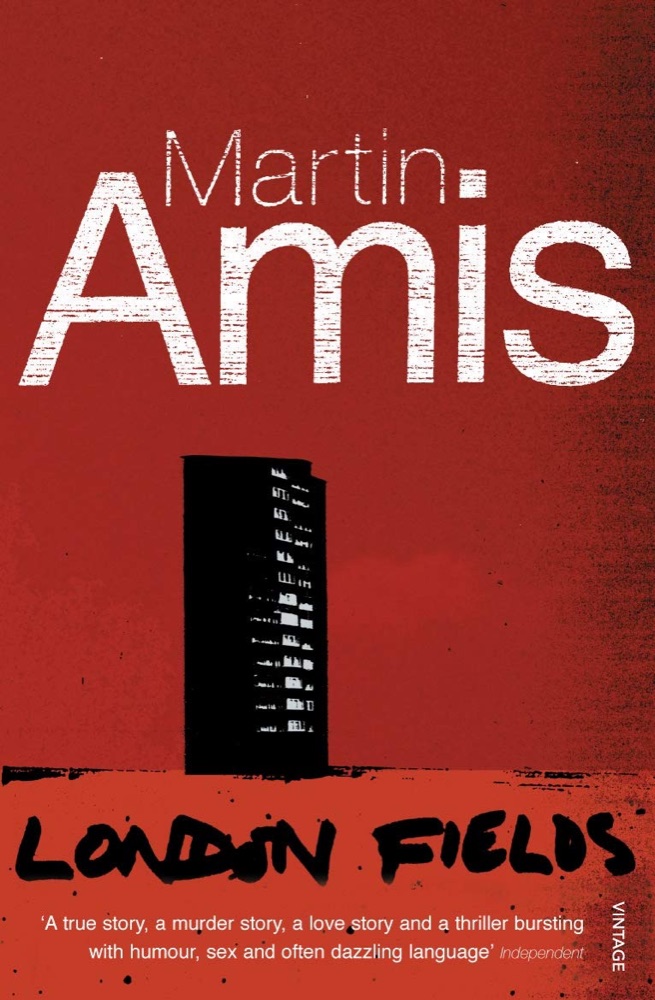
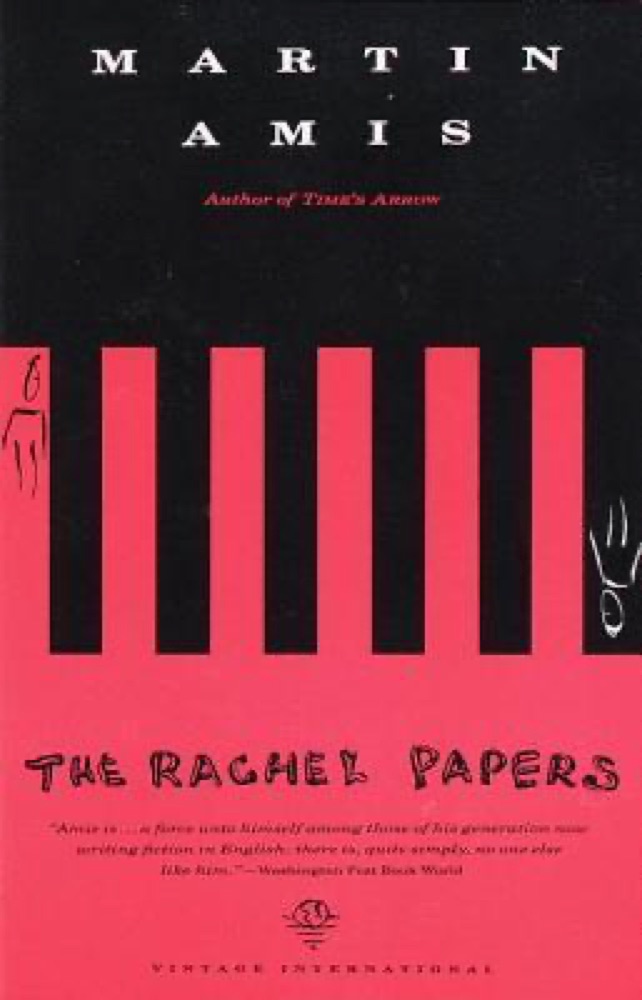
London Fields is Amis's murder story for the end of the millennium. The murderee is Nicola Six, a "black hole" of sex and self-loathing intent on orchestrating her own extinction. The murderer may be Keith Talent, a violent lowlife whose only passions are pornography and darts. Or is the killer the rich, honorable, and dimly romantic Guy Clinch?
Book details
- First published
- 1989
- Author
- Martin Amis
- Genre
- Fiction
- Goodreads rating
- 3.66 (14k ratings)
Keep reading
 V.
V.
 The Tunnel
 The Story of the Lost Child
 The Secret History
 20th Century Ghosts
 Pnin
Pnin
 The People Look Like Flowers at Last
 Betting on the Muse: Poems & Stories
 Cosmopolis
 Super Sad True Love Story
 Lady Chatterley's Lover
 The Magus
 Sexus
Sexus
 The Last Werewolf
 Tropic of Cancer
 The Damnation Game
 The Sea, the Sea
 Something Wicked This Way Comes
 Miss Lonelyhearts
 Tales of Ordinary Madness
 The Tsar of Love and Techno
 The Naked and the Dead
 Brief Interviews with Hideous Men
 A Fraction of the Whole
 That Hideous Strength
 The Quick and the Dead
 The Likeness
 The Emperor of Gladness
 In the Heart of the Heart of the Country and Other Stories
 Christmas Holiday
 Selected Stories
 Brideshead Revisited: The Sacred and Profane Memories of Captain Charles Ryder
 Dhalgren
 Gaudy Night
 Absalom, Absalom!
 Orlando
 Radiance
 Life Knocks
 Martin Eden
 Experience
 The Black Prince
 The Liar
 Henderson the Rain King
 I Have No Mouth & I Must Scream
 Sign Here
 Jude the Obscure
 Hell
Hell
 Other Voices, Other Rooms
 The Color Master: Stories
 Ada, or Ardor: A Family Chronicle
 Roadwork
 Tropic of Capricorn
 Keep the Aspidistra Flying
 Sabbath's Theater
 The Manticore
 Skeleton Crew
 Inferno
 Infinite Jest
 The Tale of the Body Thief
 The Brooklyn Follies