
 The Life-Changing Magic of Tidying Up: The Japanese Art of Decluttering and Organizing
Quotes from the Book
You can't hook up a U-Haul to a hearse
5
She couldn't tolerate mistakes and almost always chose inactivity over the possibility of doing something less than perfectly.
4
Indeed, much of her hoard allowed her to imagine various identities: a great cook, a well-read and informed person, a responsible citizen. Her things represented dreams, not realities. Getting rid of the things meant losing the dreams
3
Some people collect out of a desire for an aesthetic, others for prestige, and still others for a sense of mastery. But most theories of collecting elaborate on attempts to define, protect, or enhance the self.
2
I'm smart and creative, and I could have been happy. But I'm not anything. I have done nothing. I'm collecting life without living it.
2
It was easier to live with the mess than to experience the frustration of failing to create a perfect room.
2
Deficits in executive functions such as planning, categorization, organization, and attention leave them lost amid a sea of things, unable to figure out what to do next.
2
But when she was a home, her unworthiness was more apparent to her, mostly with she focused on the clutter. When she focused on individual items, however, her possessions seemed more comforting than threatening. The irony that her hoard could be comforting and tormenting at the same time was clear to her.
1
The hoarder self-medicated with things the way other trauma survivors self medicate with drugs or alcohol--
1
Recent studies of hoarding put the prevalence rate at somewhere between 2 and 5 percent of the population. That means that six million to fifteen million Americans suffer from hoarding that causes them distress or interferes with their ability to live.
1
As has been apparent to us from studying hoarding, we may own the things in our homes, but they own us as well.
1
Despite the appearance of slovenliness or laziness created by the condition of the house, Langley was always busy and often complained of not having enough time to do the things he needed to do. One of those things, Langley told the police on several occasions, was clearing and organizing his home. He claimed to be saving things so that he and his brother could be self-sufficient.
1
Although hoarding is considered a mental disorder, it may stem from an extraordinary ability. For hoarders, every object is rich with detail. We disregard the color and hue of a magazine cover as we search for the article inside. But if we paid attention, we might notice the soothing effect of the colors, and the meaning of the object would expand in the process. In this way, the physical world of hoarders is different and much more expansive than that of the rest of us.
Objects carry the burden of responsibilities that include acquisition, use, care, storage, and disposal. The magnitude of these responsibilities for each of us has exploded with the expanding number of items in our homes during the past fifty years. Having all these possessions has caused a shift in our behavior away from human interaction to interaction with inanimate objects. Kids now spend more time online, playing video games, or watching TV alone in their rooms than interacting with family or friends. Possessions originally sold on the promise that they would make life easier and increase leisure time have done just the opposite.
Not-just-right experiences, or NJREs as some OCD researchers and patients call them, are relatively common, and not just among people with OCD. Like an itch, the sensation that one’s clothes don’t fit right, or the experience of seeing a crooked picture on the wall, NJREs violate our expectations for order.
For most people who board, the experience of shopping or acquiring is so overwhelmingly rewarding that it erases all thoughts of consequences.
The more space they, hoarders, have available, the more space they fill. Perhaps this is actually the goal--to fill space.
This has led some scholars to suggest that collecting is a way of managing fears about death by creating a form of immortality. This is consistent with a popular theory in social psychology called the terror management theory (TMT). TMT grows out of an existential predicament--that people, like animals, are mortal. But unlike animals, we are aware of our own mortality. Knowledge of the inevitability of death and its unpredictability can produce paralyzing fear. To cope with this potential terror, cultures provide beliefs, rituals, and sanctioned strategies for managing it. One of these strategies is the belief that some part of ourselves can live on after we die. Producing or amassing something of value is one way to accomplish this. Thus a collection offers the potential for immortality.
Often both parents work longer hours to support an ever-increasing array of new conveniences that lead them to spend less and less time together.
Among children, the situation may be different. Some parents, especially those whose children had other OCD symptoms, have reported
Watch on YouTube
About Randy O. Frost
We have collected 20 quotes from 1 book by Randy O. Frost on BookQuoters.
More about the author →About the book
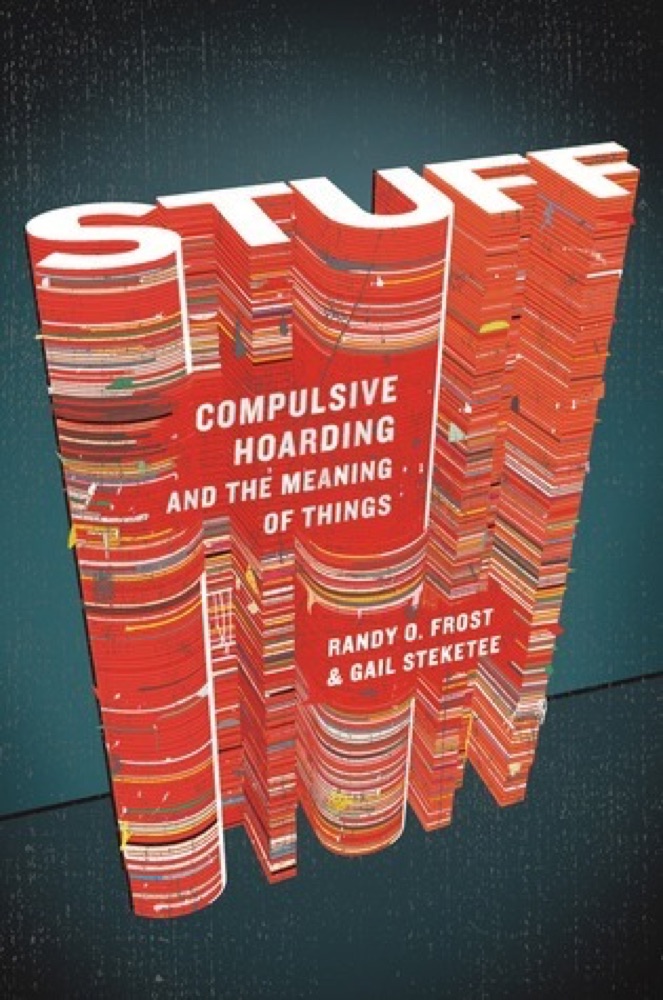
What possesses someone to save every scrap of paper that's ever come into his home? What compulsions drive a woman like Irene, whose hoarding cost her her marriage? Or Ralph, whose imagined uses for castoff items like leaky old buckets almost lost him his house?
Randy Frost and Gail Steketee were the first to study hoarding when they began their work a decade ago; they expected to find a few sufferers but ended up treating hundreds of patients and fielding thousands of calls from the families of others. Now they explore the compulsion through a series of compelling case studies in the vein of Oliver Sacks. With vivid portraits that show us the traits by which you can identify a hoarder's piles on sofas and beds that make the furniture useless, houses that can be navigated only by following small paths called goat trails, vast piles of paper that the hoarders "churn" but never discard
Book details
- First published
- 2010
- Author
- Randy O. Frost
- Genre
- Nonfiction
- Goodreads rating
- 3.92 (7k ratings)
Keep reading
The Life-Changing Magic of Tidying Up: The Japanese Art of Decluttering and Organizing
 Year of No Clutter
 Stuffocation: Living More with Less
 Decluttering at the Speed of Life: Winning Your Never-Ending Battle with Stuff
 Outer Order, Inner Calm: Declutter & Organize to Make More Room for Happiness
 The Trauma Cleaner: One Woman's Extraordinary Life in the Business of Death, Decay, and Disaster
 The Gentle Art of Swedish Death Cleaning
 The Hare With Amber Eyes: A Family's Century of Art and Loss
 Goodbye, Things: The New Japanese Minimalism
 The Life-Changing Manga of Tidying Up
 Overwhelmed: Work, Love, and Play When No One Has the Time
 The Folded Clock: A Diary
 The Hidden Girl and Other Stories
 Old Babes in the Wood: Stories
 The Collected Stories of Lydia Davis
 The Rent Collector
 The Nest
 Scarcity Brain: Fix Your Craving Mindset and Rewire Your Habits to Thrive with Enough
 Beautyland
 Early Retirement Extreme: A Philosophical and Practical Guide to Financial Independence
 One Step Too Far
 Dept. of Speculation
 The Candy House
 The Stone Diaries
 Housekeeping
 To Throw Away Unopened
 Too Much Happiness: Stories
 The Shock of the Fall
 Attempting Normal
 High Tide in Tucson
 The Minimalist Home: A Room-by-Room Guide to a Decluttered, Refocused Life
 Devil House
 State of Paradise
 The Broom of the System
 The Giant's House
 Stone Mattress: Nine Tales
 The Story of the Lost Child
 The Marble Collector
 Ill Will
 Orient
 From the Mixed-Up Files of Mrs. Basil E. Frankweiler
 Cozy Minimalist Home: More Style, Less Stuff
 A Fraction of the Whole
 number9dream
 The Weird Sisters
 Antifragile: Things That Gain from Disorder
 How to Keep House While Drowning
 The Age of Magical Overthinking: Notes on Modern Irrationality
 Smilla's Sense of Snow
 The Winter of Our Discontent
 The Rosie Effect
 Good Morning, Destroyer of Men's Souls: A Memoir of Women, Addiction, and Love
 Natural Causes: An Epidemic of Wellness, the Certainty of Dying, and Killing Ourselves to Live Longer
 Just Like Someone Without Mental Illness Only More So
 Maid: Hard Work, Low Pay, and a Mother's Will to Survive
 The Organized Mind: Thinking Straight in the Age of Information Overload
 Capital
 Gold Fame Citrus
 What Is Not Yours Is Not Yours