

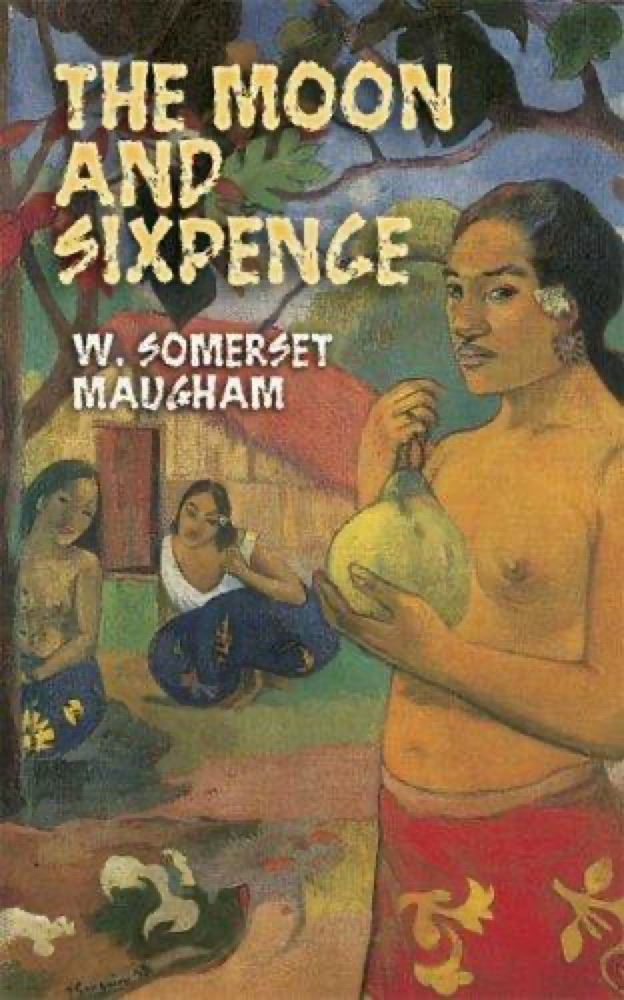
 The Moon and Sixpence
Quotes from the Book
Is that what we come into the world for, to hurry to an office, and work hour after hour till night, then hurry home and dine and go to a theatre? Is that how I must spend my youth? Youth lasts so short a time, Bateman. And when I am old, what have I to look forward to? To hurry from my home in the morning to my office and work hour after hour after hour till night, and then hurry home again, and dine and go to a theatre? That may be worthwhile if you make a fortune; I don’t know, it depends on your nature; but if you don’t, is it worth while then? I want to make more out of my life than that, Bateman.
7
She gathered herself together. No one could describe the scorn of her expression or the contemptuous hatred she put into her answer. "You men! You filthy dirty pigs! You're all the same, all of you. Pigs! Pigs!
5
What do you value in life then?" "I'm afraid you'll laugh at me. Beauty, truth, and goodness.
3
The tragedy of love is not death or separation. How long do you think it would have been before one or other of them ceased to care? Oh, it is dreadfully bitter to look at a woman whom you have loved with all your heart and soul, so that you felt you could not bear to let her out of your sight, and realise that you would not mind if you never saw her again. The tragedy of love is indifference.
3
going about with a huge, heavy arm or dragging along a grossly disfigured leg. Men and women wore the lava-lava. “It’s a very indecent costume,” said Mrs. Davidson. “Mr. Davidson thinks it should be prohibited by law. How can you expect people to be moral when they wear nothing but a strip of red cotton round their loins?” “It’s suitable enough to the climate,” said the doctor, wiping the sweat off his head. Now that they were on land the heat, though it was so early in the morning, was already oppressive. Closed in by its hills, not a breath of air came in to Pago-Pago. “In our islands,” Mrs. Davidson went on in her high-pitched tones, “we’ve practically eradicated the lava-lava. A few old men still continue to wear it, but that’s all. The women have all taken to the Mother Hubbard,
2
When I look back now and reflect on that brief passionate love of Red and Sally, I think that perhaps they should thank the ruthless fate that separated them when their love seemed still to be at its height. They suffered, but they suffered in beauty. They were spared the real tragedy of love." "I don't know exactly as I get you," said the skipper. "The tragedy of love is not death or separation. How long do you think it would have been before one or other of them ceased to care? Oh, it is dreadfully bitter to look at a woman whom you have loved with all your heart and soul, so that you felt you could not bear to let her out of your sight, and realise that you would not mind if you never saw her again. The tragedy of love is indifference.
1
His love became a prison from which he longed to escape, but he had not the strength merely to open the door-that was all it needed-and walk out into the open air. It was torture and at last he became numb and hopeless.
1
He loved not only her beauty, but that dim soul which he divined behind her suffering eyes. He would intoxicate her with his passion. In the end he would make her forget.
1
They seemed to love one another as-I hesitate to say passionately, for passion has in it always a shade of sadness, a touch of bitterness or anguish, but as whole heartedly, as simply and naturally as on that first day on which, meeting, they had recognised that a god was in them. If you had asked them I have no doubt that they would have thought it impossible to suppose their love could ever cease. Do we not know that the essential element of love is a belief in its own eternity?
1
They say that happy people have no history, and certainly a happy love has none. They did nothing all day long and yet the days seemed all too short.
1
It tears my heart just as my heart is torn when on certain nights I watch the full moon shining on the lagoon from an unclouded sky. There is always pain in the contemplation of perfect beauty.
1
It came upon me little by little. I came to like the life here, with its ease and its leisure, and the people, with their good-nature and their happy smiling faces. I began to think. I'd never had time to do that before. I began to read." "You always read." "I read for examinations. I read in order to be able to hold my own in conversation. I read for instruction. Here I learned to read for pleasure. I learned to talk. Do you know that conversation is one of the greatest pleasures in life? But it wants leisure. I'd always been too busy before. And gradually all the life that had seemed so important to me began to seem rather trivial and vulgar. What is the use of all this hustle and this constant striving?
1
I've found him a very good friend. Is it unnatural that I should take a man as I find him?" "The result is that you lose the distinction between right and wrong." "No, they remain just as clearly divided in my mind as before, but what has become a little confused in me is the distinction between the bad man and the good one. Is Arnold Jackson a bad man who does good things or a good man who does bad things? It's a difficult question to answer. Perhaps we make too much of the difference between one man and another. Perhaps even the best of us are sinners and the worst of us are saints. Who knows?
1
On the whole, perhaps, it might be admitted that rough justice was done, but it exasperated the assistant that his chief trusted his instinct rather than the evidence. He would not listen to reason. He browbeat the witnesses and when they did not see what he wished them to called them thieves and liars.
1
Watch on YouTube
About W. Somerset Maugham
We have collected 227 quotes from 11 books by W. Somerset Maugham on BookQuoters.
More about the author →More by W. Somerset Maugham
All books by W. Somerset Maugham →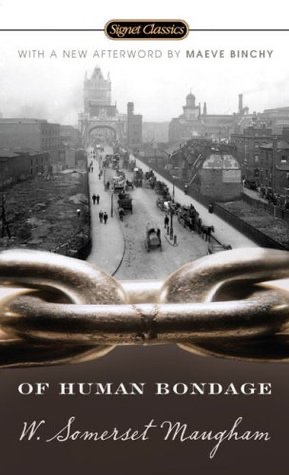

About the book
W. Somerset Maugham led many lives, including that of a doctor in London's slums, a successful playwright and novelist, an agent for British Intelligence during World War I, and a world traveler. In 1917, he took the first of many voyages to the Pacific Islands and the Far East, where his keen sense of observation found inspiration for some of his finest writing. Rain and Other South Sea Stories features one of Maugham's most famous tales, concerning the clash between a missionary and a prostitute. "Rain" was adapted for the stage and filmed on three separate occasions, its leading character portrayed by Gloria Swanson, Joan Crawford, and Rita Hayworth. This collection also includes "Macintosh," a psychological study of the competition between two officials; "The Fall of Edward Barnard," a tale of social rebellion that foreshadows The Razor's Edge; "The Pool," a portrait of a marriage b
Book details
- First published
- 1921
- Author
- W. Somerset Maugham
- Genre
- Fiction
- Goodreads rating
- 4.12 (2k ratings)
Keep reading
 The Good Soldier
 Arch of Triumph
 Christmas Holiday
 Confessions of a Mask
 From Here to Eternity
 Selected Stories
 Selected Stories of Anton Chekhov
 Brideshead Revisited: The Sacred and Profane Memories of Captain Charles Ryder
 Green Dolphin Street
 The Dean's Watch
 The Joke
 The Finkler Question
 Another Country
 Oblomov
 Lincoln in the Bardo
 Just Above My Head
 London Fields
 The Longest Journey
 The Bluest Eye
 In Sunlight and in Shadow
 The Interpretation of Murder
 The Manticore
 Hell
Hell
 Oliver Twist
 Spring Snow
 Ghana Must Go
 Independent People
 The Ballad of the Sad Café and Other Stories
 The Painted Veil
 Dubliners
 Parade's End
 Howards End
 The Brothers Karamazov
 Jayber Crow
 Jeremy Poldark
 Doctor Zhivago
The Moon and Sixpence
Doctor Zhivago
The Moon and Sixpence
 The Story of the Lost Child
 Kokoro
 The Heart of the Matter
 The Devil in the Flesh
 You Can't Go Home Again
 The Proposal
 All Passion Spent
 Busman's Honeymoon
 Thirst for Love
 Mary Barton
 A Burnt-Out Case
 The Brutal Telling
 Martin Eden
 The Fall
 While England Sleeps
 The Well of Loneliness
 A Soldier of the Great War
 The Beast in the Jungle
 Trust: Betrayed
 Plainwater: Essays and Poetry
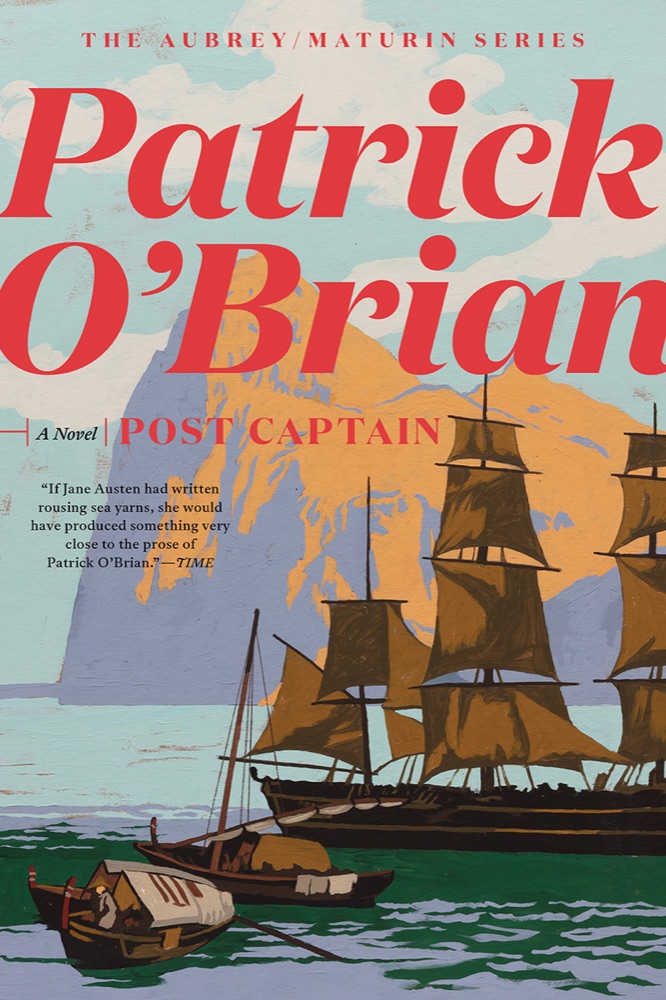 Post Captain
 The English Patient
 Embers