 The Red Book: Liber Novus
Quotes from the Book
People will do anything, no matter how absurd, in order to avoid facing their own souls. One does not become enlightened by imagining figures of light, but by making the darkness conscious.
1.1k
People will do anything, no matter how absurd, to avoid facing their own souls. They will practice Indian yoga and all its exercises, observe a strict regimen or diet, learn theosophy by heart, or mechanically repeat mystic texts from the literature of the whole world – all because they cannot get on with themselves and have not the slightest faith that anything useful could ever come out of their souls. … It is rewarding to watch patiently the silent happenings in the soul, and the most and the best happens when it is not regulated from outside and from above. I readily admit that I have such a great respect for what happens in the human soul that I would be afraid of disturbing and distorting the silent operation of nature by clumsy interference.
40
When the alchemist speaks of Mercurius, on the face of it he means quicksilver (mercury), but inwardly he means the world-creating spirit concealed or imprisoned in matter. The dragon is probably the oldest pictoral symbol in alchemy of which we have documentary evidence. It appears as the Ouroboros, the tail-eater, in the Codex Marcianus, which dates from the tenth or eleventh century, together with the legend ‘the One, the All’. Time and again the alchemists reiterate that the opus proceeds from the one and leads back to the one, that it is a sort of circle like a dragon biting its own tail. For this reason the opus was often called circulare (circular) or else rota (the wheel). Mercurius stands at the beginning and end of the work: he is the prima materia, the caput corvi, the nigredo; as dragon he devours himself and as dragon he dies, to rise again in the lapis. He is the play of colours in the cauda pavonis and the division into the four elements. He is the hermaphrodite that was in the beginning, that splits into the classical brother-sister duality and is reunited in the coniunctio, to appear once again at the end in the radiant form of the lumen novum, the stone. He is metallic yet liquid, matter yet spirit, cold yet fiery, poison and yet healing draught - a symbol uniting all the opposites.
18
The real mystery does not behave mysteriously or secretively; it speaks a secret language, it adumbrates itself by a variety of images which all indicate its true nature. I am not speaking of a secret personally guarded by someone, with a content known to its possessor, but of a mystery, a matter or circumstance which is “secret,” i.e., known only through vague hints but essentially unknown. The real nature of matter was unknown to the alchemist: he knew it only in hints. In seeking to explore it he projected the unconscious into the darkness of matter in order to illuminate it. In order to explain the mystery of matter he projected yet another mystery - his own psychic background -into what was to be explained: Obscurum per obscurius, ignotum per ignotius! This procedure was not, of course, intentional; it was an involuntary occurrence.
16
If a blind man can gradually be helped to see it is not to be expected that he will at once discern new truths with an eagle eye. One must be glad if he sees anything at all, and if he begins to understand what he sees.
11
Man kann dem Christentum eine rückständige Entwicklung vorwerfen, wenn man das eigene Ungenügen entschuldigen will. Ich will nicht in den Fehler verfallen, dasjenige der Sache zuzuschreiben, wofür die Ungeschicktheit des Menschen in erster Linie verantwortlich ist. [...] Die Forderung der "imitatio" Christi, nämlich dem Vorbild nachzufolgen und diesem ähnlich zu werden, sollte die Entwicklung und Erhöhung des eigenen inneren Menschen bezwecken, wird aber von oberflächlichen und zur mechanischen Formelhaftigkeit neigenden Gläubigen zu einem außenstehenden Kultobjekt gemacht, welches gerade durch die Verehrung daran verhindert wird, in die Tiefe der Seele einzugreifen und letztere zu jener dem Vorbild entsprechenden Ganzheit umzuschaffen.
1
La exigencia de la imitación de Cristo o sea, imitar el ejemplo y llegar a ser semejantes a éste, debiera tener como objetivo el desarrollo y la elevación del hombre interior; pero el creyente superficial, que tiende a las fórmulas mecánicas, ha hecho de Cristo un objeto de culto que está fuera del hombre, al que, precisamente por la veneración, se le impide penetrar en la profundidad del alma humana y crear la integridad correspondiente al modelo que sirve de ejemplo. De esta suerte, el mediador divino se queda en una imagen exterior, mientras que el ser humano continúa siendo un fragmento intacto en lo más profundo de su naturaleza. Sí, Cristo puede ser imitado hasta la estigmatización sin que el imitador se haya ajustado ni siquiera aproximadamente al modelo y el sentido de éste. Pues no se trata sólo de una imitación pura y simple, la cual deja sin transformar a la persona, con lo que se queda en un simple artificio. Antes bien, se trata de una realización del modelo con los propios medios —Deo concedente— en la esfera de la vida individual.
1
Watch on YouTube
About C.G. Jung
We have collected 191 quotes from 9 books by C.G. Jung on BookQuoters.
More about the author →More by C.G. Jung
The Red Book: Liber Novus
 Memories, Dreams, Reflections
 Answer to Job
 Modern Man in Search of a Soul
About the book
A study of the analogies between alchemy, Christian dogma, and psychological symbolism. Revised translation, with new bibliography and index.
Book details
- First published
- 1944
- Author
- C.G. Jung
- Genre
- Nonfiction
- Goodreads rating
- 4.32 (3k ratings)
Keep reading
 Psychology and Religion
 Man and His Symbols
 The Occult
 The Perennial Philosophy
 Twilight of the Idols/The Anti-Christ
 The Gay Science
 The World's Religions
 On the Genealogy of Morals/Ecce Homo
 The Everlasting Man
 Myths to Live By
 The Varieties of Religious Experience
 The Age of Reason
 Maps of Meaning: The Architecture of Belief
 Orthodoxy
 The Mind of the Maker: Dorothy L. Sayers' Witty Classic on the Trinity, Christianity, and Human Creativity
 The Sacred and the Profane: The Nature of Religion
 The Seven Storey Mountain
 My Bright Abyss: Meditation of a Modern Believer
 New Seeds of Contemplation
 The Crisis of the Modern World
 Reflections on the Psalms
 The Book of Mirdad: The Strange Story of a Monastery Which Was Once Called the Ark
 Dialogues Concerning Natural Religion
 The Yoga Sutras of Patanjali
 The Story of My Experiments With Truth
 No Man Is an Island
 The Temptation to Exist
 The Glass Bead Game
 The World's Last Night: And Other Essays
 The Sickness Unto Death: A Christian Psychological Exposition for Upbuilding and Awakening
 How to Know Higher Worlds: A Modern Path of Initiation
 Phaedrus
 Heretics
 Laurus
 The Book of Wisdom
 The Intellectual Life: Its Spirit, Conditions, Methods
 De Profundis and Other Writings
 The Island of the Day Before
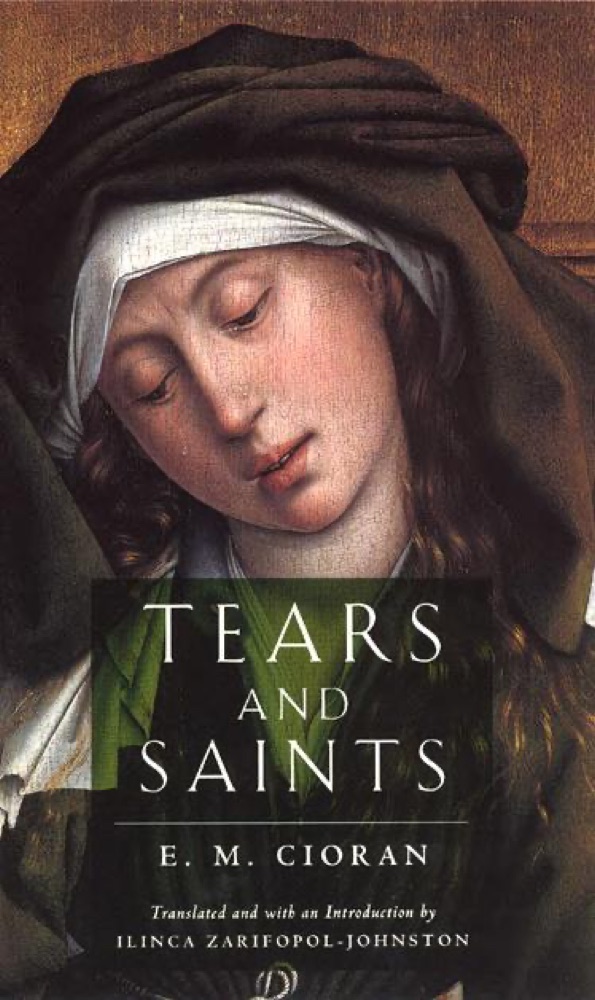 Tears and Saints
 The Gospel According to Jesus Christ
 Primeval and Other Times
 Tragic Sense of Life
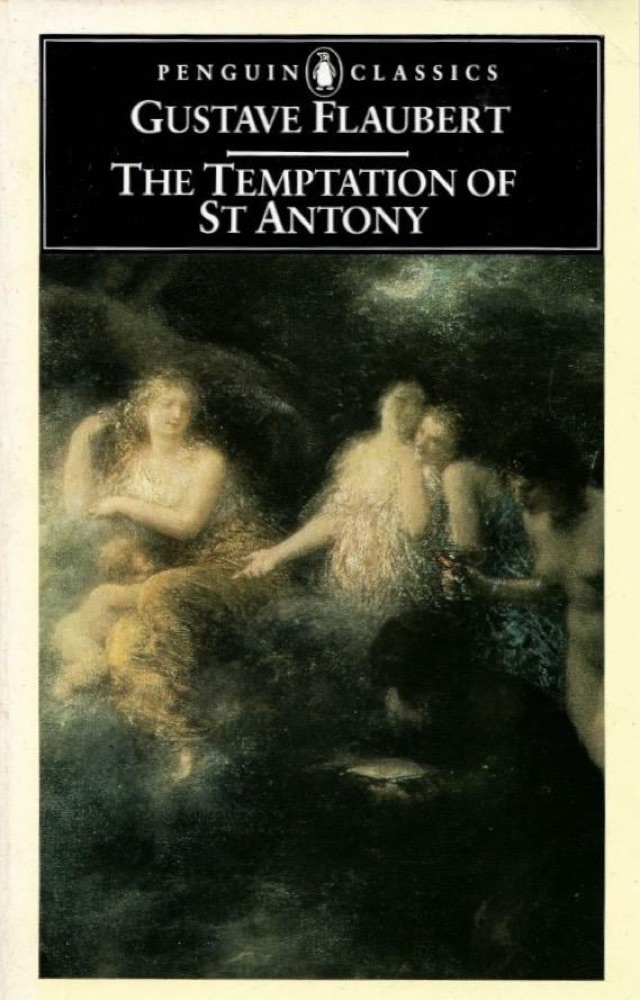 The Temptation of St. Antony
 The Convoluted Universe, Book 1
 The Discovery of Heaven
 The Star Diaries
 The Doors of Perception & Heaven and Hell
 Summa Theologica
 Moravagine
 The Orthodox Way
 The Schopenhauer Cure
 Eyeless in Gaza
 The Dwarf
 The Source Field Investigations: The Hidden Science and Lost Civilizations Behind the 2012 Prophecies
 God in Search of Man: A Philosophy of Judaism
 The Secret Magdalene
 Ego and Archetype: Individuation and the Religious Function of the Psyche
 Letters and Papers from Prison
 The Broken God