
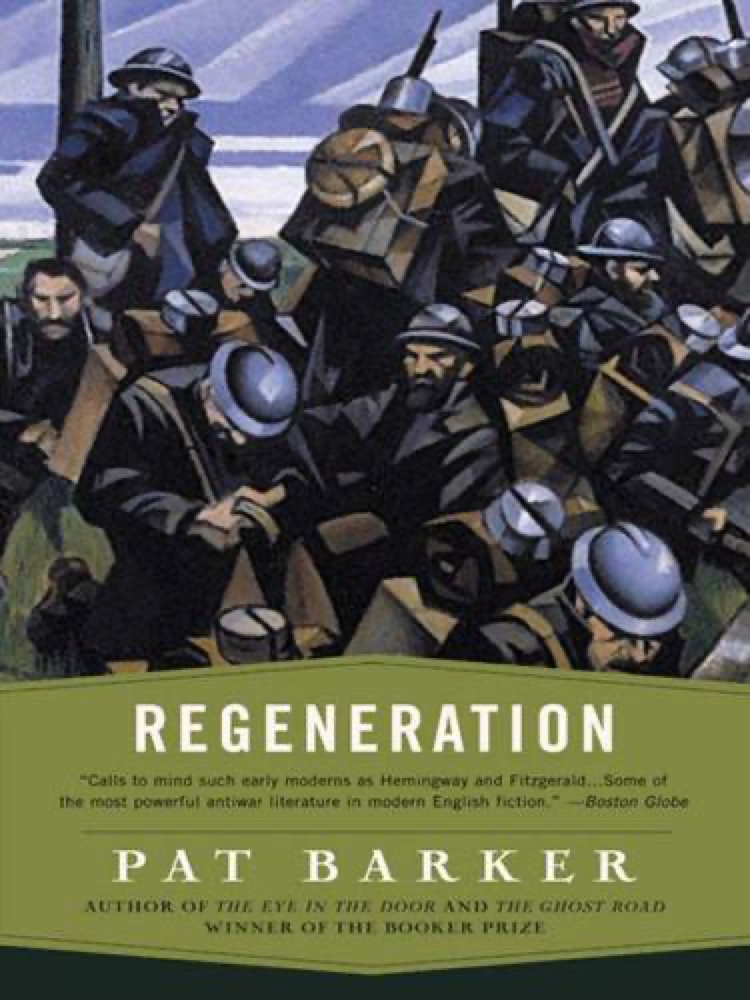
 Regeneration
Quotes from the Book
We’re going to survive–our songs, our stories. They’ll never be able to forget us. Decades after the last man who fought at Troy is dead, their sons will remember the songs their Trojan mothers sang to them. We’ll be in their dreams–and in their worst nightmares too.
122
Grief's only ever as deep as the love it's replaced.
110
Great Achilles. Brilliant Achilles, shining Achilles, godlike Achilles … How the epithets pile up. We never called him any of those things; we called him ‘the butcher’.
86
I thought: Suppose, suppose just once, once, all these centuries, the slippery gods keep their word and Achilles is granted eternal glory in return for his early death under the walls of Troy...? What will they make of us, the people of those unimaginably distant times? One thing I do know: they won't want the brutal reality of conquest and slavery. They won't want to be told about the massacres of men and boys, the enslavement of women and girls. They won't want to know we were living in a rape camp. No, they'll go for something altogether softer. A love story, perhaps? I just hope they manage to work out who the lovers were.
72
As later Priam comes secretly to the enemy camp to plead with Achilles for the return of his son Hector's body, he says: "'I do what no man before me has ever done, I kiss the hands of the man who killed my son." Those words echoed round me, as I stood in the storage hut, surrounded on all sides by the wealth Achilles had plundered from burning cities. I thought: "And I do what countless women before me have been forced to do. I spread my legs for the man who killed my husband and my brothers.
48
Yes, the death of young men in battle is a tragedy - I’d lost four brothers, I didn’t need anybody to tell me that. A tragedy worthy of any number of laments - but theirs is not the worst fate. I looked at Andromache, who’d have to live the rest of her amputated life as a slave, and I thought: We need a new song.
37
This is what free people never understand. A slave isn't a person who's being treated as a thing. A slave is a thing, as much in her own estimation as in anybody else's.
36
How do you separate a tiger's beauty from its ferocity? Or a cheetah's elegance from the speed of its attack? Achilles was like that -- the beauty and the terror were two sides of a single coin.
35
Silence becomes a woman.' Every woman I’ve ever known was brought up on that saying.
35
The defeated go down in history and disappear, and their stories die with them.
34
[...] but perhaps no kindness was possible between owner and slave, only varying degrees of brutality?
26
I listened and let it soothe me, that ceaseless ebb and flow, the crash of the breaking waves, the grating sigh of its retreat. It was like lying on the chest of somebody who loves you, somebody you know you can trust—though the sea loves nobody and can never be trusted. I was immediately aware of a new desire, to be part of it, to dissolve into it: the sea that feels nothing and can never be hurt.
25
So many pebbles on that beach—millions—all of them worn smooth by the sea’s relentless grinding, but not this one. This one had stayed sharp.
19
he’s beginning to understand that grief doesn’t strike bargains. There’s no way of avoiding the agony—or even of getting through it faster. It’s got him in its claws and it won’t let go till he’s learnt every lesson it has to teach.
17
They were men, and free. I was a woman, and a slave. And that’s a chasm no amount of sentimental chit-chat about shared imprisonment should be allowed to obscure.
16
His idea of female beauty was a woman so fat if you slapped her backside in the morning she'd still be jiggling when you got back home for dinner.
16
We’re going to survive—our songs, our stories. They’ll never be able to forget us. Decades after the last man who fought at Troy is dead, their sons will remember the songs their Trojan mothers sang to them. We’ll be in their dreams—and in their worst nightmares too.
15
He shook his head. “It won’t always be like this.” “Oh, I think it might.” “No—honestly it won’t. Things do change. And if they don’t you bloody well make them.” “Spoken like a man.
13
All Achilles’s emotions seemed to be varying shades of anger.
12
Someone once said to me: You never mention his looks. And it's true, I don't, I find it difficult. At that time, he was probably the most beautiful man alive, as he was certainly the most violent, but that's the problem. How do you separate a tiger's beauty from its ferocity? Or a cheetah's elegance from the speed of the attack? Achilles was like that- the beauty and the terror were two sides of a single coin.
11
In later life, wherever I went, I always looked for the women of Troy who'd been scattered all over the Greek world. That skinny old woman with brown-spotted hands shuffling to answer her master's door, can that really be Queen Hecuba, who, as a young and beautiful girl, newly married, had led the dancing in King Priam's hall? Or that girl in the torn and shabby dress, hurrying to fetch water from the well, can that be one of Priam's daughters? Or the ageing concubine, face paint flaking over the wrinkles in her skin, can that really be Andromache, who once, as Hector's wife, stood proudly on the battlements of Troy with her baby son in her arms?
10
She was like a windflower trembling on its slender stem, so fragile you feel it can’t possibly survive the blasts that shake it, though it survives them all.
10
Sometimes at night I lie awake and quarrel with the voices in my head.
10
Forget. So there was my duty laid out in front of me, as simple and clear as a bowl of water: Remember.
9
in my experience men are curiously blind to aggression in women. They’re the warriors, with their helmets and armour, their swords and spears, and they don’t seem to see our battles—or they prefer not to. Perhaps if they realized we’re not the gentle creatures they take us for their own peace of mind would be disturbed?
9
Would you really have married the man who'd killed your brothers? Well, first of all, I wouldn't have been given a choice. But yes, probably. Yes. I was a slave, and a slave will do anything, anything at all, to stop being a thing and become a person again. I just don't know how you could do that. Well, no, of course you don't. You've never been a slave.
8
I thought: And I do what countless women before me have been forced to do. I spread my legs for the man who killed my husband and my brother.
8
You’re a monster, do you know that?” “Yes, oddly enough, I do.” He threw his arm across Patroclus’s shoulders. “Come on, let’s eat.
8
No one looks him in the face now, it's as if his grief frightens them. What are they afraid of? That one day they'll have to endure pain like this? Or that they never will, that they're incapable of it, because grief's only ever as deep as the love it's replaced.
7
Watch on YouTube
About Pat Barker
We have collected 62 quotes from 4 books by Pat Barker on BookQuoters.
More about the author →More by Pat Barker


About the book
The ancient city of Troy has withstood a decade under siege of the powerful Greek army, which continues to wage bloody war over a stolen woman—Helen. In the Greek camp, another woman—Briseis—watches and waits for the war's outcome. She was queen of one of Troy's neighboring kingdoms, until Achilles, Greece's greatest warrior, sacked her city and murdered her husband and brothers. Briseis becomes Achilles's concubine, a prize of battle, and must adjust quickly in order to survive a radically different life, as one of the many conquered women who serve the Greek army.
When Agamemnon, the brutal political leader of the Greek forces, demands Briseis for himself, she finds herself caught between the two most powerful of the Greeks. Achilles refuses to fight in protest, and the Greeks begin to lose ground to their Trojan opponents. Keenly observant and coolly unflinching about the daily ho
Book details
- First published
- 2018
- Author
- Pat Barker
- Genre
- Historical
- Goodreads rating
- 3.89 (118k ratings)
The buzz
- The New York TimesReview in The New York Timesprofessional review (via Book Marks)
- The Washington PostReview in The Washington Postprofessional review (via Book Marks)
- The GuardianReview in The Guardianprofessional review (via Book Marks)
- The AtlanticReview in The Atlanticprofessional review (via Book Marks)
- NPRReview in NPRprofessional review (via Book Marks)
- The TimesReview in The Timesprofessional review (via Book Marks)
Keep reading
 A Thousand Ships
 The Last Song of Penelope
 Elektra
 A Song to Drown Rivers
 The Iliad
 The Song of Achilles
 Sword & Citadel
 Troy
Troy
 The King Must Die
 Atalanta
 Lavinia
 The Hymn to Dionysus
 Toll the Hounds
 The Penelopiad
 Agamemnon
 Styxx
Styxx
 Dust of Dreams
 The Wars
 The Lost Sisterhood
 The Poet Empress
 The Brutal Telling
 A Thousand Nights
 The Prophets
 Babylonia
 The Spear Cuts Through Water
 Medusa's Sisters
 Born of Silence
 The Left Hand of God
 The Huntress
 Now I Rise
 The Memoirs of Cleopatra
 Ariadne
 Clytemnestra
 The Blood Mirror
 Queen of Fire
 The Invasion of the Tearling
 The Damnation Game
 Assassin's Quest
 Always to Remember
 Mythology
 House of Chains
 The Steel Remains
 The Book Eaters
 Black Leopard, Red Wolf
 The Devil and the Dark Water
 The Atlas Complex
 Lore
Lore
 Our Hideous Progeny
 Men We Reaped
 Glorious Exploits
 The Fates Divide
 Gathering Darkness
 Blood of Dragons
 A Song of Wraiths and Ruin
 Acacia: The War with the Mein
 Nobody's Princess
 A Spear of Summer Grass
 The Mermaid, the Witch, and the Sea
 Bury Your Dead
 Muse of Nightmares