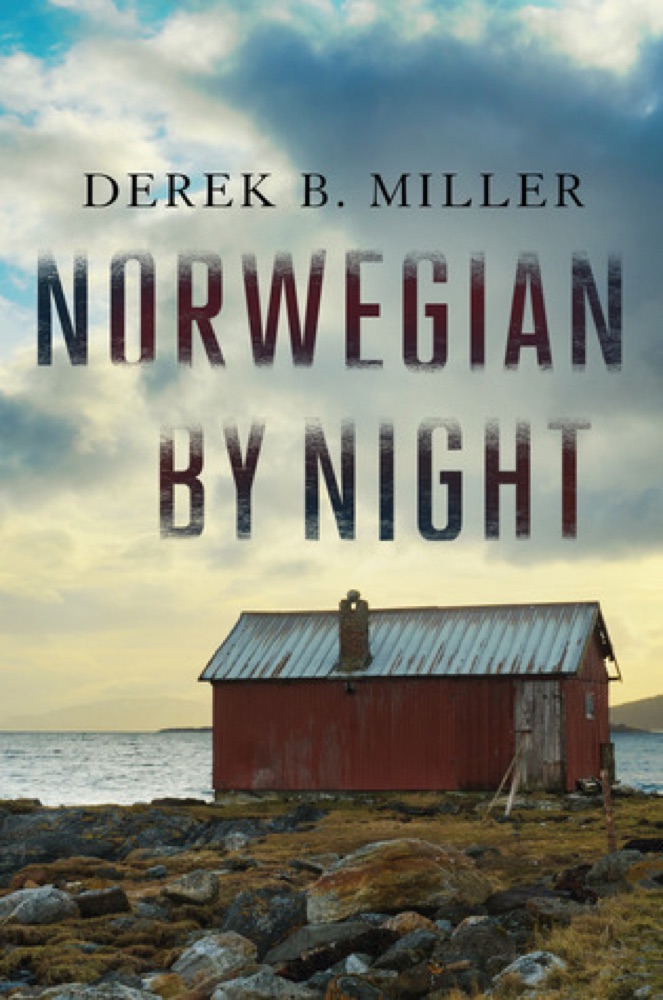

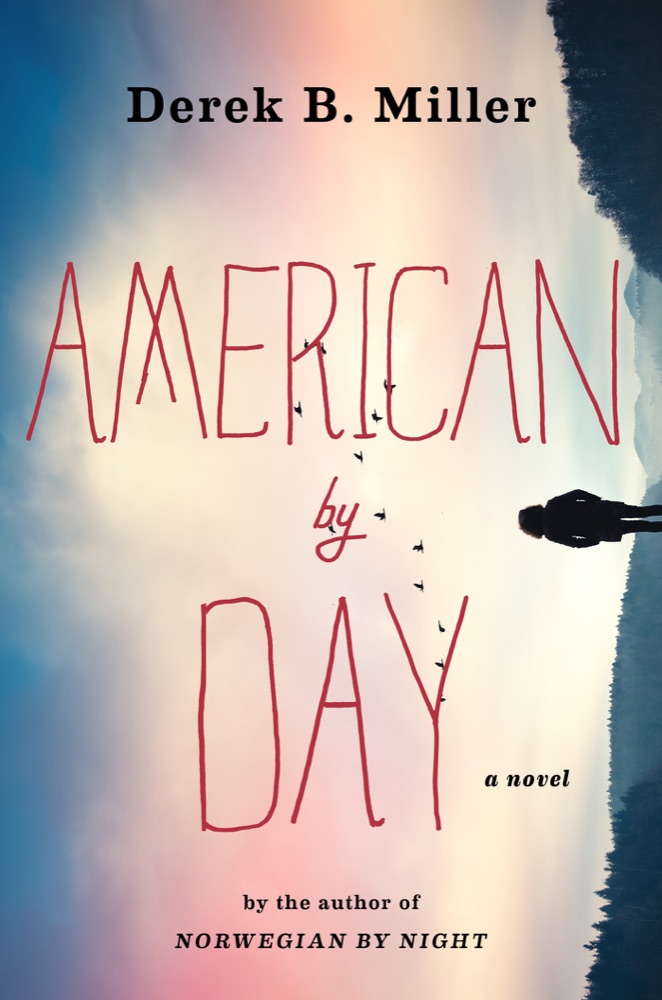
 American by Day
Quotes from the Book
Only the educated stop to look for words - having enough to occasionally misplace them.
32
Everyone gets killed in the shower. Don't you go to the movies? Psycho. Dead in shower. The MExican in No country for Old Men. Dead in shower. Michelle Pfeiffer in What Lies Beneath. Almost dead in shower, or in the bath, anyway. But she did that thing with her toe and got out OD. Still the shower, though...Glen Close in Fatal Attraction. Dead in shower. John Travolta in Pulp Fiction. Very dead in shower. But never closets. I can't think of anyone shot in a closet. This is why I hide in closets.
17
This country is what you make it. You understand that? It isn’t good and it isn’t bad. It’s just what you make it. That means you don’t make excuses for America’s bullshit. That’s what the Nazis and commies do. The Fatherland. The Motherland. America isn’t your parent. It’s your kid. And today I made America a place where you get your nose broken for telling a Jew he can’t play a round of golf. The only one allowed to tell me I can’t play golf is the ball.
12
There's also a possibility that the landlord is in there right now, wearing women's undergarments. Or a drug addict is inside stealing jewelry.Or a boatload of recent Chinese immigrants without a television watching Russia play Finland in hockey and placing bets over beer. You have no idea what's behind that door. You can't just pick the options within your field of vision. Reality comes from everywhere. At best, you can narrow down the likelihoods. But in the end, it's not a matter of deduction. It's a matter of fact. One bullet will kill you if you're stupid or unlucky. So at least don't be stupid
9
it is all clearer now than it was then. Rhea would say it is the vivid fabrications of an ageing mind. More likely, though, it is the clarity that comes from ageing - from the natural process of releasing the mind from imagined futures, and allow the present and paste to take their rightful place at the centre of our attention. The past is palpable to Sheldon now, in the way the future is to the young. It is either a brief curse or a gift before oblivion.
7
Those of us with the courage to open ourselves to that much love and not fear it - who can give joy to a dying child until the very end without withdrawing to save ourselves - those are our saints. It is not the martyrs. It is never the martyrs.
7
You know the Norwegian police? They're a bunch of pussies. They don't carry guns, just like the English. But they stay after things for years and years, nagging and nagging. They're like herpes. You think you're rid of them, and then, when you're a little stressed out, boom! In the end they catch all the killers. They exhaust their prey into submission.
6
Only the educated stop to look for words—having enough to occasionally misplace them.
5
clarity that comes from aging—from the natural process of releasing the mind from imagined futures, and allowing the present and the past to take their rightful place at the center of our attention. The
4
He expresses himself not in a torrent of words and ideas and disruptions, revelations and setbacks, but through an ever-expanding capacity to face what comes next.
4
Without a future, the mind turned back in on itself. That’s not dementia. One might even say it’s the only rational response to the inevitable.
3
At his age, it can be overwhelming and painful to harbor a thought accompanied by too much nostalgia. Not that he wanted to. Mabel, in her final years, had stopped listening to music. The songs of her teenage years brought her back to people and feelings of that time - people she could never see again and sensations that were no longer coming. It was too much for her. There are people who can manage such things. There are those of us who can no longer walk, but can close our eyes and remember a summer hike through a field, or the feeling of cool grass beneath our feet, and smile. Who still have the courage to embrace the past, and give it life and a voice in the present. But Mabel was not one of those people. Maybe she lacked that very form of courage. Or maybe her humanity was so complete, so expansive, that she would be crushed by her capacity to imagine the love that was gone.
3
Most things are both true and absurd.
3
. The liberals expounded limitless tolerance, the conservatives were racist or xenophobic, and everyone debated from philosophical positions but never from ones grounded in evidence, and so no sober consideration was being given to the very real question now haunting all of Western civilization—namely, How tolerant should we be of intolerance?
2
God made the world, said it was good,” says Sheldon aloud. “Fine. But when did he reappraise?
2
Don’t get old,” he says to Paul. “If Peter Pan shows up, just go.
2
The light is off, and it is dark. He has one hand pressed against the cold tiles of the wall above the toilet, and with his other hand he is taking aim, such as it is. He’s waiting for his prostate to get out of the way so he can take a well-deserved leak and get back to bed where he belongs, so that if by chance his heart stops this very second, he won’t be found—holding his pecker, dead on the floor—by a bunch of twenty-year-old medics who will gawk at his circumcision and bad luck.
2
there are two ways you can act: on faith or on evidence. And if it’s going to be faith, then liberals and conservatives alike have to be grouped in the same camp as people who govern from their heart and not their head. The only decision to be made about them is whether their views give you a warm feeling. And on the other side are those trying to make things better by facing things the way they are, and working from there.
1
What am I going to do there? I’m an American. I’m a Jew. I’m eighty-two. I’m a retired widower. A Marine. A watch repairman. It takes me an hour to pee. Is there a club there I’m unaware of?
1
It is summer and luminous.
1
Norway. A gift to the wandering tribes who pressed ever northward into the sea-split orchestral tumult of salty shores and cragged earth sheltering the gods that time forgot. Wine spilling like children through empty halls echoing waiting, neverly for distant guests, the fire and song rising, still and bright into the ever darkening sky. A proclamation to the eternal night. A chorus of candles and spice. We . . . they say. Children of the norlands, with fathers buried in this earth’s cradle. All memory conspiring to a single story— This . . . they say. This is our land.
1
What I mean,” he’d continued, “is that the buildings, the desks, the great structures are all products of ideas. So it isn’t the buildings that matter. It is the ideas. But because the buildings are shiny and expensive, and the ideas are more elusive, we tend to become dazzled by the buildings—that is, the artifice. In fact, they distract us from the ideas that fill them. People stand on the steps of great buildings and feel awe before they enter. Why? The ideas don’t know where they are being expressed. When I read history, I don’t read about the great buildings; I read about the ideas of empires. They all asked similar questions, but came to different answers. It is a fact that when we compare worlds, those worlds are different.
Their favorite photo is modeled on Robert Doisneau’s Kiss by the Hotel de la Ville,
All this doesn’t invade you somehow? Disrupt everything? Hollow you?” Lars puts down the coffee
Lars is more than the mere product of his world, though. He has depths of kindness that Rhea feels she lacks in herself. She does not have his capacity for forgiveness. Her emotions and mind and self are more tightly wound, more intertwined in an eternal dialogue for meaning and purpose and expression. She has a compulsion to articulate and expound, to render the world explicable, if only to herself. Letting it be, moving through, submitting to silence—these are not her ways. They are for Lars. He comes to terms with humanity as it presents itself. He expresses himself not in a torrent of words and ideas and disruptions, revelations and setbacks, but through an ever-expanding capacity to face what comes next. To see it clearly. To say what needs to be said and then stop. What is for her an act of will is for Lars a process of life.
When we look into a forest to find the source of a sound, we look at the spaces in between. Between the trees where the light shines through. Between the branches to glimpse the blue sky, or the gray and silver linings of the heavens. Our eyes look for light, and search for something to carry us from the darkness of the wilderness.
There is something about the way the Jews bear witness to history that Lars has always found unsettling. They speak as witnesses. Since Egypt. Since the morning of Western civilization, when its light shone west from Jerusalem and Athens, and blanketed Rome and all that it would leave behind. They have watched the Western tribes and empires rise and fall—from the Babylonians to the Gauls, from the Moors to the Hapsburgs to the Ottomans—and have alone remained. They have seen it all. And the rest of us wait for the verdict that is still, even now, to come.
Watch on YouTube
About Derek B. Miller
We have collected 57 quotes from 2 books by Derek B. Miller on BookQuoters.
More about the author →More by Derek B. Miller
American by Day
About the book
He will not admit it to Rhea and Lars - never, of course not - but Sheldon can't help but wonder what it is he's doing here..
Eighty-two years old, and recently widowed, Sheldon Horowitz has grudgingly moved to Oslo, with his grand-daughter and her Norwegian husband. An ex-Marine, he talks often to the ghosts of his past - the friends he lost in the Pacific and the son who followed him into the US Army, and to his death in Vietnam.
When Sheldon witnesses the murder of a woman in his apartment complex, he rescues her six-year-old son and decides to run. Pursued by both the Balkan gang responsible for the murder, and the Norwegian police, he has to rely on training from over half a century before to try and keep the boy safe. Against a strange and foreign landscape, this unlikely couple, who can't speak the same language, start to form a bond that may just save them both.
An extra
Book details
- First published
- 2012
- Author
- Derek B. Miller
- Genre
- Fiction
- Goodreads rating
- 3.94 (17k ratings)
Keep reading
 The Wars
American by Day
The Wars
American by Day
 A Single Man
 West with the Night
 Varina
 Sometimes a Great Notion
 That Hideous Strength
 Orient
 Skinny Legs and All
 Mao II
 Point Omega
 There but for the
 Wolf Hall
 The Night in Question
 Use of Weapons
 The Last Continent
 Too Like the Lightning
 The Gone-Away World
 Libra
Libra
 Liberation Day
 The Emperor of Gladness
 Before the Frost
 The Golden House
 All the King's Men
 In the Light of What We Know
 You Can't Go Home Again
 Eifelheim
 Bradbury Stories: 100 of His Most Celebrated Tales
 The High Mountains of Portugal
 Arm of the Sphinx
 The Man in the High Castle
 My Father's House
 Angle of Repose
 Apt Pupil
 The Aosawa Murders
 Light in August
 Plainwater: Essays and Poetry
 Girl with Curious Hair
 Babylon's Ashes
 Spaceman of Bohemia
 American Gods
 Out of Oz
 Essays of E.B. White
 Kafka on the Shore
 People of the Book
 The Quiet Game
 The Devil's Star
 Under the Same Stars
 Devil House
 Familiaris
 Dear Mr. M
 Where Things Come Back
 The Honourable Schoolboy
 A Fatal Grace
 Winter
 Alas, Babylon
 V.
V.
 A Drink Before the War
 Wayward
 The Library of the Dead