
 The Inheritance of Loss
Quotes from the Book
The depth of night always felt adjacent to real life, a fourth dimension of the world that allowed the honesty and courage that daylight forbade. Perhaps it was that the moon and stars reminded people of their finite lives in the margins of the universe’s story—what did it matter what human beings did or didn’t do? Or perhaps it was only the clock losing its tether to the day’s routines and yielding to pure time.
4
This was the city he believed in, the city in which knowing somebody once was knowing them forever. The city in which knowing somebody meant laying claim to their time, and expecting them to lay claim to one’s own time. Everything beautiful, and everything useful, about the city could be found in these relationships of dependence—with one’s barber, one’s rickshaw driver, one’s editor, one’s neighbor. How had Dadu forgotten that?
3
The pride of having immigrated was also, in truth, the wound. Didn’t they understand that? Didn’t they understand that he wanted every opportunity to examine the wound?
3
He was too old to commence life in a new country. In America, he knew, he would be a diminished version of himself—uncertain of social mores, unaccustomed to the accents, wary of car culture. There would be nobody in that place acquainted with his boyhood self. Was such an escape rescue or its own ruin?
3
Perhaps the true adventure was not only in seeing the world but also in seeing the versions of one's own self that the journey revealed.
2
Perhaps it was the strange distortion of the crisis, or perhaps it was simply human nature, that the pain of others was never as acute or compelling as one's own pain.
2
He understood, from everything he had endured in his own life, that the worth of honesty, presented as noble before schoolchildren, was itself a lie. The honest souls who paused to deliberate on morals found, when they made their choice, that the treasure was gone. What was absolutely true and right, and what was absolutely false and wrong, and how could any sane person live without crossing the borders every day? Lies were the lifeblood of the world.
2
What was the point of adventure if you didn't take those you love with you.
1
But pity was not a relationship. It was the rejection of a relationship.
1
Enjoy the phone, pickpocket! Enjoy the ten thousand pictures of a child you’ve never met! Ha ha!
Perhaps it was the strange distortion of the crisis
Didn’t Boomba’s family deserve the smallest part of such a life
Dadu had hoped, against all logic, that Mishti would return, someday, and live in this house, in the grand new city of the future where (and here his imagination had failed to conjure anything truly new, anything that hadn’t already been beautiful once) flower markets lined the riverbank again and neighbors shared limes from their balcony gardens and mansions hosted film shoots. Dadu, she knew, could not bear the thought of the city surrendering to the river and the bay, his beloved house losing its bones to storms and intruders, and for what? For Mishti to live, riven from her past, in America, a country that was half dreamworld, half hell?
She was leaving in seven days. Only seven days: It was close enough on the calendar to cast its glow over the whole week.
But the needs of others were always smaller than the needs of one's own child. Perhaps it was the strange distortion of the crisis, or perhaps it was simply human nature, that the pain of others was never as acute or compelling as one's own pain.
Other Americans had gathered at their home airports, urging politicians to reverse the measure, to allow lifesaving flights to continue, to think of the families awaiting reuniting, to think of the pain of children who were waiting to see their mother or father. These Americans urged their representatives to remember that all immigrants underwent thorough background checks; that applicants supplied stacks of documents to prove who they were and what their life had been; that the consulates examined bank statements, tax returns, pay stubs, employment history, education history, family history, property ownership; that they were fingerprinted, and their eyes scanned; that nobody who had even dreamed of violent behavior was issued a visa. But it was a time of anger and outcry, not of reason, nor compassion.
Maybe, if he had had somebody caring for him in the city, he would not have surrendered his bicycle and his money so easily to the policemen or the robbers, whoever they were. Now he felt ashamed, and resentful. Where was the new person he had vowed to be, mean and free? He had retreated, conceding to the person he always had been, gentle and grinning, baffled before the barbed edges of the world. That person would not survive in the city.
Away from his parents and his brother, he could be anybody. He could be, temporarily, free of his wrongs, and free of his guilt. He did not have to cower in shame. He could be prideful, or harsh, or aloof, or a person others listened to. Upon those others he could release the anger he had for himself. Perhaps the true adventure was not only in seeing the world but also in seeing the versions of one’s own self that the journey revealed.
The thief stole from us, so we stole from him. Tit for tat.
There could yet be notes of adventure in his journey of survival.
About Megha Majumdar
Megha Majumdar was born and raised in Kolkata, India, and moved to the United States at nineteen to attend university; she now lives in New York. Her debut novel A Burning was a New York Times bestseller, nominated for the National Book Award and, in India, awarded a Sahitya Akademi Yuva Puraskar. Her work has been supported by the Whiting, Civitella Ranieri, and Hawthornden foundations.
More about the author →About the book
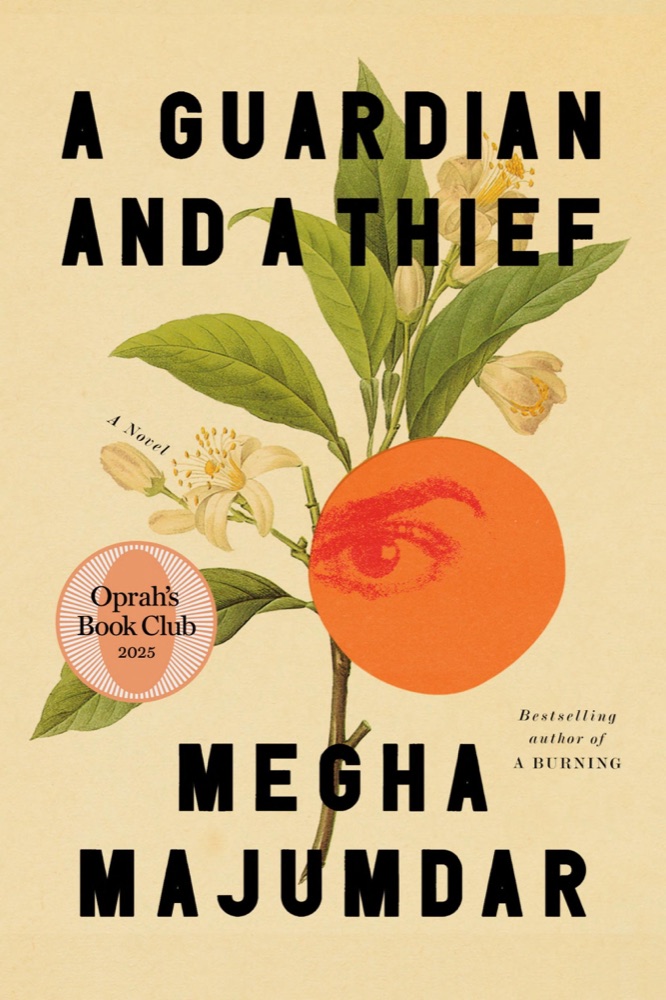
Megha Majumdar's second novel, following her bestselling debut A Burning, unfolds over a single fraught week in a near-future Kolkata ravaged by climate change, flooding, and famine. Ma, her elderly father Dadu, and her two-year-old daughter Mishti are days from leaving the collapsing city to join Ma's husband Babu, a scientist in Michigan, having secured coveted "climate visas." When a young homeless man named Boomba breaks into their apartment looking for food and steals the purse holding their passports and visas, Ma is thrown into a frantic, escalating search that entangles the two families in blackmail, desperation, and impossible choices.
The novel is a moral thriller that deliberately blurs the line between guardian and thief: each of its two protagonists sees themselves as a protector and the other as a criminal, and the book asks readers to observe rather than take sides. Majumdar has said she wanted to explore whether stealing an orange from a child to feed your own child is an erosion of humanity or its most uninhibited expression. Across roughly 200 pages, it probes morality under scarcity, the anxieties of climate collapse and immigration, and the loyalties and compromises that survival demands, drawing on Majumdar's own memories of Kolkata's brutal heat and her experience emigrating to the United States at nineteen.
Reviewers received the book as a taut, propulsive tour de force. A finalist for the National Book Award in fiction, it was called "a perfect short novel" of "tightly honed panic" by The Washington Post and praised by The New York Times, The Guardian, The Atlantic, and the Star Tribune, the last of which deemed it a "classic" that is "a beguilingly simple tale" and "a complicated morality play" at once. Critics singled out Majumdar's refusal to let her morally gray characters become caricatures, and the way the novel makes readers feel borne aloft by story rather than jerked around by plot.
Book details
- First published
- 2025
- Author
- Megha Majumdar
- Genre
- Fiction
- Goodreads rating
- 3.76 (35k ratings)
Keep reading
The Inheritance of Loss
 Another Country
 The Loneliness of Sonia and Sunny
 The Corrections
 The Story of the Lost Child
 A Bend in the River
 The Cat's Table
 Dream Count
 The Sweetness of Water
 Ohio
Ohio
 Warlight
 The Clockmaker's Daughter
 Milk Teeth
 The Brutal Telling
 What Strange Paradise
 To Paradise
 Transit
 Unaccustomed Earth
 Behind the Beautiful Forevers: Life, Death, and Hope in a Mumbai Undercity
 The Association of Small Bombs
 Freedom
 The Long Way Home
 A Passage to India
 Capital
 The Quick and the Dead
 Gold Fame Citrus
 Prague
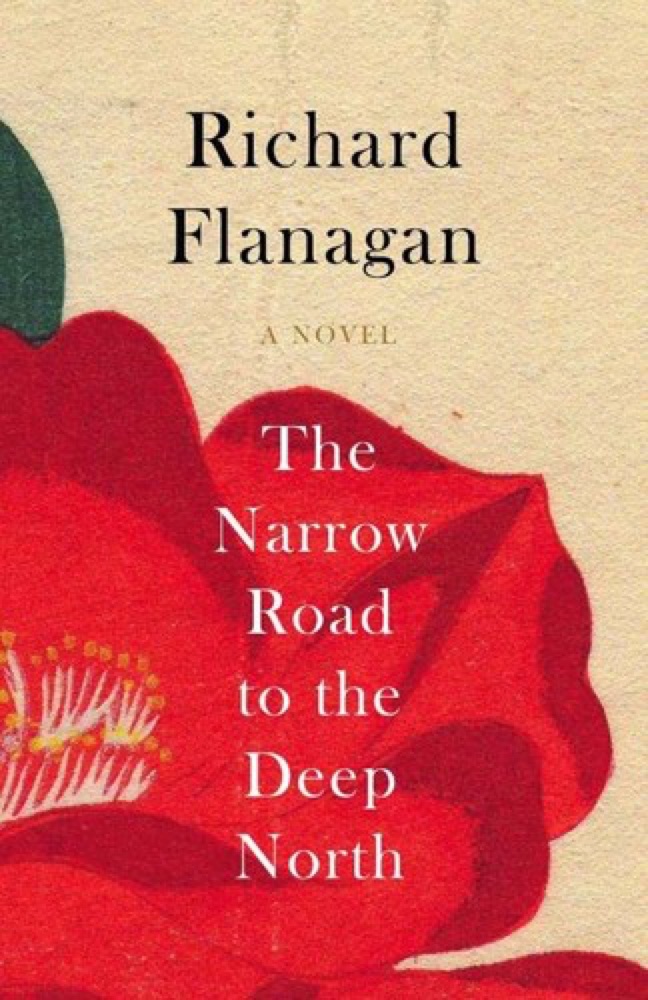 The Narrow Road to the Deep North
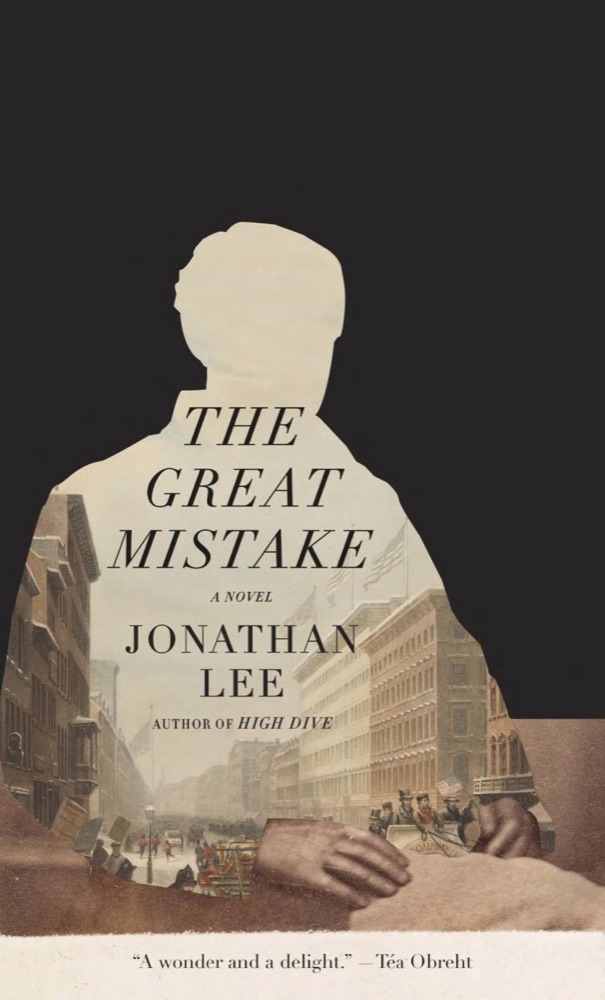 The Great Mistake
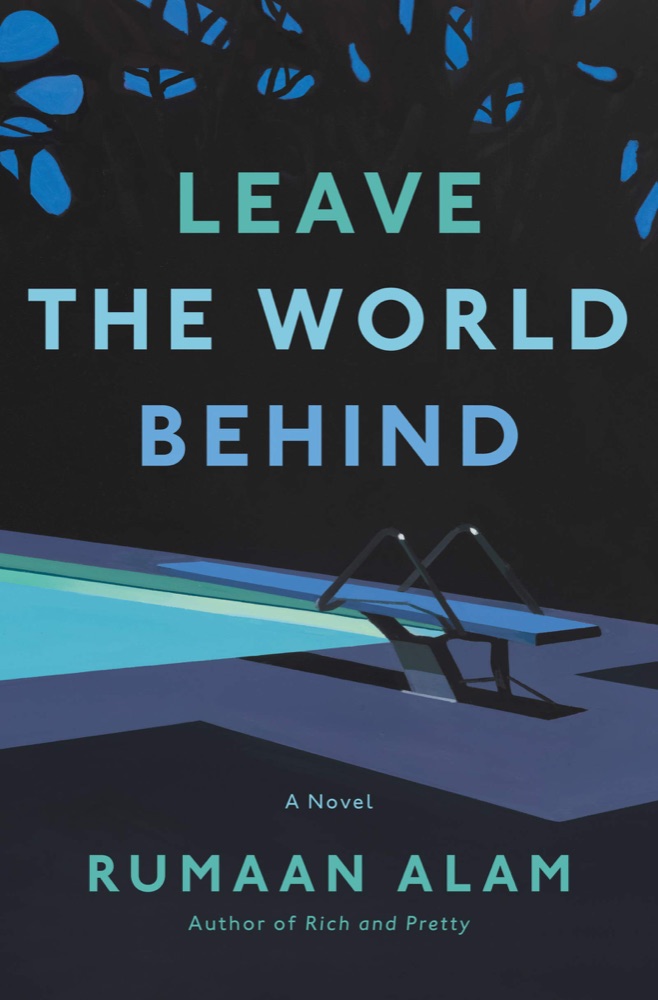 Leave the World Behind
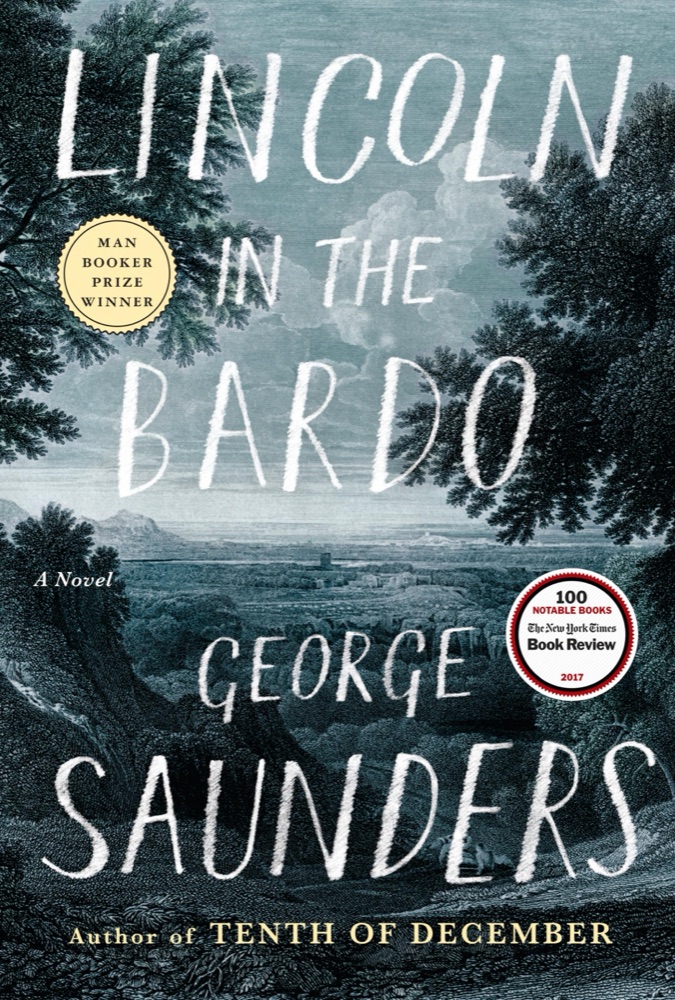 Lincoln in the Bardo
 The Prophets
 Last Night in Montreal
 The Book of My Lives
 Life & Times of Michael K
 10 Minutes 38 Seconds in This Strange World
 Severance
 Half of a Yellow Sun
 One of Ours
 The Museum of Failures
 The Passage
 Purity
 The Daughter of Doctor Moreau
 The Invasion of the Tearling
 Little Monsters
 The Whisper Man
 Home Fire
 This Strange Eventful History
 Too Much Happiness: Stories
 The Poet Empress
 The Lives of Others
 And the Mountains Echoed
 TransAtlantic
 The Post-Birthday World
 The Bedlam Stacks
 The Day of the Scorpion
 Homecoming
 The Children Act
 The Glass Palace
 The Measure of the Magic