
 The Etymologicon: A Circular Stroll through the Hidden Connections of the English Language
Quotes from the Book
In 1616, George Chapman published what he hoped would be the definitive edition of Homer, who had long been established as a canonical poet, perhaps the canonical poet. It is thus something of a surprise to read, in Chapman’s preface, his attack on “a certain envious Windfucker.” This person, Chapman complains, has spread rumors that he has translated Homer from Latin editions rather than from the original Greek. Windfucker is, arguably, just as bad a word as anything in Chaucer. (In Victorian editions of Chapman’s Homer, it is replaced with Windsucker.)
1
In a 2005 study, intrepid researchers showed that swearwords actually do “increase the believability of statements.” Testimony that contained words such as God damn it, shitty, fucking, and asshole was perceived by test subjects to be more credible than the same testimony minus the swearwords.)
1
Boxing the Jesuit” was eighteenth-century slang for masturbation. As Francis Grose explains in his 1785 dictionary of slang: “to box the Jesuit, and get cock roaches” is a “sea term [used by sailors] for masturbation. A crime it is said much practiced by the reverend fathers of that society.
1
In his influential treatise on manners, Galateo (1558), Giovanni Della Casa dictates that one should not sit with one’s back or posterior turned towards another, nor raise a thigh so high that the members of the human body, which should properly be covered with clothing at all times, might be exposed to view. For this and similar things are not done, except among people before whom one is not ashamed. It is true that a great lord might do so before one of his servants or in the presence of a friend of lower rank; for in this he would not show him arrogance but rather a particular affection and friendship. Della
1
And Queen Elizabeth I even used profuse profane swearing as a way to strengthen her hold on the English crown. She liked to sprinkle her speech with “God’s death!”—still one of the most shocking phrases a sixteenth-century Englishman could utter. Man is the operative word here—women’s language was supposed to be both chaster and more devout than men’s. As one poet who worked at Elizabeth’s court put it, women should avoid indecent or irreligious words, because “the chief virtue of women is shamefastness … when they hear or see anything tending that way they commonly blush.” Elizabeth, though, swore “God’s death!” so often that even foreign ambassadors remarked on it. When
1
Modern translations of the Bible uniformly reject the richness of “him that pisseth,” replacing it with “every last male” (New International), “every male person” (New American Standard), or “every male” (English Standard).
1
Sixteenth-century people were ashamed of more things than their medieval forebears, and ashamed in front of more people. It became more and more important to conceal these various shameful body parts and actions, in public life and in polite language.
Martial complains that he and his friend can’t punish their host for his rudeness. Appropriate revenge would be irrumatio—oral rape, basically—making him give them blow jobs. Irrumatio is a standard Roman threat made by poets, orators, and ordinary people for causes great (adultery) and small (a bad review).
Behind the anxiety about swearing lies a fear that civilization is a thin veneer, barely covering a state of chaos. We worry that this fragile membrane can be ripped apart by swearing, which violates so many dictates of polite, rational discourse and gives voice to so many unruly impulses.
By the first world war, soldiers swore so much that the word ‘fucking’ came to function as no more than ‘a warning that a noun is coming’.
To put it another way, language is a tool box and swearing is a hammer. You can try to pound a nail into a piece of wood with the handle of your screwdriver, with your wrench, or with your pliers, but it's only your hammer that's perfectly designed for the job.
(Members of this group, conscience-barred from using either oaths or obscene language, expressed insult and frustration with the word pants.)
(not even the Jesus Loves Porn Stars Bible).
Fartleberries are “excrement hanging to the hairs about the anus, &c, of a man or woman.
A character in the mock Christmas pantomime Harlequin Prince Cherrytop and the Good Fairy Fairfuck (1879) declares, “For all your threats I don’t care a fuck. / I’ll never leave my princely darling duck.” (The panto relates the story of Prince Cherrytop, who has become enslaved by the Demon of Masturbation. The Good Fairy Fairfuck helps him conquer his addiction to self-abuse, so he can embrace the joys of holy matrimony with his betrothed, the Princess Shovituppa.
When Captain Basil Hall visited the Comoro Islands off the coast of Africa in the 1820s, he was welcomed by an islander with the memorable words: “How do you do, sir? Very glad to see you. Damn your eyes! Johanna man [a man from Anjouan, one of the islands] like English very much. God damn!
Plays in this period, as any reader of Shakespeare knows, are full of double entendres (words or phrases that can be understood in two senses),
Sad wriggling wasp, you have beshit more worms Than there is grass on ground or leaf on linden tree.] The
He helpfully gives examples of how to use these words in conversation, such as “I will not swive her and she would pray me”—“I wouldn’t fuck her if she begged me.” Even worse, by the principle of didactic responsibility, might be his definition of ie fringue: “I frig with the arse as a queene doth when she is in japing,” that is, “I rub with the ass as a prostitute does while she is fucking.
Alicia Garlek scolded William Wipetail, or that Rogerus Prikeproud is a “common barrator.” (These are all actual medieval names: Alicia Garlic, William Wipe-Dick—though tail could refer to both the penis and the vagina—and Roger Proud-of-His-Prick.)
When ‘our sire’s’ pants are torn, his penis peeps out of the hole like a maggot.
Stanbridge’s text continues with a variety of phrases a schoolboy needs to know, presented in seemingly random order: “I am weary of study. I am weary of my life… . I am almost beshitten. You stink… . Turd in your teeth… . I will kill you with my own knife. He is the biggest coward that ever pissed.” Clearly Stanbridge chose topics that would interest young boys, but he is not trying to pique their interest by using bad words.
Scholar Ziony Zevit takes this euphemism and runs with it, arguing that in the Genesis narrative Eve is actually made from Adam’s penis, in particular from his penis bone.
until his honor was stained with an allegation of “softness of body”—effeminacy. Then he scornfully replied, “Suillius, cross-examine your sons: they will testify that I am a man” (interroga, Suilli, filios tuos: virum esse me fatebuntur).
Two of the “Seven Sages” who decorated a tavern in Ostia and entertained drinkers with their advice about excretion: “Solon rubbed his belly to shit well” (on left) and “Thales recommends that if you have a hard time shitting you should strain” (on right).
(The Romans appear to have been of two minds about depilation. On the one hand, “it is better to fuck a hairy cunt,” but on the other, women often plucked their pubic hair or singed it with an oil lamp. The very rich and very decadent might even employ a picatrix, a young female slave whose job was to arrange her mistress’s pubic hair.)
appears this way in graffiti from the city of Pompeii, which was preserved to an extraordinary degree when Mt. Vesuvius erupted in AD 79. “Corus licks cunt” (Corus cunnum lingit) and “Jucundus licks the cunt of Rustica” (Iucundus cunum lingit Rusticae), for example, appear on Pompeian apartment buildings.
Some other proper names from these years have also come down to us. We have Gunoka Cuntles [1219] and Bele Wydecunthe [1328], suitable partners for Godwin Clawcuncte [1066] and Robert Clevecunt [1302]. If the Millers’ ancestors ground grain, and the Taylors’ sewed cloth, what did Godwin’s and Robert’s do—and
(Fascinating, by the way, comes from the Latin fascinum, a representation of the erect penis. Tiny fascini were worn by young boys as charms to protect them against the evil eye. In ancient Rome, these penises were thought to be infused with magical power; today if something fascinates you, it captures your attention almost against your will.)
Watch on YouTube
About Melissa Mohr
We have collected 29 quotes from 1 book by Melissa Mohr on BookQuoters.
More about the author →About the book
Holy Sh*t tells the story of two kinds of swearing--obscenities and oaths--from ancient Rome and the Bible to today. With humor and insight, Melissa Mohr takes readers on a journey to discover how "swearing" has come to include both testifying with your hand on the Bible and calling someone a *#$&!* when they cut you off on the highway. She explores obscenities in ancient Rome and unearths the history of religious oaths in the Middle Ages, when swearing (or not swearing) an oath was often a matter of life and death.
Holy Sh*t also explains the advancement of civility and corresponding censorship of language in the 18th century, considers the rise of racial slurs after World War II, examines the physiological effects of swearing and answers a question that preoccupies the FCC, the US Senate, and anyone who has recently overheard little kids at a playground: are we swearing more now th
Book details
- First published
- 2013
- Author
- Melissa Mohr
- Genre
- Nonfiction
- Goodreads rating
- 3.87 (2k ratings)
Keep reading
The Etymologicon: A Circular Stroll through the Hidden Connections of the English Language
 Will in the World: How Shakespeare Became Shakespeare
 Fool
Fool
 Made in America: An Informal History of the English Language in the United States
 The Satyricon
 Cunt: A Declaration of Independence
 Letters from the Earth: Uncensored Writings
 The Liar
 Love's Labour's Lost
 Coriolanus
 The Complete Works
 The Confusion
 The Canterbury Tales
 Speaking from Among the Bones
 Word by Word: The Secret Life of Dictionaries
 The Professor and the Madman: A Tale of Murder, Insanity and the Making of the Oxford English Dictionary
 Skinny Legs and All
 People of the Book
 Unseen Academicals
 The Know-It-All
 Lamb: The Gospel According to Biff, Christ's Childhood Pal
 The Truth: Stage Adaptation
 How to Talk Dirty and Influence People
 Hammered
 The History of Tom Jones, a Foundling
 Bring Up the Bodies
 Carpe Jugulum
 Lords and Ladies
 The Gadfly
 The Scriptlings
 Mean
Mean
 The Seventh Function of Language
 Barrel Fever: Stories and Essays
 The Club of Queer Trades
 The Bonfire of the Vanities
 Embroideries
 Cocaine
 A Collection of Essays
 Arguably: Selected Essays
 White Teeth
 The Blood Mirror
 The Crimson Petal and the White
 At Swim-Two-Birds
 Disgrace
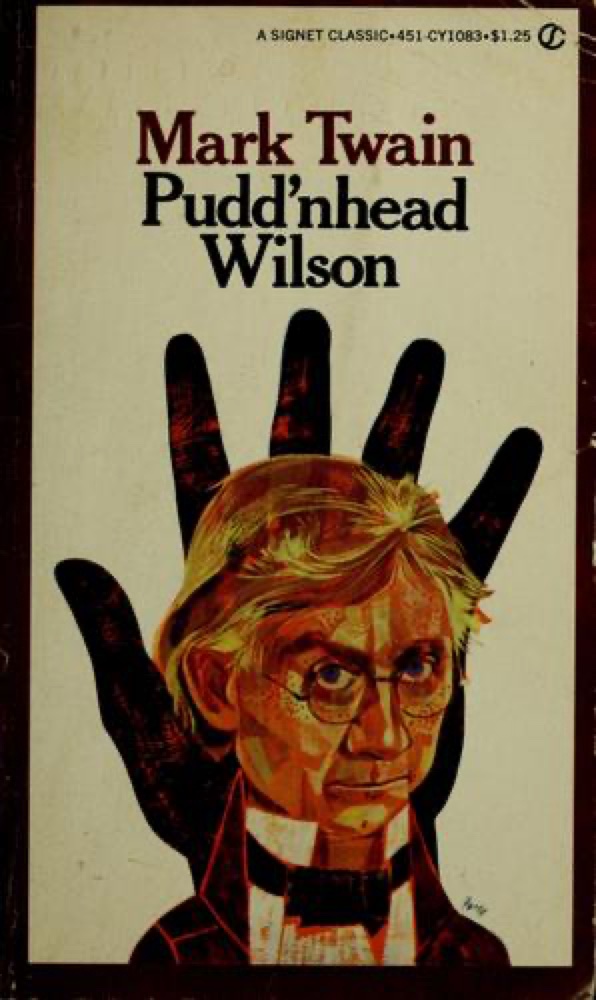 Pudd'nhead Wilson
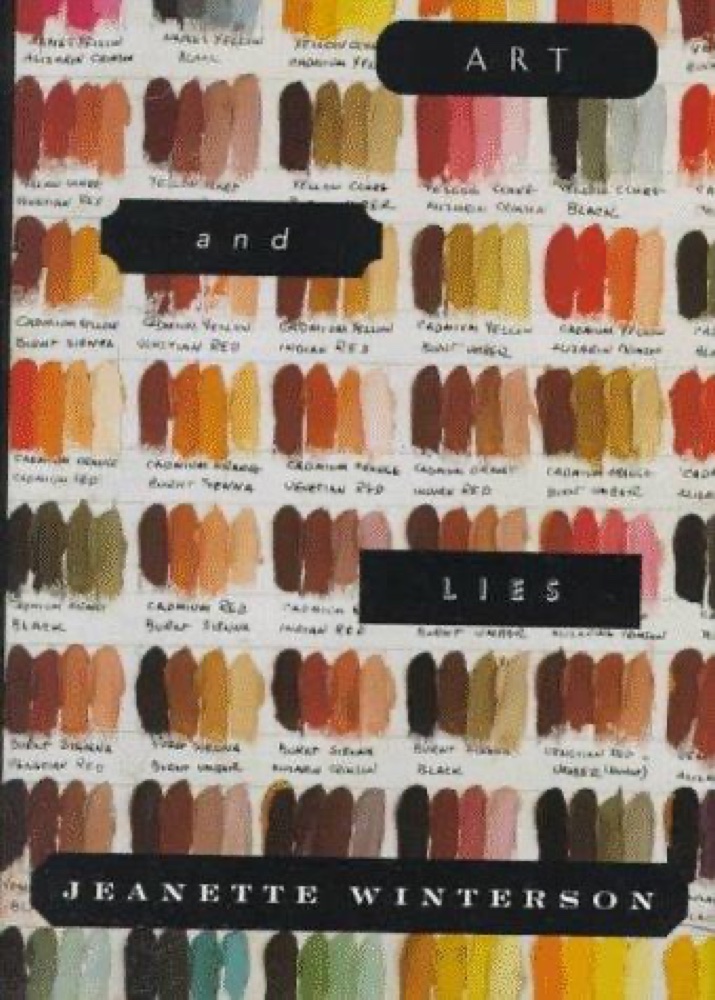 Art and Lies
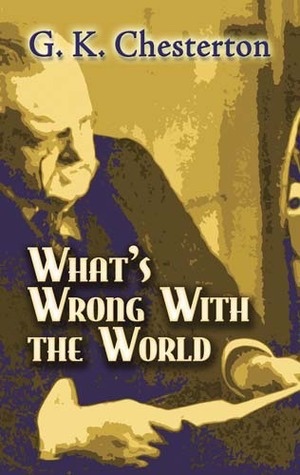 What's Wrong with the World
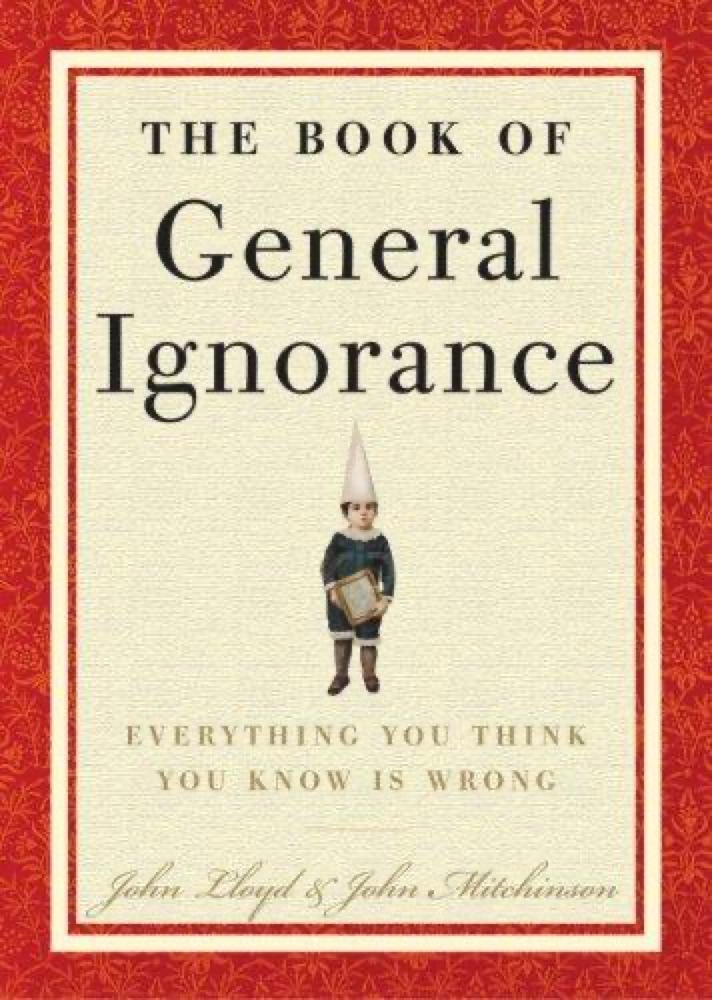 The Book of General Ignorance
 Zeus Grants Stupid Wishes: A No-Bullshit Guide to World Mythology
 Harassment Architecture
 NGLND XPX
 Notes of a Dirty Old Man
 The Big Over Easy
 Love
Love
 Between You & Me: Confessions of a Comma Queen
 Babel-17
 The Ladies of Grace Adieu and Other Stories
 The Enchantress of Florence
 The Human Stain