
 After You'd Gone
Quotes from the Book
She would try anything, she would do anything. She would open her own veins, her own body cavity, and give him her blood, her heart, her organs, if it would do the slightest good.
11
She grows up with a hidden, private flame inside her: it licks at her, warms her, warns her. You need to get away, the flame tells her. You must.
11
She thinks, This cannot happen, it cannot, how will we live, what will we do, how can Judith bear it, what will I tell people, how can we continue, what should I have done, where is my husband, what will he say, how could I have saved him, why didn't I save him, why didn't I realise that it was he who was in danger? And then, the focus narrows, and she thinks: He is dead, he is dead, he is dead.
9
There is so much to do in an family this size, so much to see, so many people needing so many differnt things. How easy is it, Agnes thinks, as she lifts the plates, to miss the pain and anguish of one person, if that person keeps quiet, if he keeps it all in, like a bottle stoppered too tightly, the pressure inside building and building, until - what? Agnes doesn't know.
9
You see, she says to him, you cannot change what you are given, cannot bend or alter what is dealt to you.
8
How were they to know that Hamnet was the pin holding them together? That without him they would all fragment and fall apart, like a cup shattered on the floor?
8
She glanced up to see that her mother was doing the same and she wanted to say, Do you think of her, do you still catch yourself listening for her footsteps, for her voice, for the sound of her breathing at night, because I do, all the time. I still think that one day I might wake and she will be there, next to me, again; there will have been some wrinkle or pleat in time and we will be back to where we were, when she was living and breathing.
8
A glover will only ever want the skin, the surface, the outer layer. Everything else is useless, an inconvenience, an unnecessary mess. She thinks of the private cruelty behind something as beautiful and perfect as a glove.
7
Every life has its kernel, its hub, its epicentre, from which everything flows out, to which everything returns. This moment is the absent mother’s: the boy, the empty house, the deserted yard, the unheard cry. Him standing here, at the back of the house, calling for the people who had fed him, swaddled him, rocked him to sleep, held his hand as he took his first steps, taught him to use a spoon, to blow on broth before he ate it, to take care crossing the street, to let sleeping dogs lie, to swill out a cup before drinking, to stay away from deep water. It will lie at her very core, for the rest of her life.
7
And as these words come, one after another, it is possible for him to slip away from himself and find a peace so absorbing, so soothing, so private, so joyous that nothing else will do.
7
She hates the way the people part to let them past and then, behind them, regroup, erasing their passage, as if it were nothing, as if it never were.
7
For Agnes, the walk to the graveyard is both too slow and too fast. She cannot bear the rows and rows of peering eyes, raking over them, sealing an image of her son’s shrouded body inside their lids, thieving that essence of him. These are people who saw him every day, passing by their doors, below their windows. They exchanged words with him, ruffled his hair, exhorted him to hurry if he was late for the school bell. He played with their children, darted in and out of their houses and shops. He carried messages for them, petted their dogs, stroked the backs of their cats as they slept on sunny windowsills. And now their lives are carrying on, unchanged, their dogs still yawning by the fireplaces, their children still whining for supper, while he is no more. So she cannot bear their gaze, cannot meet their eyes. She doesn’t want their sympathy and their prayers and their murmured words. She hates the way the people part to let them past and then, behind them, regroup, erasing their passage, as if it were nothing, as if it never were. She wishes to scratch the ground, perhaps with a hoe, to score the streets beneath her, so that there will forever be a mark, for it always to be known that this way Hamnet came. He was here.
6
There is, she has found, great power to be had in silence.
6
Gardens don’t stand still: they are always in flux.
6
But there is nothing. A high whine of nothing, like the absence of noise when a church bell falls silent.
6
Her feet moved over the earth with confidence and grace.
6
She grows up, too, with the memory of what it meant to be properly loved, for what you are, not what you ought to be.
6
It is not Christian, this ability. They beg her to stop, not to touch people’s hands, to hide this odd gift. No good will come of it, her father says, standing over Agnes as she crouches by the fire, no good at all. When she reaches up to take his hand, he snatches it away. She grows up feeling wrong, out of place, too dark, too tall, too unruly, too opinionated, too silent, too strange. She grows up with the awareness that she is merely tolerated, an irritant, useless, that she does not deserve love, that she will need to change herself substantially, crush herself down if she is to be married. She grows up, too, with the memory of what it meant to be properly loved, for what you are, not what you ought to be. There is just enough of this recollection alive, she hopes, to enable her to recognise it if she meets it again. And if she does, she won’t hesitate. She
6
She walks back, more slowly, the way she came. How odd it feels, to move along the same streets, the route in reverse, like inking over old words, her feet the quill, going back over work, rewriting, erasing. Partings are strange. It seems so simple: one minute ago, four, five, he was here, at her side; now, he is gone. She was with him; she is alone. She feels exposed, chill, peeled like an onion.
5
He wants to tear down the sky, he wants to rip every blossom from that tree, he wishes to take a burning branch and drive that pink-clad girl and her nag over a cliff, just to be rid of them, to clear them all out of his way. So many miles, so much road stands between him and his child, and so few hours left.
5
It is no matter,” she pants, as they struggle there, beside the guzzling swine. “I know. You are caught by that place, like a hooked fish.” “What place? You mean London?” “No, the place in your head. I saw it once, a long time ago, a whole country in there, a landscape. You have gone to that place and it is now more real to you than anywhere else. Nothing can keep you from it. Not even the death of your own child. I see this,” she says to him, as he binds her wrists together with one of his hands, reaching down for the bag at his feet with the other. “Don’t think I don’t.
5
You might find it a restless, verdant, inconstant sight: the wind caresses, ruffles, disturbs the mass of leaves; each tree answers to the weather’s ministrations at a slightly different tempo from its neighbour, bending and shuddering and tossing its branches, as if trying to get away from the air, from the very soil that nourishes
5
Is this what it feels like to die, to sense the nearness of something you can’t avoid? The thought falls into her head from nowhere, like a drop of wine into water, colouring her mind with its dark, spreading stain.
4
He breathes in. He breathes out. He turns his head and breathes into the whorls of her ear; he breathes in his strength, his health, his all. You will stay, is what he whispers, and I will go. He sends these words into her: I want you to take my life. It shall be yours. I give it to you.
4
How hard were the bones in the hand of an adult, how tender and soft the flesh of a child, how easy to bend and strain those young, unfinished bones.
4
Agnes is a woman broken into pieces, crumbled and scattered around. She would not be surprised to look down, one of these days, and see a foot over in the corner, an arm left on the ground, a hand dropped to the floor. Her daughters are the same. Susanna’s face is set, her brows lowered in something like anger. Judith just cries, on and on, silently; the tears leak from her and will, it seems, never stop. — How were they to know that Hamnet was the pin holding them together? That without him they would all fragment and fall apart, like a cup shattered on the floor?
4
She has seen neighbouring women do it, has heard their cries rise into screams, smelt the rusty coin scent of new birth. She has seen the pig, the cow, the ewes birth their young; she has been the one called on by her father, by Bartholomew, when lambs were stuck. Her female fingers, slender, tapered, were required to enter that narrow, heated, slick canal, and hook out the soft hoofs, the gluey nose, the plastered-back ears. And she knows, in the way she always does, that she will reach the other side of birth, that she and this baby will live. Nothing, however, could have prepared her for the relentlessness of it. It is like trying to stand in a gale, like trying to swim against the current of a flooded river, like trying to lift a fallen tree. Never has she been more sensible of her weakness, of her inadequacy. She has always felt herself to be a strong person: she can push a cow into milking position, she can douse and stir a load of laundry, she can lift and carry her small siblings, a bale of skins, a bucket of water, an armful of firewood. Her body is one of resilience, of power: she is all muscle beneath smooth skin. But this is something else. Something other. It laughs at her attempts to master it, to subdue it, to rise above it. It will, Agnes fears, overtake her. It will seize her by the scruff of her neck and plunge her down, under the surface of the water.
4
Do you still think of her, do you still catch yourself listening for her footsteps, for the sound of her breathing at night, because I do, all the time. I still think that one day I might wake and she will be there, next to me, again; there will have been some wrinkle or pleat in time and we will be back to where we were, when she was living and breathing.
4
What is given may be taken away, at any time. Cruelty and devastation wait for you around corners, inside coffers, behind doors: they can leap out at you at any moment, like a thief or brigand. The trick is never to let down your guard. Never think you are safe. Never take for granted that your children’s hearts beat, that they sup milk, that they draw breath, that they walk and speak and smile and argue and play. Never for a moment forget they may be gone, snatched from you, in the blink of an eye, borne away from you like thistledown.
3
How does a person ever tell? All he can do is inscribe strokes on a page and hope that at least some of those arrows will hit their targets....
3
Did you know?
- The novel deliberately never names William Shakespeare, referring to him only by his relationships, such as the father or the Latin tutor.
- O'Farrell renames Shakespeare's wife Agnes rather than Anne, drawing on the name used in her father's will.
- One chapter follows the imagined journey of the plague from a flea in Alexandria to the Shakespeare household in Stratford.
- It won the 2020 Women's Prize for Fiction and the National Book Critics Circle Award for Fiction.
- Hamnet and Hamlet were effectively interchangeable spellings of the same name in the period.
- The book was adapted into a stage play by Lolita Chakrabarti for the Royal Shakespeare Company in 2023.
About Maggie O'Farrell
Maggie O'Farrell is a Northern Irish-born British novelist, born in 1972, known for literary fiction and the memoir I Am, I Am, I Am. Her work has won the Costa Novel Award and the Women's Prize for Fiction.
More about the author →More by Maggie O'Farrell
After You'd Gone
 The Hand That First Held Mine
 Instructions for a Heatwave
 The Vanishing Act of Esme Lennox
About the book
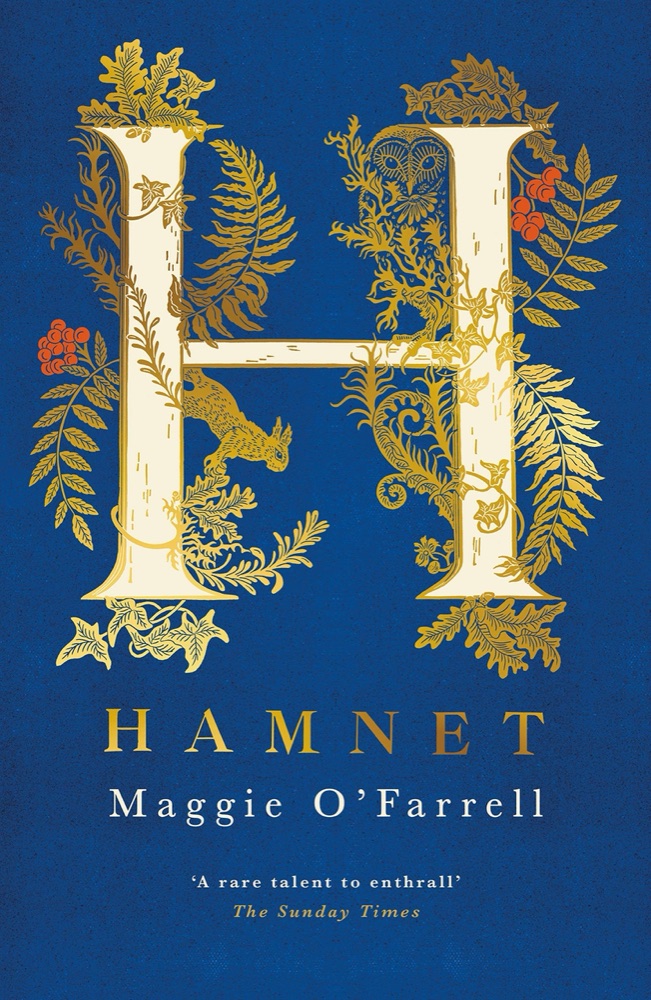
Hamnet is a work of historical fiction by Maggie O'Farrell that reimagines the family life behind one of literature's great silences: the death of William Shakespeare's only son, Hamnet, who died at eleven in 1596. The novel deliberately keeps the famous playwright unnamed, centering instead on his wife, here called Agnes, a fiercely independent healer and herbalist, and on the household in Stratford-upon-Avon. It traces their courtship, marriage and the births of their children, building toward the boy's sudden illness and death from what the book imagines as plague.
At its heart the novel is a meditation on grief, marriage and motherhood, and on the way private loss can be transmuted into art. O'Farrell threads in the natural world, folk medicine and the rhythms of domestic labor, and famously devotes a chapter to tracing how the plague might have traveled from Italy to a single English household. The closing pages connect the dead child to the play Hamlet, suggesting that a father's mourning reverberates through his most enduring work.
Hamnet was a major critical and commercial success, winning the 2020 Women's Prize for Fiction and the National Book Critics Circle Award for Fiction, and being named Waterstones Book of the Year. It became an international bestseller translated into dozens of languages and was widely praised for its lyrical prose and emotional intensity, cementing O'Farrell's reputation and inspiring a stage adaptation and a feature film.
Key characters
- AgnesShakespeare's wife, a fiercely independent healer and herbalist
- HamnetThe couple's young son, whose death anchors the novel
- JudithHamnet's twin sister, who falls gravely ill
- SusannaThe eldest Shakespeare daughter
- The father / Latin tutorThe unnamed playwright, away in London
- JohnThe playwright's father, a glover in Stratford
Book details
- First published
- 2020
- Length
- 384 pages
- Reading time
- 6 hours
- Author
- Maggie O'Farrell
- Genre
- Historical
- Goodreads rating
- 4.20 (482k ratings)
- First line
- “A boy is coming down a flight of stairs.”
Critical reception
- Won the 2020 Women's Prize for Fiction.
- Won the 2020 National Book Critics Circle Award for Fiction.
- Named Waterstones Book of the Year 2020.
- Became an international bestseller translated into dozens of languages.
Movie & TV adaptations
- IMDb
If you liked this, read…
- 1The Marriage PortraitO'Farrell's own follow-up historical novel with the same lyrical, female-centered approach.
- 2Wolf HallImmersive Tudor-era historical fiction with intimate psychological depth.
- 3The Western WindAtmospheric historical fiction steeped in the texture of early English village life.
Keep reading
 Idaho
Instructions for a Heatwave
Idaho
Instructions for a Heatwave
 Hild
Hild
 Summer Island
 Palimpsest
 The Robber Bride
 The Perfect Nanny
 Missing, Presumed
 The Promise
 The Reapers are the Angels
 The Good People
 The English Patient
 Salt Houses
 Death Watch
 The Djinn Waits a Hundred Years
 Ammonite
 The Memory Keeper's Daughter
 A Reliable Wife
 The Years
 What Is Not Yours Is Not Yours
 What It Means When a Man Falls from the Sky
 Clear Light of Day
 The White Book
 Falling Man
 Winter Garden
 Just Like Home
 10 Minutes 38 Seconds in This Strange World
 A Dangerous Place
 Ink Blood Sister Scribe
 Olive Kitteridge
 The Witching Hour
 The Heretic's Daughter
 My Brilliant Friend
 Little, Big
 Burnt Sugar
 The Safekeep
 The Book of the Unnamed Midwife
 The Sirens
 The God of Small Things
 Bury Our Bones in the Midnight Soil
 Held
Held
 The Crossing Places
 Hungry Ghosts
 Lisey's Story
 The Girl You Left Behind
 A Day of Fallen Night
 The Orchardist
 Banyan Moon
 Babylonia
 The Children's Book
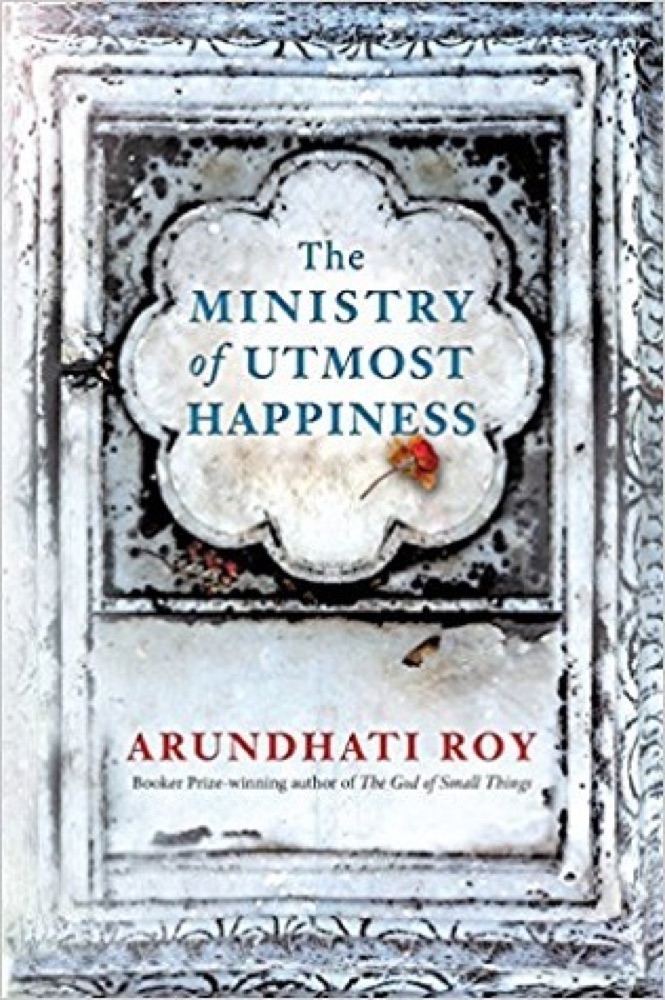 The Ministry of Utmost Happiness
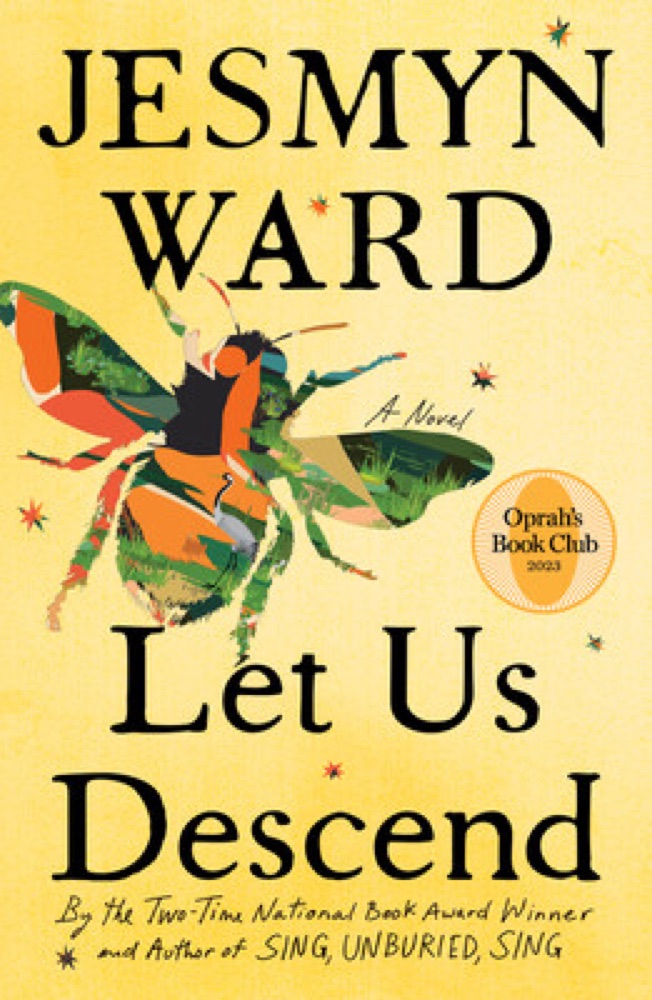 Let Us Descend
 Matrix
 The Daughter of Doctor Moreau
 Birds of America
 Journey to Munich
 Now Is the Time to Open Your Heart
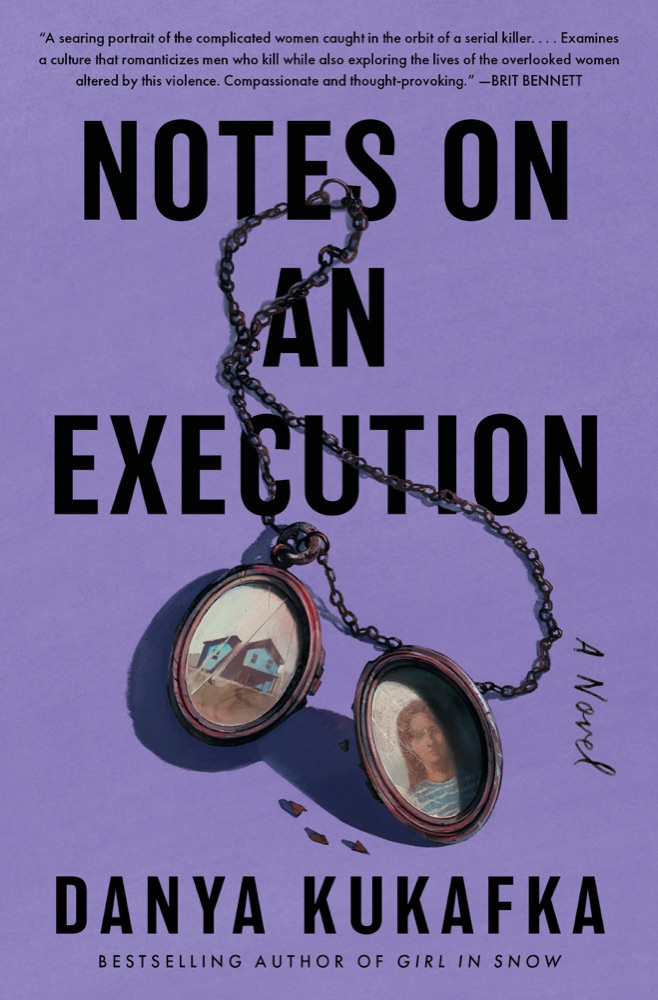 Notes on an Execution
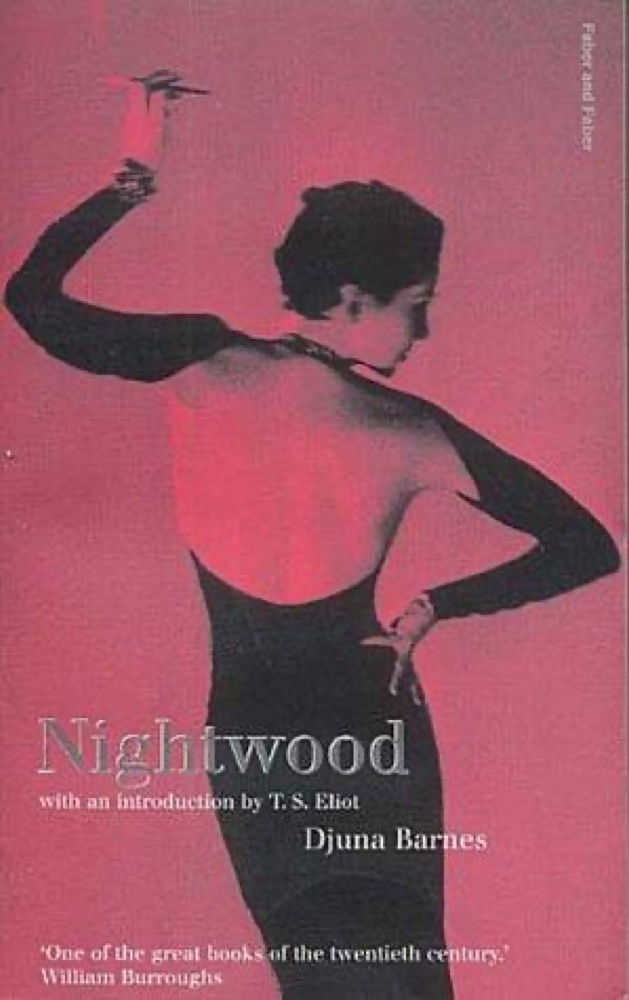 Nightwood
 Tar Baby