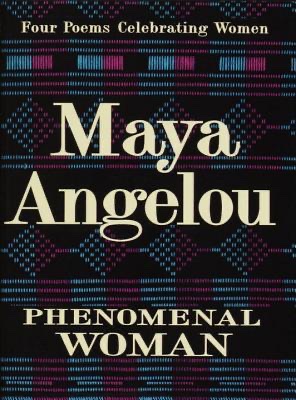
 Phenomenal Woman: Four Poems Celebrating Women
Quotes from the Book
There is no greater agony than bearing an untold story inside you.
Hoping for the best, prepared for the worst, and unsurprised by anything in between.
Words mean more than what is set down on paper. It takes the human voice to infuse them with shades of deeper meaning.
Anything that works against you can also work for you once you understand the Principle of Reverse.
The caged bird sings with a fearful trill, of things unknown, but longed for still, and his tune is heard on the distant hill, for the caged bird sings of freedom.
Instead, pursue the things you love doing, and then do them so well that people can't take their eyes off you.
To be left alone on the tightrope of youthful unknowing is to experience the excruciating beauty of full freedom and the threat of eternal indecision. Few, if any, survive their teens. Most surrender to the vague but murderous pressure of adult conformity. It becomes easier to die and avoid conflict than to maintain a constant battle with the superior forces of maturity.
Life is going to give you just what you put in it. Put your whole heart in everything you do, and pray, then you can wait.
I believe most plain girls are virtuous because of the scarcity of opportunity to be otherwise.
If you're for the right thing, you do it without thinking.
Ritie, don't worry 'cause you ain't pretty. Plenty pretty women I seen digging ditches or worse. You smart. I swear to God, I rather you have a good mind than a cute behind.
To be left alone on the tightrope of youthful unknowing is to experience the excruciating beauty of full freedom and the threat of eternal indecision.
The Black female is assaulted in her tender years by all those common forces of nature at the same time she is caught in the tripartite crossfire of masculine prejudice, white illogical hate and Black lack of power. The fact that the adult American Negro female emerges a formidable character is often met with amazement, distaste and even belligerence. It is seldom accepted as an inevitable outcome of the struggle won by survivors and deserves respect if not enthusiastic admiration.
Without willing it, I had gone from being ignorant of being ignorant to being aware of being aware. And the worst part of my awareness was that I didn't know what I was aware of. I knew I knew very little, but I was certain that the things I had yet to learn wouldn't be taught to me at George Washington High School.
The quality of strength lined with tenderness is an unbeatable combination, as are intelligence and necessity when unblunted by formal education.
At fifteen life had taught me undeniably that surrender, in its place, was as honorable as resistance, especially if one had no choice.
She comprehended the perversity of life, that in the struggle lies the joy.
A story went the rounds about a San Franciscan white matron who refused to sit beside a Negro civilian on the streetcar, even after he made room for her on the seat. Her explanation was that she would not sit beside a draft dodger who was a Negro as well. She added that the least he could do was fight for his country the way her son was fighting on Iwo Jima. The story said that the man pulled his body away from the window to show an armless sleeve. He said quietly and with great dignity, "Then ask your son to look around for my arm, which I left over there.
If growing up is painful for the Southern Black girl, being aware of her displacement is the rust on the razor that threatens the throat. It is an unnecessary insult.
The world had taken a deep breath and was having doubts about continuing to revolve.
When things were very bad his soul just crawled behind his heart and curled up and went to sleep
People whose history and future were threatened each day by extinction considered that it was only by divine intervention that they were able to live at all. I find it interesting that the meanest life, the poorest existence, is attributed to God's will, but as human beings become more affluent, as their living standard and style begin to ascend the material scale, God descends the scale of responsibility at a commensurate speed.
I had given up some youth for knowledge, but my gain was more valuable than the loss
He was a simple man who had no inferiority complex about his lack of education, and even more amazing no superiority complex because he had succeeded despite that lack.
The intensity with which young people live demands that they "blank out" as often as possible.
The needs of a society determine its ethics, and in the Black American ghettos the hero is that man who is offered only the crumbs from his country's table but by ingenuity and courage is able to take for himself a Lucullan feast. Hence the janitor who lives in one room but sports a robin's-egg-blue Cadillac is not laughed at but admired, and the domestic who buys forty-dollar shoes is not criticized but is appreciated. We know that they have put to use their full mental and physical powers. Each single gain feeds into the gains of the body collective.
It takes the human voice to infuse them with the shades of deeper meaning.
Until recently each generation found it more expedient to plead guilty to the charge of being young and ignorant, easier to take the punishment meted out by the older generation (which had itself confessed to the same crime short years before). The command to grow up at once was more bearable than the faceless horror of wavering purpose, which was youth.
Did you know?
- It is the first of Maya Angelou's seven autobiographies.
- The book was nominated for the National Book Award in 1970.
- It remained on the New York Times paperback bestseller list for two years.
- The title comes from a line in Paul Laurence Dunbar's poem "Sympathy."
- A 1979 CBS television film adaptation was co-written by Angelou herself.
- It is one of the most frequently challenged and banned books in American schools and libraries.
About Maya Angelou
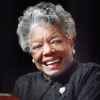
Maya Angelou (1928-2014) was an American poet, memoirist, and civil rights activist best known for her series of seven autobiographies. She read her poem "On the Pulse of Morning" at President Bill Clinton's 1993 inauguration and was awarded the Presidential Medal of Freedom in 2011.
More about the author →More by Maya Angelou
Phenomenal Woman: Four Poems Celebrating Women
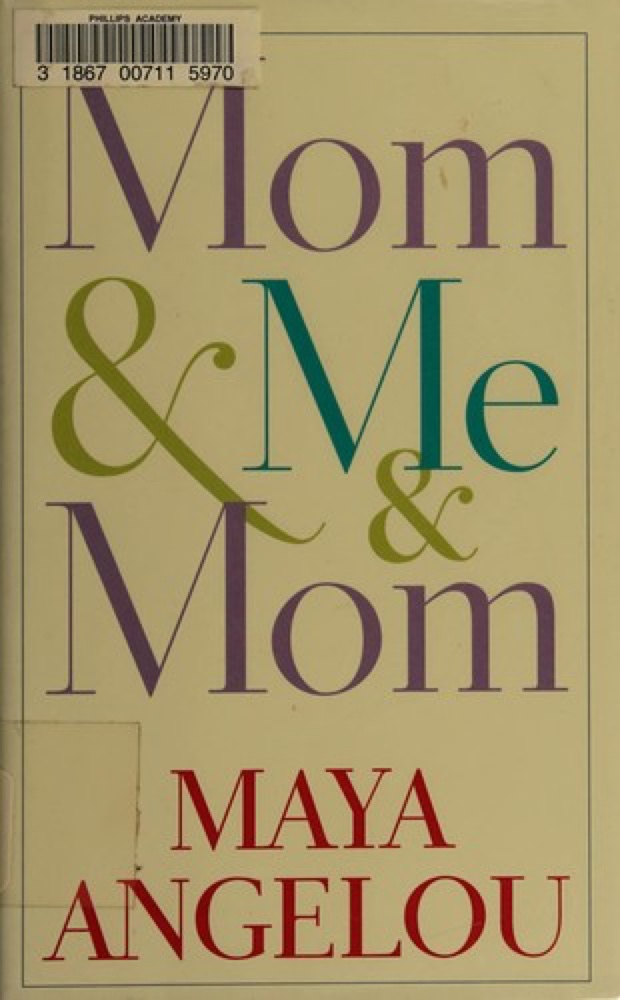 Mom & Me & Mom
 Wouldn't Take Nothing for My Journey Now
 Letter to My Daughter
About the book
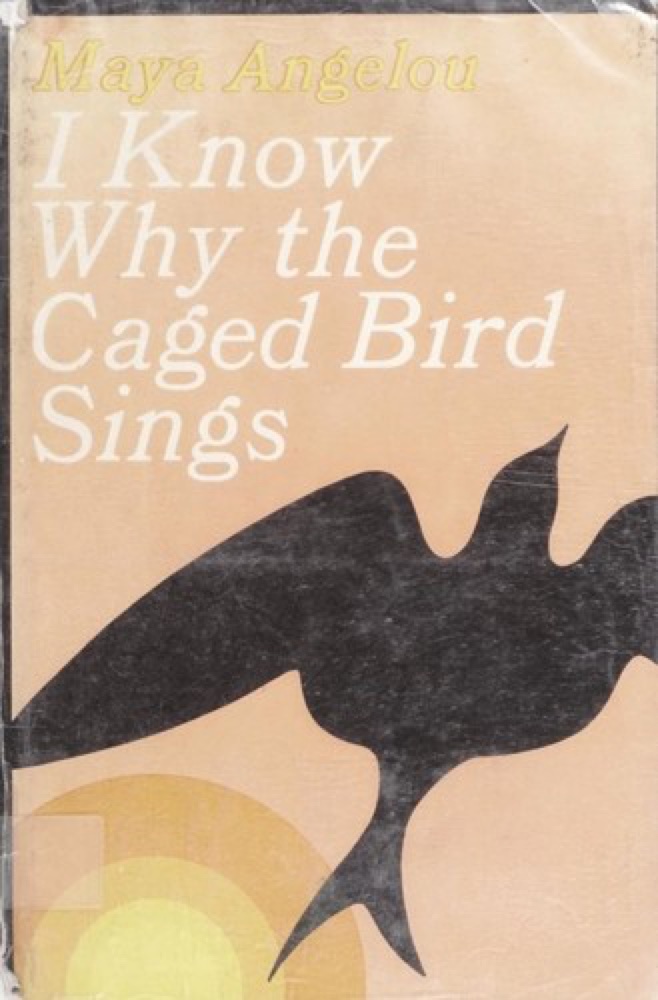
I Know Why the Caged Bird Sings is Maya Angelou's 1969 autobiography, the first in a series of seven, chronicling her early life from age three to seventeen. It follows Marguerite "Maya" Johnson and her older brother Bailey, who are sent to live with their grandmother in the segregated town of Stamps, Arkansas, after their parents' separation. The narrative moves between Arkansas, St. Louis, and California, tracing Maya's confrontations with racism, a childhood sexual assault and the years of near-muteness that followed, and her gradual emergence into self-possession and early motherhood.
The book is organized thematically as much as chronologically, using the techniques of fiction such as dialogue and characterization while remaining an autobiography. Its central themes include the formation of Black female identity, resistance to racist oppression through community and dignity, the trauma of abuse, and the redemptive power of literature and language. The character of Mrs. Bertha Flowers, who introduces Maya to classic works and coaxes her back into speech, embodies the book's belief in the transformative force of the written and spoken word.
Widely regarded as a landmark of American memoir, the book was nominated for the National Book Award in 1970 and spent two years on the New York Times paperback bestseller list. It opened new avenues for the autobiographical form and is taught in schools and universities worldwide, though its frank treatment of rape, racism, and sexuality has also made it one of the most frequently challenged books in American libraries.
Key characters
- Marguerite "Maya" JohnsonThe narrator and protagonist, from age three to seventeen
- Bailey Johnson Jr.Maya's beloved older brother
- Momma (Annie Henderson)Maya's paternal grandmother, who raises the children in Stamps
- Uncle WillieTheir physically disabled uncle who lives with Momma
- Mrs. Bertha FlowersThe refined woman who helps Maya recover her voice through literature
- Mr. FreemanVivian's boyfriend, who sexually abuses Maya
- Vivian BaxterMaya and Bailey's mother
Book details
- First published
- 1969
- Length
- 304 pages
- Reading time
- 6 hours
- Author
- Maya Angelou
- Genre
- Classics
- Goodreads rating
- 4.30 (593k ratings) →
- First line
- “What you looking at me for? I didn't come to stay...”
Series & reading order
- 1 I Know Why the Caged Bird Sings
- 2 Gather Together in My Name
- 3 Singin' and Swingin' and Gettin' Merry Like Christmas
- 4 The Heart of a Woman
- 5 All God's Children Need Traveling Shoes
- 6 A Song Flung Up to Heaven
- 7 Mom & Me & Mom
Movie & TV adaptations
- IMDb
If you liked this, read…
- 1The Bluest EyeToni Morrison's novel on Black girlhood, racism, and self-worth in America
- 2Their Eyes Were Watching GodZora Neale Hurston's landmark story of a Black woman finding her own voice
- 3Coming of Age in MississippiAnne Moody's memoir of growing up Black in the segregated South
Keep reading
 The Mill on the Floss
 Chances Are...
 The Jewel in the Crown
 And the Mountains Echoed
 Freedom
 The Hour I First Believed
 I Am Pilgrim
 Golden Fool
 All Over But the Shoutin'
 Fire Shut Up in My Bones: A Memoir
 Acacia: The War with the Mein
 Demon Copperhead
 Light in August
 The Power of One
 God Help the Child
 The Fall of Babel
 Freshwater
 The Lords of Discipline
 James
James
 Embers
 The Story of a New Name
 Like the Flowing River
 Just as I Am
 The Sea Keeper's Daughters
 Humboldt's Gift
 The Complete Essays
 Varina
 The Testaments
 Sacred Hunger
 Out of Oz
 Powers
 The 13½ Lives of Captain Bluebear
 Of Human Bondage
 My Friends
 The Likeness
 Library of Souls
 A Stolen Life
 Ilustrado
 The Tsar of Love and Techno
 Odd Hours
 The Story of the Lost Child
 The Razor's Edge
 The Sympathizer
 Middlemarch
 Crime and Punishment
 My Beloved World
 The Book of Koli
 The Secret Keeper
 The Long Hard Road Out of Hell
 This Boy's Life
 False Memory
 The Kite Runner
 Educated
 Bel Canto
 The Book of Negroes
 The Autobiography of Malcolm X
 The Secret Scripture
 The Adventures of Augie March
 The Quiet Game
 This Is Happiness