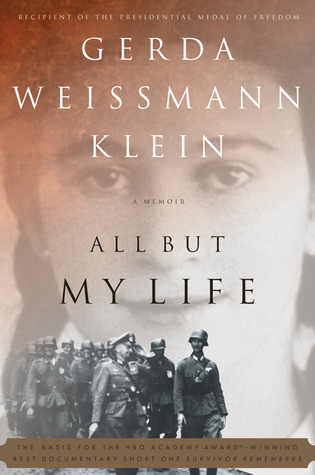
 All But My Life: A Memoir
Quotes from the Book
Everyone deserves to find that thing that cracks them open and softens them enough to see the beauty in the world.
1
I should have been angry, but I was struggling to feel much of anything.
1
While we had thought going home meant going back to a normal life, we had quickly realized there was no normal. Maybe, even, there was no home.
1
Why did people like us have to fight on the opposite side of the planet while the President got to sit stateside in the safety of his white mansion?
1
Brittany was lonely. She'd had Dillon during Carson's first deployment, and when he returned, he didn't seem very interested in getting to know his son. Then, half a year later, he was gone again. The baby could walk now, and Brittany had gotten used to being a single mom. She would have to adjust her life to fit a husband into it again.
1
Young women wore colorful new dresses with high heels and false eyelashes. They clashed against the parking lot backdrop, dust whirling around them. There were babies too young to have ever met their fathers, parents holding each other in anticipation as they waited for their sons and daughters to arrive home from war. Cleve's unit--Third Battalion, Eighth Marines--had been gone seven months. Though everyone was excited to see those who'd survived, we also anticipated the sadness that would inevitably wash over us when the buses emptied too soon.
1
At first, I hated the men who hurt him. I hoped that the other Marines were able to find and kill the bastards who did this. I wanted revenge. But as time passed, I found myself wondering what the men's names were. What they had had for breakfast that morning. Whether they had families. I wondered what it was exactly that made them want to do it. To kill. I wondered how many of their loved ones had been wounded or killed in the war. I thought about how much they must hate us, too.
1
I had never heard of an IED until Cleve's injury. He told me that day that they could be made with marbles. When the bomb goes off, the marbles explode, glass shards shooting in every direction toward their victims. As he spoke, I imagined the innocent balls of glass I played with as a child, white with blue cat's-eyes in the center, the same shade as my mother's and my eyes. The toys wait in darkness, forced to play in a war they weren't designed for.
1
It hadn't occurred to us that our country might go to war, and that if it did, we'd be the ones fighting it.
1
The idea of the war hero, to me, was nothing more than a fantasy designed to assuage America's guilt. Hero is much more palatable than casualty.
In an instant, I knew what mattered more than anything else in the world: my baby. I'd known love, but I'd never been so sure of it. Her dimpled knuckles, the way she rooted around on my chest, looking to reconnect after being so suddenly severed from my body. She put a mirror in front of me and forced me to look at every imperfect and still-beautiful piece of who I am and then said, "I love you. All of you.
I knew how precious the future ahead of me was. Time would eventually run out for me, too, and I couldn't predict when. I had to take advantage of my own "Alive Day." This was my second chance.
Running from places I didn't want to be with nowhere I wanted to go was my norm.
For the first time in my life, I wasn't afraid of my future. Instead, I was excited by all the possibilities the world had to offer and eager to experience as many of them as I could. The list of things I wanted to do grew and grew. I wanted to see and taste and smell and touch everything. And the more I wanted for reasons rooted in curiosity rather than survival, the more I discovered about who I was at my center. And the more I was able to see my own potential and worth.
The concept of waiting, of being patient, had seemed so simple before. Not any longer. Where once I thought we had time to figure things out, now I knew there would never be enough of it. I'd been told my whole life that time was on my side, and I'd been lied to. I saw it now for what it was: time was amorphous, fluid, a thing without beginning or end, a thing that had the power to speed up or stop, a thing I could neither grasp nor control. Time had betrayed me, and I no longer trusted it would be there. Everything was urgent. Everything had to be done immediately.
To wait for anything was to risk losing everything. I knew that now.
I want to believe in us, but I have a lot of doubts," I said. Cleve was silent, and I could feel my throat closing up. "Just...I just hope you know, no matter how rehab ends and no matter what happens to us, I will never forget who you are at the core. And I will always love that person." "Please don't give up on me," Cleve pleaded. "I'm not giving up on you.
My greatest fear was being alone. Alone, I was drowning in endless space around me. Alone made my skin hurt, made me want to peel it off and maybe, for once, breathe without the weight of a thousand regrets on my chest. I'd never been alone. I didn't know what to do with the silence. My thoughts were enemies, reminders of everything scary in the world. Alone, I kicked and screamed and flailed until someone bigger than me caught me and held me. I hoped, eventually, someone would catch me and protect me from myself, but I learned quickly that most people are more interested in taking advantage of the weak than they are in protecting them. "I will do anything," I thought. "Just don't leave me here alone.
Our relationship was now more duty than dream, our love the kind bound by codependence, necessity, and obsession.
That night, I wrote in my journal, "He may kill me, but as long as I am a good wife to him, it's worth it. This is my job. I am serving my country.
I hadn't noticed until that moment that I'd been treated as a part of Cleve, rather than an individual human being with her own needs. I hadn't realized how much I needed someone to ask me if I was okay.
In a single day, I'd seen my husband die and come back to life.
I didn't know at the time that it was common for people to use prescription drugs to cope with PTSD. I didn't know that the more opioids someone takes, the more sensitive they become to pain, making the opioids less effective. I didn't know that the number of veterans addicted to their prescribed meds had tripled that year. I didn't know there was an epidemic, not just at our hospital but country-wide, and it was just reaching its peak. The thing is, it wasn't my job to know.
It was as if the rage had swallowed all other emotion, all logic, like a pressure that had been building for so long and could no longer be contained, and the only way to relieve some of it was to destroy something, so why not myself?
Though the drugs were prescribed to treat the pain of physical wounds, the guys also used them to bury the emotional ones that doctors largely neglected.
Whereas he had once made me feel protected, wrapped in his muscular arms, I was now the one doing the protecting. It left me feeling vulnerable, and I selfishly wished he would get better so I could curl into the safety of him again.
I didn't know much about politics or our history with the Middle East, or even about this particular war. I'd always been taught to accept anything people in power told me. I did what I was told without asking why. But, looking around, I knew something was wrong, and I was sick of accepting it.
I imagined what cutting off a leg entailed, what it must have looked like lying beside the rest of his body. What does one do with a severed leg? I wondered.
The unfamiliar body part--I was afraid to name it--was out in the open, his foot nowhere to be found. I was later told to call it a "stump," a word I would never feel comfortable saying. The empty space below his knee sucked the air out of my body until I was empty, too. And then I was running in the opposite direction. It was too permanent, too real. His foot was gone. It was just fucking gone.
We'd fight, and then hours later, when everything settled, we'd forgive each other. We'd sit side by side in our chaotic world, knowing that, as shitty as our monsters were to each other, they were also connected. They understood each other. They were just as comforted by each other as they were triggered. We'd become enmeshed. Codependent. We also hadn't told anyone what was happening because we were afraid we'd be told to separate. We could deal with a lot, but we couldn't bear being without each other.
Did you know?
- The book is Karie Fugett's debut.
- It was published by The Dial Press on May 6, 2025.
- Fugett earned an MFA in creative nonfiction from Oregon State University.
- Library Journal gave the memoir a starred review.
- The book grew in part out of Fugett's writing about her husband's wartime injury, including a 2019 Washington Post piece.
About Karie Fugett
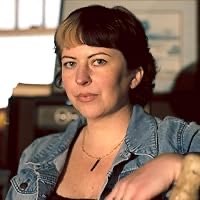
Karie Fugett is an American writer who holds a BA from the University of South Alabama and an MFA in creative nonfiction from Oregon State University; her work has appeared in The New York Times and The Washington Post, and Alive Day is her debut book.
More about the author →About the book
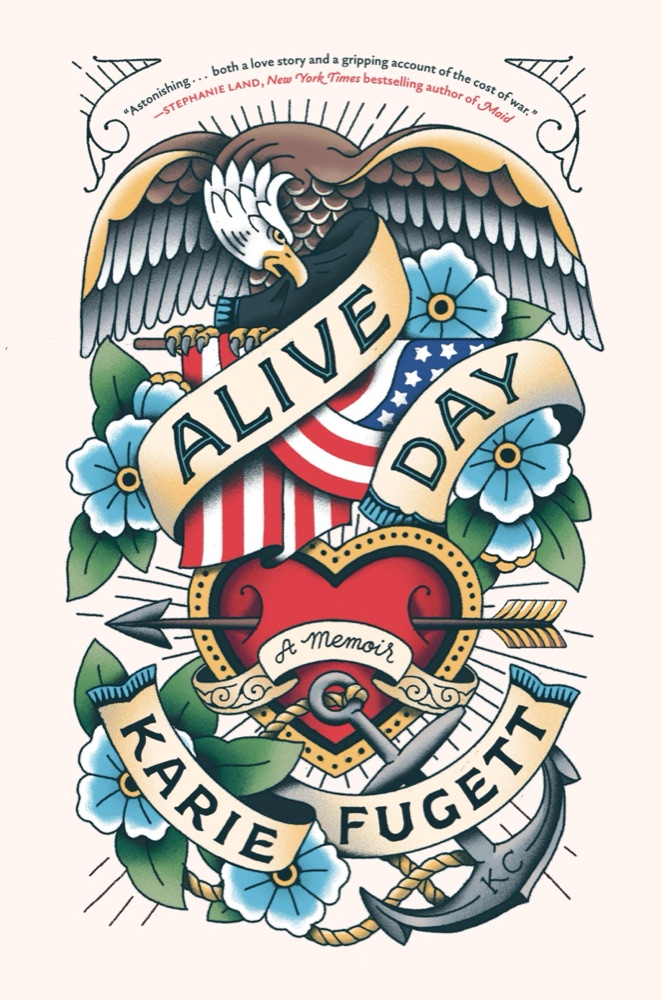
"Alive Day" is Karie Fugett's debut memoir, an intimate account of a young marriage swept into the machinery of America's wars. Fugett marries her boyfriend Cleve, a Marine, while barely out of her teens; months later his unit deploys to Iraq, and his Humvee is struck by an IED that leaves him severely wounded and ultimately an amputee. Still in her early twenties, Karie becomes his full-time caregiver, navigating military hospitals, the Department of Veterans Affairs, and a recovery shadowed by Cleve's growing dependence on prescription opioids.
Beyond the love story, the book examines the largely invisible labor of military caregivers and spouses, who are often young, poor, and unprepared for the bureaucratic and emotional burdens placed on them. It traces themes of poverty, addiction, institutional neglect, and the long domestic aftermath of combat, giving voice to an experience usually left out of war narratives.
Published by The Dial Press in 2025, the memoir drew strong notices for its candor and craft. Library Journal awarded it a starred review, and Kirkus called it a sharp, moving debut with unsettling implications about national service, with reviewers highlighting how it exposes the costs borne by military families at home.
Book details
- First published
- 2025
- Length
- 336 pages
- Reading time
- 6 hours
- Author
- Karie Fugett
- Genre
- Biography
- Goodreads rating
- 4.34 (3k ratings)
Critical reception
- Kirkus Reviews called it a sharp, moving memoir debut with unsettling implications about national service.
- Library Journal awarded the book a starred review, calling it an essential memoir for understanding military families' difficulties.
- Stephanie Land, author of Maid, praised it as both a love story and a gripping account of the cost of war from the perspective of a military widow.
The buzz
- Birch Bark Editing"Contact Points": Alive Day by Karie Fugett2025Andria Williams on caregiving, addiction, and connection after a combat injury
Keep reading
All But My Life: A Memoir
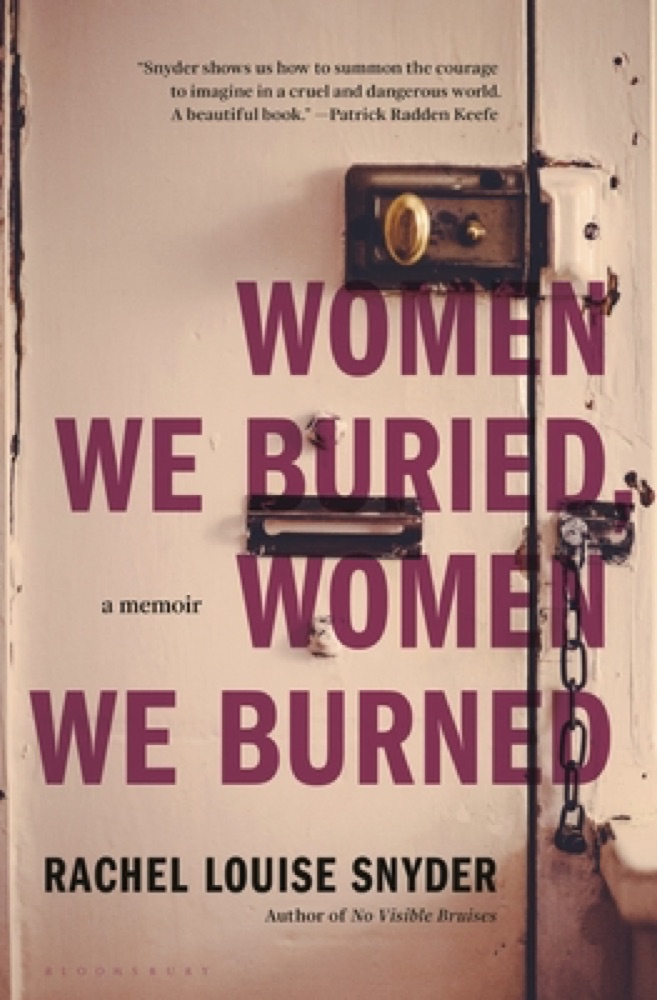 Women We Buried, Women We Burned: A Memoir
 How I Live Now
 Swimming in the Dark
 Home Front
 A Long Way Gone
 I Keep My Exoskeletons to Myself
 Somebody's Daughter
 How We Fight For Our Lives
 Things We Couldn't Say
 Between Two Kingdoms: A Memoir of a Life Interrupted
 The Tell: A Memoir
 A Small Indiscretion
 The Likeness
 Paperweight
 Outpost
 Fracture
 Underdog
 A Very Large Expanse of Sea
 The Days of Abandonment
 The Pisces
 What Is the What
 Lust & Wonder
 The First Bad Man
 A House in the Sky
 A Wolf at the Table
 The Sweet Hereafter
 Firefly Island
 Fire Shut Up in My Bones: A Memoir
 Breakable
 A Room Made of Leaves
 The Girl Who Smiled Beads: A Story of War and What Comes After
 The Death of Vivek Oji
 The Night Diary
 All Fours
 Imagine Me Gone
 Stray: Memoir of a Runaway
 Heart Berries
 Bastard Out of Carolina
 Torn Away
 Get Me Out of Here: My Recovery from Borderline Personality Disorder
 Let's Take the Long Way Home: A Memoir of Friendship
 Em and The Big Hoom
 Monkey Grip
 The Hour I First Believed
 What I Was
 In Order to Live: A North Korean Girl's Journey to Freedom
 Men We Reaped
 The Beginning of After
 What I Didn't Say
 Stone Butch Blues
 One's Company
 Hollow City
 First Love
 When God Was a Rabbit
 Disgrace
 The Aviator's Wife
 Scar Tissue
 Escape
 The Bone Season