
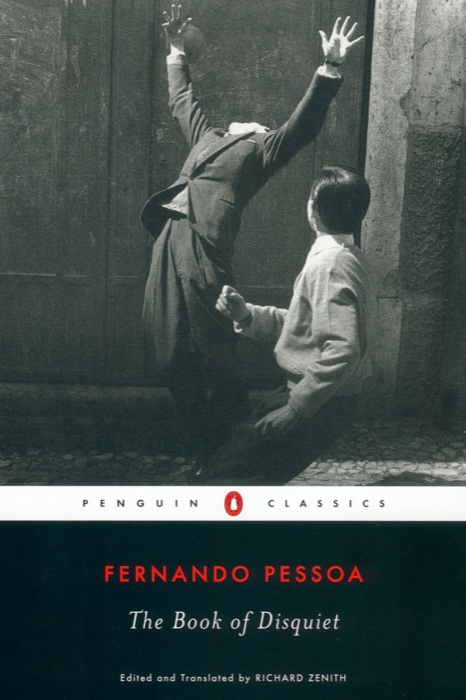
 The Book of Disquiet
Quotes from the Book
What comes, when it comes, will be what it is.
66
Se depois de eu morrer, quiserem escrever a minha biografia, não há nada mais simples. Têm só duas datas: a da minha nascença e a da minha morte. Entre uma e outra coisa, todos os dias são meus
43
Accept the universe As the gods gave it to you. If the gods wanted to give you something else They’d have done it. If there are other matters and other worlds There are.
42
I’d like to have enough time and quiet To think about absolutely nothing, To not ever feel myself living, To only know myself in others’ eyes, reflected.
42
She’s a manner of speaking. Even the flowers don’t come back, or the green leaves. There are new flowers, new green leaves. There are other beautiful days. Nothing comes back, nothing repeats itself, because everything is real.
40
If I knew I was going to die tomorrow, And Spring came the day after tomorrow, I would die peacefully, because it came the day after tomorrow. If that’s its time, when else should it come? I like it that everything is real and everything is right; And I like that it would be like this even if I didn’t like it. And so, if I die now, I die peacefully Because everything is real and everything is right.
35
I'm one of my sensations.
34
And I find a happiness in the fact of accepting — In the sublimely scientific and difficult fact of accepting the inevitable natural.
28
I’m in no hurry: the sun and the moon aren’t, either. Nobody goes faster than the legs they have. If where I want to go is far away, I’m not there in an instant. (6/20/1919)
27
Live, you say, in the present; Live only in the present. But I don’t want the present, I want reality; I want things that exist, not time that measures them. What is the present? It’s something relative to the past and the future. It’s a thing that exists in virtue of other things existing. I only want reality, things without the present. I don’t want to include time in my scheme. I don’t want to think about things as present; I want to think of them as things. I don’t want to separate them from themselves, treating them as present. I shouldn’t even treat them as real. I should treat them as nothing. I should see them, only see them; See them till I can’t think about them. See them without time, without space, To see, dispensing with everything but what you see. And this is the science of seeing, which isn’t a science.
19
I’m glad I see with my eyes and not the pages I’ve read.
19
Pouco me importa. Pouco me importa o quê? Não sei: pouco me importa.
19
Other times when I hear the wind blow I feel that just hearing the wind blow makes it worth being born.
16
Night doesn’t fall for my eyes But my idea of the night is that it falls for my eyes. Beyond my thinking and having any thoughts The night falls concretely And the shining of stars exists like it had weight.
14
And since today’s all there is for now, that’s everything. Who knows if I’ll be dead the day after tomorrow? If I’m dead the day after tomorrow, the thunderstorm day after tomorrow Will be another thunderstorm than if I hadn’t died. Of course I know thunderstorms don’t fall because I see them, But if I weren’t in the world, The world would be different — There would be me the less — And the thunderstorm would fall on a different world and would be another thunderstorm. No matter what happens, what’s falling is what’ll be falling when it falls. (7/10/1930)
10
I love flowers for being flowers, directly. And I love trees for being trees without my thought.
9
On a whitely cloudy day I get sad, almost afraid, And I begin to meditate about problems I make up.
8
Water’s water and that’s why it’s beautiful.
8
If I die very young, hear this: I was never anything but a kid playing. I was a heathen like the sun and the water, I had the universal religion only people don’t have. I was happy because I didn’t ask for anything at all, Or tried to find anything, And I didn’t find any more explanation Than the word explanation having no meaning at all.
8
He should be happy because he can think about the unhappiness of others! He’s stupid if he doesn’t know other people’s unhappiness is theirs, And isn’t cured from the outside, Because suffering isn’t like running out of ink, Or a trunk not having iron bands! There being injustice is like there being death.
8
A beleza é o nome de qualquer cousa que não existe Que eu dou às cousas em troca do agrado que me dão. Não significa nada.
7
Amar é a eterna inocência, E a única inocência não pensar...
7
What does a river know about this and what does a tree know? And I, who am no more than those, what do I know? Every time I look at things and think about what men think about them, I laugh like how a brook sounds cool on a stone.
6
Sim, eis o que os meus sentidos aprenderam sozinhos: — As cousas não têm significação: têm existência. As cousas são o único sentido oculto das cousas.
6
Watch on YouTube
About Fernando Pessoa
We have collected 69 quotes from 3 books by Fernando Pessoa on BookQuoters.
More about the author →More by Fernando Pessoa
The Book of Disquiet
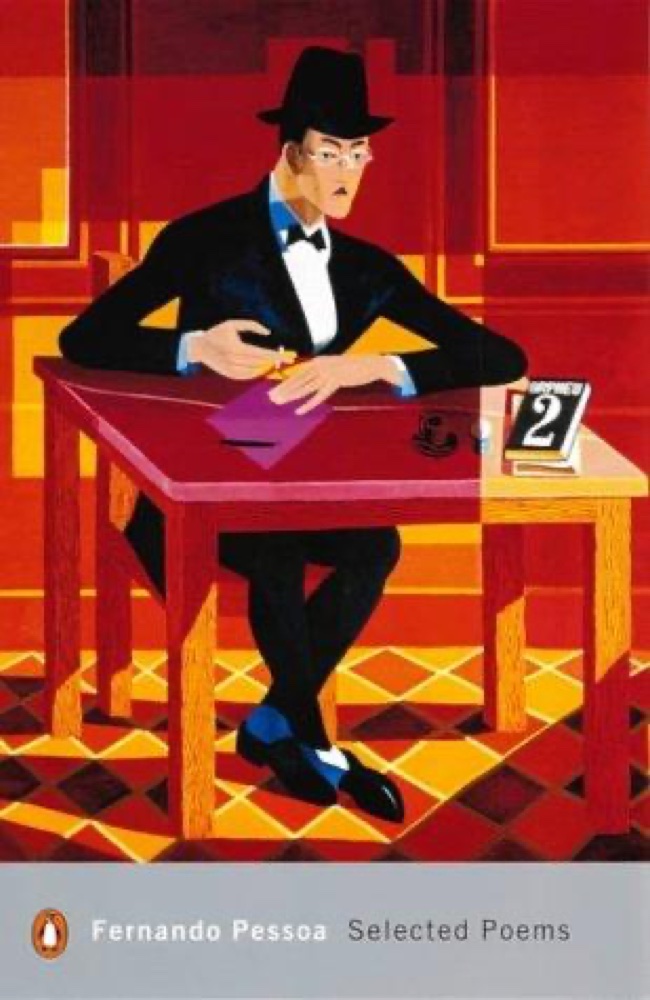 Poems of Fernando Pessoa
About the book
This is the first integral collection of Pessoa's Caeiro heteronym in English, and the poems are accompanied by the introductions of Ricardo Reis and a memoir by Álvaro de Campos, two of Pessoa's other major poetic heteronyms, as well as a poem dedicated to Caeiro by Coelho Pacheco, believed by many commentators to be another one-off heteronym.Ricardo Reis "Alberto Caeiro da Silva was born in Lisbon on April 16, 1889, and died of tuberculosis in the same city on (. . .), 1915. He spent nearly all his life in a village in Ribatejo, and only returned to the city of his birth in his final months. In Ribatejo he wrote nearly all his poems . . ."Fernando Pessoa was educated in English in Durban, as the stepson of a Portuguese diplomat, and was completely bilingual. During his lifetime he was to publish only one collection of his poems in Portuguese, although many appeared in literary journals
Book details
- First published
- 1935
- Author
- Fernando Pessoa
- Genre
- Literature
- Goodreads rating
- 4.42 (3k ratings)
Keep reading
 The Stream of Life
Poems of Fernando Pessoa
The Stream of Life
Poems of Fernando Pessoa
 Naïve. Super
 A General Theory of Oblivion
 Either/Or: A Fragment of Life
 Origin
 The Book of Chameleons
 The Passion According to G.H.
 The Hour of the Star
 Blue Horses
 New and Selected Poems, Vol. 2
 Winter Hours: Prose, Prose Poems, and Poems
 The Island of the Day Before
 Autumn
 The World and Other Places: Stories
 Conversations with God: An Uncommon Dialogue, Book 1
 Creatures of a Day: And Other Tales of Psychotherapy
 Poems New and Collected
 Soul Mountain
 Memories, Dreams, Reflections
 Nausea
 The Story of My Life
 The Shape of Water
 Night Train to Lisbon
 Tropic of Cancer
 Henderson the Rain King
 Selected Poems
 Beautiful Losers
 Tropic of Capricorn
The Book of Disquiet
Tropic of Capricorn
The Book of Disquiet
 Kafka on the Shore
 The Star Rover
 Leaves of Grass
 The Aleph and Other Stories
 Running from Safety: An Adventure of the Spirit
 The Diary of Anaïs Nin, Vol. 1: 1931-1934
 View with a Grain of Sand: Selected Poems
 Magonia
 Stories of Your Life and Others
 The Temple of the Golden Pavilion
 Tragic Sense of Life
 Hey Nostradamus!
 Lighthousekeeping
 The Stone Gods
 A Tale for the Time Being
 The Complete Poems of Emily Dickinson
 Narcissus and Goldmund
 Hard-Boiled Wonderland and the End of the World
 Greek Lessons
 Lost in Translation: A Life in a New Language
 Killing Commendatore
 Sexus
Sexus
 Notes From The Tilt-A-Whirl: Wide-Eyed Wonder in God's Spoken World
 The Zahir
 M Train
 No Death, No Fear: Comforting Wisdom for Life
 The Sunset Limited
 We the Living
 What I Loved