

 The Appointment
Quotes from the Book
I have packed myself into silence so deeply and for so long that I can never unpack myself using words. When I speak, I only pack myself a little differently.
I'm always telling myself I don't have many feelings. Even when something does affect me I'm only moderately moved. I almost never cry. It's not that I'm stronger than the ones with teary eyes, I'm weaker. They have courage. When all you are is skin and bones, feelings are a brave thing. I'm more of a coward. The difference is minimal though, I just use my strength not to cry. When I do allow myself a feeling, I take the part that hurts and bandage it up with a story that doesn't cry, that doesn't dwell on homesickness.
No words are adequate for the suffering caused by hunger. To this day I have to show hunger that I escaped his grasp. Ever since I stopped having to go hungry, I literally eat life itself. And when I eat, I am locked up inside the taste of eating. For sixty years, ever since I came back from the camp, I have been eating against starvation.
Boredom is fear's patience. Fear doesn't want to exaggerate. Only on occasion--and fear considers this very important--does it want to know how things stand with me.
Nothing had anything to do with me. I was locked up inside myself and evicted from myself. I didn’t belong to them and I was missing me.
Little treasures have a sign that says, Here I am. Bigger treasures have a sign that says, Do you remember. But the most precious treasures of all will have a sign saying, I was there.
And I’m different without you. You’re the only one who thinks you’re never different.
Todo lo que tengo lo llevo conmigo. O: todo lo mío lo llevo conmigo. He llevado todo lo que tenía. No era mío. Era o algo destinado a otras finalidades o de otra persona. […] Llevo un equipaje de silencio. Me he rodeado de un silencio tan hondo y duradero que nunca acierto a abrirme con las palabras. Cuando hablo, solamente me cierro de otra manera.
Sometimes things acquire a tenderness, a monstrous tenderness we don’t expect from them.
Everything that happens is always simple. And there’s a principle to how things proceed, assuming that they last.
En el pasillo de madera, justo al lado del contador del gas, la abuela dijo: SÉ QUE VOLVERÁS. No retuve esa frase en la memoria deliberadamente. Me la llevé al campo de trabajo sin darme cuenta. No tenía ni idea de que me acompañaba. Pero una frase así es libre. Ella actuó en mi interior más que todos los libros que me llevé. SÉ QUE VOLVERÁS se convirtió en cómplice de la pala del corazón y en adversario del ángel del hambre. Yo, que he regresado, puedo decirlo: Una frase así te mantiene con vida.
Hunger is an object. The angel has climbed into my brain. The angel doesn't think. He thinks straight. He's never absent. He knows my boundaries and he knows his direction. He knows where I come from and he knows what he does to me. He knew all this before he met me, and he knows my future. He lingers in every capillary like quicksilver. First a sweetness in my throat. Then pressure on my stomach and chest. The fear is too much. Everything has become lighter. The hunger angel leans to one side as he walks with open eyes. He staggers around in small circles and balances on my breath-swing. He knows the homesickness in the brain and the blind alleys in the air. The air angel leans to the other side as he walks with open hunger. H whispers to himself and to me: where there is loading there can also be unloading. He is of the same flesh that he is deceiving. Will have deceived. He knows about saved bread and cheek-bread and he sends out the white hare. He says he's coming back but stays where he is. When he comes, he comes with force. It's utterly clear: 1 shovel load = 1 gram bread. Hunger is an object.
Now I was someone else. We knew each other in a way we no longer were and never would be again. Being a stranger is hard, but being a stranger when you’re so impossibly close is unbearable.
I wanted to work out a trade with things that aren’t alive but aren’t dead either. I wanted to make an emergency exchange, trading my body for the horizon line above and the dusty roads on the earth below. I wanted to borrow their endurance, exist without my body, and when the worst was over, slip back into my body and reappear in my fufaika. This had nothing to do with dying, quite the opposite.
Some say that over time homesickness loses its specific content, that it starts to smolder and only then becomes all-consuming, because it’s no longer focused on a concrete home.
The hunger angel looks at me from the sky and says: Ride back. I say: But then I’ll die. If you die, I’ll make everything orange, and it won’t hurt, he says. And I ride back, and he keeps his word. As I die, the sky over every watchtower turns orange, and it doesn’t hurt.
Cement is as impossible to escape as the dust of the earth, you can’t tell where it comes from because it’s already there. And apart from hunger, the only thing in our minds that’s as quick as cement is homesickness. It steals from you the same way cement does, and you can drown in it as well.
The Russian commands sound like the name of the camp commandant. Shishtvanyanov: a gnashing and spluttering collection of ch, sh, tch, shch. We can't understand the actual words, but we sense the contempt. You get used to contempt. After a while the commands just sound like a constant clearing of the throat—coughing, sneezing, nose blowing, hacking up mucus. Trudi Pelikan said: Russian is a language that's caught a cold.
Sand can be any shade of yellow, from peroxide blond to canary, or even with a tinge of pink. Yellow sand is tender.
In the trinity of skin, bones, and brown water, men and women lose all difference.
Every shift is a work of art.
The balls were dry as wood, you had to lick and suck at them before they tasted like sour cherries. If you chewed them well, the pit felt very smooth and hot on the tongue. Those night cherries were a happy thing, but they only sharpened our hunger.
Everyone eats his words by himself although we’re all eating together. There’s no thought for the hunger of others, you can’t hunger together. Cabbage soup was our main food, but it mainly took the meat from our bones and the sanity from our minds. The hunger angel ran around in hysterics. He lost all proportion, growing more in a single day than grass in an entire summer or snow in an entire winter.
Watch on YouTube
About Herta Müller
We have collected 36 quotes from 2 books by Herta Müller on BookQuoters.
More about the author →More by Herta Müller
The Appointment
Book details
- Author
- Herta Müller
- Genre
- Fiction
- Goodreads rating
- 3.90 (7k ratings) →
Keep reading
 Smilla's Sense of Snow
 Plainwater: Essays and Poetry
 After the Quake
 A List of Cages
 South of the Border, West of the Sun
 What I Loved
 House of Leaves
 The Tent
 The Gargoyle
 The Wind-Up Bird Chronicle
 Beauty and the Mustache
 It Lasts Forever and Then It's Over
 Watermelon
 Edinburgh
 The Book of Salt
 The Likeness
 Greek Lessons
 Pandemonium
 Anthropology of an American Girl
 Embers
 Gut Symmetries
 Tropic of Cancer
 Life After Death
 What Is the What
 Middlesex
 The Dog Stars
 The Raw Shark Texts
 Sexing the Cherry
 Crank
Crank
 Every You, Every Me
 The Complete Stories
 The Shock of the Fall
 Moth Smoke
 The Color Master: Stories
 Morning in the Burned House: Poems
 Four Treasures of the Sky
 Life Knocks
 The Body
 Hardboiled & Hard Luck
 How We Are Hungry
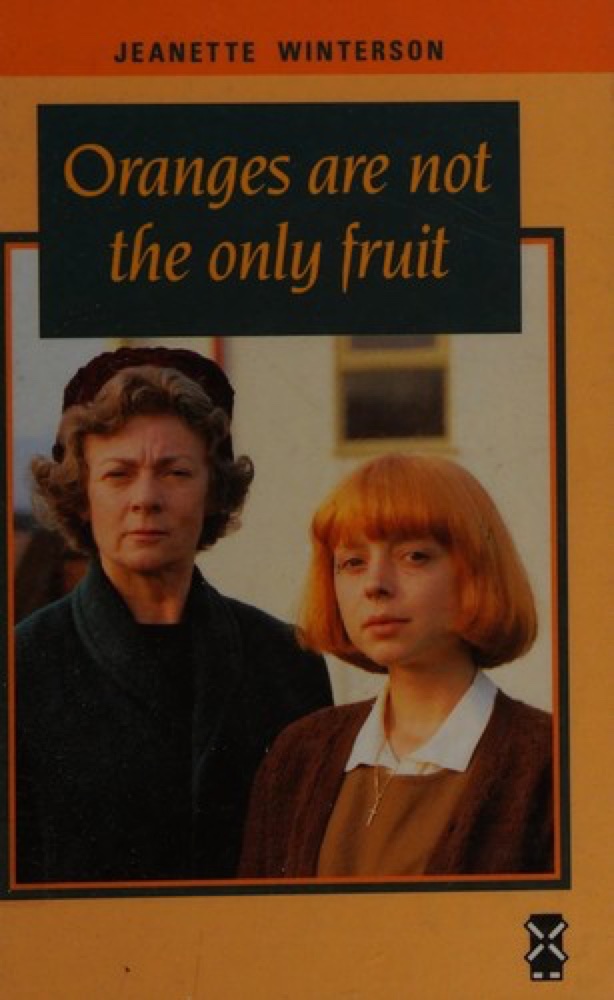 Oranges Are Not the Only Fruit
 A Three Dog Life
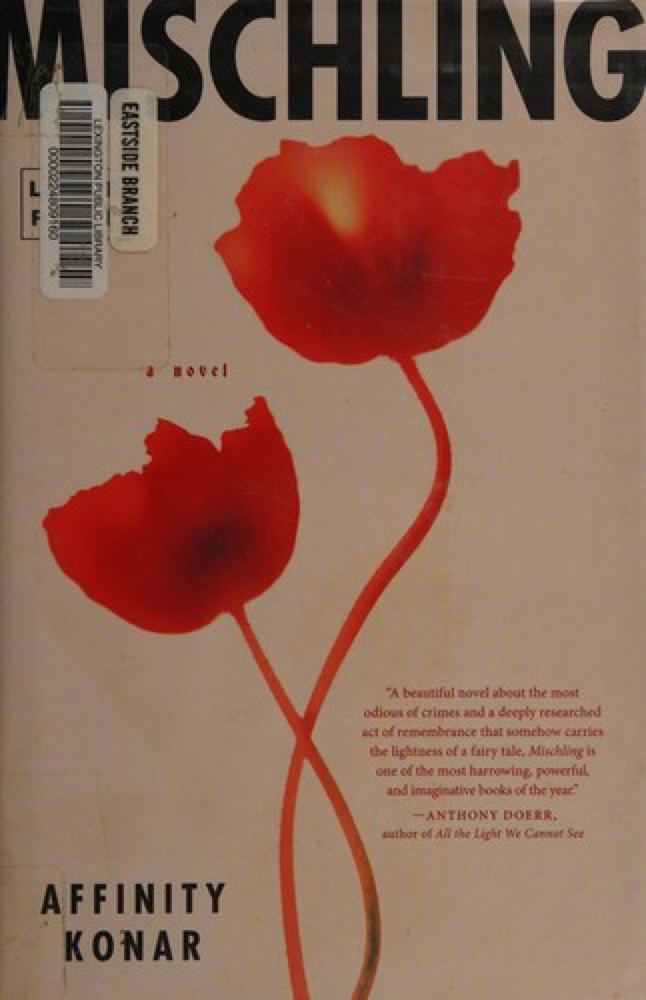 Mischling
 All of Us: The Collected Poems
 M Train
 Night Sky with Exit Wounds
 The Girl Who Smiled Beads: A Story of War and What Comes After
 The Bone Season
 The Name of the Wind
 Moon Palace
 The Complete Poems
 Goodbye Days
 Kitchen
 The Provence Cure for the Brokenhearted
 Sword & Citadel
 Possession
 Whereabouts
 Wild Awake
 Fugitive Pieces
 The Collected Stories