

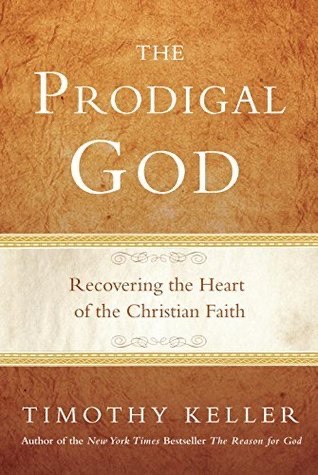
 The Prodigal God: Recovering the Heart of the Christian Faith
Quotes from the Book
...the essence of gospel-humility is not thinking more of myself or thinking less of myself, it is thinking of myself less.
50
C.S. Lewis in Mere Christianity makes a brilliant observation about gospel-humility at the very end of his chapter on pride. If we were to meet a truly humble person, Lewis says, we would never come away from meeting them thinking they were humble. They would not be always telling us they were a nobody (because a person who keeps saying they are a nobody is actually a self-obsessed person). The thing we would remember from meeting a truly gospel-humble person is how much they seemed to be totally interested in us. Because the essence of gospel-humility is not thinking more of myself or thinking less of myself, it is thinking of myself less. Gospel-humility is not needing to think about myself. Not needing to connect things with myself. It is an end to thoughts such as, ‘I’m in this room with these people, does that make me look good? Do I want to be here?’ True gospel-humility means I stop connecting every experience, every conversation, with myself. In fact, I stop thinking about myself. The freedom of self-forgetfulness. The blessed rest that only self-forgetfulness brings.
28
You see, the verdict is in. And now I perform on the basis of the verdict. Because He loves me and He accepts me, I do not have to do things just to build up my résumé. I do not have to do things to make me look good. I can do things for the joy of doing them. I can help people to help people – not so I can feel better about myself, not so I can fill up the emptiness.
18
Do you realize that it is only in the gospel of Jesus Christ that you get the verdict before the performance? The atheist might say that they get their self-image from being a good person. They are a good person and they hope that eventually they will get a verdict that confirms that they are a good person. Performance leads to the verdict. For the Buddhist too, performance leads to the verdict. If you are a Muslim, performance leads to the verdict. All this means that every day, you are in the courtroom, every day you are on trial. That is the problem. But Paul is saying that in Christianity, the verdict leads to performance.
14
the problem with self-esteem – whether it is high or low – is that, every single day, we are in the courtroom.
14
This is gospel-humility, blessed self-forgetfulness. Not thinking less of myself as in modern cultures, or less of myself as in traditional cultures. Simply thinking of myself less.
11
Pride gets no pleasure out of having something, only out of having more of it than the next person. We say that people are proud of being rich, or clever, or good-looking, but they are not. They are proud of being richer, or cleverer, or better-looking than others. If everyone else became equally rich, or clever, or good-looking there would be nothing to be proud about.
9
the natural condition of the human ego: that it is empty, painful, busy and fragile.
8
The truly gospel-humble person is a self-forgetful person whose ego is just like his or her toes. It just works. It does not draw attention to itself. The toes just work; the ego just works. Neither draws attention to itself.
7
Gospel-humility is not needing to think about myself. Not needing to connect things with myself. It is an end to thoughts such as, ‘I’m in this room with these people, does that make me look good? Do I want to be here?’ True gospel-humility means I stop connecting every experience, every conversation, with myself. In fact, I stop thinking about myself. The freedom of self-forgetfulness. The blessed rest that only self-forgetfulness brings.
6
if you try to put anything in the middle of the place that was originally made for God, it is going to be too small. It is going to rattle around in there.
6
The thing we would remember from meeting a truly gospel-humble person is how much they seemed to be totally interested in us. Because the essence of gospel-humility is not thinking more of myself or thinking less of myself, it is thinking of myself less.
6
Paul is saying that he has reached a place where his ego draws no more attention to itself than any other part of his body. He has reached the place where he is not thinking about himself anymore. When he does something wrong or something good, he does not connect it to himself any more.
5
low self-esteem and pride are horrible nuisances to our own future and to everyone around us.
5
In his book Sickness Unto Death, Søren Kierkegaard says, it is the normal state of the human heart to try to build its identity around something besides God.2 Spiritual pride is the illusion that we are competent to run our own lives, achieve our own sense of self-worth and find a purpose big enough to give us meaning in life without God.
5
So Paul does not look to the Corinthians for his identity. He does not go to them for the verdict that he is a ‘somebody’. He does not get that sense of identity from them. But he does not get it from himself either. He knows that trying to find self-esteem by living up to a certain set of standards is a trap.
4
Spiritual pride is the illusion that we are competent to run our own lives, achieve our own sense of self-worth and find a purpose big enough to give us meaning in life without God.
4
the essence of gospel-humility is not thinking more of myself or thinking less of myself, it is thinking of myself less.
4
Up until the 20th century, traditional cultures (and this is still true of most cultures in the world) always believed that too high a view of yourself was the root cause of all the evil in the world...Our belief today--and it in deeply rooted in everything--is that people misbehave for lack of self-esteem and because they have too low a view of themselves.
4
All I can tell you is that we have to re-live the gospel every time we pray. We have to re-live it every time we go to church. We have to re-live the gospel on the spot and ask ourselves what we are doing in the courtroom. We should not be there. The court is adjourned.
3
The way the normal human ego tries to fill its emptiness and deal with its discomfort is by comparing itself to other people. All the time.
3
I cannot live up to my parents’ standards – and that makes me feel terrible. I cannot live up to your standards – and that makes me feel terrible. I cannot live up to society’s standards – and that makes me feel terrible. I cannot live up to other societies’ standards – that makes me feel terrible. Perhaps the solution is to set my own standards? But I cannot keep them either – and that makes me feel terrible, unless I set incredibly low standards. Are low standards a solution? Not at all. That makes me feel terrible because I realize I am the type of person who has low standards. Trying to boost our self-esteem by trying to live up to our own standards or someone else’s is a trap. It is not an answer.
2
But Paul is saying that in Christianity, the verdict leads to performance.
2
A truly gospel-humble person is not a self-hating person or a self-loving person, but a gospel-humble person. The truly gospel-humble person is a self-forgetful person whose ego is just like his or her toes. It just works. It does not draw attention to itself. The toes just work; the ego just works. Neither draws attention to itself. Here is one little test. The self-forgetful person would never be hurt particularly badly by criticism. It would not devastate them, it would not keep them up late, it would not bother them. Why? Because a person who is devastated by criticism is putting too much value on what other people think, on other people’s opinions.
2
Both low self-esteem and pride are horrible nuisances to our own future and to everyone around us.
2
A superiority complex and an inferiority complex are basically the same. They are both results of being overinflated.
1
The ego often hurts. That is because it has something incredibly wrong with it. Something unbelievably wrong with it. It is always drawing attention to itself – it does so every single day. It is always making us think about how we look and how we are treated. People sometimes say their feelings are hurt. But our feelings can’t be hurt! It is the ego that hurts – my sense of self, my identity. Our feelings are fine! It is my ego that hurts.
1
Watch on YouTube
About Timothy J. Keller
We have collected 286 quotes from 10 books by Timothy J. Keller on BookQuoters.
More about the author →More by Timothy J. Keller
The Prodigal God: Recovering the Heart of the Christian Faith
 Counterfeit Gods: The Empty Promises of Money, Sex, and Power, and the Only Hope That Matters
 The Reason for God: Belief in an Age of Skepticism
 The Meaning of Marriage: Facing the Complexities of Commitment with the Wisdom of God
About the book
‘What are the marks of a supernaturally changed heart?’
This is one of the questions the Apostle Paul addresses as he writes to the church in Corinth. He’s not after some superficial outward tinkering, but instead a deep–rooted, life–altering change that takes place on the inside. In an age where pleasing people, puffing up your ego and building your résumé are seen as the methods to ‘make it’, the Apostle Paul calls us to find true rest in blessed self–forgetfulness.
In this short and punchy book, best–selling author Timothy Keller, shows that gospel–humility means we can stop connecting every experience, every conversation with ourselves and can thus be free from self–condemnation. A truly gospel–humble person is not a self–hating person or a self–loving person, but a self–forgetful person.
This freedom can be yours…
Book details
- First published
- 2012
- Author
- Timothy J. Keller
- Genre
- Nonfiction
- Goodreads rating
- 4.53 (31k ratings)
Keep reading
 Humble Roots: How Humility Grounds and Nourishes Your Soul
 Humility: True Greatness
 Celebration of Discipline: The Path to Spiritual Growth
 No Man Is an Island
 The Purpose Driven Life: What on Earth Am I Here for?
 Rediscover Catholicism
 Mere Christianity
 Abba's Child: The Cry of the Heart for Intimate Belonging
 Emotionally Healthy Spirituality: Unleash A Revolution In Your Life in Christ
 Renovation of the Heart: Putting On the Character of Christ
 Jesus Over Everything: Uncomplicating the Daily Struggle to Put Jesus First
 Changes That Heal: How to Understand the Past to Ensure a Healthier Future
 The Life You've Always Wanted: Spiritual Disciplines for Ordinary People
 You're Not Enough (and That's Ok): Escaping the Toxic Culture of Self-Love
 The Me I Want to Be: Becoming God's Best Version of You
 Humility
 The Gifts of Imperfection
 The Sickness Unto Death: A Christian Psychological Exposition for Upbuilding and Awakening
 Hallelujah Anyway: Rediscovering Mercy
 Spiritual Depression: Its Causes and Cure
 Everything Belongs: The Gift of Contemplative Prayer
 Tattoos on the Heart: The Power of Boundless Compassion
 Six Pillars of Self-Esteem
 Living Fearless: Exchanging the Lies of the World for the Liberating Truth of God
 The Secret Thoughts of an Unlikely Convert: An English Professor's Journey Into Christian Faith
 This Here Flesh: Spirituality, Liberation, and the Stories That Make Us
The Reason for God: Belief in an Age of Skepticism
This Here Flesh: Spirituality, Liberation, and the Stories That Make Us
The Reason for God: Belief in an Age of Skepticism
 The Way of Perfection
 Searching for God Knows What
 Barking to the Choir: The Power of Radical Kinship
 The Ego and Its Own
 The Deeply Formed Life: Five Transformative Values to Root Us in the Way of Jesus
 Studies in the Sermon on the Mount
 Blue Like Jazz: Nonreligious Thoughts on Christian Spirituality
 Shameless: A Case for Not Feeling Bad About Feeling Good
 The Art of Being
 New Seeds of Contemplation
 When Strivings Cease: Replacing the Gospel of Self-Improvement with the Gospel of Life-Transforming Grace
 Think: The Life of the Mind and the Love of God
 A Long Obedience in the Same Direction: Discipleship in an Instant Society
 The Holy Longing: The Search for a Christian Spirituality
 Freedom of Simplicity: Finding Harmony in a Complex World
 A Return to Love: Reflections on the Principles of "A Course in Miracles"
 Waking the Dead: The Glory of a Heart Fully Alive
 Thoughts in Solitude
 The Things You Can See Only When You Slow Down: How to Be Calm in a Busy World
 Breathing Underwater: Spirituality and the 12 Steps
 Dusk, Night, Dawn: On Revival and Courage
 New Morning Mercies: A Daily Gospel Devotional
 Of Mess and Moxie: Wrangling Delight Out of This Wild and Glorious Life
 Gay Girl, Good God: The Story of Who I Was and Who God Has Always Been
 For the Love: Fighting for Grace in a World of Impossible Standards
 Plan B: Further Thoughts on Faith
 The Divine Conspiracy: Rediscovering Our Hidden Life in God
 7: An Experimental Mutiny Against Excess
 Breakfast with Buddha
 Inside Out
 Grace for the Good Girl: Letting Go of the Try-Hard Life
 A Little Book on the Christian Life