
 The Stranger
Quotes from the Book
I know that man is capable of great deeds. But if he isn't capable of great emotion, well, he leaves me cold.
And he knew, also, what the old man was thinking as his tears flowed, and he, Rieux, thought it too: that a loveless world is a dead world, and always there comes an hour when one is weary of prisons, of one's work, and of devotion to duty, and all one craves for is a loved face, the warmth and wonder of a loving heart.
The truth is that everyone is bored, and devotes himself to cultivating habits.
But, you know, I feel more fellowship with the defeated than with saints. Heroism and sanctity don't really appeal to me, I imagine. What interests me is being a man.
They knew now that if there is one thing one can always yearn for, and sometimes attain, it is human love.
The evil in the world comes almost always from ignorance, and goodwill can cause as much damage as ill-will if it is not enlightened. People are more often good than bad, though in fact that is not the question. But they are more or less ignorant and this is what one calls vice or virtue, the most appalling vice being the ignorance that thinks it knows everything and which consequently authorizes itself to kill. The murderer's soul is blind, and there is no true goodness or fine love without the greatest possible degree of clear-sightedness.
For who would dare to assert that eternal happiness can compensate for a single moment's human suffering
But it's not easy. I've been thinking it over for years. While we loved each other we didn't need words to make ourselves understood. But people don't love forever. A time came when I should have found the words to keep her with me, only I couldn't.
Well, personally, I've seen enough of people who die for an idea. I don't believe in heroism; I know it's easy and I've learned that it can be murderous. What interests me is living and dying for what one loves.
In fact, it comes to this: nobody is capable of really thinking about anyone, even in the worst calamity. For really to think about someone means thinking about that person every minute of the day, without letting one’s thoughts be diverted by anything- by meals, by a fly that settles on one’s cheek, by household duties, or by a sudden itch somewhere. But there are always flies and itches. That’s why life is difficult to live.
But what does it mean, the plague? It's life, that's all.
Nothing in the world is worth turning one's back on what one loves.
Am well. Thinking of you always. Love
But again and again there comes a time in history when the man who dares to say that two and two make four is punished with death. The schoolteacher is well aware of this. And the question is not one of knowing what punishment or reward attends the making of this calculation. The question is one of knowing whether two and two do make four
There are more things to admire in men then to despise.
Whereas during those months of separation time had never gone quickly enough for their liking and they were wanting to speed its flight, now that they were in sight of the town they would have liked to slow it down and hold each moment in suspense, once the breaks went on and the train was entering the station. For the sensation, confused perhaps, but none the less poingant for that, of all those days and weeks and months of life lost to their love made them vaguely feel they were entitled to some compensation; this present hour of joy should run at half the speed of those long hours of waiting.
stupidity has a knack of getting its way; as we should see if we were not always so much wrapped up in ourselves
All I maintain is that on this earth there are pestilences and there are victims, and it's up to us, so far as possible, not to join forces with the pestilences.
It is in the thick of calamity that one gets hardened to the truth - in other words, to silence.
What on earth prompted you to take a hand in this?" "I don't know. My… my code of morals, perhaps." "Your code of morals. What code, if I may ask?" "Comprehension.
What’s true of all the evils in the world is true of plague as well. It helps men to rise above themselves.
Thus each of us had to be content to live only for the day, alone under the vast indifference of the sky.
how hard it must be to live only with what one knows and what one remembers, cut off from what one hopes for!
On moonlight nights the long, straight street and dirty white walls, nowhere darkened by the shadow of a tree, their peace untroubled by footsteps or a dog's bark, glimmered in the pale recession. The silent city was no more than an assemblage of huge, inert cubes, between which only the mute effigies of great men, carapaced in bronze, with their blank stone or metal faces, conjured up a sorry semblance of what the man had been. In lifeless squares and avenues these tawdry idols lorded it under the lowering sky; stolid monsters that might have personified the rule of immobility imposed on us, or, anyhow, its final aspect, that of a defunct city in which plague, stone, and darkness had effectively silenced every voice.
And indeed it could be said that once the faintest stirring of hope became possible, the dominion of plague was ended.
No doubt our love was still there, but quite simply it was unusable, heavy to carry, inert inside of us, sterile as crime or condemnation. It was no longer anything except a patience with no future and a stubborn wait.
I was very fond of you, but now I’m so, so tired. I’m not happy to go, but one needn't be happy to make another start.
Did you know?
- The novel was originally published in French as La Peste by Gallimard in 1947.
- The English translation by Stuart Gilbert appeared in 1948, published by Hamish Hamilton.
- Camus set the story in Oran, the Algerian coastal city where he had lived, but deliberately left the year vague, writing it as '194-'.
- The epidemic is widely read as an allegory for the Nazi occupation of France during World War II.
- Camus drew on the historical memory of a cholera epidemic that struck Oran in 1849.
- The book experienced a major surge in sales and readership during the 2020 COVID-19 pandemic.
About Albert Camus
Albert Camus (1913-1960) was a French-Algerian novelist, essayist, and philosopher associated with absurdism. He won the Nobel Prize in Literature in 1957 and is best known for The Stranger and The Plague.
More about the author →More by Albert Camus
The Stranger
 The Rebel: An Essay on Man in Revolt
 The Myth of Sisyphus and Other Essays
 A Happy Death
About the book
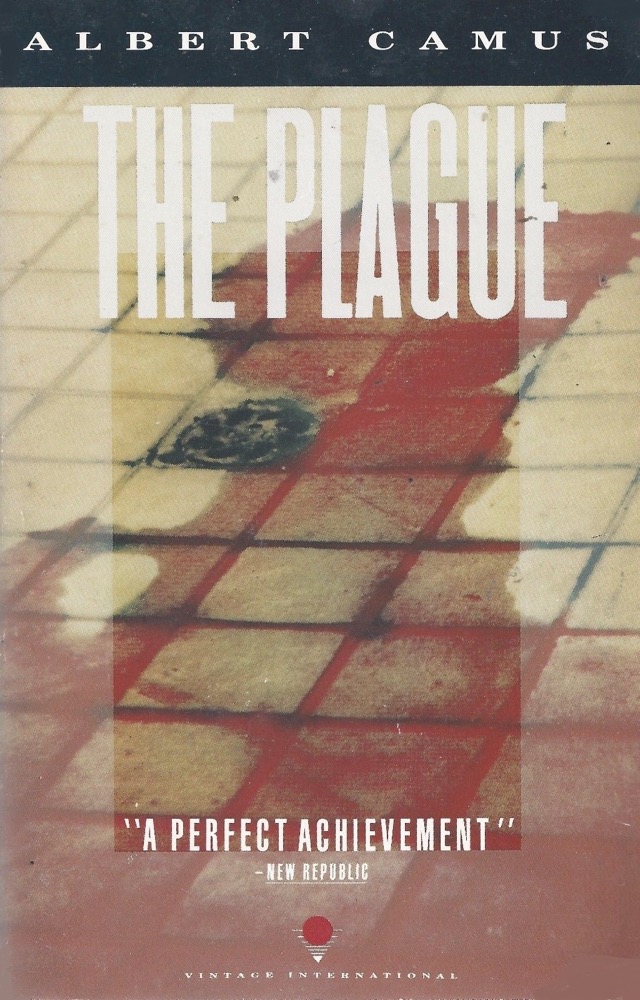
The Plague (La Peste) is Albert Camus's 1947 novel set in the Algerian port city of Oran, where a sudden epidemic of plague forces the town into quarantine. When rats begin dying in the streets and the first human deaths follow, Dr. Bernard Rieux recognizes the danger while officials hesitate to act. As the death toll climbs and the city gates are sealed, Rieux and a handful of others organize themselves to fight the outbreak, enduring separation, exile, and the slow, grinding work of tending the sick until the epidemic finally recedes.
Camus uses the epidemic as an allegory, widely read as a meditation on the Nazi occupation of France and, more broadly, on how ordinary people respond to a shared catastrophe. The novel stresses the powerlessness of its characters to control their fate, yet it insists on the dignity of resistance: Rieux's quiet perseverance, the volunteers who join him, and the debate between the doctor's secular commitment and Father Paneloux's religious interpretation of suffering all probe questions of faith, duty, and human solidarity.
Often grouped with existentialist literature despite Camus's own resistance to the label, The Plague is considered a classic of twentieth-century fiction and a central expression of his philosophy of the absurd and of revolt. Camus was awarded the Nobel Prize in Literature in 1957, and the book saw a dramatic surge of renewed interest during the 2020 COVID-19 pandemic, when readers found unexpected parallels between its fictional quarantine and their own lives.
Key characters
- Dr. Bernard RieuxThe physician who first recognizes the plague and leads the fight against it; later revealed as the narrator
- Jean TarrouA visitor who organizes volunteer sanitary teams and opposes the death penalty
- Raymond RambertA journalist trapped by the quarantine who first seeks escape, then chooses to stay and help
- Joseph GrandA modest civil servant who volunteers to assist and keeps the epidemic's records
- Father PanelouxA Jesuit priest who preaches the plague as divine punishment before joining the relief effort
- CottardA troubled man who paradoxically thrives during the epidemic and breaks down when it ends
- Dr. CastelAn older colleague of Rieux who works to develop an anti-plague serum
Book details
- First published
- 1947
- Length
- 308 pages
- Reading time
- 6 hours
- Author
- Albert Camus
- Genre
- Classics
- Goodreads rating
- 4.02 (326k ratings) →
- First line
- “The unusual events described in this chronicle occurred in 194- at Oran.”
Movie & TV adaptations
- IMDb
If you liked this, read…
- 1The StrangerCamus's earlier novel, the companion expression of his philosophy of the absurd
- 2BlindnessJosé Saramago's allegorical novel of a society collapsing under a mysterious epidemic
- 3NauseaSartre's existentialist novel wrestling with meaning and human freedom
Keep reading
 The Heart of the Matter
 The Magus
 Uncle Tom's Cabin
 Embers
 Crime and Punishment
 The Children of Men
 The Winter of Our Discontent
 The Count of Monte Cristo
 The Death of the Heart
 The Story of the Lost Child
 Dracula
 The Quiet American
 Mother Night
 Three Comrades
 Snow
Snow
 The Once and Future King
 The Kite Runner
 Scythe
 Hell
Hell
 Fool's Fate
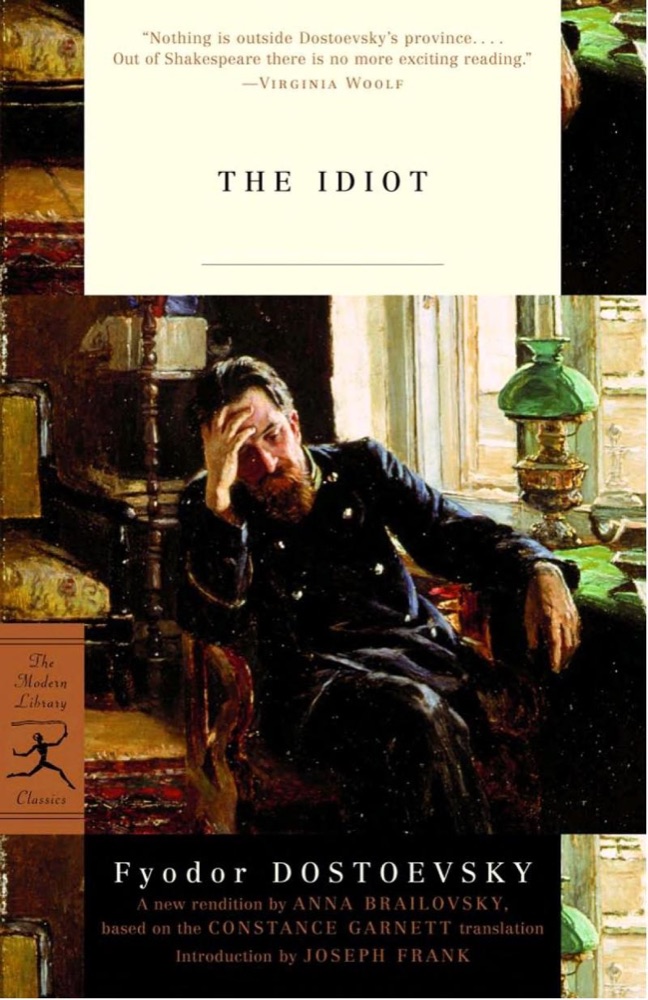 The Idiot
 Disgrace
 The Black Obelisk
 The Signature of All Things
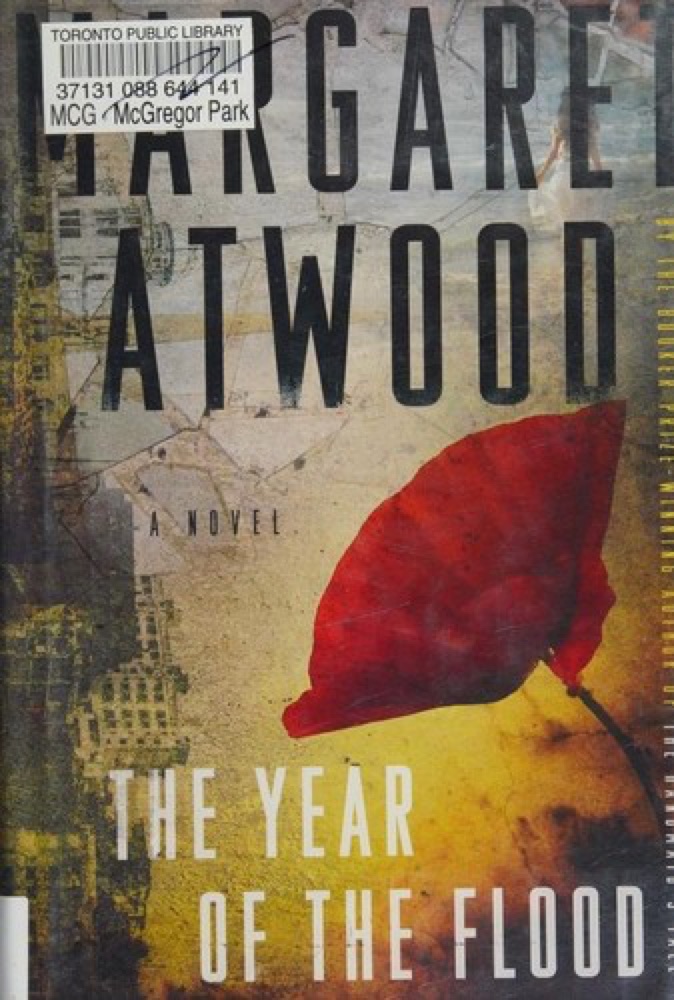 The Year of the Flood
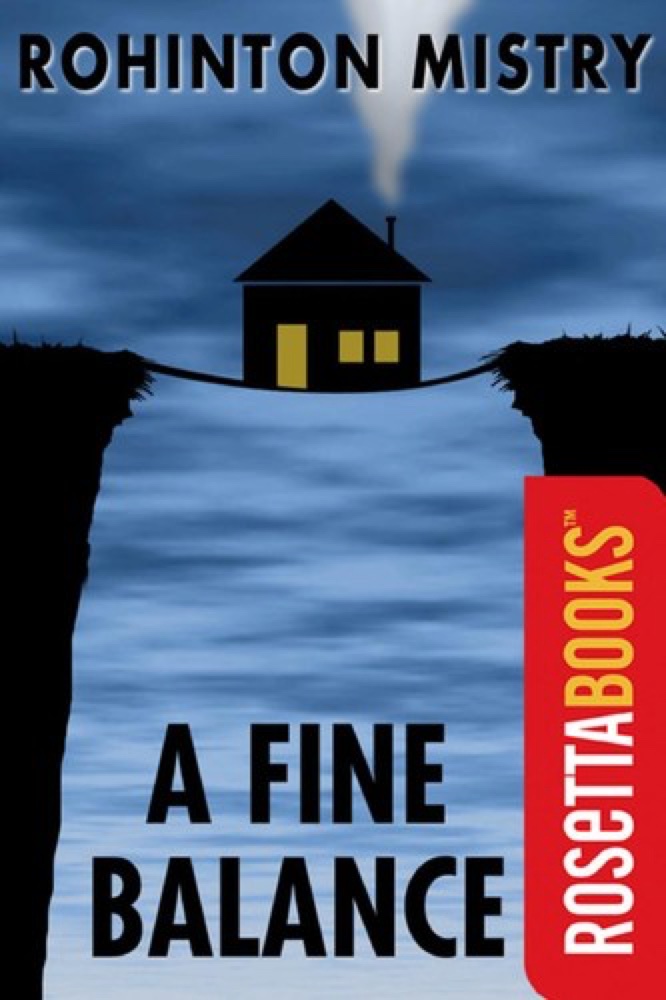 A Fine Balance
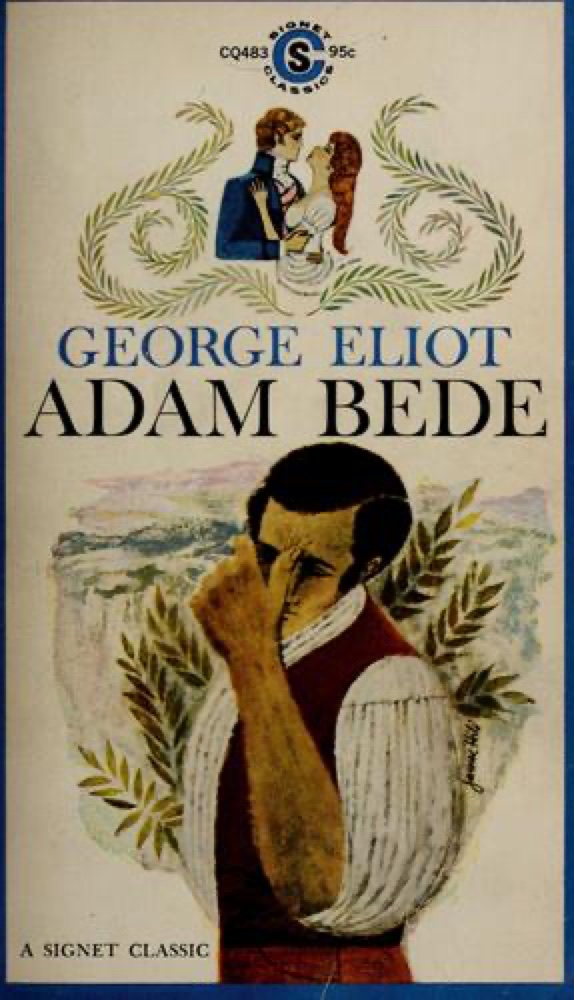 Adam Bede
 The Power and the Glory
 Journey to the End of the Night
 Life and Fate
 Daniel Deronda
 The Luminaries
 War and Peace
 The Sea, the Sea
 Brideshead Revisited: The Sacred and Profane Memories of Captain Charles Ryder
 Rot & Ruin
 In Cold Blood
 The Fall
 Point Counter Point
 Fathers and Sons
 Brother Odd
 The Fall of Babel
 Dust
Dust
 The Blight of Muirwood
 Cold Mountain
 The Consolation of Philosophy
 A Passage to India
 Light in August
 The Sympathizer
 Jayber Crow
 Day
Day
 The Damnation Game
 That Hideous Strength
 Arch of Triumph
 Bury Your Dead
 The Setting Sun
 Les Misérables
 The First Circle
 The Heart Is a Lonely Hunter
 The Man in the High Castle