
 Crime and Punishment
Quotes from the Book
But how could you live and have no story to tell?
I am a dreamer. I know so little of real life that I just can't help re-living such moments as these in my dreams, for such moments are something I have very rarely experienced. I am going to dream about you the whole night, the whole week, the whole year. I feel I know you so well that I couldn't have known you better if we'd been friends for twenty years. You won't fail me, will you? Only two minutes, and you've made me happy forever. Yes, happy. Who knows, perhaps you've reconciled me with myself, resolved all my doubts. When I woke up it seemed to me that some snatch of a tune I had known for a long time, I had heard somewhere before but had forgotten, a melody of great sweetness, was coming back to me now. It seemed to me that it had been trying to emerge from my soul all my life, and only now- If and when you fall in love, may you be happy with her. I don't need to wish her anything, for she'll be happy with you. May your sky always be clear, may your dear smile always be bright and happy, and may you be for ever blessed for that moment of bliss and happiness which you gave to another lonely and grateful heart. Isn't such a moment sufficient for the whole of one's life?
My God, a moment of bliss. Why, isn't that enough for a whole lifetime?
I am a dreamer. I know so little of real life that I just can’t help re-living such moments as these in my dreams, for such moments are something I have very rarely experienced. I am going to dream about you the whole night, the whole week, the whole year.
Because it begins to seem to me at such times that I am incapable of beginning a life in real life, because it has seemed to me that I have lost all touch, all instinct for the actual, the real; because at last I have cursed myself; because after my fantastic nights I have moments of returning sobriety, which are awful! Meanwhile, you hear the whirl and roar of the crowd in the vortex of life around you; you hear, you see, men living in reality; you see that life for them is not forbidden, that their life does not float away like a dream, like a vision; that their life is being eternally renewed, eternally youthful, and not one hour of it is the same as another; while fancy is so spiritless, monotonous to vulgarity and easily scared, the slave of shadows, of the idea, the slave of the first cloud that shrouds the sun... One feels that this inexhaustible fancy is weary at last and worn out with continual exercise, because one is growing into manhood, outgrowing one's old ideals: they are being shattered into fragments, into dust; if there is no other life one must build one up from the fragments. And meanwhile the soul longs and craves for something else! And in vain the dreamer rakes over his old dreams, as though seeking a spark among the embers, to fan them into flame, to warm his chilled heart by the rekindled fire, and to rouse up in it again all that was so sweet, that touched his heart, that set his blood boiling, drew tears from his eyes, and so luxuriously deceived him!
I don’t know how to be silent when my heart is speaking.
And so I ask myself: 'Where are your dreams?' And I shake my head and mutter: 'How the years go by!' And I ask myself again: 'What have you done with those years? Where have you buried your best moments? Have you really lived? Look,' I say to myself, 'how cold it is becoming all over the world!' And more years will pass and behind them will creep grim isolation. Tottering senility will come hobbling, leaning on a crutch, and behind these will come unrelieved boredom and despair. The world of fancies will fade, dreams will wilt and die and fall like autumn leaves from the trees. . . .
It was a wonderful night, such a night as is only possible when we are young, dear reader.
Oh, how unbearable is a happy person sometimes!
In the end, you feel that your much-vaunted, inexhaustible fantasy is growing tired, debilitated, exhausted, because you're bound to grow out of your old ideals; they're smashed to splinters and turn to dust, and if you have no other life, you have no choice but to keep rebuilding your dreams from the splinters and dust. But the heart longs for something different! And it is vain to dig in the ashes of your old fancies, trying to find even a tiny spark to fan into a new flame that will warm the chilled heart and bring back to life everything that can send the blood rushing wildly through the body, fill the eyes with tears--everything that can delude you so well!
May your sky always be clear, may your dear smile always be bright and happy, and may you be for ever blessed for that moment of bliss and happiness which you gave to another lonely and grateful heart. Isn't such a moment sufficient for the whole of one's life?
. . . finally, I couldn't imagine how I could live without books, and I stopped dreaming about marrying that Chinese prince. . . .
I sometimes have moments of such despair, such despair … Because in those moments I start to think that I will never be capable of beginning to live a real life; because I have already begun to think that I have lost all sense of proportion, all sense of the real and the actual; because, what is more, I have cursed myself; because my nights of fantasy are followed by hideous moments of sobering! And all the time one hears the human crowd swirling and thundering around one in the whirlwind of life, one hears, one sees how people live—that they live in reality, that for them life is not something forbidden, that their lives are not scattered for the winds like dreams or visions but are forever in the process of renewal, forever young, and that no two moments in them are ever the same; while how dreary and monotonous to the point of being vulgar is timorous fantasy, the slave of shadow, of the idea...
May you be for ever blessed for that moment of bliss and happiness which you gave to another lonely and grateful heart. Isn't such a moment sufficient for the whole of one's life?
I like revisiting, at certain times, spots where I was once happy; I like to shape the present in the image of the irretrievable past.
Your hand is cold, mine burns like fire. How blind you are, Nastenka!
Here my tears are falling, Nastenka. Let them flow, let them flow - they don't hurt anybody. They will dry Nastenka.
It suddenly seemed to me that I was lonely, that everyone was forsaking me and going away from me.
And in vain does the dreamer rummage about in his old dreams, raking them over as though they were a heap of cinders, looking into these cinders for some spark, however tiny, to fan it into a flame so as to warm his chilled blood by it and revive in it all that he held so dear before, all that touched his heart, that made his blood course through his veins, that drew tears from his eyes, and that so splendidly deceived him!
It suddenly seemed to me that I was lonely, that every one was forsaking me and going away from me. Of course, any one is entitled to ask who “every one” was. For though I had been living almost eight years in Petersburg I had hardly an acquaintance. But what did I want with acquaintances? I was acquainted with all Petersburg as it was...
Where have you buried your best days? Have you lived or not? Look, one says to oneself, look how cold the world is growing.
I am told that the proximity of punishment arouses real repentance in the criminal and sometimes awakens a feeling of genuine remorse in the most hardened heart; I am told this is due to fear.
The dreamer—if you want an exact definition—is not a human being, but a creature of an intermediate sort.
and what shall I have to dream of when I have been so happy in reality beside you!
At first it was simply liking, Nastenka, but now, now ! I am just in the same position as you were when you went to him with your bundle. In a worse position than you, Nastenka,because he cared for no one else as you do.
At last my heart was too full.
Grandmother was always regretting the old days-she was younger in old days,and the sun was warmer in old days,and cream did not turn so sour in old days-it was always the old days!
Ah, Nastenka! Why, one thanks some people for being alive at the same time with one; I thank you for having met me, for my being able to remember you all my life!
Listen, listen!" I interrupted her. "Forgive me if I tell you something else.... I tell you what, I can't help coming here to-morrow, I am a dreamer; I have so little real life that I look upon such moments as this now, as so rare, that I cannot help going over such moments again in my dreams. I shall be dreaming of you all night, a whole week, a whole year. I shall certainly come here to-morrow, just here to this place, just at the same hour, and I shall be happy remembering today. This place is dear to me already. I have already two or three such places in Petersburg. I once shed tears over memories ... like you.... Who knows, perhaps you were weeping ten minutes ago over some memory.... But, forgive me, I have forgotten myself again; perhaps you have once been particularly happy here....
It was a wonderful night, such a night as is only possible when we are young, dear reader. The sky was so starry, so bright that, looking at it, one could not help asking oneself whether ill-humoured and capricious people could live under such a sky. That is a youthful question too, dear reader, very youthful, but may the Lord put it more frequently into your heart!...
I create entire romances in my dreams.
158
Oh, Nastenka! You know, we thank some people for merely living at the same time as we do. I thank you for the fact that I met you, that I will remember you for all my life!
92
My God! A whole minute of bliss! Is that really so little for the whole of a man's life?
88
As I sit here next to you, it is already painful to think of the future, because there's nothing in it but a lonely, stale, useless existence.
73
I love you because you didn't fall in love with me.
52
Did you know?
- The story is subtitled "A Sentimental Story (From the Memoirs of a Dreamer)."
- It first appeared in the Russian literary journal Otechestvennye Zapiski (Notes of the Fatherland) in 1848.
- The entire story unfolds over four consecutive nights plus a final morning.
- Its title refers to the "white nights," the long-lit summer nights of Saint Petersburg.
- The narrator is an unnamed solitary "dreamer," a figure recurring in Dostoevsky's early fiction.
- Luchino Visconti adapted it into the 1957 Italian film Le notti bianche.
About Fyodor Dostoevsky
Fyodor Dostoevsky (1821-1881) was a Russian novelist and short-story writer whose works probe psychology, morality, and faith. He is best known for later novels including Crime and Punishment and The Brothers Karamazov.
More about the author →More by Fyodor Dostoevsky
All books by Fyodor Dostoevsky →
About the book
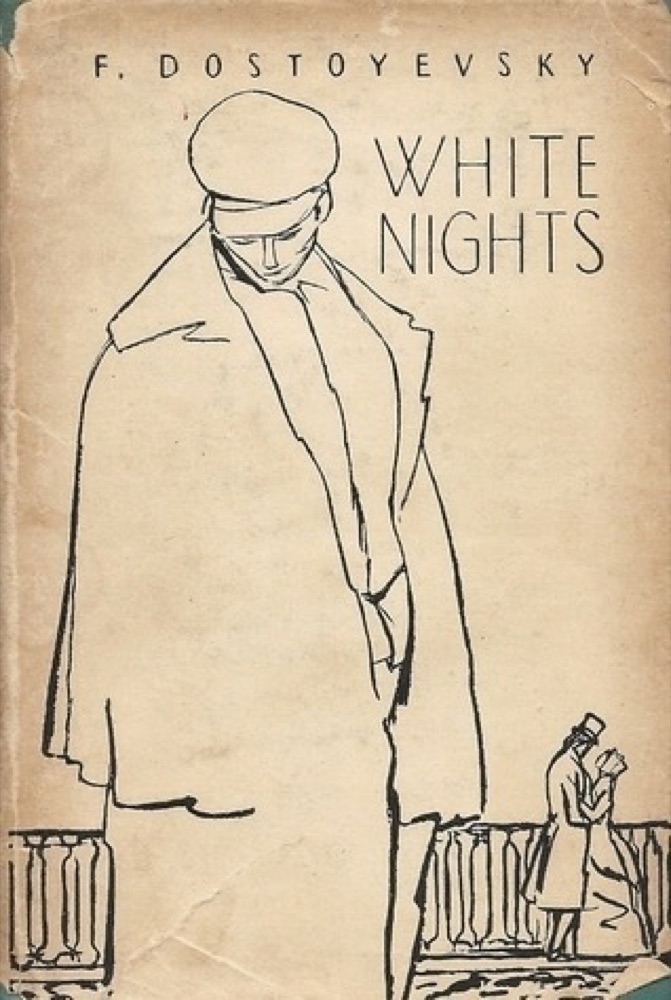
"White Nights," subtitled "A Sentimental Story (From the Memoirs of a Dreamer)," is a short work by Fyodor Dostoevsky first published in 1848. Set in Saint Petersburg, it follows a lonely, unnamed young narrator who wanders the city's streets and one night encounters a weeping young woman named Nastenka. Over four consecutive nights the two strangers form an intense friendship, confiding their hopes and histories to one another as the narrator quietly falls in love.
At its heart the story explores loneliness, isolation, and the consoling but precarious world of the daydreamer who lives more vividly in his imagination than in reality. The narrator is the archetypal "dreamer" figure that recurs throughout Dostoevsky's early fiction, and the tale dwells on unrequited love, fleeting human connection, and the bittersweet gratitude that can survive disappointment.
Written when Dostoevsky was still in his twenties, "White Nights" is regarded as one of his most tender and accessible early works, prized for its psychological intimacy and lyrical depiction of Petersburg's luminous summer nights. It has remained widely read and has inspired numerous film adaptations across several countries, cementing its place as an enduring touchstone of romantic melancholy.
Key characters
- The NarratorA lonely young dreamer in Saint Petersburg who tells the story
- NastenkaA young woman the narrator meets, who is awaiting an absent lover
- MatryonaThe narrator's elderly maid
Book details
- First published
- 1848
- Author
- Fyodor Dostoevsky
- Genre
- Classics
- Goodreads rating
- 4.06 (410k ratings)
- First line
- “It was a wonderful night, such a night as is only possible when we are young, dear reader.”
Critical reception
- Considered one of Dostoevsky's finest and most accessible early works, written before his major novels.
- Praised for its lyrical portrayal of Saint Petersburg and its intimate psychological study of loneliness.
- Has inspired numerous international film adaptations, attesting to its lasting appeal.
Movie & TV adaptations
- IMDb
- IMDb
- IMDb
Keep reading
 This Side of Paradise
 Kitchen
 Rebecca
 Schoolgirl
 Asleep
 Chasing Brooklyn
 What I Loved
 When We Collided
 Norwegian Wood
 Sputnik Sweetheart
 Glitterland
 The Lovely Bones
 After the Quake
 Poems, 1962-2012
 Memorizing You
 Belong to Me
 One Evening in Paris
 The Journals of Sylvia Plath
 The World and Other Places: Stories
 Winter Solstice
 A Sport and a Pastime
 Good Morning, Midnight
 All the Lovers in the Night
 Dream Count
 The Sea of Tranquility
 Long Day's Journey Into Night
 Petals on the Wind
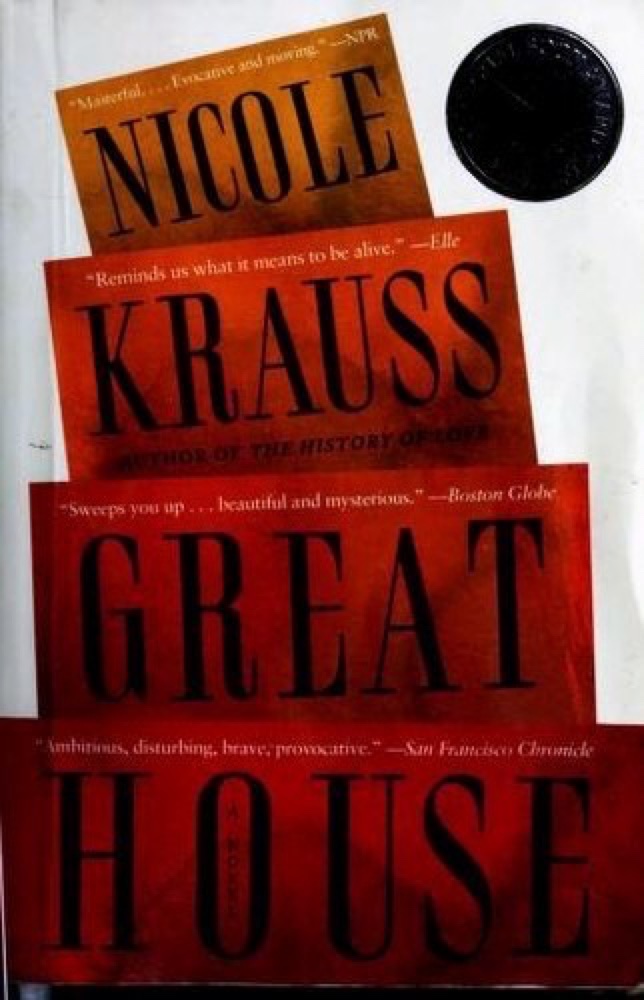 Great House
 Any Human Heart
 The Dream of Perpetual Motion
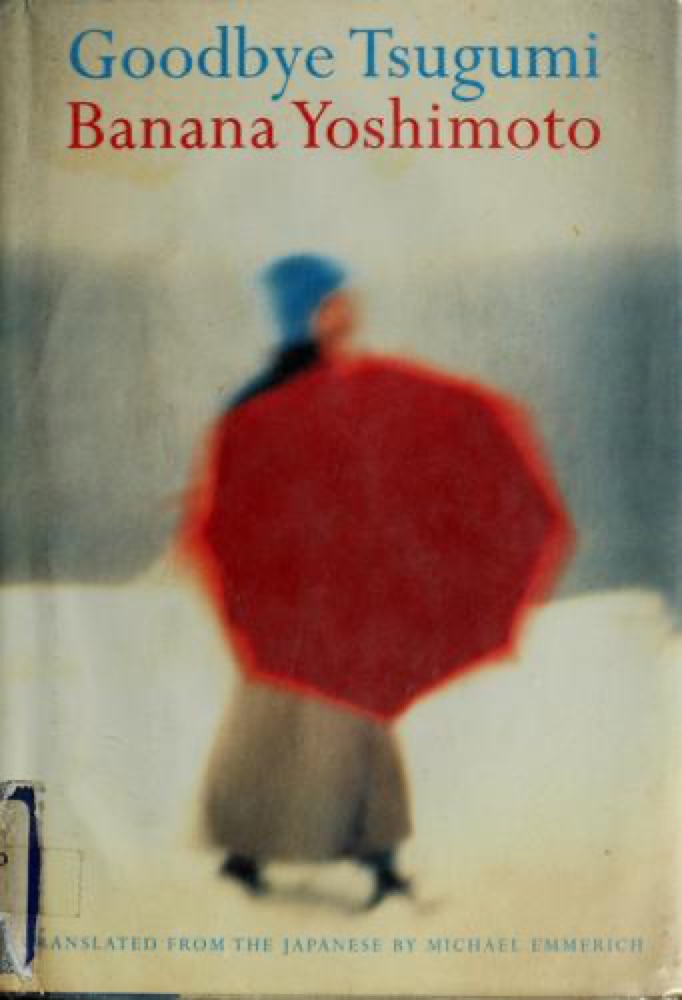 Tsugumi
 Beautiful World, Where Are You
 The Sweet Far Thing
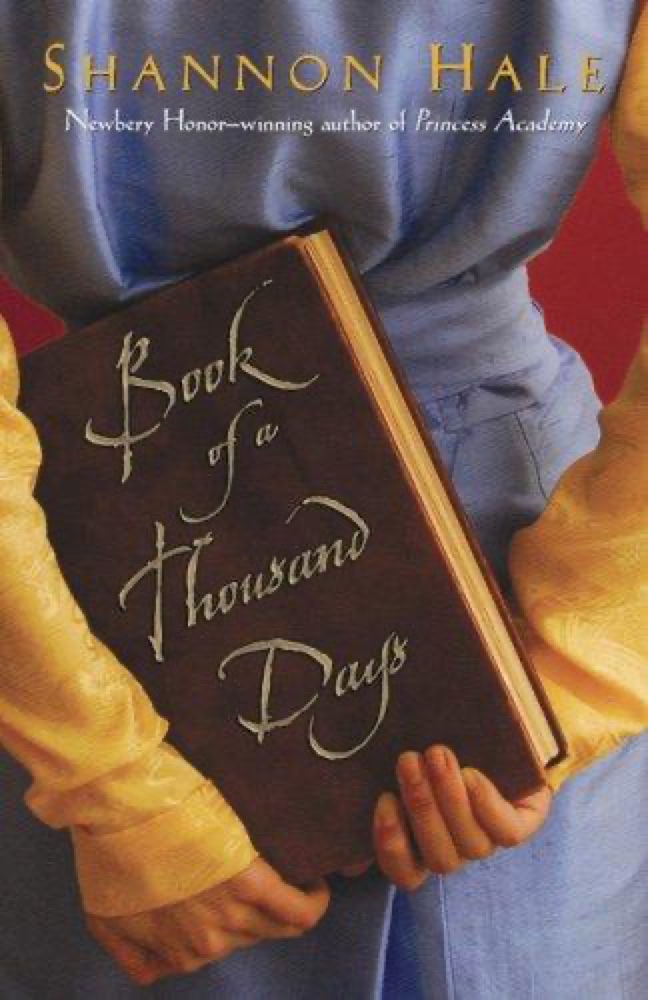 Book of a Thousand Days
 Snow
Snow
 No One Belongs Here More Than You
 The Black Prince
 Min kamp 2
 Doctor Zhivago
 The Siren
 Nights in Rodanthe
 Wild Awake
 The Unabridged Journals of Sylvia Plath
 If He Had Been with Me
 The Complete Poems of Anna Akhmatova
 Liberation Day
 White Oleander
 Lament: The Faerie Queen's Deception
 The Impossible Lives of Greta Wells
 Sundays at Tiffany's
 The Seagull
 Linger
 Swimming in the Dark
 The Inexplicable Logic of My Life
 Tender Is the Night
 Impulse
 The Hours
 Far from You
 What I Was
 Everything Is Illuminated