
 Crime and Punishment
Quotes from the Book
Don’t let us forget that the causes of human actions are usually immeasurably more complex and varied than our subsequent explanations of them.
It is better to be unhappy and know the worst, than to be happy in a fool's paradise.
There is something at the bottom of every new human thought, every thought of genius, or even every earnest thought that springs up in any brain, which can never be communicated to others, even if one were to write volumes about it and were explaining one's idea for thirty-five years; there's something left which cannot be induced to emerge from your brain, and remains with you forever; and with it you will die, without communicating to anyone perhaps the most important of your ideas.
Lack of originality, everywhere, all over the world, from time immemorial, has always been considered the foremost quality and the recommendation of the active, efficient and practical man.
Grown-up people do not know that a child can give exceedingly good advice even in the most difficult case.
A fool with a heart and no sense is just as unhappy as a fool with sense and no heart.
I am a fool with a heart but no brains, and you are a fool with brains but no heart; and we’re both unhappy, and we both suffer.
One can't understand everything at once, we can't begin with perfection all at once! In order to reach perfection one must begin by being ignorant of a great deal. And if we understand things too quickly, perhaps we shan't understand them thoroughly.
It's life that matters, nothing but life—the process of discovering, the everlasting and perpetual process, not the discovery itself, at all.
It wasn't the New World that mattered...Columbus died almost without seeing it; and not really knowing what he had discovered. It's life that matters, nothing but life — the process of discovering, the everlasting and perpetual process, not the discovery itself, at all.
In every idea of genius or in every new human idea, or, more simply still, in every serious human idea born in anyone's brain, there is something that cannot possibly be conveyed to others.
I almost do not exist now and I know it; God knows what lives in me in place of me.
Sometimes you dream strange dreams, impossible and unnatural; you wake up and remember them clearly, and are surprised at a strange fact: you remember first of all that reason did not abandon you during the whole course of your dream; you even remember that you acted extremely cleverly and logically for that whole long, long time when you were surrounded by murderers, when they were being clever with you, concealed their intentions, treated you in a friendly way, though they already had their weapons ready and were only waiting for some sort of sign; you remember how cleverly you finally deceived them, hid from them; then you realize that they know your whole deception by heart and merely do not show you that they know where you are hiding; but you are clever and deceive them again—all that you remember clearly. But why at the same time could your reason be reconciled with such obvious absurdities and impossibilities, with which, among other things, your dream was filled? Before your eyes, one of your murderers turned into a woman, and from a woman into a clever, nasty little dwarf—and all that you allowed at once, as an accomplished fact, almost without the least perplexity, and precisely at the moment when, on the other hand, your reason was strained to the utmost, displaying extraordinary force, cleverness, keenness, logic? Why, also, on awakening from your dream and entering fully into reality, do you feel almost every time, and occasionally with an extraordinary force of impressions, that along with the dream you are leaving behind something you have failed to fathom? You smile at the absurdity of your dream and feel at the same time that the tissue of those absurdities contains some thought, but a thought that is real, something that belongs to your true life, something that exists and has always existed in your heart; it is as if your dream has told you something new, prophetic, awaited; your impression is strong, it is joyful or tormenting, but what it is and what has been told you—all that you can neither comprehend nor recall.
One man doesn't believe in god at all, while the other believes in him so thoroughly that he prays as he murders men!
God knows what is in me in place of me.
The Russian soul is a dark place.
Compassion was the most important, perhaps the sole law of human existence.
Oh I've plenty of time, my time is entirely my own.
Pass us by, and forgive us our happiness
Do you know I don't know how one can walk by a tree and not be happy at the sight of it? How can one talk to a man and not be happy in loving him! Oh, it's only that I'm not able to express it...And what beautiful things there are at every step, that even the most hopeless man must feel to be beautiful! Look at a child! Look at God's sunrise! Look at the grass, how it grows! Look at the eyes that gaze at you and love you!...
The prince says that the world will be saved by beauty! And I maintain that the reason he has such playful ideas is that he is in love.
We must never forget that human motives are generally far more complicated than we are apt to suppose, and that we can very rarely accurately describe the motives of another.
I think that if one is faced by inevitable destruction -- if a house is falling upon you, for instance -- one must feel a great longing to sit down, close one's eyes and wait, come what may . . .
Once he went into the mountains on a clear, sunny day, and wandered about for a long time with a tormenting thought that refused to take shape. Before him was the shining sky, below him the lake, around him the horizon, bright and infinite, as if it went on forever. For a long time he looked and suffered. He remembered now how he had stretched out his arms to that bright, infinite blue and wept. What had tormented him was that he was a total stranger to it all. What was this banquet, what was this great everlasting feast, to which he had long been drawn, always, ever since childhood, and which he could never join? Every morning the same bright sun rises; every morning there is a rainbow over the waterfall; every evening the highest snowcapped mountain, there, far away, at the edge of the sky, burns with a crimson flame; every little fly that buzzes near him in a hot ray of sunlight participates in this whole chorus: knows its place, loves it, and is happy; every little blade of grass grows and is happy! And everything has its path, and everything knows its path, goes with a song and comes back with a song; only he knows nothing, understands nothing, neither people nor sounds, a stranger to everything and a castaway.
One can tell a child everything, anything. I have often been struck by the fact that parents know their children so little. They should not conceal so much from them. How well even little children understand that their parents conceal things from them, because they consider them too young to understand! Children are capable of giving advice in the most important matters. How can one deceive these dear little birds, when they look at one so sweetly and confidingly? I call them birds because there is nothing in the world better than birds!
God has such gladness every time he sees from heaven that a sinner is praying to Him with all his heart, as a mother has when she sees the first smile on her baby's face.
If he's alive he has everything in his power! Whose fault is it he doesn't understand that
I must add... my gratitude to you for the attention with which you have listened to me, for, from my numerous observations, our Liberals are never capable of letting anyone else have a conviction of his own without at once meeting their opponent with abuse or even something worse.
I want to talk about everything with at least one person as I talk about things with myself.
440
Do you know I don't know how one can walk by a tree and not be happy at the sight of it? How can one talk to a man and not be happy in loving him! Oh, it's only that I'm not able to express it...And what beautiful things there are at every step, that even the most hopeless man must feel to be beautiful! Look at a child! Look at God's sunrise! Look at the grass, how it grows! Look at the eyes that gaze at you and love you!
251
It wasn't the New World that mattered... Columbus died almost without seeing it; and not really knowing what he had discovered. It's life that matters, nothing but life — the process of discovering, the everlasting and perpetual process, not the discovery itself, at all.
196
I think that if one is faced by inevitable destruction -- if a house is falling upon you, for instance -- one must feel a great longing to sit down, close one's eyes and wait, come what may...
101
There is nothing so annoying as to be fairly rich, of a fairly good family, pleasing presence, average education, to be "not stupid," kindhearted, and yet to have no talent at all, no originality, not a single idea of one's own—to be, in fact, "just like everyone else." Of such people there are countless numbers in this world—far more even than appear. They can be divided into two classes as all men can—that is, those of limited intellect, and those who are much cleverer. The former of these classes is the happier. To a commonplace man of limited intellect, for instance, nothing is simpler than to imagine himself an original character, and to revel in that belief without the slightest misgiving. Many of our young women have thought fit to cut their hair short, put on blue spectacles, and call themselves Nihilists. By doing this they have been able to persuade themselves, without further trouble, that they have acquired new convictions of their own. Some men have but felt some little qualm of kindness towards their fellow-men, and the fact has been quite enough to persuade them that they stand alone in the van of enlightenment and that no one has such humanitarian feelings as they. Others have but to read an idea of somebody else's, and they can immediately assimilate it and believe that it was a child of their own brain. The "impudence of ignorance," if I may use the expression, is developed to a wonderful extent in such cases;—unlikely as it appears, it is met with at every turn. ... those belonged to the other class—to the "much cleverer" persons, though from head to foot permeated and saturated with the longing to be original. This class, as I have said above, is far less happy. For the "clever commonplace" person, though he may possibly imagine himself a man of genius and originality, none the less has within his heart the deathless worm of suspicion and doubt; and this doubt sometimes brings a clever man to despair. (As a rule, however, nothing tragic happens;—his liver becomes a little damaged in the course of time, nothing more serious. Such men do not give up their aspirations after originality without a severe struggle,—and there have been men who, though good fellows in themselves, and even benefactors to humanity, have sunk to the level of base criminals for the sake of originality)
97
Did you know?
- Dostoevsky said his aim was to depict 'a positively good and beautiful man,' a task he considered nearly impossible.
- Prince Myshkin's epilepsy and ecstatic pre-seizure states reflect Dostoevsky's own experience of the illness.
- The novel was written largely abroad, with its final chapters completed in Florence in January 1869.
- Akira Kurosawa adapted the novel into a 1951 Japanese film transposing the story to postwar Hokkaido.
- It was first published as a serial in the journal The Russian Messenger across 1868 and 1869.
About Fyodor Dostoevsky
Fyodor Dostoevsky (1821-1881) was a Russian novelist whose psychologically penetrating fiction explored faith, suffering, and morality. His major works include Crime and Punishment, The Idiot, Demons, and The Brothers Karamazov.
More about the author →More by Fyodor Dostoevsky
All books by Fyodor Dostoevsky →
About the book
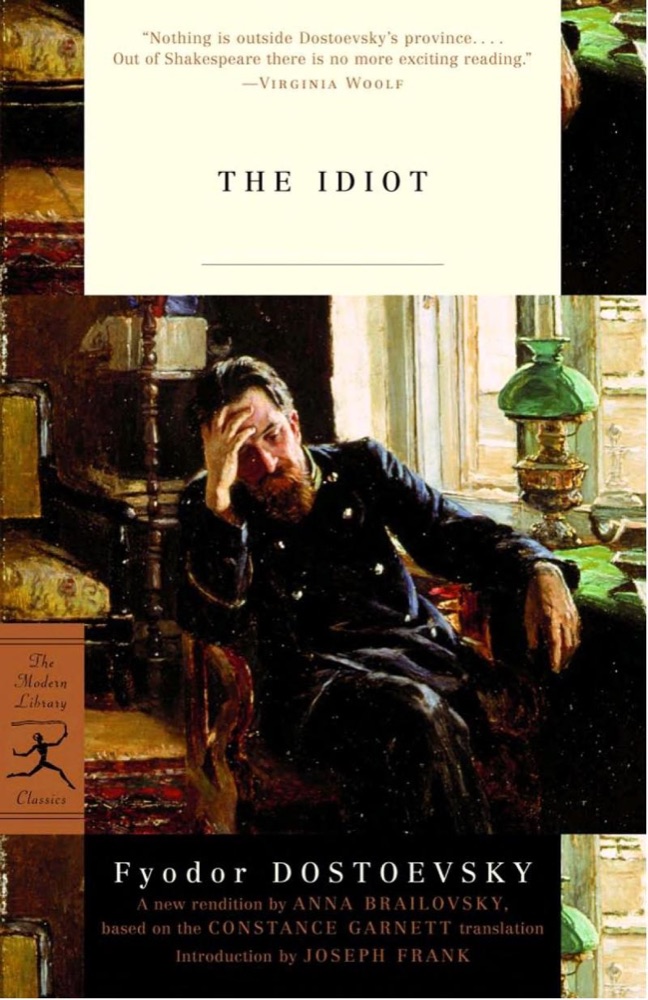
The Idiot follows Prince Lev Nikolayevich Myshkin, a guileless young nobleman who returns to Russia after years of treatment for epilepsy in a Swiss sanatorium. Arriving in Saint Petersburg with almost nothing, his radical innocence and Christian compassion immediately set him apart from the worldly, money-driven society he re-enters. He becomes entangled with the magnetic, deeply wounded Nastasya Filippovna, the proud Aglaya Yepanchin, and the obsessive merchant's son Rogozhin, as his goodness collides with a world of vanity, passion, and cruelty.
Dostoevsky set out to portray a 'positively good and beautiful man' and test whether such a figure could survive in modern Russia. The novel explores the conflict between Christian faith and the skepticism and nihilism of the era, the tension between innocence and corruption, and humanity's confrontation with mortality and capital punishment. Myshkin's epilepsy and his meditations on execution draw directly on Dostoevsky's own illness and his experience of a mock execution.
Serialized in The Russian Messenger in 1868-1869, the book was met with skepticism by contemporary Russian reviewers, who found it formless and 'fantastical.' Dostoevsky himself considered it a partial failure even as he prized its central idea. Modern criticism has reversed this verdict, regarding The Idiot as one of his major achievements and a daring experiment in the novel form, and it has inspired numerous stage, opera, and film adaptations.
Key characters
- Prince Lev Nikolayevich MyshkinInnocent, compassionate nobleman returning from Swiss treatment for epilepsy
- Nastasya Filippovna BarashkovaBeautiful, tormented woman torn between Myshkin and Rogozhin
- Parfyon RogozhinMerchant's heir consumed by obsessive passion for Nastasya
- Aglaya Ivanovna YepanchinProud, intelligent youngest Yepanchin daughter drawn to Myshkin
- Ippolit TerentyevYoung nihilist intellectual dying of tuberculosis
Book details
- First published
- 1869
- Length
- 659 pages
- Reading time
- 40 hours
- Author
- Fyodor Dostoevsky
- Genre
- Classics
- Goodreads rating
- 4.21 (227k ratings) →
Critical reception
- Contemporary Russian reviewers criticized the novel as formless and 'fantastical.'
- Dostoevsky regarded the work as a partial failure while valuing its central idea.
- Modern critics consider it one of Dostoevsky's major novels and a bold formal experiment.
Movie & TV adaptations
- IMDb
- IMDb
- IMDb
If you liked this, read…
- 1Crime and PunishmentDostoevsky's earlier study of conscience and moral extremity in Petersburg.
- 2The Brothers KaramazovHis later novel wrestling with faith, doubt, and goodness.
- 3DemonsDostoevsky's portrait of ideological turmoil in Russian society.
Keep reading
 The Adolescent
 Demons
Crime and Punishment
Demons
Crime and Punishment
 The Magus
 The Complete Essays
 East of Eden
 Stranger in a Strange Land
 The Man Without Qualities
 The Fountainhead
 The Count of Monte Cristo
 The Man in the High Castle
 Notes from Underground
 Daniel Deronda
 Point Counter Point
 The Quiet American
 Cat's Cradle
 The Magic Mountain
 The Black Obelisk
 Fathers and Sons
 Island
 The Fall
 Doctor Zhivago
 The Adventures of Augie March
 Uncle Vanya
 Dead Souls
 Antigone
 Children of God
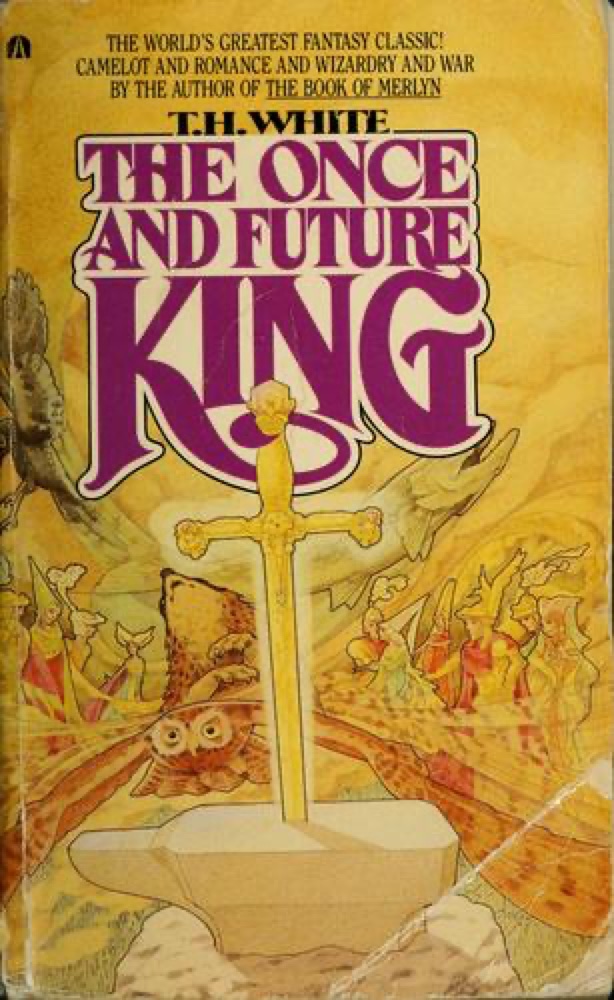 The Once and Future King
 Brother Odd
 Odd Apocalypse
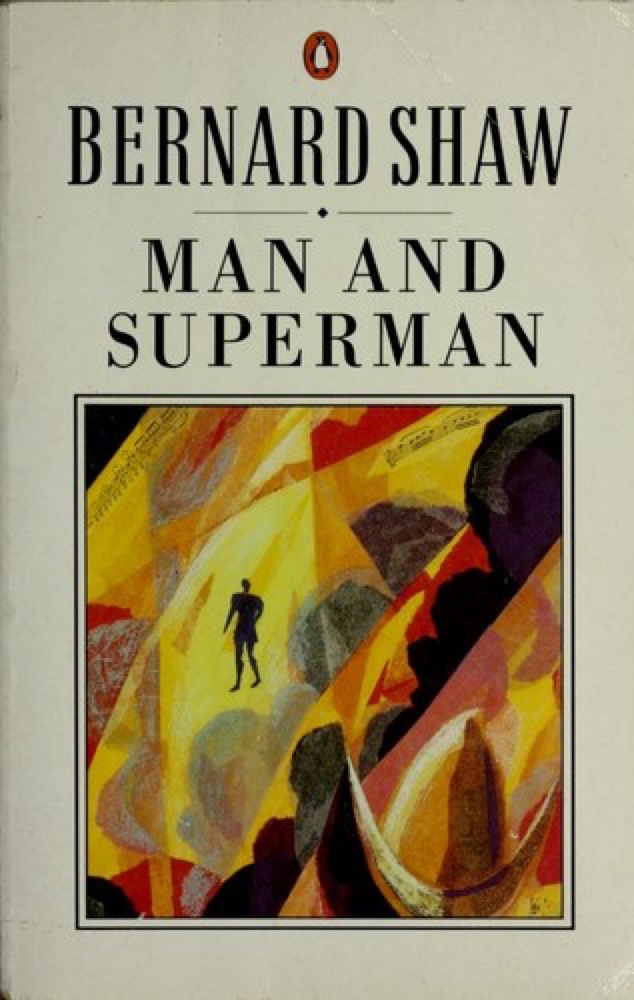 Man and Superman
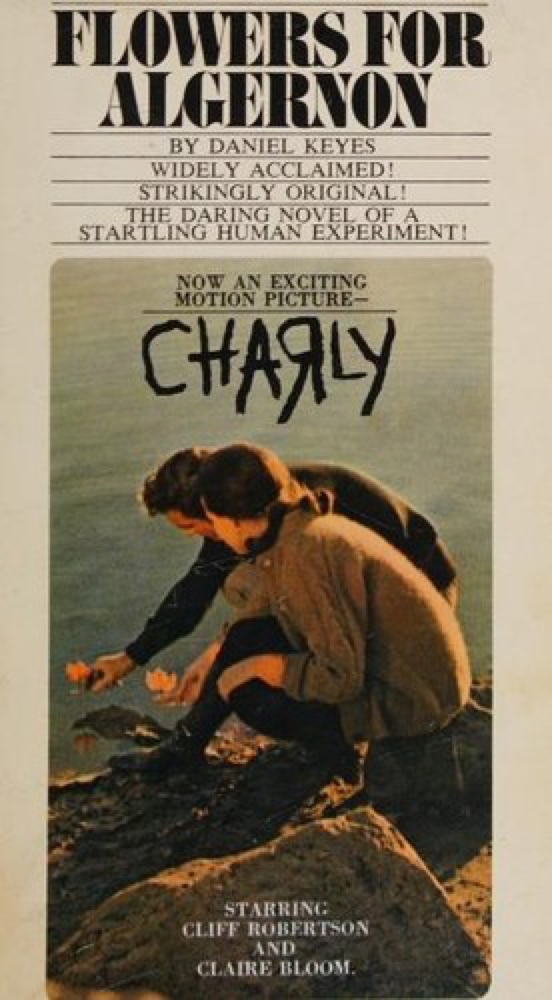 Flowers for Algernon
 The Immoralist
 Without Dogma
 The Signature of All Things
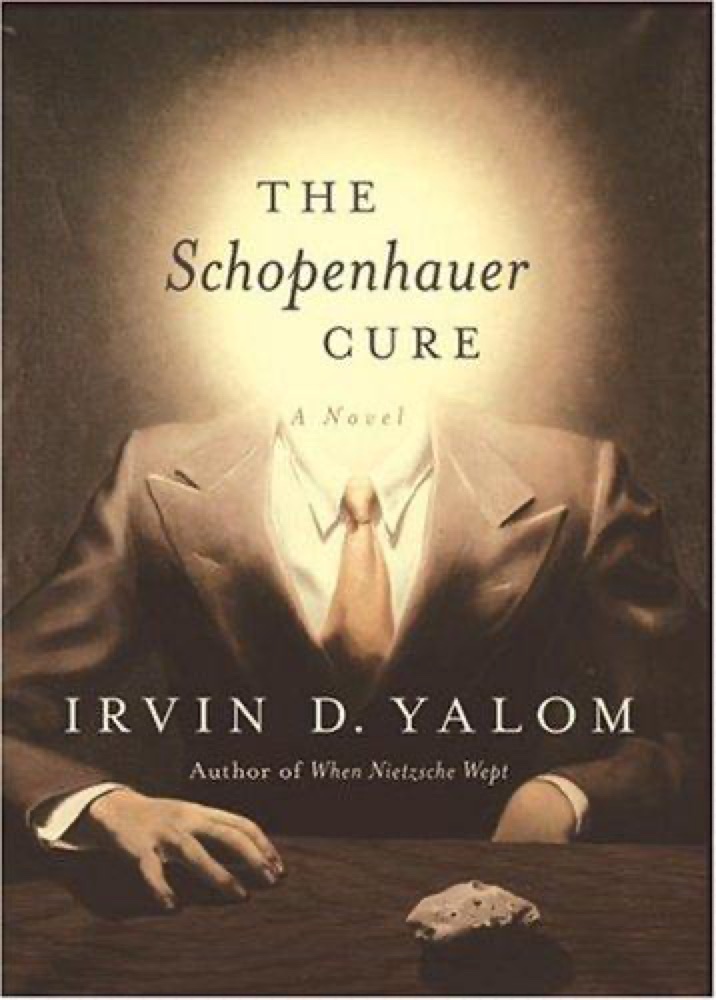 The Schopenhauer Cure
 The Story of the Lost Child
 Shadow of the Hegemon
 Senlin Ascends
 The Jewel in the Crown
 Uncle Tom's Cabin
 Dracula
 The Fall of Babel
 Henderson the Rain King
 Demian
 American Pastoral
 The First Circle
 Shōgun
 The Secret Scripture
 The Gay Science
 Xenocide
 Infinite Jest
 The Consolation of Philosophy
 The Heart of the Matter
 Mother Night
 The Razor's Edge
 Foucault's Pendulum
 We
We
 Embers
 A Hero of Our Time