

 Notes from Underground
Quotes from the Book
Pain and suffering are always inevitable for a large intelligence and a deep heart. The really great men must, I think, have great sadness on earth.
To go wrong in one's own way is better than to go right in someone else's.
The darker the night, the brighter the stars, The deeper the grief, the closer is God!
We sometimes encounter people, even perfect strangers, who begin to interest us at first sight, somehow suddenly, all at once, before a word has been spoken.
It takes something more than intelligence to act intelligently.
Taking a new step, uttering a new word, is what people fear most.
Pain and suffering are always inevitable for a large intelligence and a deep heart.
I used to analyze myself down to the last thread, used to compare myself with others, recalled all the smallest glances, smiles and words of those to whom I’d tried to be frank, interpreted everything in a bad light, laughed viciously at my attempts ‘to be like the rest’ –and suddenly, in the midst of my laughing, I’d give way to sadness, fall into ludicrous despondency and once again start the whole process all over again – in short, I went round and round like a squirrel on a wheel.
We're always thinking of eternity as an idea that cannot be understood, something immense. But why must it be? What if, instead of all this, you suddenly find just a little room there, something like a village bath-house, grimy, and spiders in every corner, and that's all eternity is. Sometimes, you know, I can't help feeling that that's what it is.
I did not bow down to you, I bowed down to all the suffering of humanity.
And the more I drink the more I feel it. That's why I drink too. I try to find sympathy and feeling in drink.... I drink so that I may suffer twice as much!
A hundred suspicions don't make a proof.
The fear of appearances is the first symptom of impotence.
Man grows used to everything, the scoundrel!
Power is given only to him who dares to stoop and take it ... one must have the courage to dare.
We sometimes encounter people, even perfect strangers, who begin to interest us at first sight, somehow suddenly, all at once, before a word has been spoken
There is nothing in the world more difficult than candor, and nothing easier than flattery. If there is a hundredth of a fraction of a false note to candor, it immediately produces dissonance, and as a result, exposure. But in flattery, even if everything is false down to the last note, it is still pleasant, and people will listen not without pleasure; with coarse pleasure, perhaps, but pleasure nevertheless.
Only to live, to live and live! Life, whatever it may be!
Do you understand, sir, do you understand what it means when you have absolutely nowhere to turn?" Marmeladov’s question came suddenly into his mind "for every man must have somewhere to turn...
Truly great men must, I think, experience great sorrow on the earth.
Man has it all in his hands, and it all slips through his fingers from sheer cowardice.
The man who has a conscience suffers whilst acknowledging his sin. That is his punishment.
You see I kept asking myself then: why am I so stupid that if others are stupid—and I know they are—yet I won't be wiser?
What do you think?" shouted Razumihin, louder than ever, "you think I am attacking them for talking nonsense? Not a bit! I like them to talk nonsense. That's man's one privilege over all creation. Through error you come to the truth! I am a man because I err! You never reach any truth without making fourteen mistakes and very likely a hundred and fourteen. And a fine thing, too, in its way; but we can't even make mistakes on our own account! Talk nonsense, but talk your own nonsense, and I'll kiss you for it. To go wrong in one's own way is better than to go right in someone else's. In the first case you are a man, in the second you're no better than a bird. Truth won't escape you, but life can be cramped. There have been examples. And what are we doing now? In science, development, thought, invention, ideals, aims, liberalism, judgment, experience and everything, everything, everything, we are still in the preparatory class at school. We prefer to live on other people's ideas, it's what we are used to! Am I right, am I right?" cried Razumihin, pressing and shaking the two ladies' hands.
Break what must be broken, once for all, that's all, and take the suffering on oneself.
In a morbid condition, dreams are often distinguished by their remarkably graphic, vivid, and extremely lifelike quality. The resulting picture is sometimes monstrous, but the setting and the whole process of the presentation sometimes happen to be so probable, and with details so subtle, unexpected, yet artistically consistent with the whole fullness of the picture, that even the dreamer himself would be unable to invent them in reality, though he were as much an artist as Pushkin or Turgenev. Such dreams, morbid dreams, are always long remembered and produce a strong impression on the disturbed and already excited organism of the person.Raskolnikov had a terrible dream.
People with new ideas, people with the faintest capacity for saying something new, are extremely few in number, extraordinarily so, in fact.
Don’t be overwise; fling yourself straight into life, without deliberation; don’t be afraid - the flood will bear you to the bank and set you safe on your feet again.
What do you think, would not one tiny crime be wiped out by thousands of good deeds?
Your worst sin is that you have destroyed and betrayed yourself for nothing.
2.4k
Existence alone had never been enough for him; he had always wanted more. Perhaps it was only from the force of his desires that he had regarded himself as a man to whom more was permitted than to others.
273
Did you know?
- The novel was first published in serial form across twelve monthly installments of the literary journal The Russian Messenger in 1866.
- It is structured in six parts followed by an epilogue.
- The story is set in Saint Petersburg, where Dostoevsky himself lived.
- Dostoevsky wrote the novel while under heavy financial pressure, partly driven by gambling debts.
- A separate book edition appeared in 1867, the year after serialization.
About Fyodor Dostoevsky
Fyodor Dostoevsky (1821-1881) was a Russian novelist and philosopher whose works explore faith, suffering, and the human psyche. His major novels include Crime and Punishment, The Idiot, Demons, and The Brothers Karamazov.
More about the author →More by Fyodor Dostoevsky
All books by Fyodor Dostoevsky →
About the book
Crime and Punishment follows Rodion Raskolnikov, an impoverished former law student living in a cramped garret in mid-19th-century Saint Petersburg, who convinces himself that an exceptional individual has the right to transgress moral law for a greater good. Acting on this theory, he murders a predatory pawnbroker, but the deed plunges him into feverish guilt, paranoia, and physical illness rather than the liberation he imagined. Across six parts and an epilogue, the novel traces his psychological unraveling and his charged encounters with the gentle, self-sacrificing Sonya and the perceptive investigator Porfiry Petrovich.
The book is a sustained inquiry into conscience, suffering, and redemption. Dostoevsky probes the dangers of rationalism, nihilism, and utilitarian theories that reduce human worth to calculation, setting them against the redemptive power of compassion, confession, and Christian faith. Poverty, alienation, and the moral pressures of the modern city press on every character, while Raskolnikov's internal struggle dramatizes the gap between abstract ideas and the lived weight of an act.
First serialized in The Russian Messenger in 1866, Crime and Punishment was the literary sensation of its year and remains one of the most influential novels ever written. Its penetrating treatment of guilt and the divided self helped shape later existentialist thought and the development of psychological fiction, and it continues to be widely read, taught, and adapted around the world.
Key characters
- Rodion RaskolnikovImpoverished former law student and the novel's protagonist
- Sonya MarmeladovaYoung woman driven to prostitution who becomes Raskolnikov's moral and spiritual guide
- Porfiry PetrovichShrewd magistrate investigating the murders
- Avdotya (Dunya) RaskolnikovaRaskolnikov's devoted sister
- Dmitri RazumikhinRaskolnikov's loyal and good-natured friend
- Arkady SvidrigailovDissolute landowner who pursues Dunya
Book details
- First published
- 1866
- Length
- 671 pages
- Reading time
- 24 hours
- Author
- Fyodor Dostoevsky
- Genre
- Classics
- Goodreads rating
- 4.29 (1.1M ratings)
- First line
- “On an exceptionally hot evening early in July a young man came out of the garret in which he lodged in S. Place and walked slowly, as though in hesitation, towards K. bridge.”
Critical reception
- The novel was the literary sensation of 1866 in Russia upon its serial publication.
- It is widely regarded as a foundational work of psychological and existentialist fiction.
- It remains one of Dostoevsky's most celebrated and frequently studied novels.
Movie & TV adaptations
- IMDb
- IMDb
Keep reading
 The First Circle
 The Idiot
 Uncle Tom's Cabin
 Beyond Good and Evil
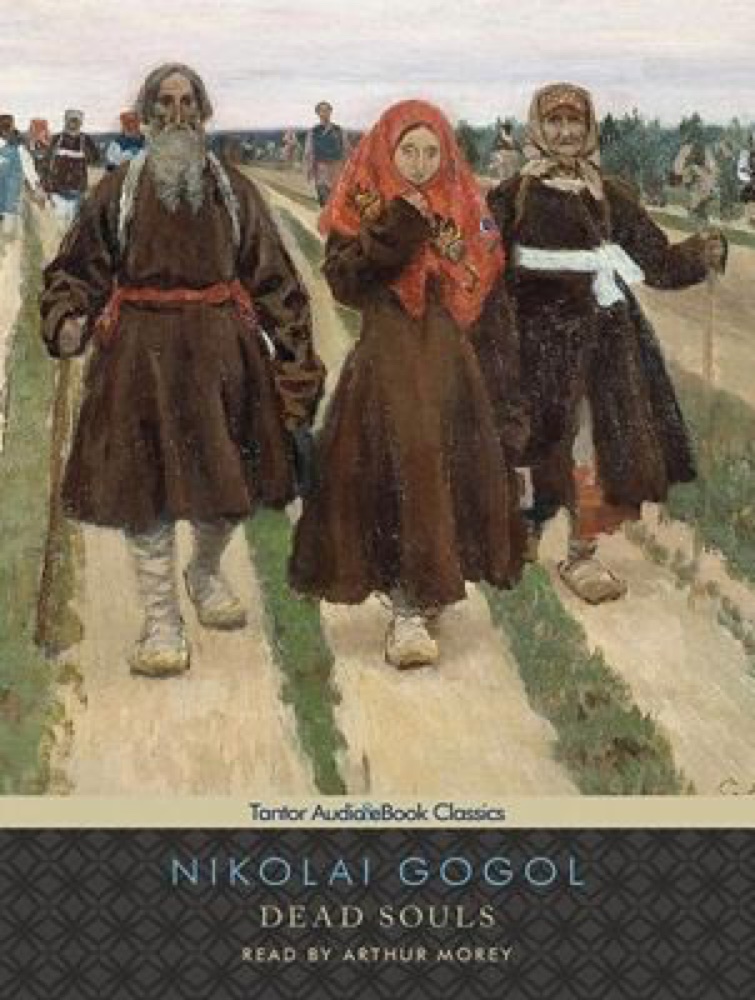 Dead Souls
Notes from Underground
Dead Souls
Notes from Underground
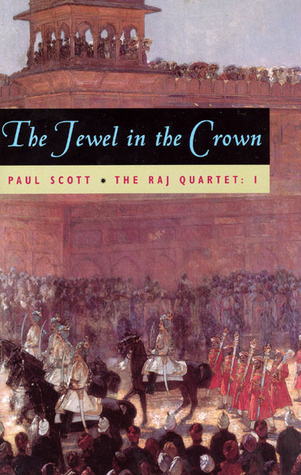 The Jewel in the Crown
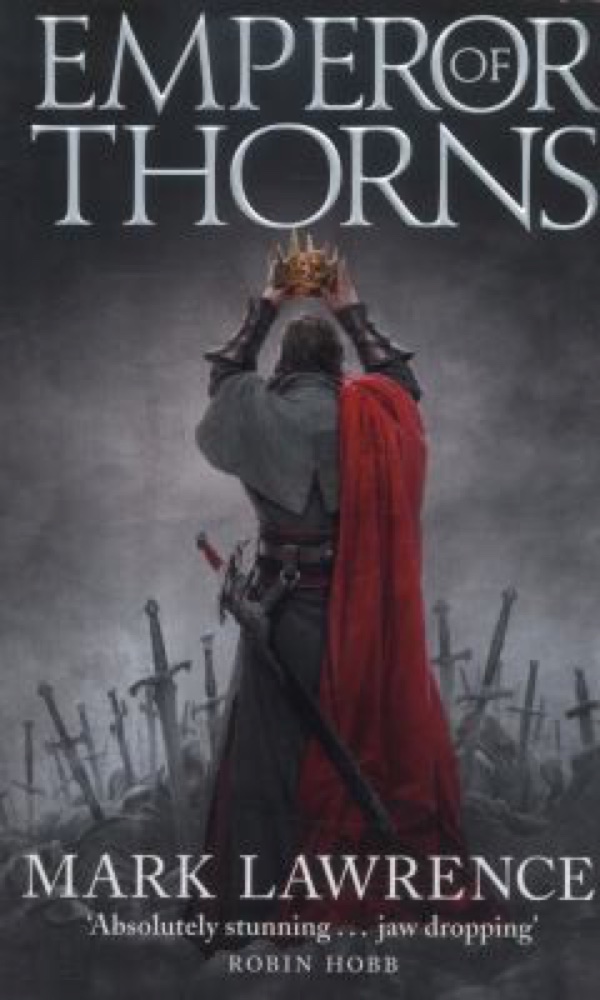 Emperor of Thorns
 The Black Prism
 The Complete Essays
 The Black Obelisk
 Middlemarch
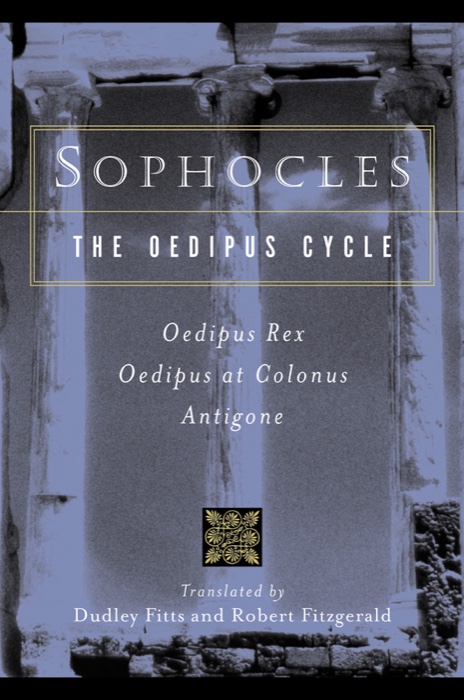 The Oedipus Cycle: Oedipus Rex/Oedipus at Colonus/Antigone
 Scaramouche
 Demons
 Last Argument of Kings
 East of Eden
 The Adolescent
 The Luminaries
 The Razor's Edge
 An Instance of the Fingerpost
 Embers
 The Fall of Babel
 Gaudy Night
 Before They Are Hanged
 The Heart of the Matter
 Of Human Bondage
 Journey to the End of the Night
 The Naked and the Dead
 Man and Superman
 Odd Hours
 That Hideous Strength
 Fool's Fate
 Scythe
 The Man in the High Castle
 The Fall
 The Prisoner of Heaven
 Rot & Ruin
 Stranger in a Strange Land
 Fathers and Sons
 Light in August
 In Cold Blood
 The Children of Men
 The Kite Runner
 Humboldt's Gift
 The Devil and Miss Prym
 The Winter of Our Discontent
 The Once and Future King
 Daniel Deronda
 Sacred Hunger
 The Blinding Knife
 Blue Bamboo: Japanese Tales of Fantasy
 Adam Bede
 Infamous
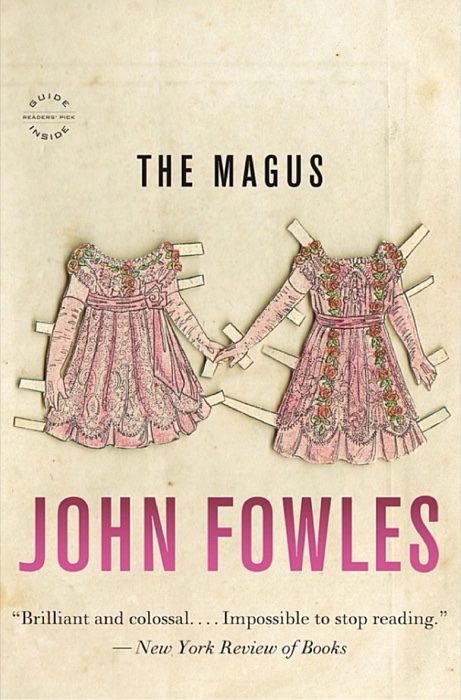 The Magus
 The Plague
 Velocity
 The Gadfly
 Cuckold
 Alias Grace