
 The Book of Laughter and Forgetting
Quotes from the Book
Love is by definition an unmerited gift; being loved without meriting it is the very proof of real love. If a woman tells me: I love you because you're intelligent, because you're decent, because you buy me gifts, because you don't chase women, because you do the dishes, then I'm disappointed; such love seems a rather self-interested business. How much finer it is to hear: I'm crazy about you even though you're neither intelligent nor decent, even though you're a liar, an egotist, a bastard.
844
There is a secret bond between slowness and memory, between speed and forgetting. A man is walking down the street. At a certain moment, he tries to recall something, but the recollection escapes him. Automatically, he slows down. Meanwhile, a person who wants to forget a disagreeable incident he has just lived through starts unconsciously to speed up his pace, as if he were trying to distance himself from a thing still too close to him in time. In existential mathematics that experience takes the form of two basic equations: The degree of slowness is directly proportional to the intensity of memory; the degree of speed is directly proportional to the intensity of forgetting.
196
The degree of slowness is directionally proportional to the intensity of memory. The degree of speed is directionally proportional to the intensity of forgetting.
94
She is sadder and sadder, and for a man there is no balm more soothing than the sadness he has caused a woman.
71
The religion of orgasm: utilitarianism projected into sex life; efficiency versus indolence; coition reduced to an obstacle to be got past as quickly as possible in order to reach an ecstatic explosion, the only true goal of love-making and of the universe.
39
Speed is the form of ecstasy the technical revolution has bestowed on man. As opposed to a motorcyclist, the runner is always present in his body, forever required to think about his blisters, his exhaustion; when he runs he feels his weight, his age, more conscious than ever of himself and of his time of life. This all changes when man delegates the faculty of speed to a machine: from then on, his own body is outside the process, and he gives over to a speed that is noncorporeal, nonmaterial, pure speed, speed itself, ecstasy speed.
39
I beg you friend, be happy. I have the vague sense that on your capacity to be happy hangs our only hope.
22
Because beyond their practical function, all gestures have a meaning that exceeds the intention of those who make them; when people in bathing suits fling themselves into the water, it is joy itself that shows in the gesture, notwithstanding any sadness the divers may actually feel. When someone jumps into the water fully clothed, it is another thing entirely: the only person who jumps into the water fully clothed is a person trying to drown; and a person trying to drown does not dive headfirst; he lets himself fall: thus speaks the immemorial language of gestures.
17
What could I say? Maybe this: the man hunched over his motorcycle can focus only on the present instant of his flight; he is caught in a fragment of time cut off from both the past and the future; he is wrenched from the continuity of time; he is outside time; in other words, he is in a state of ecstasy; in that state he is unaware of his age, his wife, his children, his worries, and so he has no fear, because the source of fear is in the future, and a person freed of the future has nothing to fear.
16
In existential mathematics that experience takes the form of two basic equations: The degree of slowness is directly proportional to the intensity of memory; the degree of speed is directly proportional to the intensity of forgetting.
8
When I described Madame de T's night, I recalled the well-known equation from one of the first chapters of the textbook of existential mathematics: the degree of speed is directly proportional to the intensity of forgetting. From that equation we can deduce various corrollaries, for instance this one: our period is given over to the demon of speed, and that is the reason it so easily forgets its own self. Now I would reverse that statement and say: our period is obsessed by the desire to forget, and it is to fulfill that desire that it gives over to the demon of speed; it picks up the pace to show us that it no longer wishes to be remembered; that it is tired of itself; sick of itself; that it wants to blow out the tiny trembling flame of memory.
8
A scarf from her dress works free and floats behind her the way memories float behind the dead.
8
Why has the pleasure of slowness disappeared? Ah, where have they gone, the amblers of yesteryear? Where have they gone, those loafing heroes of folk song, those vagabonds who roam from one mill to another and bed down under the stars?
7
Is goodwill so fragile, so precarious a thing, then? (Of course, dear fellow, of course)
7
... in that state he is unaware of his age, his wife, his children, his worries, and so he has no fear, because the source of fear is in the future, and a person freed of the future has nothing to fear.
4
Le sentiment d'être élu est présent, par exemple, dans toute relation amoureuse. car l'amour, par définition, est un cadeau non mérité ; être aimé sans mérite, c'est même la preuve d'un vrai amour. Si une femme me dit : je t'aime parce que tu es intelligent, parce que tu es honnête, parce que tu m'achètes des cadeaux, parce que tu ne dragues pas, parce que tu fais la vaiselle, je suis déçu ; cet amour a l'air de quelque chose d'intéressé. Combien il est plus beau d'entendre : je suis folle de toi bien que tu ne sois ni intelligent ni honnête, bien que tu sois menteur, égoïste, salaud. (chapitre 15)
4
Cada possibilidade nova que tem a existência, até a menos provável, transforma a existência inteira.
3
He understands that that impatience to speak is also an implacable uninterest in listening
2
The way contemporary history is told is like a huge concert where they present all of Beethoven’s one hundred thirty-eight opuses one after the other, but actually play just the first eight bars of each.
2
Change the world! In Pontevin's view, what a monstrous goal! Not because the world is so admirable as it is but because any change leads inevitably to something worse.
2
Être élu est une notion théologique qui veut dire : sans aucun mérite, par un verdict surnaturel, par une volonté libre, sinon capricieuse, de Dieu, on est choisi pour quelque chose d'exceptionnel et d'extraordinaire. C'est dans cette conviction que les saints ont puisé la force de supporter les plus atroces supplices. Les notions théologiques se reflètent, telle leur propre parodie, dans la trivialité de nos vies ; chacun de nous souffre (plus ou moins) de la bassesse de sa vie trop ordinaire et désire y échapper et s'élever. Chacun de nous a connu l'illusion (plus ou moins forte) d'être digne de cette élévation, d'être prédestiné et choisi pour elle. (chapitre 15)
2
Watch on YouTube
About Milan Kundera
We have collected 272 quotes from 13 books by Milan Kundera on BookQuoters.
More about the author →More by Milan Kundera
All books by Milan Kundera →

About the book
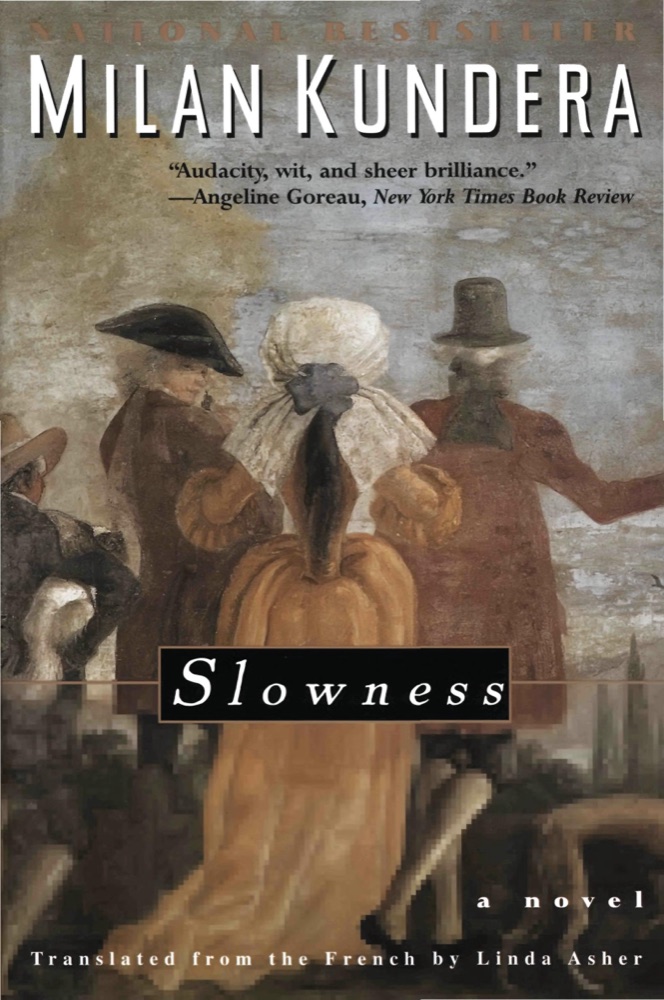
Milan Kundera's lightest novel, a divertimento, an opera buffa, Slowness is also the first of this author's fictional works to have been written in French.
Disconcerted and enchanted, the reader follows the narrator of Slowness through a midsummer's night in which two tales of seduction, separated by more than two hundred years, interweave and oscillate between the sublime and the comic. Underlying this libertine fantasy is a profound meditation on contemporary life: about the secret bond between slowness and memory, about the connection between our era's desire to forget and the way we have given ourselves over to the demon of speed. And about "dancers" possessed by the passion to be seen, for whom life is just merely a perpetual show emptied of every intimacy and every joy.
Book details
- First published
- 1995
- Author
- Milan Kundera
- Genre
- Fiction
- Goodreads rating
- 3.60 (23k ratings)
Keep reading
 Identity
 The Unbearable Lightness of Being
The Book of Laughter and Forgetting
The Unbearable Lightness of Being
The Book of Laughter and Forgetting
 The Magic Mountain
 The Elementary Particles
 Sexus
Sexus
 Nutshell
 Eyeless in Gaza
 In Search of Lost Time
 The Man Without Qualities
 The Philosopher and the Wolf
 Stories of Your Life and Others
 Spring Snow
 Arch of Triumph
 V.
V.
 The Fall
 Flights
 The World as Will and Representation, Vol 1
 Hourglass: Time, Memory, Marriage
 Smilla's Sense of Snow
 Selected Stories
 Oblomov
 The Kreutzer Sonata
 The Myth of Sisyphus
 Moravagine
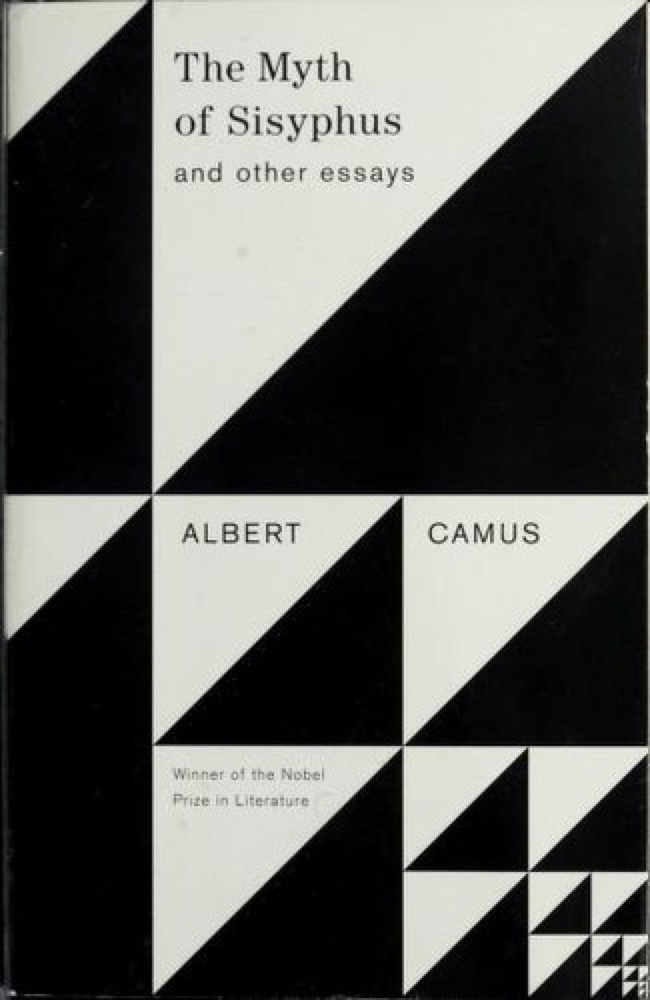 The Myth of Sisyphus and Other Essays
 First Person Singular: Stories
 Girl with Curious Hair
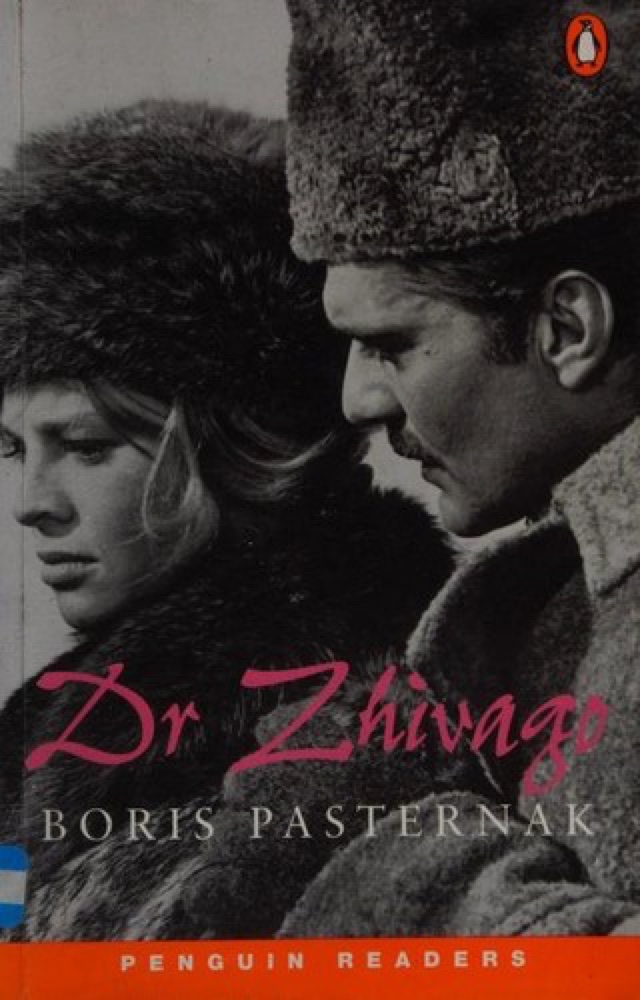 Doctor Zhivago
 All That I Am
 Winter
 The First Fifteen Lives of Harry August
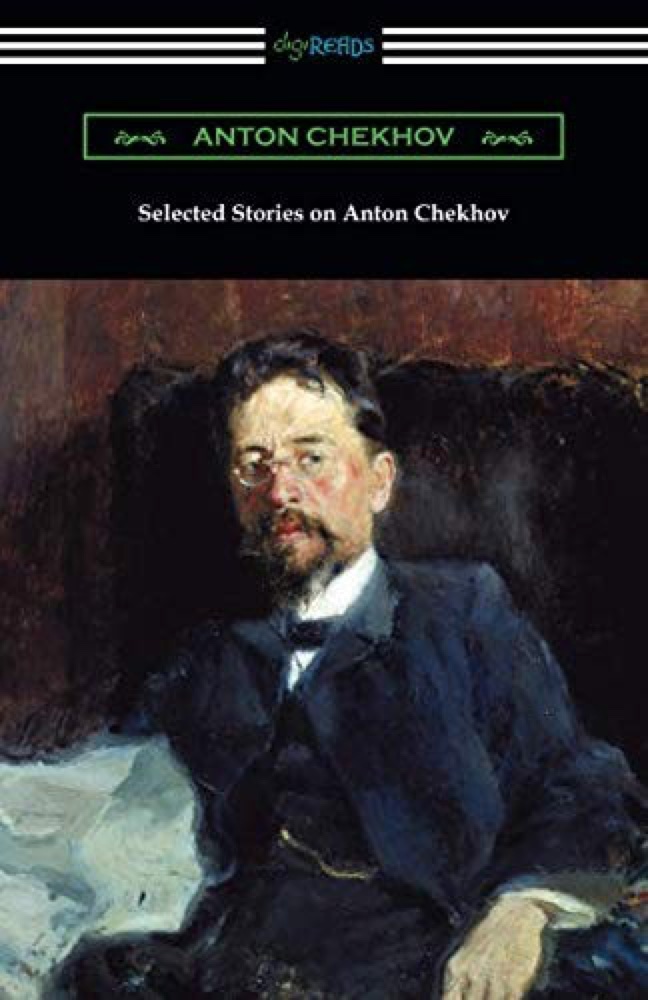 Selected Stories of Anton Chekhov
 Night Train to Lisbon
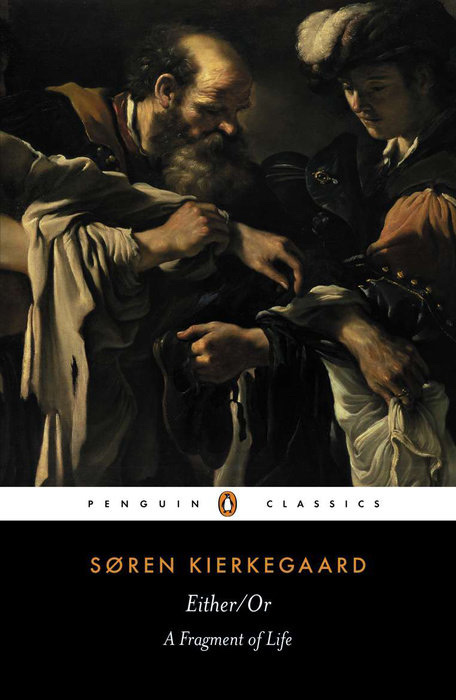 Either/Or: A Fragment of Life
 The Devil in the Flesh
 Saturday
 The Floating Opera
 A Fisherman of the Inland Sea
 Complete Works of Oscar Wilde
 Fugitive Pieces
 Daybreak: Thoughts on the Prejudices of Morality
 The Anomaly
 The Pale King
 The Gay Science
 Sexing the Cherry
 Memories, Dreams, Reflections
 The Glass Bead Game
 The Recognitions
 The Star Diaries
 Point Counter Point
 A Short History of Decay
 Zeno's Conscience
 Swann's Way
 The Interpretation of Murder
 Creatures of a Day: And Other Tales of Psychotherapy
 Underworld
 The Dream of Perpetual Motion
 A Soldier of the Great War
 The Passion