
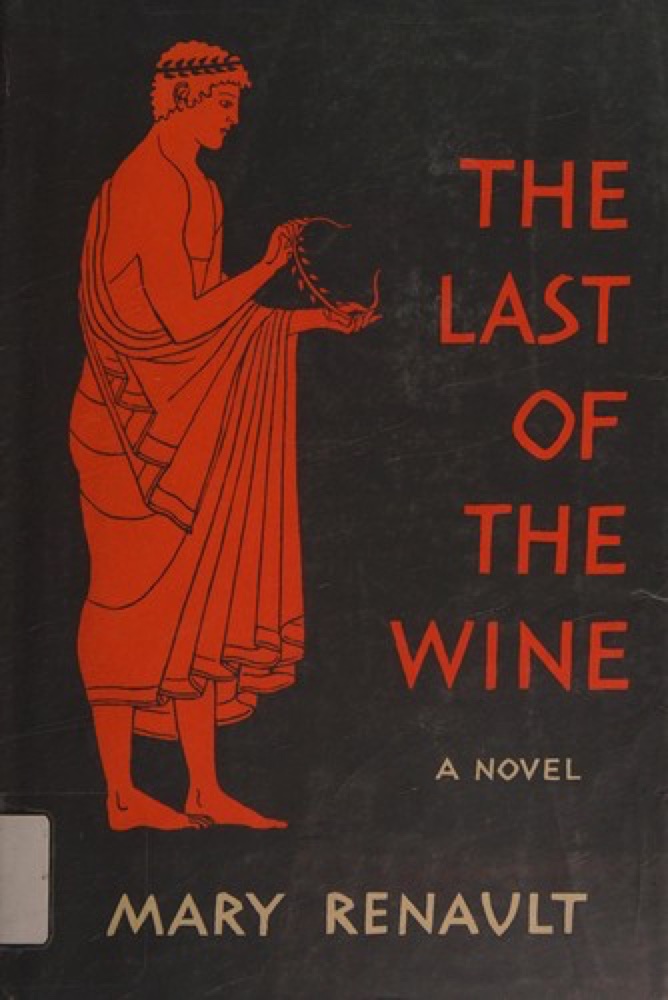
 The Last of the Wine
Quotes from the Book
True friends share everything, except the past before they met.
1.2k
One might have supposed that the true act of love was to lie together and talk.
61
Do not believe that others will die, not you.... I have wrestled with Thanatos knee to knee and I know how death is vanquished. Man's immortality is not to live forever; for that wish is born of fear. Each moment free from fear makes a man immortal.
39
He stood between death and life as between night and morning, and thought with a soaring rapture, 'I am not afraid.
30
At the stair-foot Hephaistion was waiting. He happened to be there, as he happened to have a ball handy if Alexander wanted a game, or water if he was thirsty; not by calculation, but in a constant awareness by which no smallest trifle was missed. Now, when he came down the stairs with a shut mouth and blue lines under his eyes, Hephaistion received some mute signal he understood, and fell into step beside him.
19
(Alexander)'Sometimes I forget all this for months on end. Sometimes I think of it day and night. Sometimes I think, unless I find out the truth of it, I shall go mad.' (Hephaistion)'That's stupid. You've got me now. Do you think I'd let you go mad?
17
In grief more than in joy, man longs to know that the universe turns around him.
15
The school discussed friendship often. It is, they learned, one of the things man can least afford to lack; necessary to the good life, and beautiful in itself. Between friends is no need of justice, for neither wrong nor inequality can exist... Friendship is perfect when virtuous men love the good in one another; for virtue gives more delight than beauty, and is untouched by time.
14
Hephaistion had known for many ages that if a god should offer him one gift in all his lifetime, he would choose this. Joy hit him like a lightning-bolt.
9
Man’s immortality is not to live forever; for that wish is born of fear. Each moment free from fear makes a man immortal.
7
Do you know that old song about Orpheus, how he played his lyre on the mountainside, and found a lion had crouched at his feet to listen? I’m no Orpheus, I know; but sometimes I see the lion’s eyes. Where did it go, after the music, what became of it? The story doesn’t say.
7
Plato, in his opinion, had committed too much to love.
5
Alexander offered him (Aristotle)a hand to mount the gangplank, and tried the effect of a smile. When the man returned it, it could be seen that smiling was what he would do best; he would not often be caught with his head back laughing. But he did look like a man who would answer questions.
4
His feelings were confused; he wanted to grasp till Alexander's very bones were somehow engulfed within himself, but knew this to be wicked and mad; he would kill anyone who harmed a hair of his head.
3
Love is the true food of the soul. But the soul eats to live, like the body– it mustn't live to eat...The soul lives to do!
2
Man's immortality is not to live for ever; for that wish is born of fear. Each moment free from fear makes a man immortal.
2
...maybe his soul remembered. as we know. the ashes of Achilles and Patroklos were mingled in one urn. not even a god could sift the one from the other. Achilles has come back with his fierceness and his pride, and with Patroklos’ feeling. each of them suffered for what he was; this boy will suffer for both.
2
Hephaistion was thinking how fragile his rib cage seemed, how terrible were the warring desires to cherish and to crush it.
2
People who have earned no pride in themselves, are content to be proud of their cities through other men.
2
He had to do them, to show he was the best.
2
grief more than in joy, man longs to know that the universe turns around him.
2
With new friendships had come visits to the philosophers and teachers of rhetoric; and, presently, the chance to learn from experts the art of war. He had longed for home and had returned with gladness; but by then he had been received into the mystery of Hellas, forever her initiate. Athens was her altar, almost her self. All he asked of Athens was to restore her glories; her present leaders seemed to him like the Phokians at Delphi, unworthy men who had seized a holy shrine. Deep in his mind moved a knowledge that for Athenians freedom and glory went together; but he was like a man in love, who thinks the strongest trait of the loved one’s nature will be easily changed, as soon as they are married.
2
So they debated, willing things to be as they had always been, unwilling to know that events are made by men, and that men had changed.
1
Among the cheerful pieties, his voice said tartly, “Be less wasteful of such precious things, Alexander, till you are master of the lands they grow in.
1
I left you to make you understand my mystery. Do not believe others will die, not you. It is not for that I'm your friend. By laying myself on the pyre, I became divine. I have wrestled with Thanatos knee to knee, and I know how death is vanquished. Man's immortality is not to live forever, for that wish is born of fear. Each moment free from fear, makes a man immortal.
1
they discussed the nature of the outstanding man. Is self-regard a flaw in him? Certainly yes, in respect of common greeds and pleasures. But then, what self should be regarded? Not the body nor its passions, but the intellectual soul, whose office it is to rule the rest like a king. To love that self, to be covetous of honor for it, to indulge its appetite for virtue and noble deeds; to prefer an hour of glory closed by death, to a slothful life; to reach for the lion’s share of moral dignity: there lies the fulfilling self-regard. The old saws are wrong, said the philosopher, which tell man to be forever humble before his own mortality. Rather he should strain his being to put on immortality, never to fall below the highest thing he knows.
1
Watch on YouTube
About Mary Renault
We have collected 133 quotes from 6 books by Mary Renault on BookQuoters.
More about the author →More by Mary Renault
All books by Mary Renault →
About the book
Alexander the Great died at the age of thirty-three, leaving behind an empire that stretched from Greece and Egypt to India and a new cosmopolitan model for western civilisation.
In Alexander's childhood, his defiant character was molded into the makings of a king. His mother, Olympias, and his father, King Philip of Macedon, fought each other for their son's loyalty, teaching Alexander politics and vengeance from the cradle. His love for the youth Hephaistion, on whom he depended for he rest of his life, taught him trust, whilst Aristotle's tutoring provoked his mind and Homer's Iliad fuelled his aspirations. He killed his first man in battle at the age of twelve and became the commander of Macedon's cavalry at eighteen - by the time his father was murdered and he acceded to the throne, Alexander's skills had grown to match his fiery ambition.
Book details
- First published
- 1969
- Author
- Mary Renault
- Genre
- Historical
- Goodreads rating
- 3.96 (11k ratings)
Keep reading
 The Persian Boy
 Mythology
 The King Must Die
 The Song of Achilles
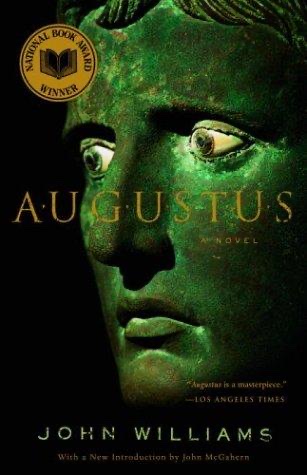 Augustus
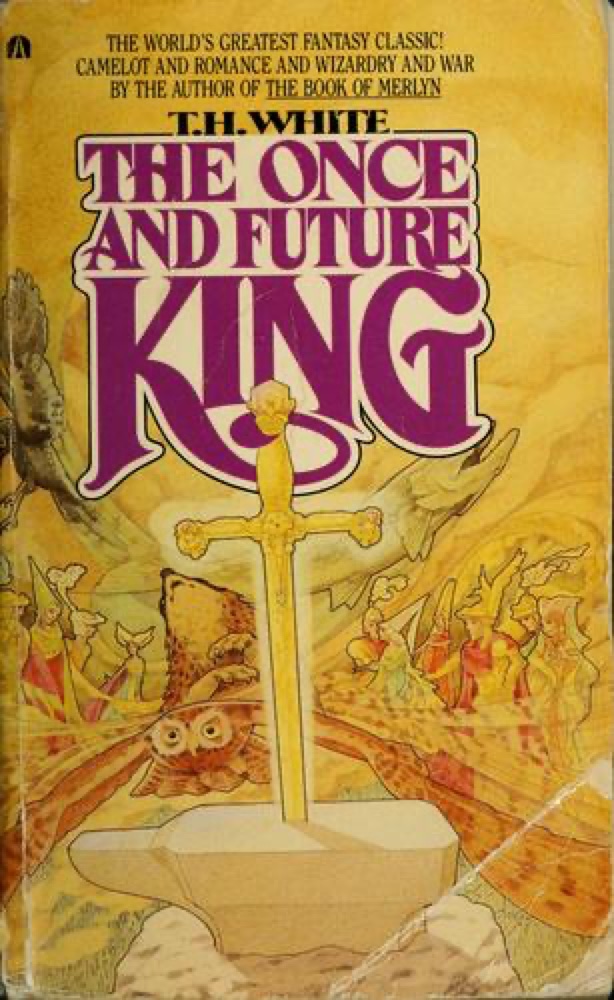 The Once and Future King
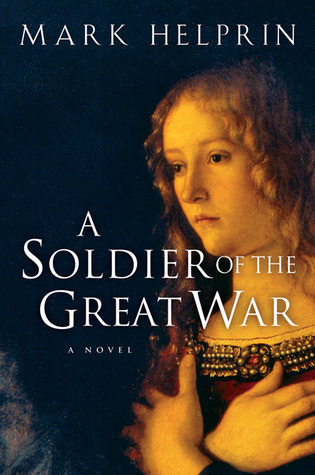 A Soldier of the Great War
 Ben-Hur: A Tale of the Christ
 Oblomov
 The Dream of Scipio
 The Fall of Hyperion
 The Mirror & the Light
 The Odyssey
 The Memoirs of Cleopatra
 Lord of the Silver Bow
 Arch of Triumph
 Lord of Light
 The Histories
 The Hymn to Dionysus
 The Bright Sword
 The Longest Journey
 From Here to Eternity
 Maldoror and the Complete Works
 Laurus
 Sword & Citadel
 The Grace of Kings
 The Warrior Prophet
 The Professor's House
 Glorious Exploits
 The Dean's Watch
 Lion of Macedon
 The Cossacks
 Armadale
 The Iliad
 Spring Snow
 Fall of Light
 You Can't Go Home Again
 The Claw of the Conciliator
 The Agony and the Ecstasy
 The Narrow Road to the Deep North
 The Symposium
 The Greek Way
 Sackett's Land
 Of Human Bondage
 The Everlasting Man
 Legend
 Phantastes
 The Last Man
 She
She
 The Enchantress of Florence
 The Brothers Karamazov
 Earth Abides
 A Song to Drown Rivers
 Phaedrus
 Zorba the Greek
 Abraham Lincoln: Vampire Hunter
 The Thousandfold Thought
 Les Misérables
 Toll the Hounds
 The Damnation Game