
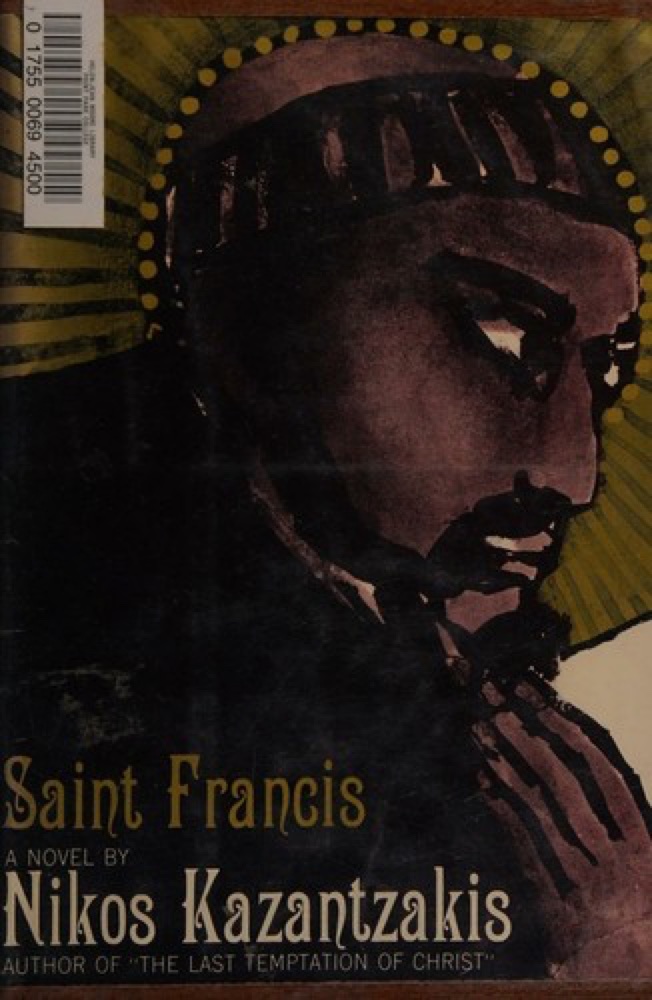
 Saint Francis
Quotes from the Book
I felt once more how simple and frugal a thing is happiness: a glass of wine, a roast chestnut, a wretched little brazier, the sound of the sea. Nothing else.
This is true happiness: to have no ambition and to work like a horse as if you had every ambition. To live far from men, not to need them and yet to love them. To have the stars above, the land to your left and the sea to your right and to realize of a sudden that in your heart, life has accomplished its final miracle: it has become a fairy tale.
God changes his appearance every second. Blessed is the man who can recognize him in all his disguises.
If a woman sleeps alone it puts a shame on all men. God has a very big heart, but there is one sin He will not forgive. If a woman calls a man to her bed and he will not go.
You can knock on a deaf man's door forever.
I was happy, I knew that. While experiencing happiness, we have difficulty in being conscious of it. Only when the happiness is past and we look back on it do we suddenly realize - sometimes with astonishment - how happy we had been.
Life is trouble. Only death is not. To be alive is to undo your belt and *look* for trouble.
Look, one day I had gone to a little village. An old grandfather of ninety was busy planting an almond tree. ‘What, grandfather!’ I exclaimed. ‘Planting an almond tree?’ And he, bent as he was, turned around and said: ‘My son, I carry on as if I should never die.’ I replied: ‘And I carry on as if I was going to die any minute.’ Which of us was right, boss?
When everything goes wrong, what a joy to test your soul and see if it has endurance and courage! An invisible and all-powerful enemy—some call him God, others the Devil, seem to rush upon us to destroy us; but we are not destroyed.
Happy is the man, I thought, who, before dying, has the good fortune to sail the Aegean sea.
Every man has his folly, but the greatest folly of all … is not to have one.
For I realize today that it is a mortal sin to violate the great laws of nature. We should not hurry, we should not be impatient, but we should confidently obey the eternal rhythm.
the highest point a man can attain is not Knowledge, or Virtue, or Goodness, or Victory, but something even greater, more heroic and more despairing: Sacred Awe!
All those who actually live the mysteries of life haven't the time to write, and all those who have the time don't live them! D'you see?
You have everything but one thing: madness. A man needs a little madness or else - he never dares cut the rope and be free.
Free yourself from one passion to be dominated by another and nobler one. But is not that, too, a form of slavery? To sacrifice oneself to an idea, to a race, to God? Or does it mean that the higher the model the longer the longer the tether of our slavery?
No, you're not free," he said. "The string you're tied to is perhaps no longer than other people's. That's all. You're on a long piece of string, boss; you come and go, and think you're free, but you never cut the string in two. And when people don't cut that string . . ." "I'll cut it some day!" I said defiantly, because Zorba's words had touched an open wound in me and hurt. "It's difficult, boss, very difficult. You need a touch of folly to do that; folly, d'you see? You have to risk everything! But you've got such a strong head, it'll always get the better of you. A man's head is like a grocer; it keeps accounts: I've paid so much and earned so much and that means a profit of this much or a loss of that much! The head's a careful little shopkeeper; it never risks all it has, always keeps something in reserve. It never breaks the string. Ah no! It hangs on tight to it, the bastard! If the string slips out of its grasp, the head, poor devil, is lost, finished! But if a man doesn't break the string, tell me, what flavor is left in life? The flavor of camomile, weak camomile tea! Nothing like rum-that makes you see life inside out!
When shall I at last retire into solitude alone, without companions, without joy and without sorrow, with only the sacred certainty that all is a dream? When, in my rags—without desires—shall I retire contented into the mountains? When, seeing that my body is merely sickness and crime, age and death, shall I—free, fearless, and blissful—retire to the forest? When? When, oh when?
Watch on YouTube
About Nikos Kazantzakis
We have collected 84 quotes from 5 books by Nikos Kazantzakis on BookQuoters.
More about the author →More by Nikos Kazantzakis

Book details
- Author
- Nikos Kazantzakis
- Genre
- Classics
- Goodreads rating
- 4.02 (60k ratings) →
Keep reading
 Demons
 The Count of Monte Cristo
 Shōgun
 The Consolation of Philosophy
 The Idiot
 Lord of the Silver Bow
 Either/Or: A Fragment of Life
 Henderson the Rain King
 East of Eden
 For Whom the Bell Tolls
 The Curse of Chalion
 Dracula
 Doctor Zhivago
 Perelandra
 The Secret Scripture
 Faust
Faust
 Atlas Shrugged
 Lord of Light
 Demian
 Legend
 The Magus
 The Fall
 A Soldier of the Great War
 Moby-Dick
 The Claw of the Conciliator
 Thus Spake Zarathustra
 The Schopenhauer Cure
 The Blue Castle
 The Broken Eye
 The Gay Science
 Man and Superman
 A Happy Death
 Lilith
 The Zahir
 The Fountainhead
 Uncle Tom's Cabin
 The Same Old Story
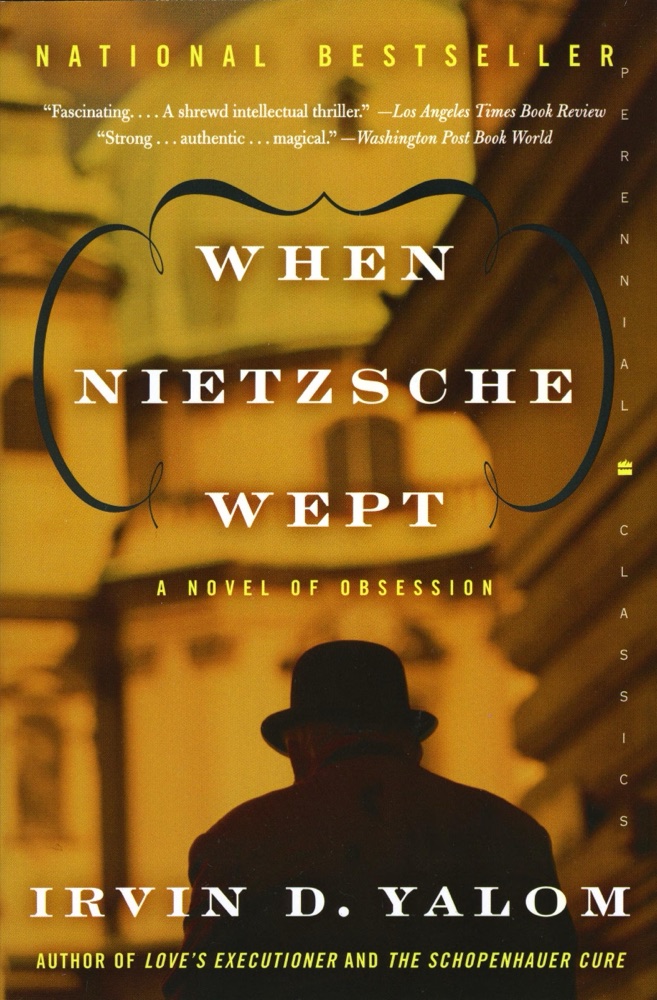 When Nietzsche Wept
 Notes from Underground
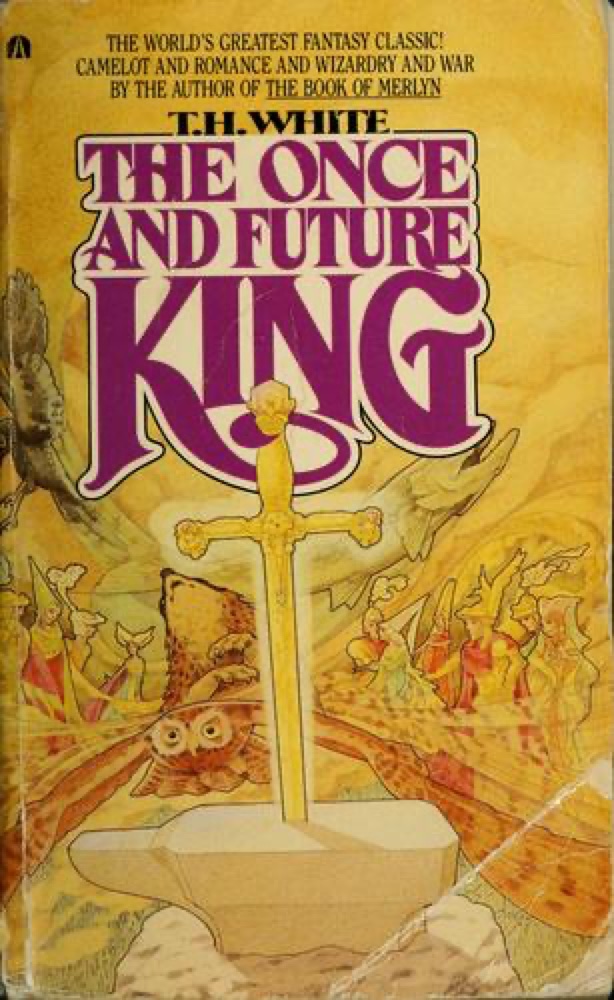 The Once and Future King
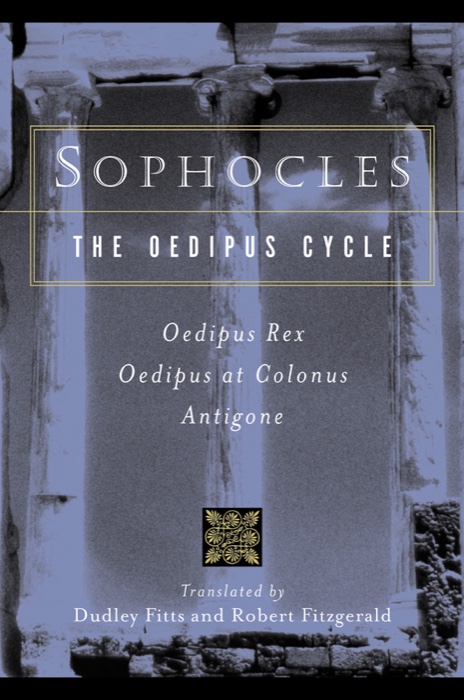 The Oedipus Cycle: Oedipus Rex/Oedipus at Colonus/Antigone
 Manalive
 Cuckold
 Sexus
Sexus
 The Home and the World
 Ben-Hur: A Tale of the Christ
 The First Circle
 Cancer Ward
 Point Counter Point
 We
We
 Royal Assassin
 The Brothers Karamazov
 Don Quixote
 The Bacchae
 The Seven Storey Mountain
 The Man Who Was Thursday
 Uncle Vanya
 The Illustrated Man
 The Gargoyle
 Day
Day