 Whose Names Are Unknown
Quotes from the Book
Good preachers don’t preach about God and heaven, and things like that. They always preach against something, like hell and the devil. Them is things to be against. It wouldn’t do a preacher no good to preach for God. He’s got to preach against the devil and all wicked and sinful things. That’s what the people like to hear about. They want to hear about the bad things.
9
Preachers has got to preach against something. It wouldn’t do them no good to preach for everything. They got to be against something every time.
7
There were always well-developed plans in Jeeter’s mind for the things he intended doing; but somehow he never got around to doing them. One day led to the next, and it was much more easy to say he would wait until tomorrow. When that day arrived, he invariably postponed action until a more convenient time. Things had been going along in that easy way for almost a lifetime now; nevertheless,
5
He still could not understand why he had nothing, and would never have anything, and there was no one who knew and who could tell him. It was the unsolved mystery of his life.
4
He would not even consider going elsewhere to live, even though he were offered a chance to work another man’s farm on shares. Even to move to Augusta and work in the cotton mills would be impossible for him. The restless movement of the other tenant farmers to the mills had never had any effect on Jeeter. Working in cotton mills might be all right for some people, he said, but as for him, he would rather die of starvation than leave the land. In seven years his views of the subject had not been altered; and if anything, he was more determined than ever to remain where he was at all cost.
3
Co-operative and corporate farming would have saved them all.
3
She could sometimes stand the pain of it in her stomach when she knew there was nothing to eat, but when Lov stood in full view taking turnips out of the sack, she could not bear the sight of seeing food no one would let her have.
3
Though it sometimes looks like a rich man will never help the poor; whereas the poor people will give away everything they has to help somebody who ain’t got nothing. That’s how it looks to me. Don’t seem like it ought to be that way, but I reckon the rich ain’t got no time to fool with us poor folks.
2
He sometimes said it was partly his own fault, but he believed steadfastly that his position had been brought about by other people. He
2
The spring-time ain’t going to let you fool it by hiding away inside a durn cotton mill. It knows you got to stay on the land to feel good. That’s because humans made the mills. God made the land, but you don’t see Him building durn cotton mills. That’s how I know better than to go up there like the rest of them. I stay where God made a place for me.
2
Women ain’t good for nothing but to marry and work for men,
He knew the time for burning and plowing had ended the day before, but there still lingered in the warm March air something of the new season. The smell of freshly turned earth and the odor of pine and sedge-smoke hovered over the land even after burning and plowing was done. He breathed deeply of it, filling his body with the invigorating aroma.
It was still not too late to begin, but Jeeter did not have a mule, and he did not have the credit to purchase seed-cotton and guano at the stores. Up until this year, he had lived in the hope that something would happen at the last moment to provide a mule and credit, but now it seemed to him that there was no use hoping for anything any more. He could still look forward to the following year when he could perhaps raise a crop of cotton, but it was an anticipation not so keen as it once had been. He had felt himself sink lower and lower, his condition fall further and further, year after year, until now his trust in God and the land was at the stage where further disappointment might easily cause him to lose his mind and reason. He still could not understand why he had nothing, and would never have anything, and there was no one who knew and who could tell him. It was the unsolved mystery of his life.
Me and Tom used to get along first-rate concerning everything. Me and him never had no difficulties like I was always having with my other children. They used to throw rocks at me and hit me over the head with sticks, but Tom never did. Tom was always a first-rate boy when I knowed him.
Watch on YouTube
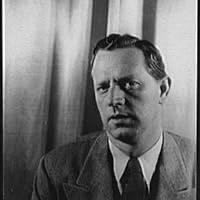
About Erskine Caldwell
We have collected 14 quotes from 1 book by Erskine Caldwell on BookQuoters.
More about the author →About the book
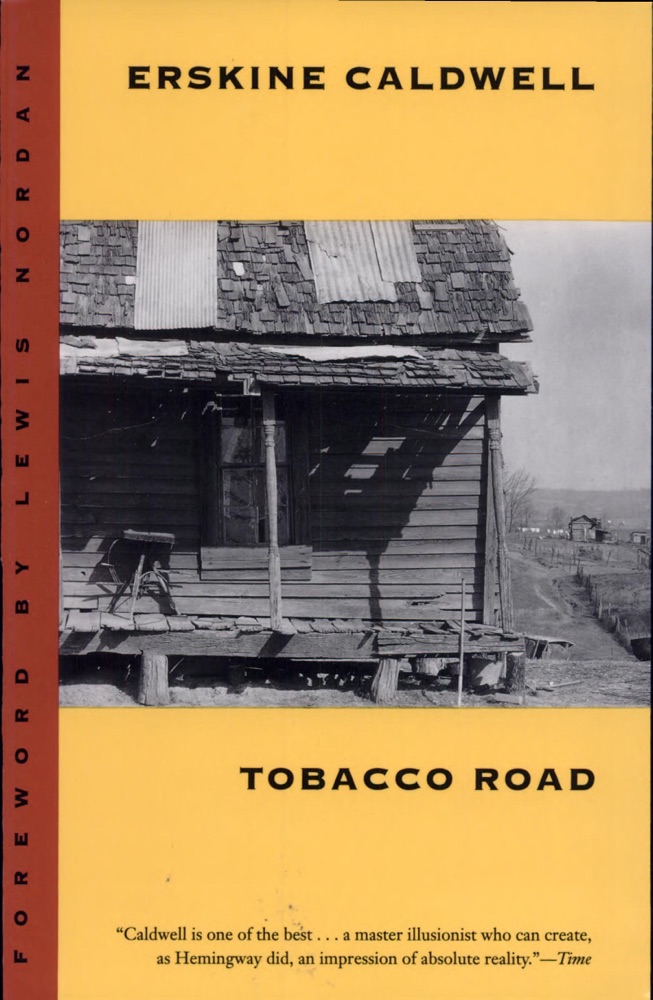
The classic novel of a Georgia family undone by the Great Depression: “[A] story of force and beauty” (New York Post). Even before the Great Depression struck, Jeeter Lester and his family were desperately poor sharecroppers. But when hard times begin to affect the families that once helped support them, the Lesters slip completely into the abyss. Rather than hold on to each other for support, Jeeter, his wife Ada, and their twelve children are overcome by the fractured and violent society around them. Banned and burned when first released in 1932, Tobacco Road is a brutal examination of poverty’s dehumanizing influence by one of America’s great masters of political fiction.
Book details
- First published
- 1932
- Author
- Erskine Caldwell
- Genre
- Fiction
- Goodreads rating
- 3.70 (16k ratings)
Keep reading
Whose Names Are Unknown
 One of Ours
 The Known World
 The Reivers
 Mohawk
 The Prophets
 Eifelheim
 Hard Times
 The Sweetness of Water
 The Good Lord Bird
 The Burning Soul
 The Complete Stories
 The Given Day
 Homegoing
 From Here to Eternity
 Shaman
 The Autobiography of Eleanor Roosevelt
 The Virginian
 The Grapes of Wrath
 Sometimes a Great Notion
 In the Garden of Iden
 Alas, Babylon
 The Whisper Man
 The Devil and the Dark Water
 The Unvanquished
 Jayber Crow
 The Underground Railroad
 Independent People
 Cold Mountain
 Cannery Row
 Dragon Seed
 Mary Barton
 The Nickel Boys
 The Night Watchman
 The Lincoln Highway
 Petals of Blood
 The Absolute Book
 In the Beauty of the Lilies
 Sackett's Land
 Ordeal by Innocence
 Look at the Birdie: Unpublished Short Fiction
 World Without End
 The Bone Tree
 The Wolf in Winter
 The Kalahari Typing School for Men
 A Good Man is Hard to Find and Other Stories
 The Love Songs of W.E.B. Du Bois
 A Bend in the River
 Let the Circle Be Unbroken
 Things Fall Apart
 Prairie Fires: The American Dreams of Laura Ingalls Wilder
 The Princess and Curdie
 The Limpopo Academy of Private Detection
 Natchez Burning
 How Beautiful We Were
 The Son
 A Place on Earth
 Blood Done Sign My Name: A True Story
 Familiaris