
 The Boy in the Striped Pajamas
Quotes from the Book
A line came into my mind, something that Hannah Arendt once said about the poet Auden: that life had manifested the heart's invisible furies on his face.
If there is one thing I've learned in more than seven decades of life, it's that the world is a completely fucked-up place. You never know what's around the corner and it's often something unpleasant.
I've always believed that if women could only collectively harness the power that they have then they'd rule the world.
Maybe there were no villains in my mother’s story at all. Just men and women, trying to do their best by each other. And failing.
I remember a friend of mine once telling me that we hate what we fear in ourselves,
It's as if she understood completely the condition of loneliness and how it undermines us all, forcing us to make choices that we know are wrong for us.
It was a difficult time to be Irish, a difficult time to be twenty-one years of age and a difficult time to be a man who was attracted to other men. To be all three simultaneously required a level of subterfuge and guile that felt contrary to my nature.
Every man is afraid of women as far as I can see,” said Julian, displaying an understanding of the universe far beyond his years. “That’s true,” she said. “But only because most men are not as smart as women and yet they continue to hold all the power. They fear a change of the world order.
You look like a Greek God sent down by the immortal Zeus from Mount Olympus to taunt the rest of us inferior beings with your astonishing beauty, I said, which somehow in translation came out as "you look fine, why?
The women are always the whores; the priests are always the good men who were led astray.
What you know about women,” replied Maude, “could be written in large font on the back of a postage stamp and there’d still be room for the Lord’s Prayer.
I was deluding myself, for love was one thing but desire was something else entirely.
I had never considered myself to be a dishonest person, hating the idea that I was capable of such mendacity and deceit, but the more I examined the architecture of my life, the more I realized how fraudulent were its foundations. The belief that I would spend the rest of my time on earth lying to people weighed heavily on me and at such times I gave serious consideration to taking my own life.
I may not have known much about pregnancies but I knew that you couldn’t have a son or a daughter without actually doing it first. The priests at school had once muttered something to the effect that when a mummy and a daddy loved each other very much, they lay close together and the Holy Spirit descended upon them to create the miracle of new life. (Charles, in his one attempt at a man-to-man talk with me, had put it rather differently. ‘Get her kit off,’ he said. ‘Play with her tits a bit, because the ladies love that. Then just stick your cock in her pussy and ram it in and out a bit. Don’t hang around too long in there – it’s not a bloody train station. Just do your business and get on with your day.’ It’s no wonder he managed to secure so many wives, the old romantic.) I
Did I ever tell you that they nearly cut my dick off?’ ‘No,’ I said, uncertain whether this was something that had really happened or something he was misremembering in his delirium. ‘It’s true,’ he said. ‘The night before the Gardaí found me. They said that I had a choice. That they’d either pop one of my eyes out or cut my dick off. They told me I could choose which.’ ‘Jesus,’ I said. ‘I mean I would have said my eye, of course. Probably the one on the other side to the missing ear, just to balance things out. But can you imagine if they had cut my dick off? I wouldn’t be lying here right now, would I? None of this would have happened.’ ‘That’s one way of looking at it,’ I said. ‘They would have saved my life.’ ‘Maybe.’ ‘No, you’re right. I’d be dead already because I’d probably have killed myself if they’d cut my dick off. There’s no way I would have gone through my life dickless. It’s amazing, isn’t it, how one small part of our anatomy completely controls our lives?
life had manifested the heart’s invisible furies on his face.
Do you enjoy being a writer, Mrs Avery?” asked Julian. “No, of course not, she said. “It’s a hideous profession. Entered into by narcissists who think their pathetic little imaginations will be of interest to people they’ve never met.
I don’t drink coffee,” she said, taking a sip from her tea. “Coffee is for Americans and Protestants. Irish people should drink tea. That’s how we were brought up after all. Give me a nice cup of Lyons and I’m content.” “I don’t mind the occasional cup of Barry’s myself.” “No, that’s from Cork.
Actually, they were very strange parents,' I told her. 'Neither of them were what you might call conventional people. And they had an extremely peculiar approach to parenting. Sometimes I felt as if I were little more than a tenant in their house, as if they weren't entirely sure what I was doing there. But they never mistreated me, nor did they ever do anything to hurt me. And perhaps they loved me in their own way. The concept itself might have been slightly alien to them.' 'And did you love them?' 'Yes, I did,' I said without hesitation. 'I loved them both very much. Despite everything. But then children usually do. They look for safety and security, and one way or another Charles and Maude provided that.' (p. 556)
Cyril about Charles Avery: 'Charles was a banker. He was quite rich but he was always cheating on his taxes. He went to prison a few times for it. And when he was younger he always had a string of women on the go. But he was good fun. He was always telling me I wasn't a real Avery, though. I think that I could have done without that.' 'That sounds quite mean on his part.' 'I honestly don't think that he was trying to be cruel. It was more a matter of fact. Anyway, he's dead now. They both are. And I was with him when he went. I miss him still.' (p. 557)
Catherine on her relationship with Kenneth (and a great quote in the wake of International Women's Week - and remember this is written by a male author even if it's put in the mouth of a woman): 'And what did I do, only slip my hand inside his own and say that maybe he should hold my hand instead for a while, and I can see the look on his face even to this day. The shock and the desire. Oh, I loved the power I had over him! The power I could sense in myself! You won't understand this but it's something that every girl realizes at some point in her life, usually when she's around fiteen or sixteen. Maybe it's even younger now. That she has more power than every man in the room combined, because men are weak and governed by their desires and their desperate need for women but women are strong. I've always believed that if women could only collectively harness the power that they have then they'd rule the world. But they don't. I don't know why. And for all their weakness and stupidity, men are smart enough to know that being in charge counts for a lot. They have that over us at least.' (p. 561-562)
line came into my mind, something that Hannah Arendt had once said about the poet Auden: that life had manifested the heart’s invisible furies on his face.
You were never a real Avery,” he hissed. “You know that, don’t you?” “I do,” I said. “But Christ on a bike, you came close. You came damned close.
What you know about women,” replied Maude, “could be written in large font on the back of a postage stamp and there’d still be room for the Lord’s Prayer. For all your
And what did I do, only slip my hand inside his own and say that maybe he should hold my hand instead for a while, and I can see the look on his face even to this day. The shock and the desire. Oh, I loved the power I had over him! The power I could sense in myself! You won't understand this but it's something that every girl realizes at some point in her life, usually when she's around fiteen or sixteen. Maybe it's even younger now. That she has more power than every man in the room combined, because men are weak and governed by their desires and their desperate need for women but women are strong. I've always believed that if women could only collectively harness the power that they have then they'd rule the world. But they don't. I don't know why. And for all their weakness and stupidity, men are smart enough to know that being in charge counts for a lot. They have that over us at least.' (p. 561-562)
We’re none of us normal. Not in this fucking country.
He tells a story, and that's what I like. Does this fella tell a story? He doesn't spend twenty pages describing the colour of the sky?' 'He hasn't so far.' 'Good. Jeffrey Archer never talks about the colour of the sky and I like that in a writer. I'd say Jeffrey Archer has never even looked up at the sky his entire life.' 'Especially now that he's in prison,' I suggested.
Long before we discovered that he had fathered two children by two different women, one in Drimoleague and one in Clonakilty, Father James Monroe stood on the altar of the Church of Our Lady, Star of the Sea, in the parish of Goleen, West Cork, and denounced my mother as a whore.
Did you know?
- The novel spans seven decades of Irish history, from the 1940s to the present day.
- It was published by Doubleday in the UK and by Hogarth in the United States.
- The story opens with Cyril's unmarried teenage mother being publicly denounced from the altar of a church in Goleen, West Cork.
- It won the Glass Bell Award for best novel of 2017 and was shortlisted for the Irish Book Awards Novel of the Year.
- The book was longlisted for the Dublin International Literary Award and published in more than thirty countries.
About John Boyne
John Boyne is an Irish novelist born in Dublin on 30 April 1971. He studied English literature at Trinity College Dublin and creative writing at the University of East Anglia, and is best known for his historical novel The Boy in the Striped Pyjamas (2006), which was adapted into a 2008 film.
More about the author →More by John Boyne
All books by John Boyne →
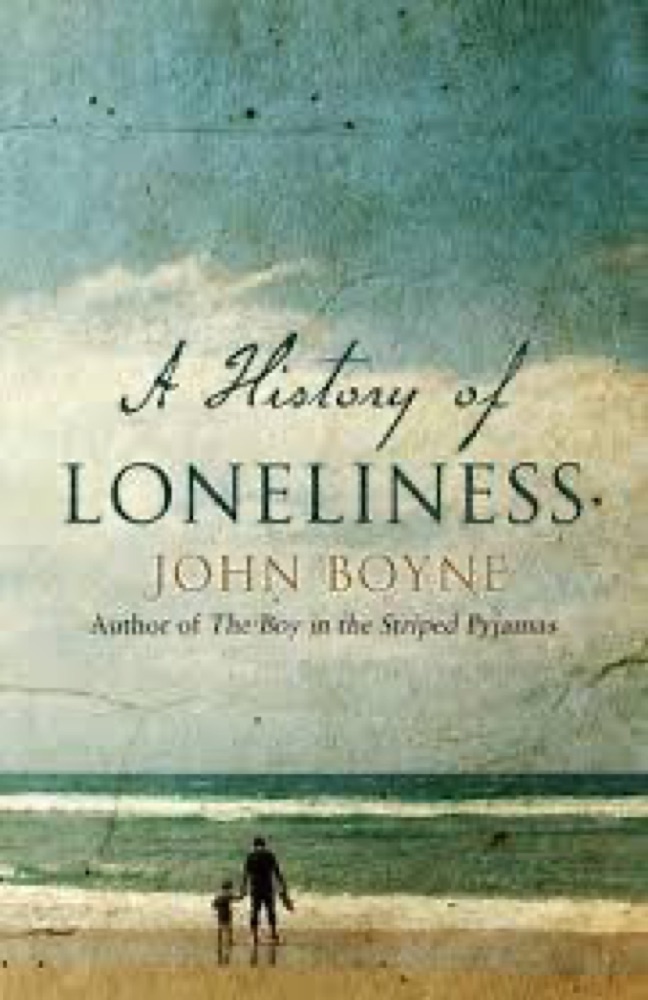
About the book
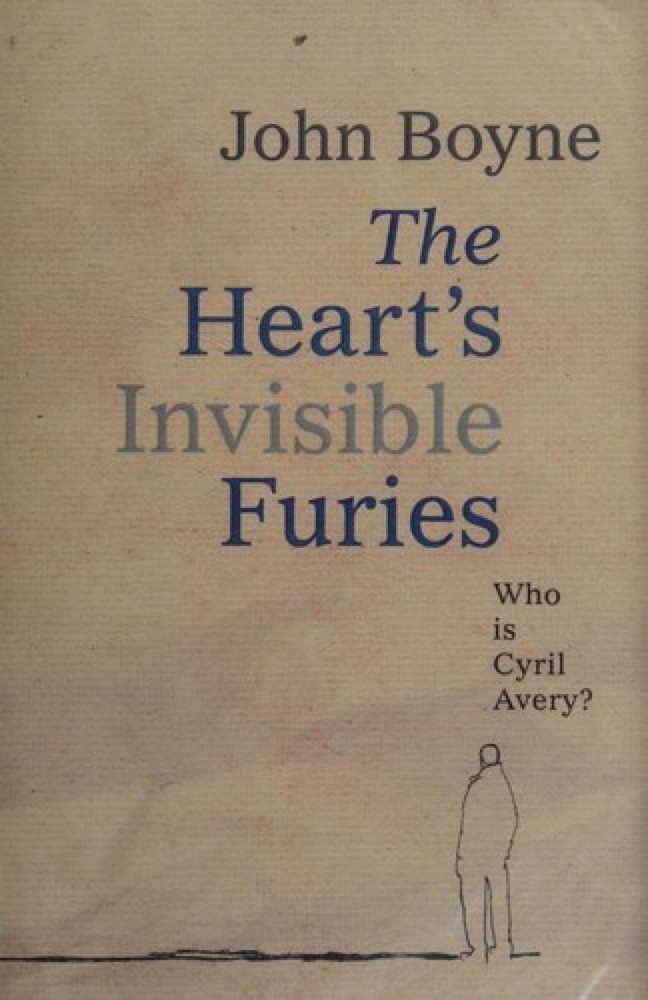
The Heart's Invisible Furies is a sweeping social novel by Irish writer John Boyne, published by Doubleday in 2017. It follows Cyril Avery, born out of wedlock to a teenage girl cast out of her rural West Cork community and adopted by an eccentric, well-to-do Dublin couple through the intervention of a nun. The story tracks Cyril across seven decades of Irish life, from the 1940s to the present day, as he struggles to understand who he is, where he came from, and where he belongs, anchored only tenuously by his friendship with the charismatic and reckless Julian Woodbead.
At its core the book is about identity, belonging, and the search for a home in a country and an era shaped by shame and intolerance. Cyril's lifelong effort to reconcile his sexuality with a repressive Catholic Ireland lets Boyne dramatize a much broader range of prejudice, secrecy, and social change. Told with dark humour alongside its heartbreak, the narrative repeatedly relies on chance and coincidence to knit its characters' lives together across the years.
Through one ordinary man's story, Boyne offers a portrait of modern Ireland's transformation, mapping personal struggle onto national change. Widely regarded as among Boyne's most ambitious works, the novel was praised for its emotional scope and won the Glass Bell Award for best novel of 2017. It has been published in more than thirty countries and remains one of the author's best-known books alongside The Boy in the Striped Pyjamas.
Key characters
- Cyril AveryAdopted protagonist searching for identity and belonging across seven decades
- Catherine GogginCyril's biological mother, cast out of her West Cork village as a pregnant teenager
- Julian WoodbeadCyril's charismatic, reckless childhood friend and lifelong anchor
- Charles AveryCyril's eccentric, wealthy adoptive father
- Maude AveryCyril's aloof adoptive mother, a novelist
- BastiaanDutch doctor with whom Cyril finds happiness in Amsterdam
- IgnacSlovenian youth Cyril and Bastiaan take in and raise
Book details
- First published
- 2017
- Length
- 592 pages
- Reading time
- 36 hours
- Author
- John Boyne
- Genre
- Fiction
- Goodreads rating
- 4.51 (225k ratings) →
- First line
- “Long before we discovered that he had fathered two children by two different women, one in Drimoleague and one in Clonakilty, Father James Monroe stood on the altar of the Church of Our Lady, Star of the Sea, in the parish of Goleen, West Cork, and denounced my mother as a whore.”
If you liked this, read…
- 1A Little LifeAnother sweeping, emotionally intense novel about a man's lifelong reckoning with trauma and belonging
- 2The Boy in the Striped PyjamasJohn Boyne's most famous novel, sharing his empathetic historical storytelling
- 3The AbsolutistAn earlier Boyne novel exploring shame, secrecy, and hidden love
Keep reading
 Rainbow Black
 On Beauty
 The Benevolent Society of Ill-Mannered Ladies
 The Family Upstairs
 Brief Interviews with Hideous Men
 Zikora
 The Story of a New Name
 A Hero of Our Time
 Jude the Obscure
 Women
Women
 Her Body and Other Parties
 Uncle Silas
 Agnes Grey
 A Curious Beginning
 The Painted Veil
 Lives of Girls and Women
 Those Who Leave and Those Who Stay
 Mother Night
 Homesick for Another World
 Nine Stories
 Flappers and Philosophers
 Jailbird
 Dream Count
 What Is Not Yours Is Not Yours
 The Moonstone
 White Oleander
 The Golden Notebook
 Yesteryear
 The Gargoyle
 Gerald's Game
 When We Were Animals
 The Country Girls
 The Days of Abandonment
 Lady Chatterley's Lover
 Old Babes in the Wood: Stories
 The Grace Year
 My Cousin Rachel
 Bastard Out of Carolina
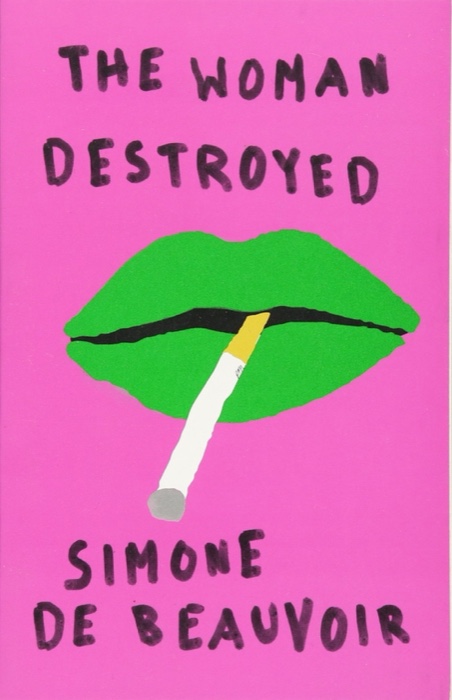 The Woman Destroyed
 The Women's Room
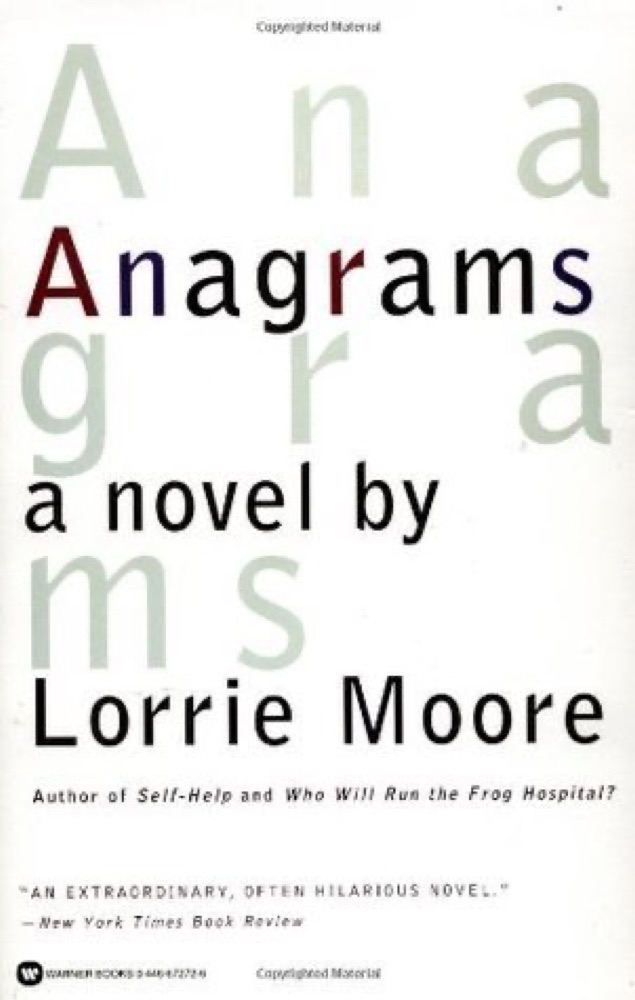 Anagrams
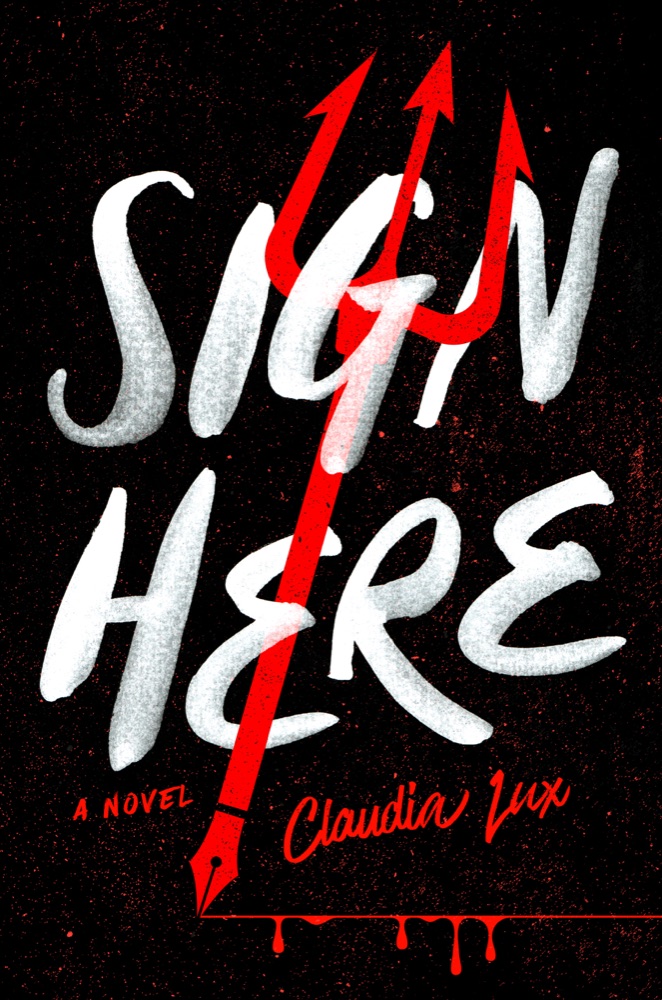 Sign Here
 The Marriage of Opposites
 Fear of Flying
 Lady Audley's Secret
 The French Lieutenant's Woman
 Sexing the Cherry
 Library of Souls
 The Witching Hour
 Sexus
Sexus
 In the Heart of the Heart of the Country and Other Stories
 The Age of Innocence
 Anita de Monte Laughs Last
 The Moon and Sixpence
 The Woman in White
 Kokoro
 The Untouchable
 Gaudy Night
 Laura
Laura
 The Good Soldier