 Green Dolphin Street
Quotes from the Book
A great sea fog is not homogenous--its density varies: it is honeycombed with streets, it has its caves of clear air, its cliffs of solid vapour, all shifting and changing place with the subtlety of legerdemain.
8
The moon rose up that evening and shot her silver arrows at the house under the artu tree. The house was empty. Then the moon came across the sea and across the reef. She lit the lagoon to it's dark, dim heart. She lit the coral brains and sand spaces, and the fish casting their shadows on the sand and the coral. The keeper of the lagoon rose to greet her, and the fin of him broke her reflection on the mirror-like surface into a thousand glittering ripples. She saw the white staring ribs of the form on the reef. Then, peeping over the trees, she looked down into the valley, where the great stone idol had kept it's solitary vigil for five thousand years, perhaps, and more. At this base, in his shadow, looking as if under his protection, lay two human beings, naked, clasped in each other's arms and fast asleep. One could scarcely pity his vigil, had it been marked sometimes through the years by such an incident as this. The thing had been conducted just as the birds conduct their love affairs. An affair absolutely natural, absolutely blameless and without sin. A marriage according to Nature, without feasts or guests, consummated with accidental cynicism under the shadow of a religion a thousand years dead.
7
...the thoughts we think in childhood, Captain, are the fathers of the thoughts we think when we are grown up.
6
When we have learnt to call storms, storms, and death, death, and birth, birth, when we have mastered the sailor's horn-book and Mr Piddington's law of cyclones, Ellis's anatomy and Lewer's midwifery, we have already made ourself half blind. We have become hypnotized by words and names. We think in words and names, not in ideas; the commonplace has triumphed, the true intellect is half crushed.
5
Memory cannot produce a picture that Imagination has not retouched; and her pictures, even the ones least touched by Imagination, are no mere photographs, but the world of an artist.
4
It is a rare experience for a man to hold a tame and unstruggling and unfrightened bird in his hands; next to pressing a woman in his arms, it is the pleasantest tactile sensation he will ever experience, perhaps, in life. He will feel a desire to press it to his heart, if he has such a thing.
1
Nowhere in the world, perhaps, so well as here, could you appreciate Nature’s splendid indifference to the great affairs of Man.
When I was quite a child,” went on Lestrange, “a child no older than Dicky, my nurse used to terrify me with tales about dead people. I was told I’d go to hell when I died if I wasn’t a good child. I cannot tell you how much that has poisoned my life, for the thoughts we think in childhood, Captain, are the fathers of the thoughts we think when we are grown up. And can a diseased father—have healthy children?
Le Farge came aft, on to the poop, and stood for a moment looking over the sea on the port side, where a bank of fog had suddenly appeared
Watch on YouTube
About Henry de Vere Stacpoole
We have collected 9 quotes from 1 book by Henry de Vere Stacpoole on BookQuoters.
More about the author →About the book
The Blue Lagoon is the story of two cousins, Dicky and Emmeline Lestrange, stranded on a remote island with a beautiful lagoon. As children, they are cared for by Paddy Button, a portly sailor who drinks himself to death after only two and a half years in paradise. Frightened and confused by the man's gruesome corpse, the children flee to another part of Palm Tree Island. Over a period of five years, they grow up and eventually fall in love. Sex and birth are as mysterious to them as death, but they manage to copulate instinctively and conceive a child. The birth is especially fifteen-year-old Emmeline, alone in the jungle, loses consciousness and awakes to find a baby boy on the ground near her. Naming the boy Hannah (an example of Stacpoole's penchant for gender reversals), the Lestranges live in familial bliss until they are unexpectedly expelled from their tropical Eden.
Book details
- First published
- 1908
- Author
- Henry de Vere Stacpoole
- Genre
- Classics
- Goodreads rating
- 3.60 (3k ratings)
Keep reading
Green Dolphin Street
 The Prince of Tides
 The Sailor Who Fell from Grace with the Sea
 Out of the Silent Planet
 Swann's Way
 In Search of Lost Time
 Twenty Thousand Leagues Under the Sea
 The Angel Esmeralda
 The Island of the Day Before
 The Plover
 Independent People
 The Captive & The Fugitive
 The Outermost House: A Year of Life on the Great Beach of Cape Cod
 The Hungry Tide
 Winter
 Oscar and Lucinda
 The Moor's Last Sigh
 Johnny Panic and the Bible of Dreams: Short Stories, Prose and Diary Excerpts
 Sexing the Cherry
 Wind, Sand and Stars
 Once Upon a River
 Allan Quatermain
 The Immense Journey
 The Shell Collector
 The Enchantress of Florence
 The Infinities
 The Old Curiosity Shop
 The French Lieutenant's Woman
 Sea of Poppies
 The Covenant of Water
 Black Lamb and Grey Falcon
 Selected Poems
 Monday or Tuesday
 The Collected Poems
 The Celtic Twilight: Faerie and Folklore
 The Stories of Vladimir Nabokov
 A Sport and a Pastime
 She
She
 The Sea, the Sea
 The Farthest Shore
 Light Years
 Turtle Diary
 Dombey and Son
 House of Salt and Sorrows
 The Professor's House
 The Cat's Table
 The Lighthouse
 Speak, Memory
 Peace
Peace
 The Great God Pan
 The Complete Stories and Poems
 Weaveworld
 The Lighthouse Witches
 Orlando
 The Witches of Eastwick
 The Water Babies
 Death in Venice and Other Tales
 The People in the Trees
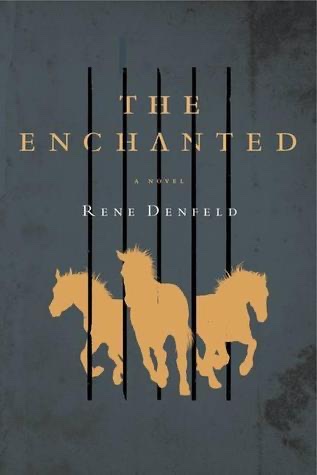 The Enchanted
 Ada, or Ardor: A Family Chronicle