
 The Children of Men
Quotes from the Book
Not so much two ships passing in the night as two ships sailing together for a time but always bound for different ports.
181
Every island to a child is a treasure island.
22
I wonder if childhood is ever really happy. Just as well, perhaps. To be blissfully happy so young would leave one always seeking to recapture the unobtainable. Like those people who were always happiest at school or university. Always going back. No reunion ever missed. It always seemed to me rather pathetic.
12
Dalgliesh was too experienced to assume that fear implied guilt; it was often the most innocent who were the most terrified.
8
Our parents' generation carried the past memorialized in paint, porcelain, and wood; we cast it off. Even our national history is remembered in terms of the worst we did, not the best.
7
Unnatural death always provoked a peculiar unease, an uncomfortable realization that there were still some things that might not be susceptible to bureaucratic control.
3
I thought that any woman as beautiful as she must have an instinct about life, access to some secret wisdom which is beyond cleverness.
You will already know that Dr. Speidel is being cared for in hospital and that he has SARS—severe acute respiratory syndrome.
First of all, I want to reassure you that the primary way that SARS spreads is by close person-to-person contact, perhaps by droplets when the infected person coughs or sneezes, or by someone touching the surface or object which has been contaminated by infected droplets and then carrying them to the nose, mouth or eyes. It’s possible that SARS might be carried through the air by other means, but at present no one seems sure of that. We can take it that only those of you who came into close contact with either Dr. Speidel or Mr. Dalgliesh are seriously at risk. Nevertheless, it is right that everyone here on Combe should be in quarantine for about ten days. The
Then Dr. Staveley said, “So we agree to accept voluntary quarantine. I’ll let the authorities know. Of course, while this is happening there’ll be a great deal of international activity tracing visitors who flew from Beijing with Dr. Speidel and the friend he stayed with in the south of France.
SARS usually begins with a fever and the symptoms associated with flu—headache, general feeling of being unwell, aches in the body. Some patients, but not all, have a cough at the very outset.
One of the visitors here arrived with SARS; Mr. Dalgliesh caught it. He’s in the sickroom.
Painfully he got to his feet and stood at the foot of the body. The silence was numinous, broken only by the sound of the sea. He listened to it, not in the sense of being aware of the rhythmic crash of the waves against the unyielding granite, but letting the perpetual sound enter into some deeper level of consciousness so that it became an eternal lament for the unhealable anguish of the world.
What are the symptoms?” “Initially much the same as flu—high temperature, aching limbs, loss of energy. There may not be a cough until later.
Are you all right, Commander? You must have inhaled Speidel’s breath when you helped him after he collapsed and went with him back to his cottage. You—and Jo, who nursed him—are the two most at risk.
It was first light when he awoke, his hair and the pillow hot and dank with sweat. The aspirin had at least brought down his temperature. Perhaps all would be well. But the ache in his limbs was worse, and he was possessed of a heavy weariness which made intolerable even the effort of getting out of bed.
He knew what was wrong: he must have caught Dr. Speidel’s influenza. He hoped that he hadn’t infected Miss Holcombe. So far as he could remember, he hadn’t sneezed or coughed while in the cottage. He had touched her hand only briefly on arriving and had sat distanced from her. At eighty she must have built up a healthy resistance to most infections, and she had been given her annual anti-flu injection.
The edge of the cliff was less than five feet away, bounded by a waist-high stone wall. The roar of the ocean pounded in their ears. Instinctively Kate recoiled a step before moving to gaze over the wall. Far below them, the spray rose in a white mist as the waves broke in thunderous explosions against the cliff face.
The aching in his limbs had persisted all day, and it occurred to him that he might be infectious and, if so, wondered whether it was fair to call on Miss Holcombe. But he wasn’t either sneezing or coughing. He would keep his distance as far as possible,
He had had a restless night, alternately throwing off the bedclothes because he was uncomfortably hot and then waking an hour later shivering with cold. He overslept, waking finally just after eight with the beginning of a headache and heavy limbs. Like many healthy people, he regarded illness as a personal insult best countered by refusing to accept its reality.
You did well in there, Sergeant. You knew what to say to Mrs. Burbridge, what would comfort her.” “I’ve had a religious education, ma’am. It comes in useful sometimes.
He arrived every three months with daughter and copy-editor, stayed for two weeks, created a disturbance and succeeded in reminding us that we permanent residents are a coterie of irrelevant escapees from reality; that, like the old lighthouse, we are merely symbols, relics of the past. He punctured our complacency. To that extent he served his purpose. You could call him a necessary evil.
If you decide to do without a personal god it’s illogical to saddle yourself with a legacy of Judeo-Christian sin. That way you suffer the psychological inconveniences of guilt without the consolation of absolution. Oliver had plenty to feel guilty about, as indeed have we all.
Our parents’ generation carried the past memorialised in paint, porcelain and wood; we cast it off. Even our national history is taught or remembered in terms of the worst we did, not the best.
He felt none of that numinous awe born of emptiness and the echo of plainsong on the silent air that ancient churches could evoke. Nevertheless, he found himself closing the door more quietly than he would have done, and marvelled, as he often did, how deep-seated and lasting were the influences of his childhood, when, for a priest’s son, the year had been divided not by school terms, holidays or months, but by the church calendar: Advent, Christmas, Pentecost, the seemingly interminable Sundays after Trinity.
Or was it that she knew as well as did he that his job fuelled the poetry, that the best of his verse had its roots in the pain, horror and pathetic detritus of the tragic and broken lives which made up his working life? Was it this knowledge that kept her silent and distanced when he was working? For him as a poet, beauty in nature, in human faces, had never been enough. He had always needed Yeats’s foul rag-and-bone shop of the heart. He wondered, too, whether Emma sensed his uncomfortable, half-shameful acknowledgement that he who so guarded his privacy had chosen a job that permitted—indeed required—him to violate the privacy of others, the dead as well as the living.
Some words came into his mind, he thought by George Orwell. Murder, the unique crime, should arise only from strong emotions. And of course it always did.
Whatever is not forbidden is allowable. That is in accordance with the sound principle of English law that everything is permissible unless legally prohibited, compared with the practice in mainland Europe, where nothing is permitted unless legally sanctioned.
That was the terrifying thing about love: he felt that he had handed over the key to his mind and she could wander in at will.
Suddenly he recalled long-forgotten words, lines from a poem—Donne, wasn’t it? Who is as safe as we where none can do / Treason to us, except one of we two. Even when he was warmed by her naked flesh, treason slithered like a snake into his mind and lay there heavily coiled, somnolent but unshiftable.
Watch on YouTube
About P.D. James
We have collected 155 quotes from 10 books by P.D. James on BookQuoters.
More about the author →More by P.D. James
All books by P.D. James →
About the book
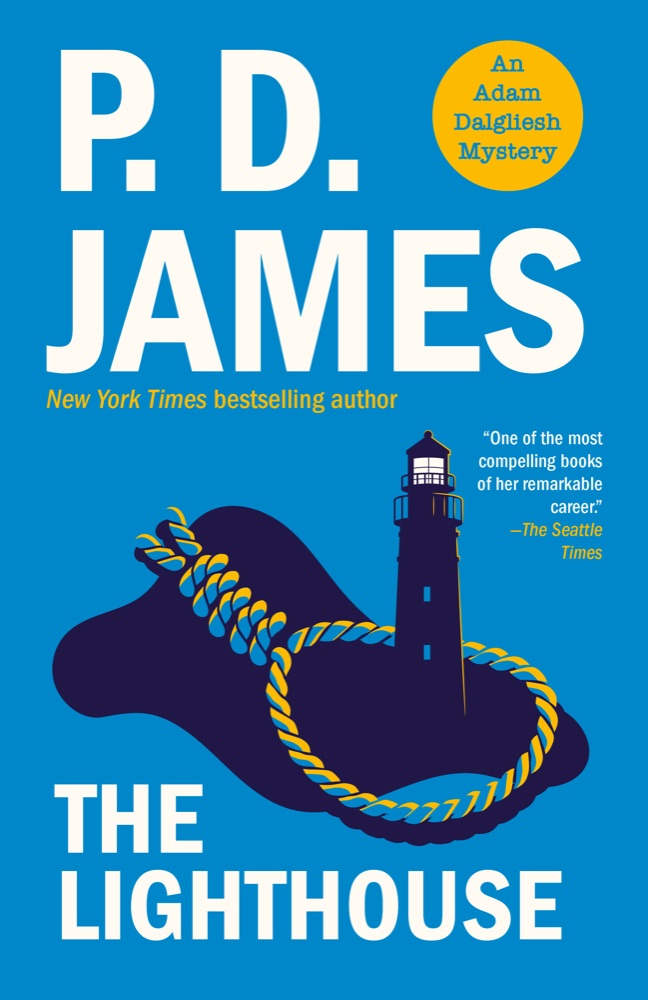
Combe Island off the Cornish coast offers respite to over-stressed high authorities who require privacy and security. But demanding author Nathan Oliver is found strangled and hanging from the renovated lighthouse. Investigator Adam Dagliesh, his inspector Kate Miskin, and sergeant Francis Benton are all pre-occupied with their personal and love lives. The first victim was thoroughly disliked by visitors and residents for valid reasons, but the second, a recovered alcoholic priest, was admired by the skeleton staff. Suspects include Oliver's daughter Miranda, editor Dennis, animal researcher Dr Yelland, recently orphaned Dan, aged Emily, boatman Jago, sickly Dr Speidel, physician Dr Stavely and his unfaithful wife Jo, administrator Maycroft, housekeeper Mrs Plunkett, cook Mrs Burbridge, rebellious teen Millie. Past murders are uncovered and SARS threatens the island.
Book details
- First published
- 2005
- Author
- P.D. James
- Genre
- Mystery
- Goodreads rating
- 3.86 (20k ratings)
Keep reading
 The Shipping News
 A Burnt-Out Case
 The Brutal Telling
 The Ministry of Fear
 The Naked and the Dead
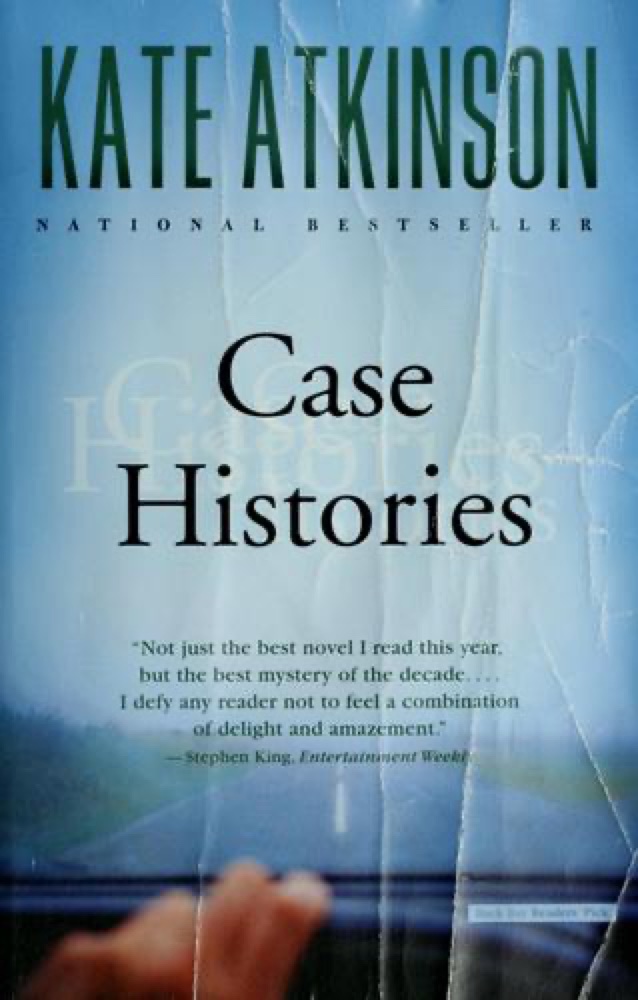 Case Histories
 Little Dorrit
 The Stories of John Cheever
 Glass Houses
 The Novel Habits of Happiness
 The Round House
 Another Country
 A Rule Against Murder
 Death Watch
 The Professor's House
 Pnin
Pnin
 The Bedlam Stacks
 The Whisper Man
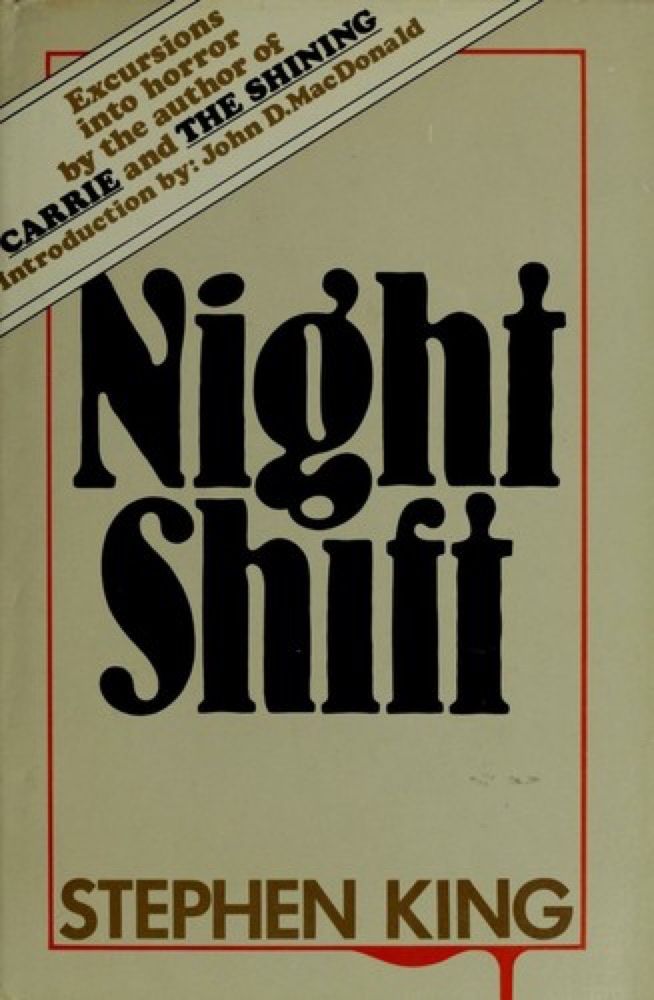 Night Shift
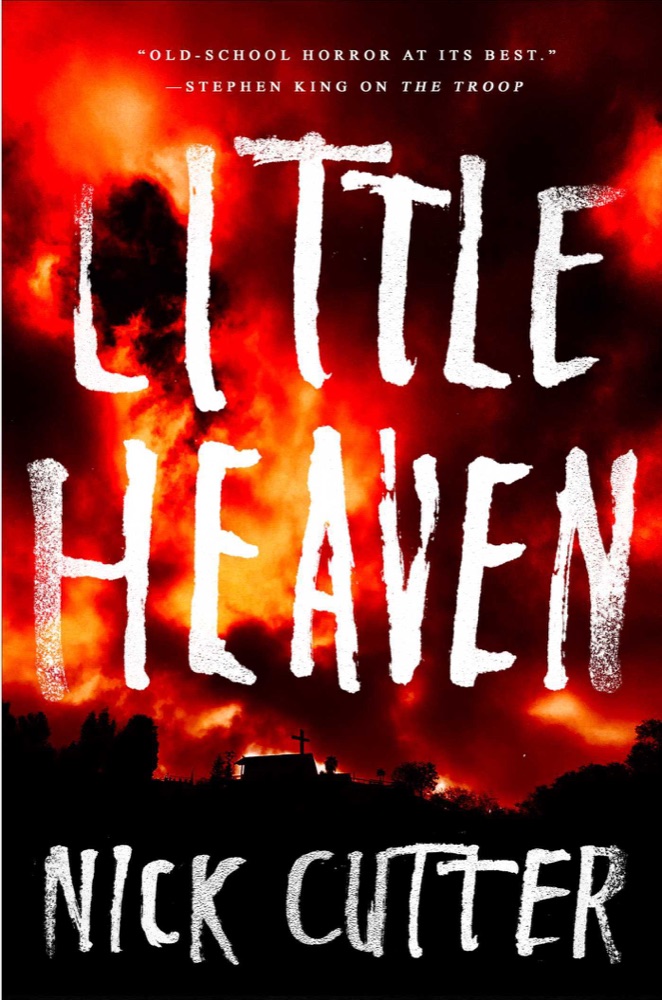 Little Heaven
 10 Minutes 38 Seconds in This Strange World
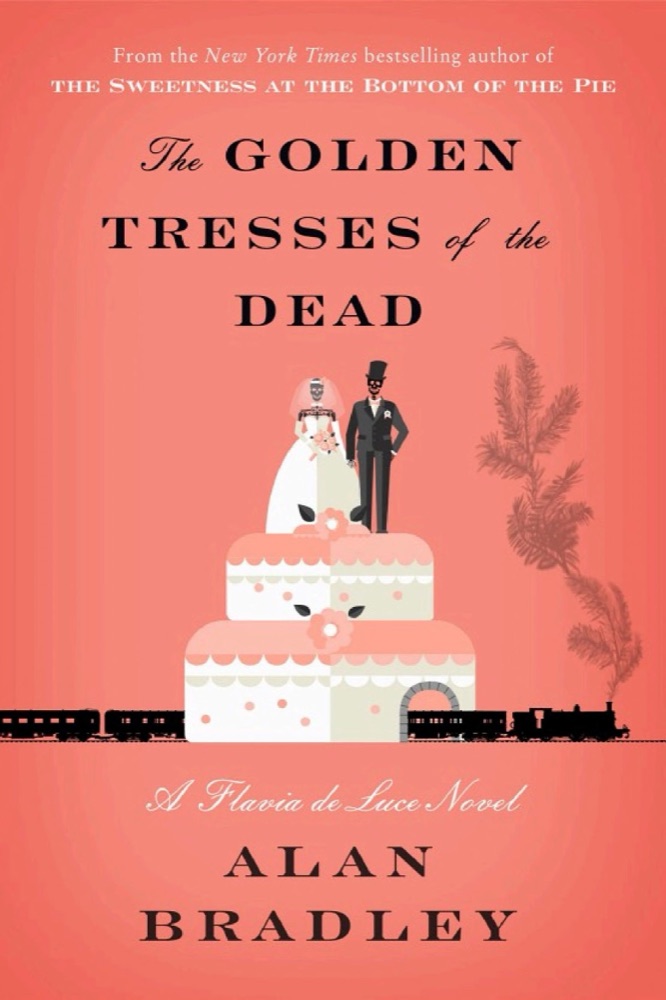 The Golden Tresses of the Dead
 Oliver Twist
 Sea of Silver Light
 Don't Look Now and Other Stories
 The Quick and the Dead
 While England Sleeps
 Too Much Happiness: Stories
 The Collected Stories
 Essays of E.B. White
 Lethal White
 The Christie Affair
 A Spot of Bother
 Bluebeard's Egg
 Hush
Hush
 Dombey and Son
 The Clocks
 The Night in Question
 The Accursed
 Authority
 Ordeal by Innocence
 I, Zombie
 The Soulkeepers
 Down Cemetery Road
 A Beautiful Blue Death
 The Burning Soul
 Wayward
 Handling the Undead
 Thrice the Brinded Cat Hath Mew'd
 The Scapegoat
 The Cat's Table
 Broken Homes
 The Accidental Tourist
 The Scar
 What the Night Knows
 One of Ours
 Joe Country
 A Dangerous Place
 The Pox Party
 The Silence of Bones