 A House in the Sky
Quotes from the Book
Journalists can sound grandiose when they talk about their profession. Some of us are adrenaline junkies; some of us are escapists; some of us do wreck our personal lives and hurt those who love us most. This work can destroy people. I have seen so many friends and colleagues become unrecognizable from trauma: short-tempered, sleepless, and alienated from friends. But after years of witnessing so much suffering in the world, we find it hard to acknowledge that lucky, free, prosperous people like us might be suffering, too. We feel more comfortable in the darkest places than we do back home, where life seems too simple and too easy. We don’t listen to that inner voice that says it is time to take a break from documenting other people’s lives and start building our own. Under it all, however, are the things that sustain us and bring us together: the privilege of witnessing things that others do not; an idealistic belief that a photograph might affect people’s souls; the thrill of creating art and contributing to the world’s database of knowledge. When I return home and rationally consider the risks, the choices are difficult. But when I am doing my work, I am alive and I am me. It’s what I do. I am sure there are other versions of happiness, but this one is mine.
28
Photography has shaped the way I look at the world; it has taught me to look beyond myself and capture the world outside.
16
The truth was, the difference between a studio photographer and a photojournalist was the same as the difference between a political cartoonist and an abstract painter; the only thing the two had in common was the blank page.
10
I became fascinated by the notion of dispelling stereotypes or misconceptions through photography, of presenting the counterintuitive.
8
I found that the camera was a comforting companion. It opened up new worlds, and gave me access to people’s most intimate moments. I discovered the privilege of seeing life in all its complexity, the thrill of learning something new every day. When I was behind a camera, it was the only place in the world I wanted to be.
7
Trying to convey beauty in war was a technique to try to prevent the reader from looking away or turning the page in response to something horrible. I wanted them to linger, to ask questions.
6
The women also put my life of privilege, opportunity, independence, and freedom into perspective. As an American woman, I was spoiled: to work, to make decisions, to be independent, to have relationships with men, to feel sexy, to fall in love, to fall out of love, to travel. I was only twenty-six, and I had already enjoyed a lifetime of new experiences.
6
I choose to live in peace and witness war—to experience the worst in people but to remember the beauty.
5
because in a sense, our work was our life. It defined who we were, it wasn’t just a job we did for a living, and I needed to hold on to that for as long as I could.
4
But I have faith, as I’ve always had, that if I work hard enough, care enough, and love enough in all areas of my life, I can create and enjoy a full life.
3
The truth is that few of us are born into this work. It is something we discover accidentally, something that happens gradually. We get a glimpse of this unusual life and this extraordinary profession, and we want to keep doing it, no matter how exhausting, stressful, or dangerous it becomes. It is the way we make a living, but it feels more like a responsibility, or a calling. It makes us happy, because it gives us a sense of purpose. We bear witness to history, and influence policy.
3
He taught me to stand on a street corner or in a room for an hour—or two or three—waiting for that great epiphany of a moment, the wondrous combination of subject, light, and composition. And something else: the inexplicable magic that made the image dive right into your heart.
3
I often lived with an aching emptiness inside me. I learned early on that living a world away meant I would have to work harder to stay close to the people I loved.
2
More than anything, he taught me the art of patience. Cameras introduce tension. People are aware of the power of a camera, and this instinctively makes most subjects uncomfortable and stiff. But Bebeto taught me to linger in a place long enough, without photographing, so that people grew comfortable with me and the camera’s presence.
2
We had learned from the killing of a Reuters photographer on the balcony of the Palestine Hotel that a long lens could be mistaken for a rocket-propelled grenade.
2
If I took a month off, I was likely to be replaced by one of the other, say, two hundred freelancers vying to get my assignments. If I took six months off to have a baby, I believed I would be written off by my editors. I was in a man’s profession.
2
I had the privilege to travel and to walk away from hardship when it became too much to bear. Most people on earth didn’t have an exit door to walk away from their own lives.
1
This was the first time I had to decide between my personal and professional lives. Some part of me knew, or hoped, that real love should complement my work, not take away from it.
1
I am sure there are other versions of happiness, but this one is mine.
1
He spoke Spanish, English, Italian, and just enough of every other language to be able to charm women around the world.
1
Before I gave birth to Lukas, I hadn’t truly understood that painful, consuming, I-will-do-anything-to-save-this-human-being kind of love.
1
With my subjects—the thousands of people I have photographed—I have shared the joy of survival, the courage to resist oppression, the anguish of loss, the resilience of the oppressed, the brutality of the worst of men and the tenderness of the best.
1
Stay in Latin America, learn photography, and make all your professional mistakes in Argentina,” he said, “because if you make one mistake in New York, no one will give you a second chance.
1
I was desperate. I spent almost two months traipsing around the mountains of one of the world’s most dangerous places, and as the piece went to press, my reporting was being questioned, some of my strongest images were being removed from the layout, and the editor in chief decided uncharacteristically that he would not run a slide show.
1
the Christian Science Monitor and the AP. I wrote to the photo desk of the New York Times several times, offering myself up as a stringer, and each time my e-mail went unanswered. I wrote directly to the New York Times correspondents based in India and asked if I could shoot anything for them. They told me they took their own pictures while on assignment. I would keep trying. I felt that if I could only shoot for the New York Times—to me, the newspaper that most influenced American foreign policy and that employed the world’s best journalists—I would reach the pinnacle of my career.
1
In my late teens I had made a promise to myself that every day I would push myself to do something I didn’t want to do. I was convinced it would ultimately make me become a better person. The philosophy extended to work: I allowed myself to enjoy life only if I worked hard, if I tested my limits, if I created a lasting body of work.
But I realized how selfless my parents were: Regardless of how much pain they suffered as a result of my professional decisions, they always supported me. They had given me a boundless inner strength.
Covering war was inflicting immeasurable pain on our loved ones, and we knew it.
Really? Was it dangerous? Have you ever almost died?” It was a question I had received often since I started covering war. Everyone wanted to reduce my entire career down to the one or two moments when I might have lost my life.
Watch on YouTube
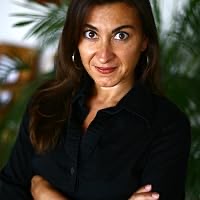
About Lynsey Addario
We have collected 29 quotes from 1 book by Lynsey Addario on BookQuoters.
More about the author →About the book
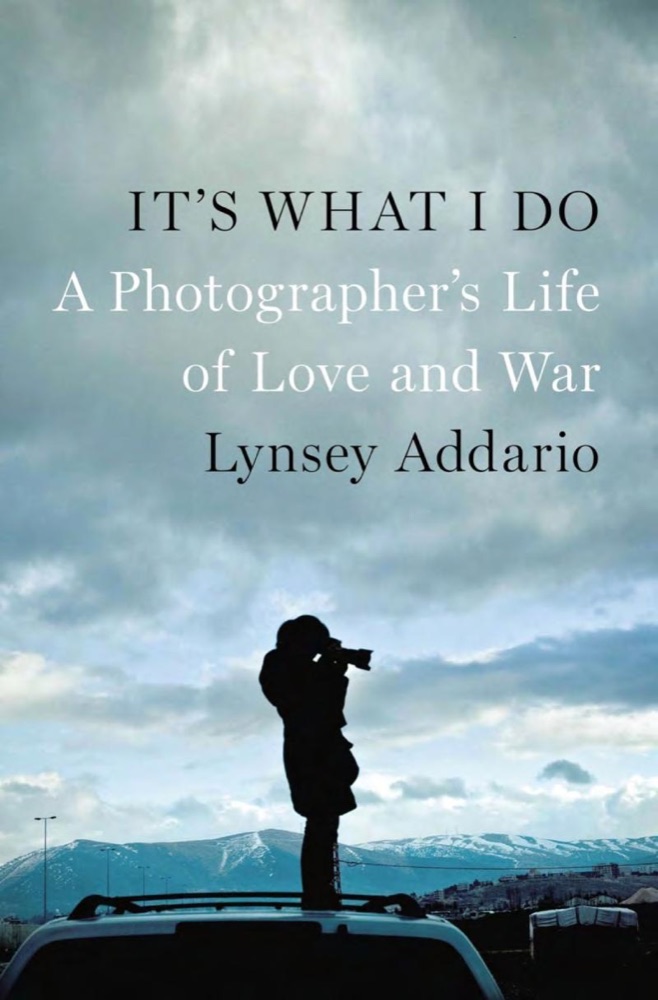
War photographer Lynsey Addario’s memoir It’s What I Do is the story of how the relentless pursuit of truth, in virtually every major theater of war in the twenty-first century, has shaped her life. What she does, with clarity, beauty, and candor, is to document, often in their most extreme moments, the complex lives of others. It’s her work, but it’s much more than that: it’s her singular calling.
Lynsey Addario was just finding her way as a young photographer when September 11 changed the world. One of the few photojournalists with experience in Afghanistan, she gets the call to return and cover the American invasion. She makes a decision she would often find herself making—not to stay home, not to lead a quiet or predictable life, but to set out across the world, face the chaos of crisis, and make a name for herself.
Addario finds a way to travel with a purpose. She photographs
Book details
- First published
- 2015
- Author
- Lynsey Addario
- Genre
- Nonfiction
- Goodreads rating
- 4.35 (14k ratings)
Keep reading
A House in the Sky
 Mother Mary Comes to Me
 No One Tells You This
 By Myself and Then Some
 All But My Life: A Memoir
 Between Two Kingdoms: A Memoir of a Life Interrupted
 The Beauty of Living Twice
 How We Fight For Our Lives
 Open Book
 The Tell: A Memoir
 Breaking Night: A Memoir of Forgiveness, Survival, and My Journey from Homeless to Harvard
 The Third Gilmore Girl: A Memoir
 Truth & Beauty
 Finding My Way: A Memoir
 The Muse
 The Likeness
 Alive Day: A Memoir
 In Order to Live: A North Korean Girl's Journey to Freedom
 Dream Count
 The Sea Keeper's Daughters
 All the Lovers in the Night
 Inside Out
 What I Loved
 Autobiography of a Face
 Broken Horses
 Lucky
Lucky
 A Promised Land
 To Shake the Sleeping Self: A Journey from Oregon to Patagonia, and a Quest for a Life with No Regret
 A Little Devil in America: Notes in Praise of Black Performance
 The Book of My Lives
 Travels with Myself and Another
 Save Me the Plums: My Gourmet Memoir
 One's Company
 Borne
Borne
 Singin' and Swingin' and Gettin' Merry Like Christmas
 Without Reservations: The Travels of an Independent Woman
 My Lucky Life in and Out of Show Business
 Still Me
 Women We Buried, Women We Burned: A Memoir
 A Lowcountry Heart: Reflections on a Writing Life
 Educated
 Dream Work
 Stay with Me
 Managing Expectations: A Memoir in Essays – A Poignant Collection of Personal Stories on Acting, Failure, and Motherhood's Joy
 My Friends
 The Moth Presents All These Wonders: True Stories About Facing the Unknown
 A Long Way Gone
 All This Could Be Different
 The Girl Who Smiled Beads: A Story of War and What Comes After
 The Wish
 Dead-End Memories: Stories
 Dreams of Falling
 The Story of the Lost Child
 The Dressmaker's Gift
 Never Stop Walking: A Memoir of Finding Home Across the World
 American on Purpose: The Improbable Adventures of an Unlikely Patriot
 The Sweet Hereafter
 The Book of Negroes
 Close to the Knives: A Memoir of Disintegration
 Heart Berries