

 Waging Heavy Peace: A Hippie Dream
Quotes from the Book
Many fine keyboard players could and did emulate and recreate his parts, but nobody else other than Rick had the ability to create them in the first place.
1
David, on the other hand, may not be so initially alarming, but once decided on a course of action is hard to sway. When his immovable object met Roger’s irresistible force, difficulties were guaranteed to follow.
1
The Wall as a piece represents large amount of material spread across a range of media: the record, the concerts – enhanced with film, stage effects an props – and a movie. This has been Roger’s intention from the outset. He had already shown his fondness for exploring the possibilities of multimedia, but the Wall took things considerable further. The whole project also covered a large amount of time, a period of work that actually lasted from mid-1978, when Roger was creating the initial version, until 1982, with the release of the movie.
1
The album feels much more home-made, very much as a band playing together in one space. I think that Rick in particular felt significantly more integrated in the process this time, compared to Momentary Lapse. It was nice to have him back.
the two-track for nuggets of musical ideas – the core of ‘Cluster One’ and ‘Marooned’ emerged and lingered through to the final album. But the truly significant thing was that each improvisation represented a kick-start to the creative process. That was – as we had always found – our most problematic hurdle. And by allowing ourselves to play whatever came into our heads, with no taboo or no-go areas, I had the impression that we were expanding a field of vision that had become increasingly narrow over the past two decades.
No more hired guns; just David, Rick and myself, with the engineer at the desk, a two-track left running – and as much time as we needed. Although bitter experience had taught us to be prepared for disappointment, and though there was no pressure to come up with anything concrete at these sessions, the very fact of booking the studio was an indication of our commitment.
A couple of things strike me about the finished album. In hindsight I really should have had the self-belief to play all the drum parts. And in the early days of life after Roger, I think David and I felt that we had to get it right, or we would be slaughtered. As a result it is a very ‘careful’ album with very few risks taken. These things together make me feel ever so slightly removed from Momentary Lapse, to the point that it doesn’t always sound like us. However, ‘Learning To Fly’ does for some reason – it feels very much like a ‘home’ track.
Rick joined proceedings quite late in the day and was quarantined from any costs or legal repercussions from Roger. This was mainly a practical matter. There was some confusion over Rick’s position within the band. When David and I first wanted to talk to Rick we discovered that buried in his leaving agreement from 1981 was a clause that prevented him rejoining the group. Consequently we had to be careful about what constituted being a member of the band; only David and I appeared on the cover of the album.
In fact, I found myself overwhelmed by the computers on this record. I hadn’t played seriously for four years and didn’t even like the sound or feel of my own playing. Perhaps I had been demoralised by the conflict with Roger. Certainly I ended up struggling to play some parts satisfactorily. With time pressure on, I surrendered a number of parts to some of the best session players in Los Angeles, including Jim Keltner and Carmine Appice – an odd feeling, a bit like handing your car over to Michael Schumacher. This was not only a defeatist attitude, but meant I then had to learn the damn drum part to play it live (an experience to file under ‘never ever again’).
What Roger really needed was for the band to be formally dissolved to clear the way for his own solo career, and he probably assumed that this would happen if he withdrew his services, given that Rick was no longer technically a member, I had done little beyond motor racing and becoming a garage proprietor, and even David had become more of a producer and guest guitarist with other musicians than a band member. What no one anticipated was David’s response to what I think he felt was the lack of credit and exposure for his contributions and ideas. The division of spoils – and more particularly credit – is often unfair, but he had perhaps suffered the most injustice. Even I, not prone to confrontation, felt aggrieved that after twenty years I thought I was being told to quietly lie down, roll over and retire.
I had dinner one night with Roger, who said that he would settle for being released from Steve’s contract. Unfortunately, Steve was a significant part of our enterprise and I think we felt that we were bound together, perhaps more than necessary. Part of the problem was that nothing was written down. There was a verbal agreement – just as binding as a written one, so the lawyers tell us – between Steve and the band, which meant that any actions by one individual had to be ratified by the rest of us. Discussions were muddied by a lack of understanding, certainly by me, of what the implications really were – as a result the issues remained unclear and any trust uncertain. In retrospect, we should have settled with Roger then and there.
We did meet and talk; we even had a relatively relaxed meeting in 1984 at a Japanese restaurant, soothed by sushi and sake, to discuss all the things we weren’t going to do – and then Steve joined us to hear about it. Roger was doubtless misled by our general bonhomie and acquiescence into believing that we accepted Pink Floyd was almost over. David and I meanwhile thought that after Roger had finished Pros And Cons, life could continue. We had, after all, had a number of hiatuses before. Roger sees this meeting as duplicity, rather than diplomacy – I disagree. Clearly, our communication skills were still troublingly non-existent.
I went to see his show at Earls Court, and found the experience had an astonishingly depressing effect on me. The first half was made up of Floyd numbers and gave me the impression of being a (rather elderly) Peter Pan at the nursery window – that was my part being played by someone else. In retrospect this one event probably had as much to do in galvanising me as anything else. I realised I could not quite so easily let go and watch the train roll on without me.
But it was another factor in how David and I viewed the future. Both David and myself regarded playing live and touring as an integral part of being in the band. If being part of a Roger-led Floyd meant that there would be no live shows (‘due to indiscipline, all touring has been cancelled this term’) and only aggravation in the recording studio, the future prospect seemed distinctly unappealing.
Why were we prepared to go along with what felt like Roger’s takeover? We accepted so many things as inevitable that, looking back, seem unnecessary. Such craven compliance might have been the result of gradual changes wrought in the band structure over the previous decade. Perhaps lacking confidence in his own writing abilities, David may have felt that if we confronted these issues we risked losing Roger and being unable to continue. Or in the aftermath of Rick’s departure maybe we feared being marginalised and then negotiated out individually. It pains me to admit it, but whatever the reasons, the tendency to cast Roger as the ultimate villain, though tempting, is probably misplaced.
After The Dark Side Of The Moon there had been a pronounced tendency for all of us to deliver criticism badly – and to take it even worse. Roger is sometimes credited with enjoying confrontation, but I don’t think that’s the case. I do think Roger is often unaware of just how alarming he can be, and once he sees a confrontation as necessary he is so grimly committed to winning that he throws everything into the fray – and his everything can be pretty scary. On the positive side I think it is an enormous asset to his golf, tennis and poker playing . . . David, on the other hand, may not be so initially alarming, but once decided on a course of action is hard to sway. When his immovable object met Roger’s irresistible force, difficulties were guaranteed to follow.
If I was not having much fun, David was certainly not having an easy time either. Roger was studiously ignoring any of David’s suggestions, which is why he probably wanted Michael on board to augment the musical input. In many ways Michael was probably as much a substitute for David as for Rick or Bob, given his melodic strengths and his experience in writing, and arranging. It may well have been paranoia, but it did look as though David was being frozen out.
It was a pity that before I’d even started work on The Final Cut, Roger felt it necessary to announce aggressively that since whatever I did ‘was drumming’, I couldn’t claim either extra royalties or credit for any of this work. This really did seem like behaviour beginning to border on the megalomaniac, particularly since I posed no threat to his plans. I decided to look on the bright side: at least it was a way of escaping from the fraught atmosphere in the studio.
The upshot was that the album consisted entirely of Roger’s writing. David’s input was minimised – apart from his guitar solos, which even Roger was not foolhardy enough to try and influence – and most significantly Roger decided to take on the bulk of the vocal duties himself, leaving David to sing one song, ‘Not Now John’. In the past, the inflection of David’s vocals had inevitably made some subtle changes to the melodic structure of Roger’s songs. So this change, and the loss of Rick’s trademark keyboard sound, meant the disappearance of key elements from what had become an established ‘Pink Floyd sound’.
Falkland Islands in a conflict most expertly described by Jorge Luis Borges as ‘two bald men fighting over a comb’;
I still find it hard to really cover some of the events of this period properly. Roger was probably still my closest friend, and we were able to enjoy each other’s company. But our friendship was increasingly put under strain as Roger struggled to modify what had been an ostensibly democratic band into the reality of one with a single leader.
Whatever bond Rick had enjoyed with Roger in the previous fifteen or so years was terminally broken, and Rick’s downfall was swift. Steve was happily cruising to America on the QE2 when he was called by Roger and told to have Rick out of the band by the time Roger arrived in LA, where the album was due to be mixed.
The suggestion was put to us that we should become non-resident in the UK for one year so that we could earn some money and replenish the dwindling coffers, and provide some time for our accountants and tax specialists to salvage something from the wreckage. The whole experience cast an enormous cloud over us. We had always prided ourselves on being smart enough not to be caught out like this. We saw ourselves as educated, middle class, in control of everything. We had been utterly wrong.
The truth that emerged was that Norton Warburg had been siphoning off funds from their investments company, an apparently gilt-edged set-up, to underwrite the disastrous venture capital side, all those skateboards, pizzas and dodgy cars. Eventually the company founder Andrew Warburg fled to Spain, returning to England in 1982, where he was arrested, charged, and served three years. A lot of people lost their money. Because Norton Warburg had been approved by reputable organisations such as American Express and the Bank of England many people had put their entire life savings or pensions in.
Although the spitting incident was unnerving at the time, it did serve to set Roger’s creative wheels spinning, and he developed the outline for a show based around the concept of an audience both physically and mentally separated from their idols. Whether the confrontation in Montreal
The end of the Animals tour marked another low point. David now says that this was one period when he really felt that it might be all up for Pink Floyd. His view is that we had achieved, and sustained, the success we had originally wanted as a band, and accordingly were finding it difficult to see what more we could do.
Watch on YouTube
About Nick Mason
We have collected 26 quotes from 1 book by Nick Mason on BookQuoters.
More about the author →About the book
Here, for the first time, is the story of Pink Floyd from the inside out. With 116 million albums sold worldwide and 25 years on the pop charts to their credit, Pink Floyd is one of the most successful rock groups in history, yet their story until now is one of the least known. The only continuous member of the band through its entire 40-year history, Nick Mason has witnessed every twist, turn, and sommersault from behind his drum kit. The journey begins with the band's origins as the darlings of London's late 1960s underground and the creation of the classic Pink Floyd sound, all the way through to The Wall and those legendary stadium shows. Here are the players who shaped the band's history and the story behind the story the inside perspective on, for example, the deterioration and departure of Syd Barrett; the overwhelming success of The Dark Side of the Moon and the resulting pressur
Book details
- First published
- 2004
- Author
- Nick Mason
- Genre
- Biography
- Goodreads rating
- 4.13 (6k ratings)
Keep reading
Waging Heavy Peace: A Hippie Dream
 Mo' Meta Blues: The World According to Questlove
 What Does This Button Do?: An Autobiography
 Main Lines, Blood Feasts, and Bad Taste: A Lester Bangs Reader
 Renegade: The Lives and Tales of Mark E. Smith
 Me
Me
 See A Little Light: The Trail of Rage and Melody
 It's So Easy: And Other Lies
 Mustaine: A Heavy Metal Memoir
 Please Kill Me: The Uncensored Oral History of Punk
 Life
Life
 Born to Run
 Let's Go (So We Can Get Back): A Memoir of Recording and Discording with Wilco, Etc.
 Psychotic Reactions and Carburetor Dung
 Miles: The Autobiography
 The Last Samurai
 White Tears
 Rat Girl
 The World According to Clarkson
 Clothes, Clothes, Clothes. Music, Music, Music. Boys, Boys, Boys
 Radio Free Albemuth
 The Real Frank Zappa Book
 Ayoade on Top
 I, Partridge: We Need to Talk About Alan
 The Great Shark Hunt: Strange Tales from a Strange Time
 Down with the System: A Memoir
 The Manticore
 The Shepherd's Hut
 The Uncool
 Green Mars
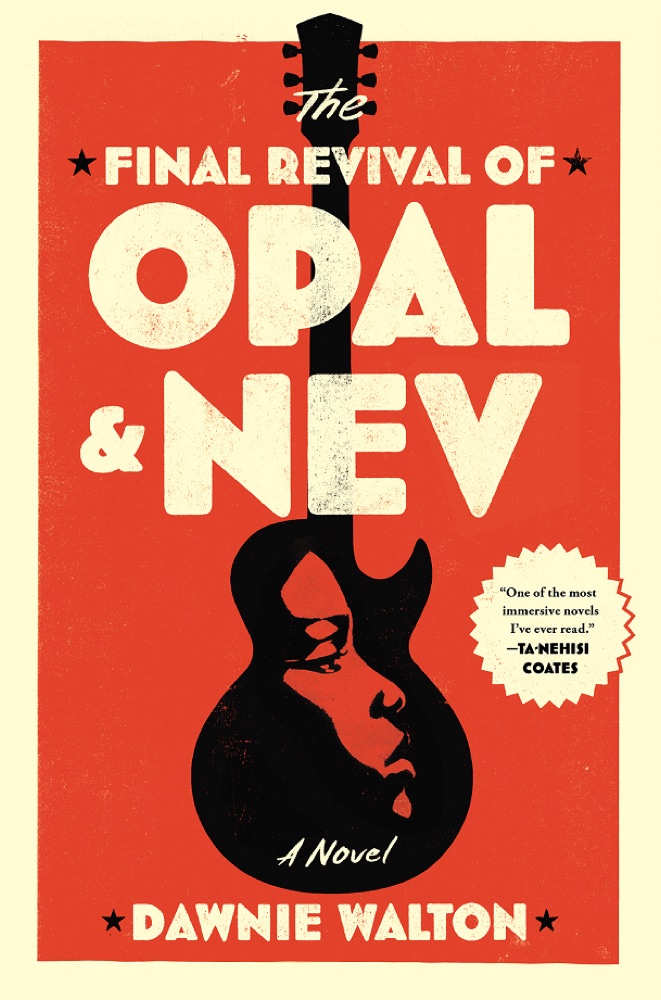 The Final Revival of Opal & Nev
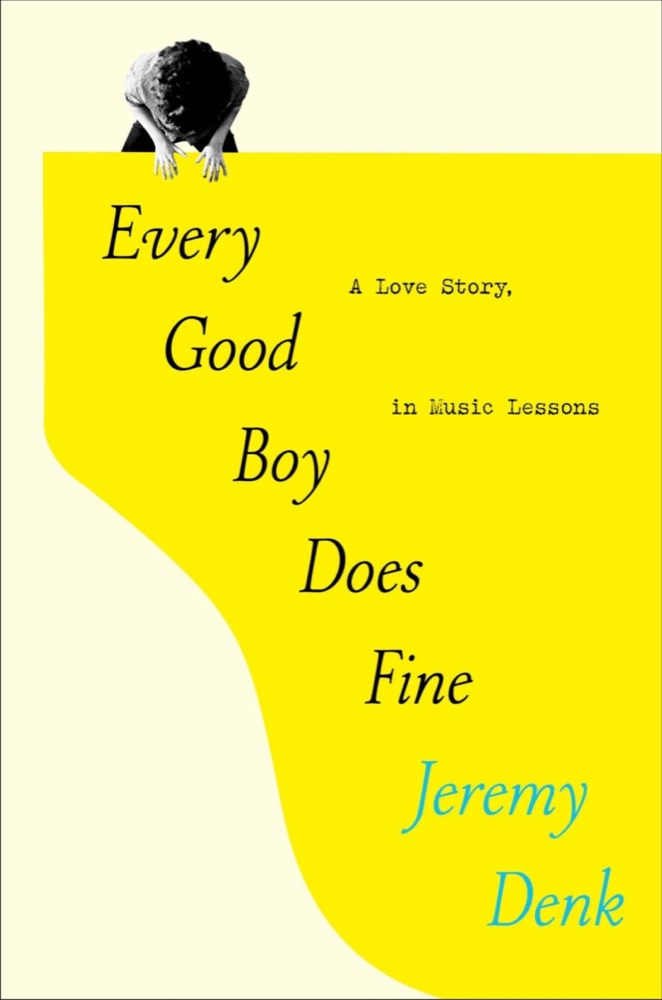 Every Good Boy Does Fine: A Love Story, in Music Lessons
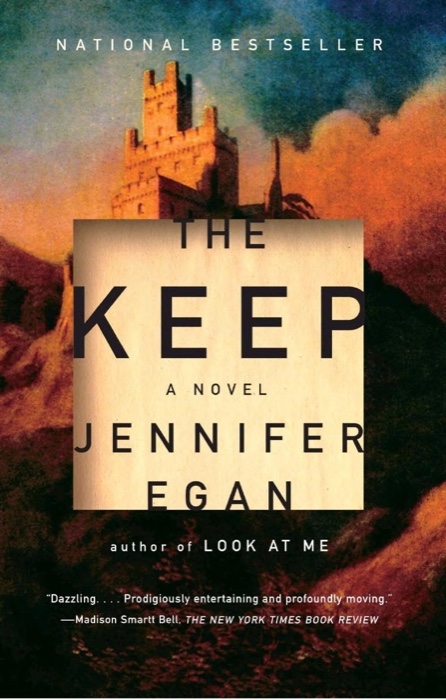 The Keep
 NGLND XPX
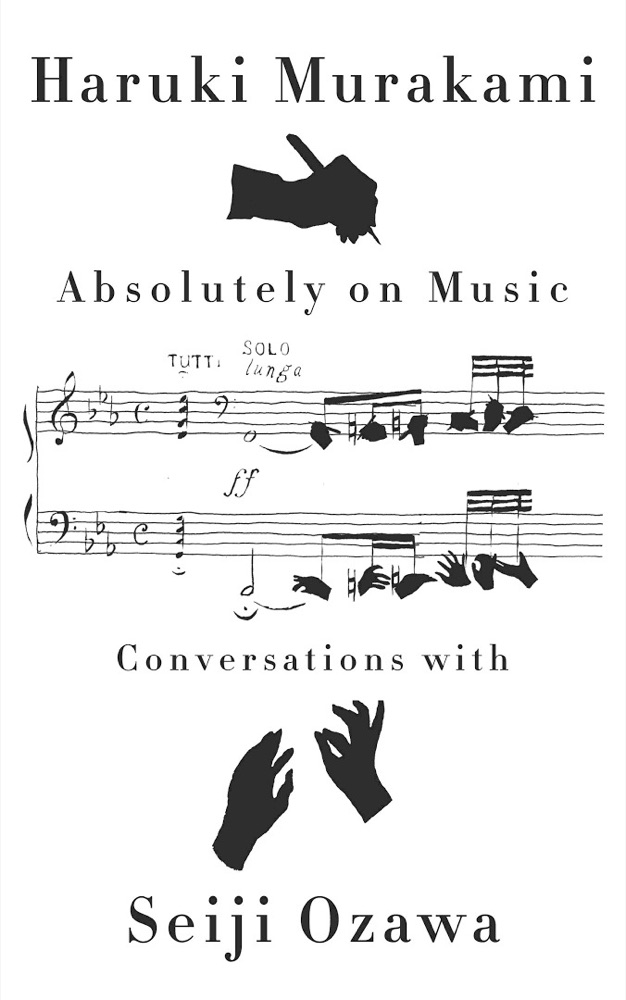 Absolutely on Music: Conversations with Seiji Ozawa
 A Naked Singularity
 Table for Two
 Reamde
 Hunger Makes Me a Modern Girl
 Slumberland
 Nerd Do Well
 Songbook
 The War of the Flowers
 Chronicles, Volume One
 Clown Town
 Fall; or, Dodge in Hell
 Imagine Me Gone
 The Further Adventures of An Idiot Abroad
 Oblivion
 Orfeo
Orfeo
 Deliver Me from Nowhere: The Making of Bruce Springsteen's Nebraska
 Touching from a Distance: Ian Curtis and Joy Division
 John
John
 Amy & Roger's Epic Detour
 Slash
Slash
 The Mark and the Void
 Coming Through Slaughter
 Utopia Avenue