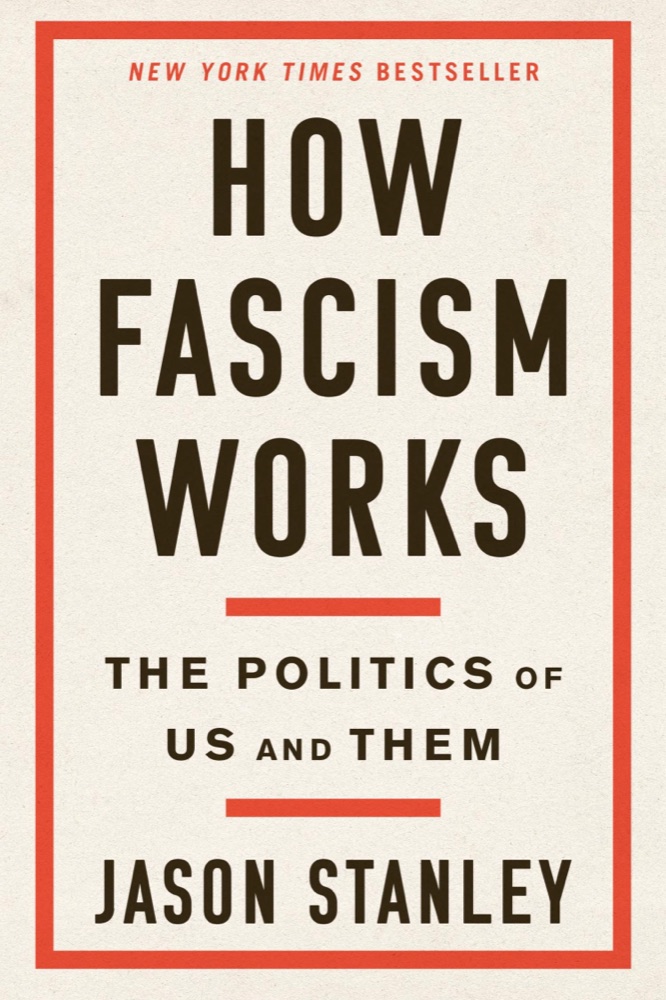

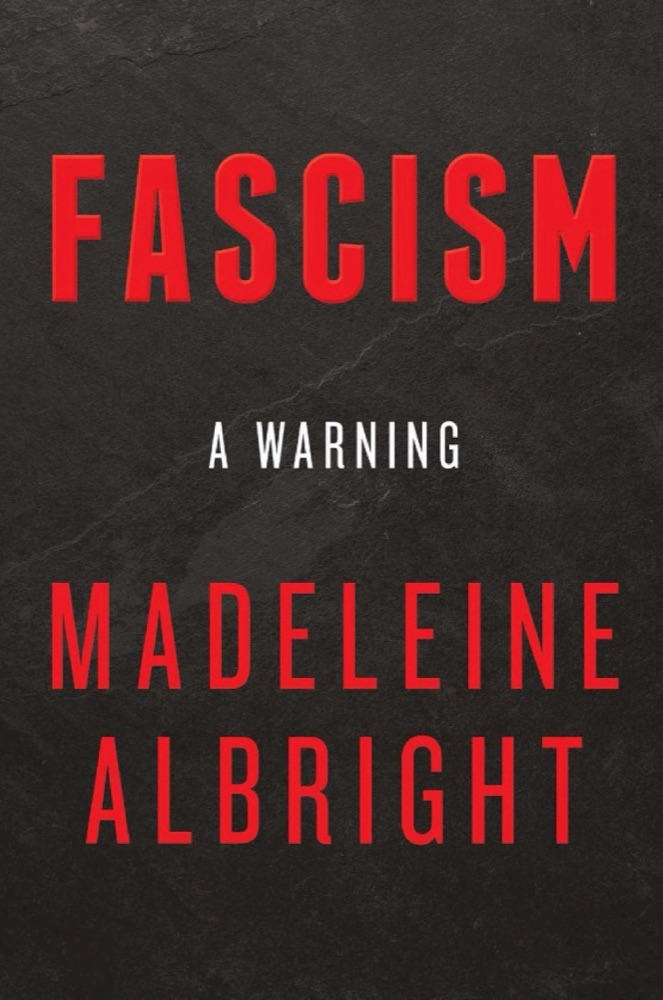
 Fascism: A Warning
Quotes from the Book
Fascist politics invokes a pure mythic past tragically destroyed. Depending on how the nation is defined, the mythic past may be religiously pure, racially pure, culturally pure, or all of the above.
27
To describe someone as a “criminal” is both to mark that person with a terrifying permanent character trait and simultaneously to place the person outside the circle of “us.” They are criminals. We make mistakes.
25
The dangers of fascist politics come from the particular way in which it dehumanizes segments of the population. By excluding these groups, it limits the capacity for empathy among other citizens, leading to the justification of inhumane treatment, from repression of freedom, mass imprisonment, and expulsion to, in extreme cases, mass extermination.
21
Pratap Mehta wrote: The targeting of enemies—minorities, liberals, secularists, leftists, urban naxals, intellectuals, assorted protestors—is not driven by a calculus of ordinary politics….When you legitimize yourself entirely by inventing enemies, the truth ceases to matter, normal restraints of civilization and decency cease to matter, the checks and balances of normal politics cease to matter.*2
17
Fascist politics does not necessarily lead to an explicitly fascist state, but it is dangerous nonetheless. Fascist politics includes many distinct strategies: the mythic past, propaganda, anti-intellectualism, unreality, hierarchy, victimhood, law and order, sexual anxiety, appeals to the heartland, and a dismantling of public welfare and unity.
14
In fascist politics, women who do not fit traditional gender roles, nonwhites, homosexuals, immigrants, “decadent cosmopolitans,” those who do not have the dominant religion, are in their very existence violations of law and order. By describing black Americans as a threat to law and order, demagogues in the United States have been able to create a strong sense of white national identity that requires protection from the nonwhite “threat.
14
Fascist politics feeds off the sense of aggrieved victimization caused by loss of hierarchal status.
10
fascist politics creates a state of unreality, in which conspiracy theories and fake news replace reasoned debate.
10
In book 8 of Plato’s Republic, Socrates argues that people are not naturally led to self-governance but rather seek a strong leader to follow. Democracy, by permitting freedom of speech, opens the door for a demagogue to exploit the people’s need for a strongman; the strongman will use this freedom to prey on the people’s resentments and fears. Once the strongman seizes power, he will end democracy, replacing it with tyranny. In short, book 8 of The Republic argues that democracy is a self-undermining system whose very ideals lead to its own demise. Fascists have always been well acquainted with this recipe for using democracy’s liberties against itself; Nazi propaganda minister Joseph Goebbels once declared, “This will always remain one of the best jokes of democracy, that it gave its deadly enemies the means by which it was destroyed.” Today is no different from the past. Again, we find the enemies of liberal democracy employing this strategy, pushing the freedom of speech to its limits and ultimately using it to subvert others’ speech.
10
But what is most terrifying about these rhetorical divides is that it is typical of fascist movements to attempt to transform myths about “them” into reality through social policy.
10
The pull of fascist politics is powerful. It simplifies human existence, gives us an object, a “them” whose supposed laziness highlights our own virtue and discipline, encourages us to identify with a forceful leader who helps us make sense of the world, whose bluntness regarding the “undeserving” people in the world is refreshing. If democracy looks like a successful business, if the CEO is tough-talking and cares little for democratic institutions, even denigrates them, so much the better. Fascist politics preys on the human frailty that makes our own suffering seem bearable if we know that those we look down upon are being made to suffer more. Navigating the tensions created by living in a state with a democratic sphere of governance, a nondemocratic hierarchical economic sphere, and a rich, complex civil society replete with organizations, associations, and community groups adhering to multiple visions of a good life can be frustrating. Democratic citizenship requires a degree of empathy, insight, and kindness that demands a great deal of all of us. There are easier ways to live.
9
Reconstruction ended when Southern whites enacted laws that had the practical effect of banning black citizens from voting. White southerners propagated the myth that this was necessary because black citizens were unable to self-govern; in the histories advanced at the time, Reconstruction was represented as a time of unparalleled political corruption, with stability restored only when whites were again given full power.
8
Fascist politics exchanges reality for the pronouncements of a single individual, or perhaps a political party. Regular and repeated obvious lying is part of the process by which fascist politics destroys the information space. A fascist leader can replace truth with power, ultimately lying without consequence. By replacing the world with a person, fascist politics makes us unable to assess arguments by a common standard. The fascist politician possesses specific techniques to destroy information spaces and break down reality.
7
To many white Americans, President Obama must have been corrupt, because his very occupation of the White House was a kind of corruption of the traditional order. When women attain positions of political power usually reserved for men—or when Muslims, blacks, Jews, homosexuals, or “cosmopolitans” profit or even share the public goods of a democracy, such as healthcare—that is perceived as corruption.5 Fascist politicians know that their supporters will turn a blind eye to their own, true corruption since in their own case it is just a matter of members of the chosen nation taking what is rightfully theirs.
7
central tenets of fascist ideology—authoritarianism, hierarchy, purity, and struggle.
7
The strategic aim of these hierarchal constructions of history is to displace truth, and the invention of a glorious past includes the erasure of inconvenient realities.
7
[Nazis] believed that the women’s movement was part of an international Jewish conspiracy to subvert the German family and thus destroy the German race. The movement, it claimed, was encouraging women to assert their economic independence and to neglect their proper task of producing children. It was spreading the feminine doctrines of pacifism, democracy and “materialism.” By encouraging contraception and abortion and so lowering the birth rate, it was attacking the very existence of the German people.
7
When universities are as expensive as they are in the United States, their generous liberal visions are easy targets for fascist demagoguery. Under conditions of stark economic inequality, when the benefits of liberal education, and the exposure to diverse cultures and norms, are available only to the wealthy few, liberal tolerance can be smoothly represented as elite privilege. Stark economic inequality creates conditions richly conducive to fascist demagoguery. It is fantasy to think that liberal democratic norms can flourish under such conditions.
5
Pause for a moment in this context to consider the empathy in play when the contemporary “opiate crisis” is covered in the U.S. media. The opiate crisis is not depicted as driven by vicious and terrifying “opiate rings.” Nor are those addicted to opiates defined as criminals.
5
For the fascist, schools and universities are there to indoctrinate national or racial pride, conveying for example (where nationalism is racialized) the glorious achievements of the dominant race.
5
Right-to-work laws were originally advanced in language that mirrored precisely Hitler’s attacks on trade unions in Mein Kampf. Nevertheless, their antiunion agenda, explicitly founded upon a desire to maintain white racial hierarchy and prevent solidarity across races and religions, has largely won the day in the United States today. Such antiunion policies paved the way for a presidential candidate running a white nationalist campaign with open nostalgia for the 1930s to sweep to victory across the once proud labor states of the Midwest.
4
The misrepresentation of political protests as riots was a factor in the election campaign of Donald Trump, whose campaign had strong echoes of Nixon’s. Nixon, however, campaigned at a time of rising rates of violent crime. Trump’s successful “law and order” campaign took place under the conditions of some of the lowest rates of violent crime in recorded U.S. history. ...
4
What happens when conspiracy theories become the coin of politics, and mainstream media and educational institutions are discredited, is that citizens no longer have a common reality that can serve as background for democratic deliberation. In such a situation, citizens have no choice but to look for markers to follow other than truth or reliability. What happens in such cases, as we see across the world, is that citizens look to politics for tribal identifications, for addressing personal grievances, and for entertainment. When news becomes sports, the strongman achieves a certain measure of popularity. Fascist politics transforms the news from a conduit of information and reasoned debate into a spectacle with the strongman as the star.
4
Trump exploited the lengthy history of ranking Americans into a hierarchy of worth by race, the “deserving” versus the “undeserving.
4
a growing body of social psychological evidence substantiates the phenomenon of dominant group feelings of victimization at the prospect of sharing power equally with members of minority groups. A great deal of recent attention has been paid in the United States to the fact that around 2050, the United States will become a “majority-minority” country, meaning that whites will no longer be a majority of Americans.
4
Fascist movements share with social Darwinism the idea that life is a competition for power, according to which the division of society’s resources should be left up to pure free market competition.
3
Fascist politics lures its audiences with the temptation of freedom from democratic norms while masking the fact that the alternative proposed is not a form of freedom that can sustain a stable nation state and can scarcely guarantee liberty. A state-based ethnic, religious, racial, or national conflict between “us” and “them” can hardly remain stable for long. And yes, even if fascism could sustain a stable state, would it be a good political community, a decent country within which children can be socialized to become empathetic human beings? Children can certainly be taught to hate, but to affirm hatred as a dimension of socialization has unintended consequences. Does anyone really want their children’s sense of identity to be based on a legacy of marginalization of others?
3
Instead, in fascist ideology, all institutions, from the family to the business to the state, would run according to the Führer Principle. The father, in fascist ideology, is the leader of the family; the CEO is the leader of the business; the authoritarian leader is the father, or the CEO, of the state. When voters in a democratic society yearn for a CEO as president, they are responding to their own implicit fascist impulses.
3
Watch on YouTube
About Jason F. Stanley
We have collected 28 quotes from 1 book by Jason F. Stanley on BookQuoters.
More about the author →About the book
A Yale philosopher identifies the ten pillars of fascist politics, and charts their horrifying rise and deep history—now with a new preface.
As a scholar of philosophy and propaganda and the child of refugees of WWII Europe, Jason Stanley has long understood that democratic societies, including the United States, can be vulnerable to fascism. In How Fascism Works, he identifies ten pillars of fascist politics—an appeal to the mythic past, propaganda, anti-intellectualism, unreality, hierarchy, victimhood, law and order, sexual anxiety, favoring “the heartland,” and a dismantling of public goods and unions—that amount to an urgent diagnosis of the tactics right-wing politicians use to break down democracies and a critical lens on the current moment.
Stanley knits together reflections on history, philosophy, sociology, and critical race theory with stories from contemporary Hungary,
Book details
- First published
- 2018
- Author
- Jason F. Stanley
- Genre
- Nonfiction
- Goodreads rating
- 4.25 (18k ratings)
The buzz
- The GuardianReview in The Guardianprofessional review (via Book Marks)
- NytiReview in Nytiprofessional review (via Book Marks)
- The Times Literary SupplementReview in The Times Literary Supplementprofessional review (via Book Marks)
- Kirkus ReviewsReview in Kirkus Reviewsprofessional review (via Book Marks)
- Publishers WeeklyReview in Publishers Weeklyprofessional review (via Book Marks)
Keep reading
Fascism: A Warning
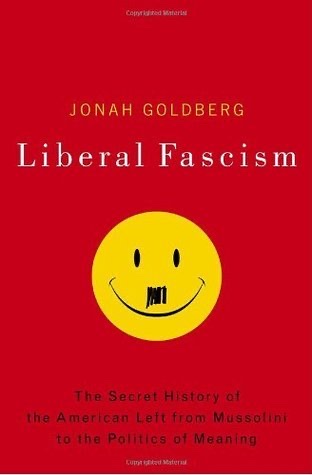 Liberal Fascism: The Secret History of the American Left from Mussolini to the Politics of Meaning
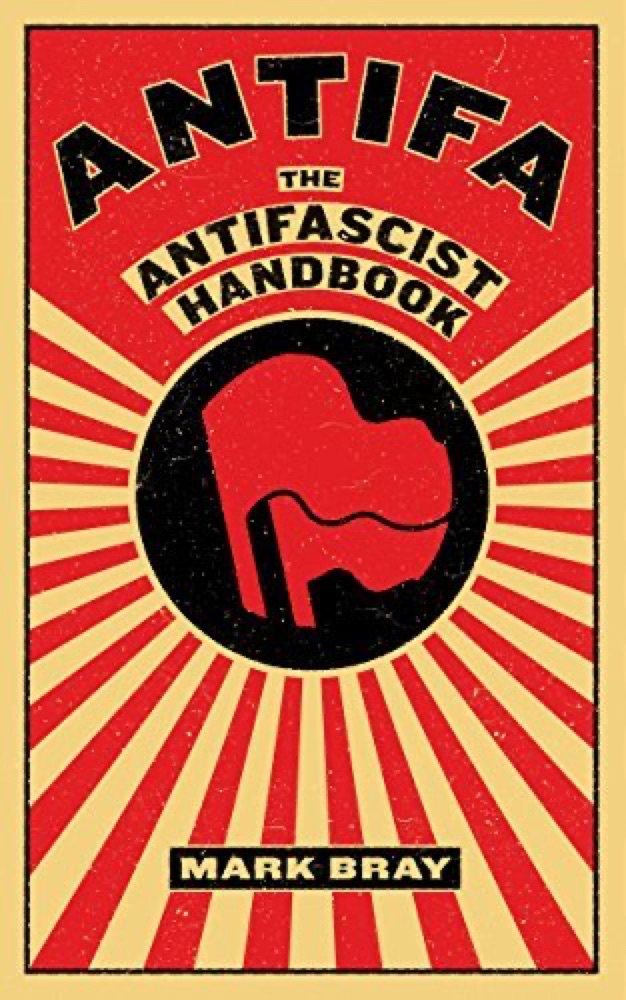 Antifa: The Anti-Fascist Handbook
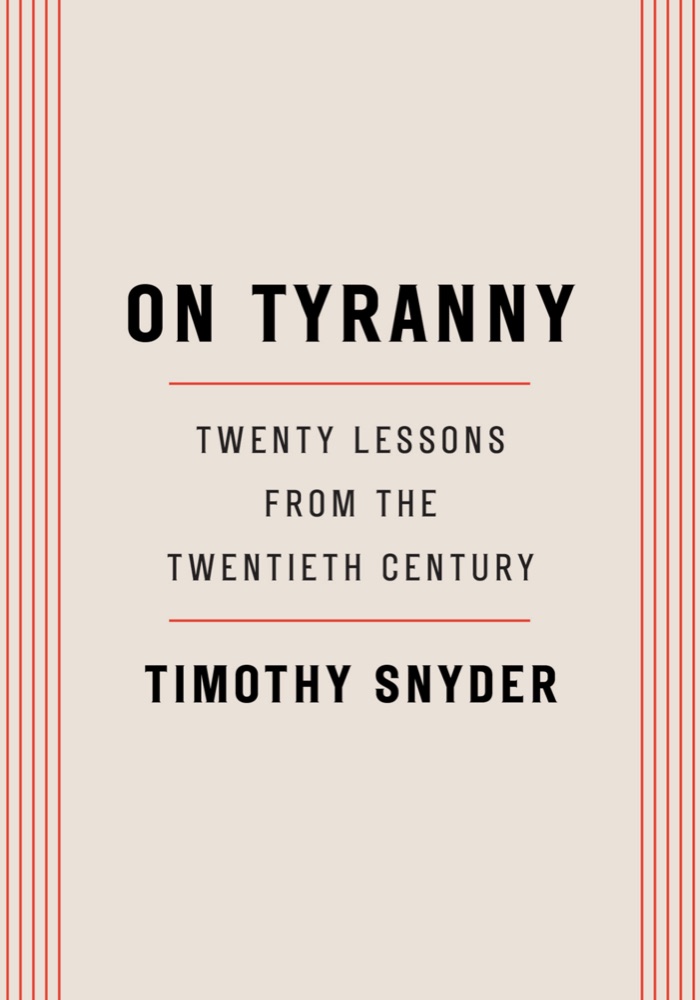 On Tyranny: Twenty Lessons from the Twentieth Century
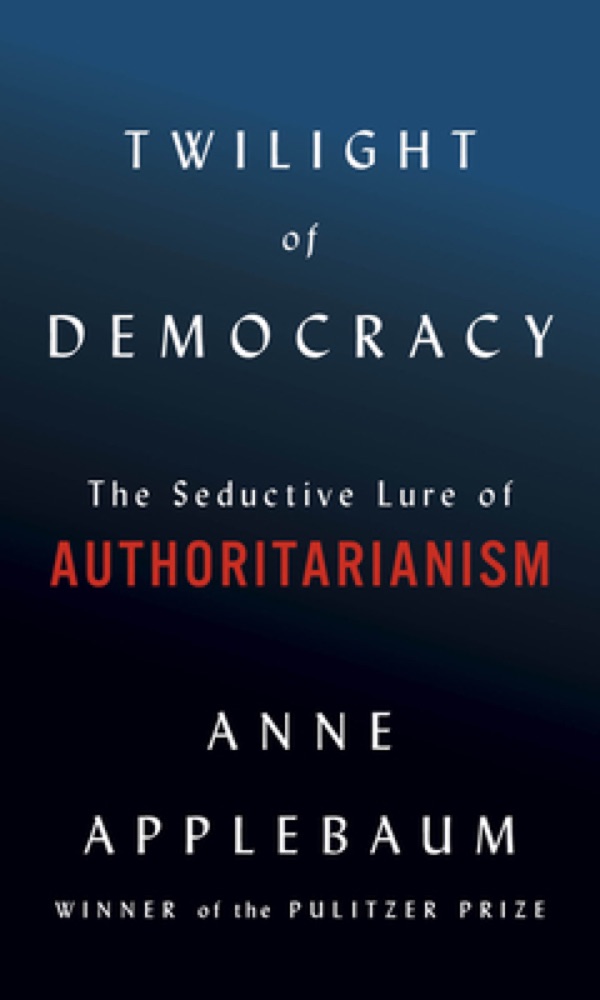 Twilight of Democracy: The Seductive Lure of Authoritarianism
 America: The Farewell Tour
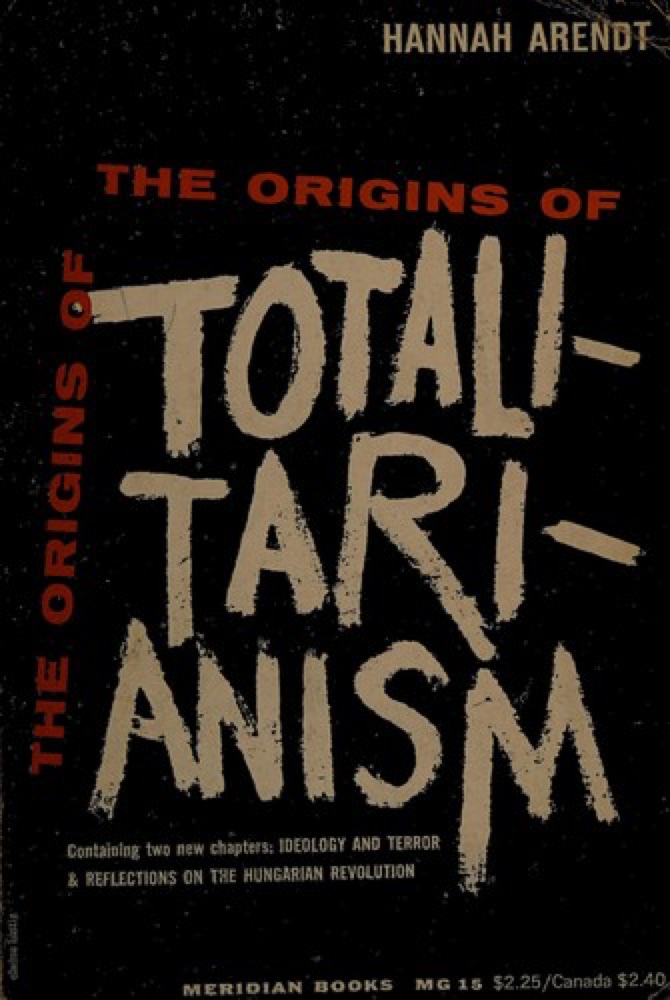 The Origins of Totalitarianism
 Conspirators' Hierarchy: The Story of the Committee of 300
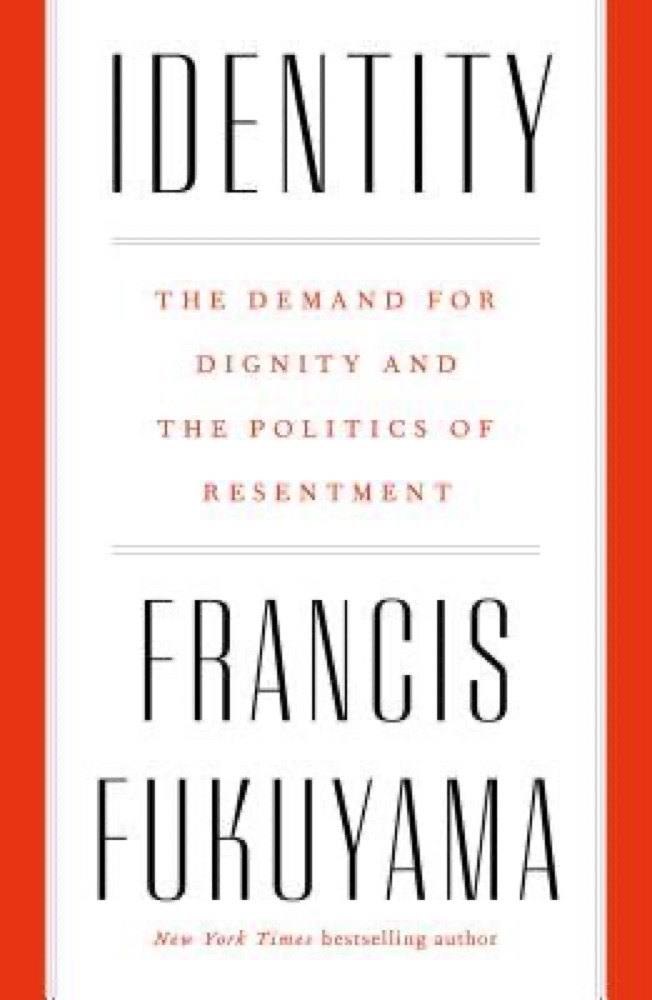 Identity: The Demand for Dignity and the Politics of Resentment
 A People's History of the United States
 Culture Warlords: My Journey Into the Dark Web of White Supremacy
 Death of the Liberal Class
 Empire of Illusion: The End of Literacy and the Triumph of Spectacle
 Elite Capture: How the Powerful Took Over Identity Politics
 Defying Hitler
 Blackshirts and Reds: Rational Fascism and the Overthrow of Communism
 What's Left?
 Myth America: Historians Take On the Biggest Legends and Lies About Our Past
 What's Our Problem?: A Self-Help Book for Societies
 The Machiavellians: Defenders of Freedom
 Dark Continent: Europe's Twentieth Century
 Chomsky On Anarchism
 The Reactionary Mind: Conservatism from Edmund Burke to Sarah Palin
 Unmasked: Inside Antifa's Radical Plan to Destroy Democracy
 Brave New World Revisited
 First As Tragedy, Then As Farce
 Where Do We Go from Here: Chaos or Community?
 Political Order and Political Decay: From the Industrial Revolution to the Globalization of Democracy
 Why We're Polarized
 The Utopia of Rules: On Technology, Stupidity, and the Secret Joys of Bureaucracy
 A Colony in a Nation
 Doppelganger: A Trip into the Mirror World
 Power Systems: Conversations on Global Democratic Uprisings and the New Challenges to U.S. Empire
 The Message
 Modern Times: The World from the Twenties to the Nineties
 Understanding Power: The Indispensable Chomsky
 The Strange Death of Europe: Immigration, Identity, Islam
 The View From Flyover Country: Essays by Sarah Kendzior
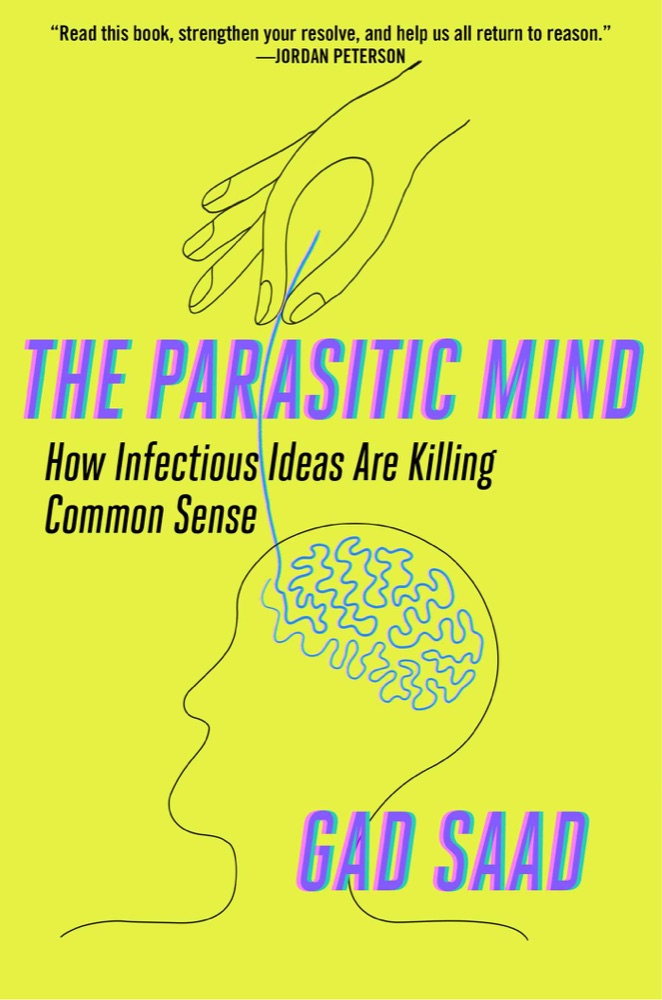 Parasitic Mind: How Infectious Ideas Are Killing Common Sense
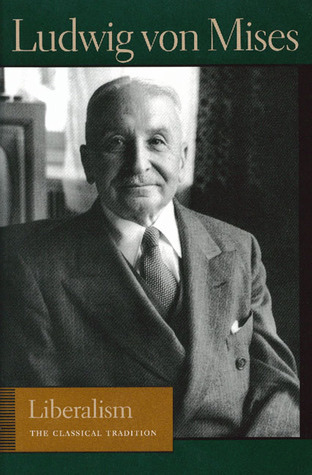 Liberalism: The Classical Tradition
 Behold a Pale Horse
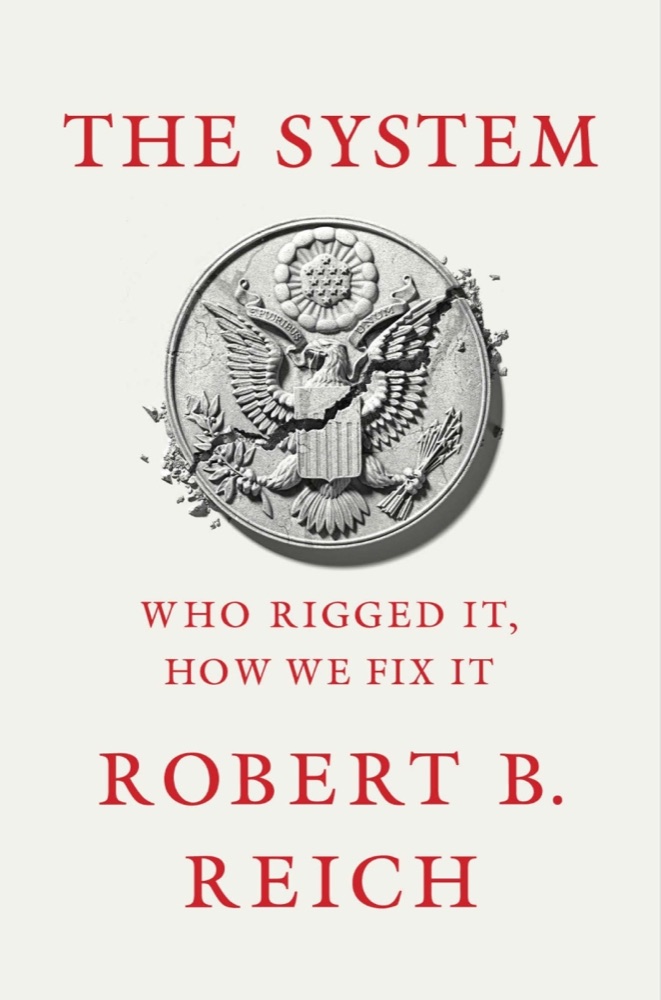 The System: Who Rigged It, How We Fix It
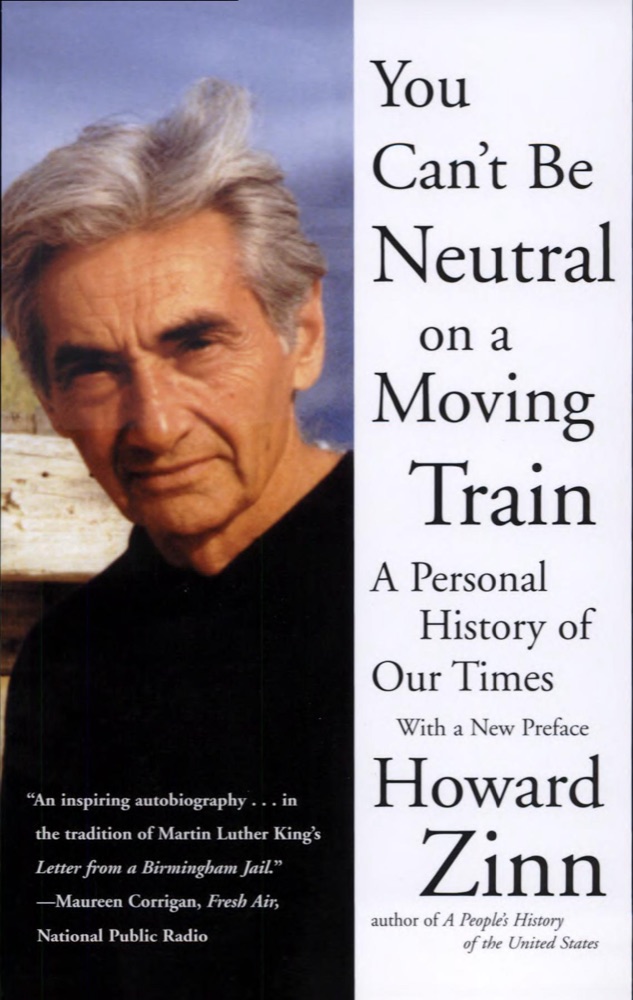 You Can't Be Neutral on a Moving Train: A Personal History of Our Times
 The Rise and Fall of the Third Reich: A History of Nazi Germany
 Unthinkable: Trauma, Truth, and the Trials of American Democracy
 One-Dimensional Man: Studies in the Ideology of Advanced Industrial Society
 Anti-Intellectualism in American Life
 What White People Can Do Next: From Allyship to Coalition – An Empowering Guide to Interrogating Whiteness and Creating Justice
 Notes on Nationalism
 The Iron Heel
 The Untold History of The United States
 Political Theology: Four Chapters on the Concept of Sovereignty
 Rules for Radicals: A Pragmatic Primer for Realistic Radicals
 No Name in the Street
 The Madness of Crowds: Gender, Race and Identity
 The Power of the Powerless
 What Unites Us: Reflections on Patriotism
 Capitalism: The Unknown Ideal
 Ameritopia: The Unmaking of America
 The Road to Serfdom