
 After Leaving Mr. Mackenzie
Quotes from the Book
Aunt Lavinia always had a near-religious belief that it was wicked to inflict one's personal despair on others. Any display of self-pity or self-dissatisfaction she saw as a social cruelty that was very nearly criminal.
8
As you get older no doubt you'll change automatically, just like I did. You will learn all the tricks. You will dress much better, and talk much more, and listen much less. And you'll start to realise that it never does one much good to take anything too seriously at all.
4
There is really nothing more unattractive than the sight of a young woman displaying a repulsive amount of arm.
4
She took one of her poodle's charcoal biscuits out of the packet and ate it herself. 'Either these are quite delicious or quite disgusting. Like many things in life, it's rather hard to tell which,' she said.
1
Great Granny Webster seemed to hate colours. Almost everything she owned was either black or dark brown.
1
bravery. A very different character from Great Granny Webster, Aunt Lavinia in some ways had been just as stoical.
It shocked him to realise that my grandfather’s whole sense of himself had become inseparable from the burden of maintaining his inherited possessions.
It was after the birth of Aunt Lavinia that she first showed signs of severe mental illness and started behaving as if she were bewitched.
He described her as a woman who seemed to have no centre.
think he liked the idea that, with a person such as old Mrs Webster, you can never get any surprises.
Aunt Lavinia had always seen everything in life as a lottery and therefore assumed that everybody must see it as she did.
When they tried to describe the tipsy rowdiness of nights in smoky college rooms when the debutantes came down from London, their attempts to make it sound exhilarating only left me with an impression of a way of life which was destructive and brutal. Sons of aristocratic parents, they had formed a fashionable little clique which was selective in its membership and comprised of leaders and followers, like a gang.
I’ve never enjoyed being regarded as a pauper, particularly on the occasions when I am perilously near to being one.
All her relationships had invariably been superficial, and maybe she felt so superficially rooted to life that it seemed hardly very momentous to her whether she stayed in it or left it. She gave me the sense that she felt it would only bore me if she went into explanations—that she thought she would be stating the obvious. She had a horror of being dull.
Her house combined ostentatiousness and vulgarity with every kind of comfort.
Obviously she wanted to present her near-suicide as farce rather than tragedy. She appeared to see death rather as she saw life, as an exciting but unimportant game.
When I think back now—there was something slightly peculiar about a newly married young woman who insisted she had to walk alone round the damp cold woods of Dunmartin at midnight because she had learned the secret of talking to the trees.
I could see nothing to keep her in this stagnant suburb, except her passion for pointless suffering and her general inertia.
I suddenly saw Great Granny Webster as awesome. She had outlived so many. She had managed to be both the start of a line and the end of a line. In my family she seemed to be Alpha and Omega.
But Aunt Lavinia had finally succeeded in killing herself six months before, dying in her Mayfair house from an overdose of vodka and sleeping pills. She had slipped out of life in much the same eel-like way that she had slipped out of her many marriages and romances.
It was the mood of that pre-war Oxford which remained lost for me—the high spirits, hope and recklessness, the sense of comradeship made closer through shared jokes and rebellion. This mood was too fragile to be resurrected many years after it had suffered a smoke-like dispersal.
At the beginning I had been delighted to hear that I was considered an invalid and that I was going to be sent to stay with her for two months. When I told my Aunt Lavinia she said, “I’ll cross my fingers for you, darling,” and I had no idea what she meant. At that time I was convinced that there was nothing worse in life than being at my boarding-school; but from the first moment I walked through Great Granny Webster’s huge forbidding black front door, which had a hideous stained-glass covered porch full of potted plants that had to be watered day and night by Richards, I was starting to revise this opinion.
When one was with her she could almost persuade one that there was something cowardly and despicable in any emotional dodging, in any refusal to experience every single blow that life could deal one, head-on. She could make one feel that there was an almost super-human courage in the way she was not frightened to admit that the only thing she now hoped for from life was a continued consciousness, unpleasant as she well knew that it had to be. All she wanted from each new day that broke was the knowledge that she was still defiantly there - that against all odds she had still managed to survive in the lonely, loveless vacuum she had created for herself.
I had hardly ever seen Great Granny Webster at that time, and yet her feelings interested me. She was little more to me than the silhouette of a formidable old woman dressed in black who appeared occasionally at family gatherings and made us feel that she was taking a dangerous risk with her upright spine when circumstances forced her to bend over and kiss her great-grandchildren.
Watch on YouTube
About Caroline Blackwood
We have collected 24 quotes from 1 book by Caroline Blackwood on BookQuoters.
More about the author →About the book
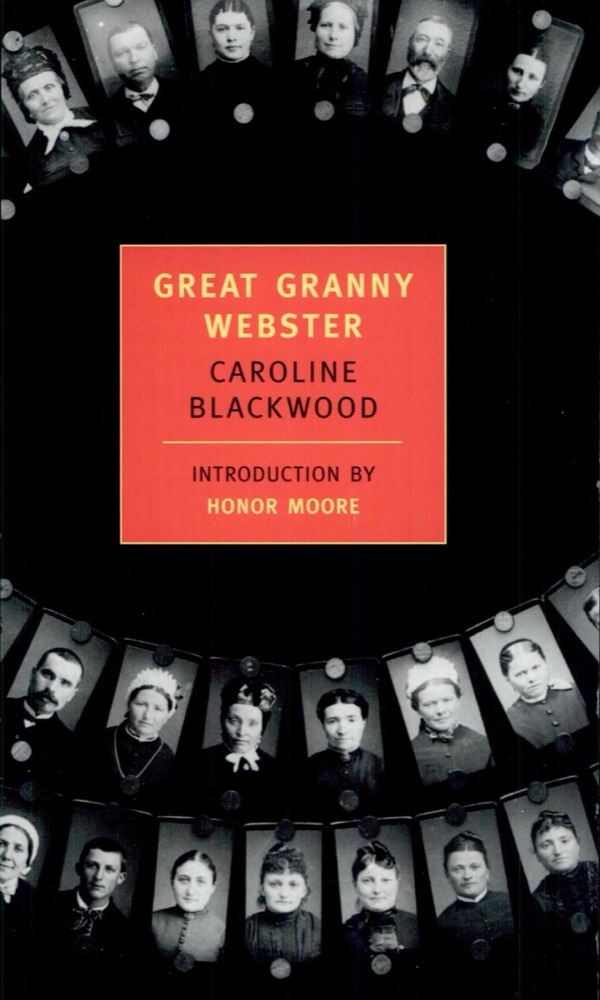
Great Granny Webster is Caroline Blackwood's masterpiece. Heiress to the Guinness fortune, Blackwood was celebrated as a great beauty and dazzling raconteur long before she made her name as a strikingly original writer. This macabre, mordantly funny, partly autobiographical novel reveals the gothic craziness behind the scenes in the great houses of the aristocracy, as witnessed through the unsparing eyes of an orphaned teenage girl. Great Granny Webster herself is a fabulous monster, the chilliest of matriarchs, presiding with steely self-regard over a landscape of ruined lives.
Book details
- First published
- 1977
- Author
- Caroline Blackwood
- Genre
- Fiction
- Goodreads rating
- 3.74 (3k ratings)
Keep reading
After Leaving Mr. Mackenzie
 Uncle Silas
 Cold Comfort Farm
 A Slow Fire Burning
 The House of Mirth
 The Paying Guests
 O Caledonia
 The Portrait of a Lady
 Mrs. Dalloway
 The Pursuit of Love
 All Passion Spent
 Shrines of Gaiety
 The Fraud
 The Mayor of Casterbridge
 Lolly Willowes
 Birds of America
 The Stories of John Cheever
 The Benevolent Society of Ill-Mannered Ladies
 Ink Blood Sister Scribe
 Excellent Women
 The Buccaneers
 Case Histories
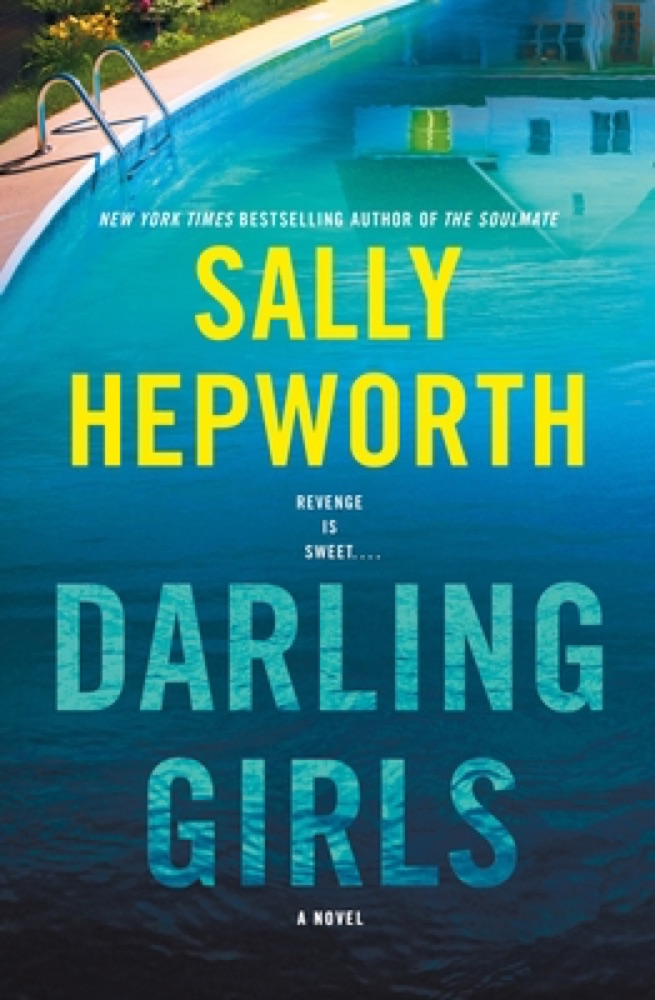 Darling Girls
 The Vegetarian
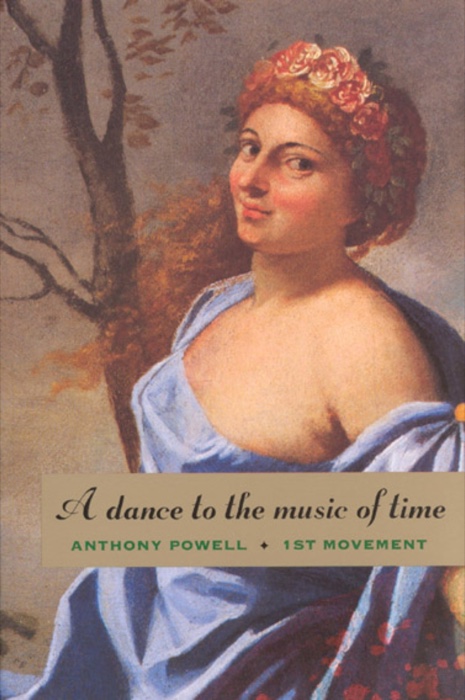 A Dance to the Music of Time: 1st Movement
 The Mirror Crack'd from Side to Side
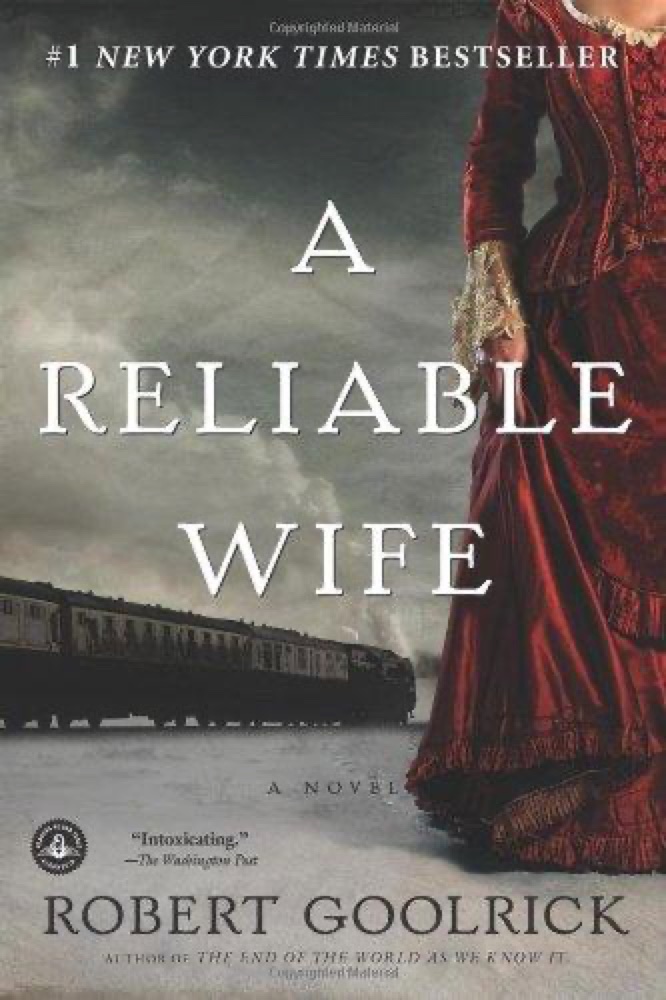 A Reliable Wife
 Transcription
 Ordinary Human Failings
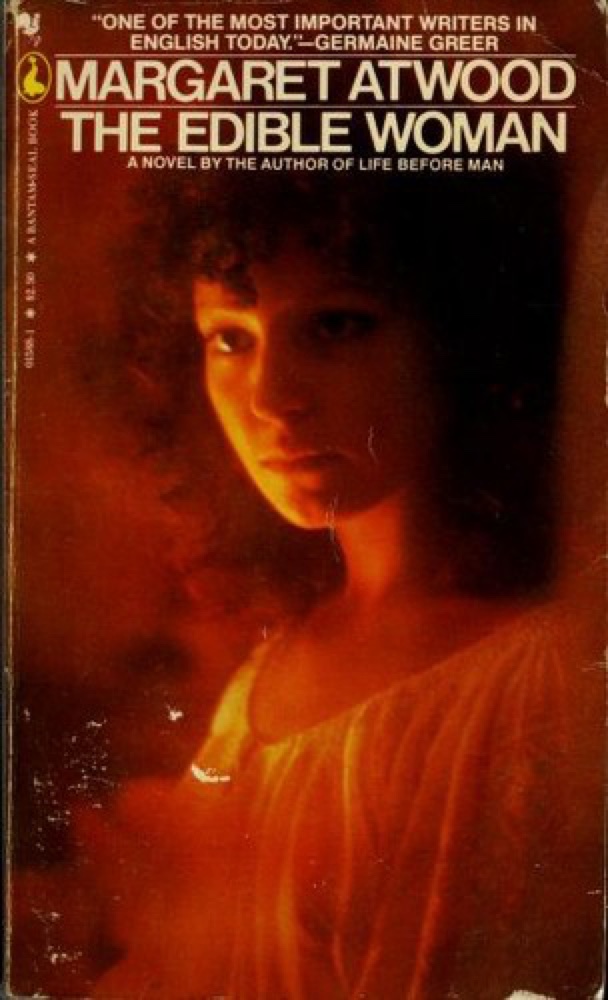 The Edible Woman
 The Enchanted April
 Small Pleasures
 The Hollow of Fear
 The Custom of the Country
 Crampton Hodnet
 Bluebeard's Egg
 The Life of Charlotte Brontë
 My Brilliant Friend
 A Restless Truth
 The God of the Woods
 Mexican Gothic
 Salt Slow
 The Body in the Library
 Red Comet: The Short Life and Blazing Art of Sylvia Plath
 The Summer Before the Dark
 Olive Kitteridge
 Everything That Rises Must Converge: Stories
 Fool Me Twice
 Down Cemetery Road
 Missing, Presumed
 The Years
 Clear Light of Day
 Lady Audley's Secret
 Slammerkin
 The Safekeep
 The Buddha of Suburbia
 The Little Friend
 The Wayward Bus
 Still Life with Bread Crumbs
 Venetia