 The Great Omission: Reclaiming Jesus's Essential Teachings on Discipleship
Quotes from the Book
For those of us who desire to follow Jesus, here is the reality we must turn and face: If we’re not being intentionally formed by Jesus himself, then it’s highly likely we are being unintentionally formed by someone or something else.
11
The single most important question is, Are we becoming more loving? Not, Are we becoming more biblically educated? Or practicing more spiritual disciplines? Or more involved in church? Those are all good things, but not the most important thing.
10
There simply is no better way, truth, or life to be found than that of Jesus.
7
Without solitude it is virtually impossible to live a spiritual life.
6
For Jesus, salvation is less about getting you into heaven and more about getting heaven into you.
5
Jesus isn’t asking you to do something you’re not already doing. All of us are abiding. The question isn’t, Are you abiding? It’s, What are you abiding in?
5
Following Jesus is not a three-step formula: be with him, become like him, and so on. But there is a sequence. It is not a program but a progression. First, you come and be with Jesus; gradually you start to become like him; eventually, it's like you can't help it - you begin to do the kinds of things he did in the world. We see this progression in the stories of the original disciples: They spent months or possibly years just following him around Israel and sitting at his feet. Very slowly they began to change, and eventually, he "sent them out" to preach.
4
The undirected mind tends toward chaos.” The psychologist Mihaly Csikszentmihalyi called this phenomenon “psychic entropy.
4
Contemplative prayer isn't looking to get anything from God; it's just looking at God. "I look at Him, He looks at me, and we are happy." Few of us even realize this type of prayer is a possibility. It's this deeper layer of prayer that I find both most challenging and most rewarding. Challenging not because it's unpleasant (the opposite, in fact) but because it requires the very capacity of which our world schemes to rob me: attention.
3
You can’t follow Jesus alone. Not “shouldn’t”; can’t. It’s not even an option. Jesus didn’t have a disciple; he had disciples, plural. He called people to apprentice under him in community.
3
The problem is: Human beings resist facing reality. The human capacity for self-deception is staggering. But when it comes to sin, ignorance is not bliss. It’s a cancer metastasizing through our bloodstreams. The diagnosis is essential to the cure. Over a millennia and a half ago, Evagrius Ponticus said, “The beginning of salvation is to condemn oneself.” He was just saying that until we name our sin and open our wound to God, we can’t be saved from it.
3
Come, follow me.[11] Contrary to what many assume, Jesus did not invite people to convert to Christianity. He didn’t even call people to become Christians (keep reading…); he invited people to apprentice under him into a whole new way of living. To be transformed. My thesis is simple: Transformation is possible if we are willing to arrange our lives around the practices, rhythms, and truths that Jesus himself did, which will open our lives to God’s power to change. Said another way, we can be transformed if we are willing to apprentice ourselves to Jesus.
3
There are no accidental saints. You can't just slip your hand up at the end of a sermon. It's a high bar of entry: It will require you to reorder your entire life around following Jesus as your undisputed top priority, over your job, your money, your reputation - over everything. Yet all these things will find their rightful place once integrated into a life of apprenticeship.
2
It’s the very things we run from, avoid at all costs, dread, medicate, and deny that hold the secret to our liberation. These unhappy times of great emotional pain, in a beautifully redemptive turn, have the potential—if we open to God in them—to transform us into grounded, deeply joyful people. Suffering is sadness leaving the body.
2
The French philosopher Jacques Ellul once compared the Western obsession with “technique” to magic in the Middle Ages. It’s a modern form of superstition that’s all about trying to control what we cannot possibly control.
2
Paul called it prayer “without ceasing.”[13] The Spanish Carmelite Saint John of the Cross called it “silent love” and urged us to “remain in loving attention on God.” Madame Guyon—the French mystic—called it a “continuous inner act of abiding.” The old Quakers called it “centering down,”[14] as if abiding was getting in touch with the bedrock of all reality. The Jesuit spiritual director Jean-Pierre de Caussade called it “the sacrament of the present moment,” as if each moment with God is its own Eucharist, its own movable feast.[15] A. W. Tozer called it “habitual, conscious communion” and said, “At the heart of the Christian message is God Himself waiting for His redeemed children to push in to conscious awareness of His presence.”[16] Dallas Willard loved to call it “the with-God life.”[17] So many saints, with so many names for life with Jesus. But my undisputed favorite is from a monk named Brother Lawrence, who called this “the practice of the presence of God.
2
The deeper question here is, In whom are you trusting? Who (or what) do you put your faith in to show you the way to the life you desire? It’s my conviction that contrary to what we hear, living by faith isn’t a Christian thing or even a religious thing; it’s a human thing—we all live by faith. The question isn’t, Am I going to believe? It’s, Who or what am I going to believe in? Meaning, Who or what am I going to entrust my life to? Do I really want to trust myself—or any other human, for that matter? We creatures who seem to have gotten ourselves into the very mess we’re trying to fix?
2
When you do the math, you may conclude that, yes, following Jesus will cost you—a lot. But here’s the thing: Not following Jesus will cost you even more. It will cost you life with God, the very purpose for which you were created. It will cost you access to the inner life of the Trinity, the “peace…which transcends all understanding,” and the “joy that is inexpressible and filled with glory.”[17] It will cost you freedom from the bondage of sin, healing from the wounding of sin, forgiveness from the guilt and shame of sin, and adoption into the family of God out of the isolation of sin.
1
Run through your mental Rolodex of people past eighty: Most of them are either gracious, happy, grateful, patient, loving, self-giving people you know, just happy to be alive and sitting in the same room with you, or the most bitter, manipulative, spiteful people you know, oozing emotional poison into their family lines and reveling in others' pain. Sure, some are in the middle of the bell curve, but most are noticeably to one side. That's because they've spent almost a century becoming a person. Being formed.
1
So many Christians simply have no idea of the staggering immensity of God's love for them and of that love's power to transform them into people of love, as well as bring them great happiness and lasting peace. If they knew, they would undoubtedly do whatever it takes to make time to be with him. Unfortunately, many of us still view following Jesus as a means to an end - a ticket to heaven, to nice feelings, to a successful, upwardly mobile life, and so on. We still don't get it: He's the end. The reward for following Jesus is Jesus.
1
Powerful forces have a vested interest in our believing the myth (and it is a myth) that we are following no one at all. Many of the cultural liturgies that indoctrinate us daily - "Be true to yourself," - can be traced back to sources with a nefarious agenda. If "they" (whether multinational corporations, politicians, anti-democratic government agents, marketing departments, influencers who just want more followers, etc., etc.) can make us believe that each person is a blank slate, just following the inner compass of our "authentic self" in an upward march to happiness, then they can keep us blind to all the ways we've been "discipled" - formed and manipulated - by their desires.
1
Amusing ourselves to death,” as the social critic Neil Postman called it, has never been more convenient.[3] You can disappear into the black hole of Netflix, become a workaholic in pursuit of riches or fame, or simply “eat, drink, and be merry” in the adult playground of the modern city. Western culture is arguably built around the denial of death through the coping mechanism of distraction. As Ronald Rolheiser put it, “We are distracting ourselves into spiritual oblivion.”[4]
1
After all, the opposite of contemplation is not action but reaction. It’s not a life that is active—doing good in the world, working hard, serving those in need. That’s exactly what you would expect to come from a life of abiding: fruit. The opposite of contemplation is a life that is reactive—getting sucked into the tyranny of the urgent instead of the important, chasing the latest fad, wasting our fleeting lives climbing some illusory corporate ladder, hurrying from one distraction to the next…
1
Apprenticeship to Jesus is about turning your body into a temple, a place of overlap between heaven and earth—an advance sign of what one day Jesus will do for the entire cosmos, when heaven and earth are at long last reunited as one. This is the single most extraordinary opportunity in the entire universe: to let your body become God’s home. And it’s set before you every single day.
1
John Wimber, the founder of the Vineyard Church, came to faith in Jesus in his twenties out of a wild background in the L.A. music scene. He read the Gospels and Acts and was floored by the stories of healings and prophecy and the rest. Then he came to church, where he saw none of it. “When do we get to do the stuff?” he asked.[41] “Do the stuff” has since entered the charismatic lexicon as code for operating in the manifestations of the Spirit we read of in 1 Corinthians 12—prophecy, words of wisdom and knowledge, healings, miracles, and more. When you combine telling others about Jesus with a prophetic word, experience of healing, or insight no one could know apart from the Spirit (what Paul seems to mean by “a word of knowledge”), the result can be electric. Of course, there are lots of ways to do this terribly, but with the right training, we can learn to do this in a down-to-earth, calm, loving way. More
1
As Kallistos Ware put it, “From this hour and moment I can start to walk through the world, conscious that it is God’s world, that he is near me in everything that I see and touch, in everyone whom I encounter.”[62]
1
Work at its best is an expression of love. As the poet Kahlil Gibran put it, “Work is love made visible.
1
In his analogy, sin was like a sickness and he was the doctor. Repentance wasn’t just pleading for mercy before a judge; it was opening your wounding to a physician. Based on this line, ancient Christians called Jesus “the doctor of the soul.
1
But at its worst, this is laziness, pure and simple, because it’s far easier to go to church once a week chasing a spiritual high and angle for a download from heaven than to do the daily, unglamorous work of discipleship.
1
The genius of Jesus’ ethical teaching was that you cannot keep the law by trying not to break the law. You cannot become more loving by trying to become more loving, no matter how much self-effort you bring to the table. You have to be transformed in your inner person, or what Jesus called “the heart.
1
Watch on YouTube
About John Mark Comer
We have collected 30 quotes from 1 book by John Mark Comer on BookQuoters.
More about the author →About the book
The author of the international bestseller The Ruthless Elimination of Hurry calls us to rediscover the path that leads to a deeper life with God .
“One of the most important books I have read in a decade . . . If we would all follow in this way, our lives would change and the world would change.”—Jennie Allen, author of Get Out of Your Head and Find Your People
We are constantly being formed by the world around us. To be formed by Jesus will require us to become his apprentice.
To live by what the first Christian disciples called a Rule of Life—a set of practices and relational rhythms that slow us down and open up space in our daily lives for God to do what only God can do—transforms the deepest parts of us to become like him.
This introduction to spiritual formation is full of John Mark Comer’s trademark mix of theological substance and cultural insight as well as pra
Book details
- First published
- 2024
- Author
- John Mark Comer
- Genre
- Nonfiction
- Goodreads rating
- 4.48 (35k ratings)
Keep reading
The Great Omission: Reclaiming Jesus's Essential Teachings on Discipleship
 The Spirit of the Disciplines: Understanding How God Changes Lives
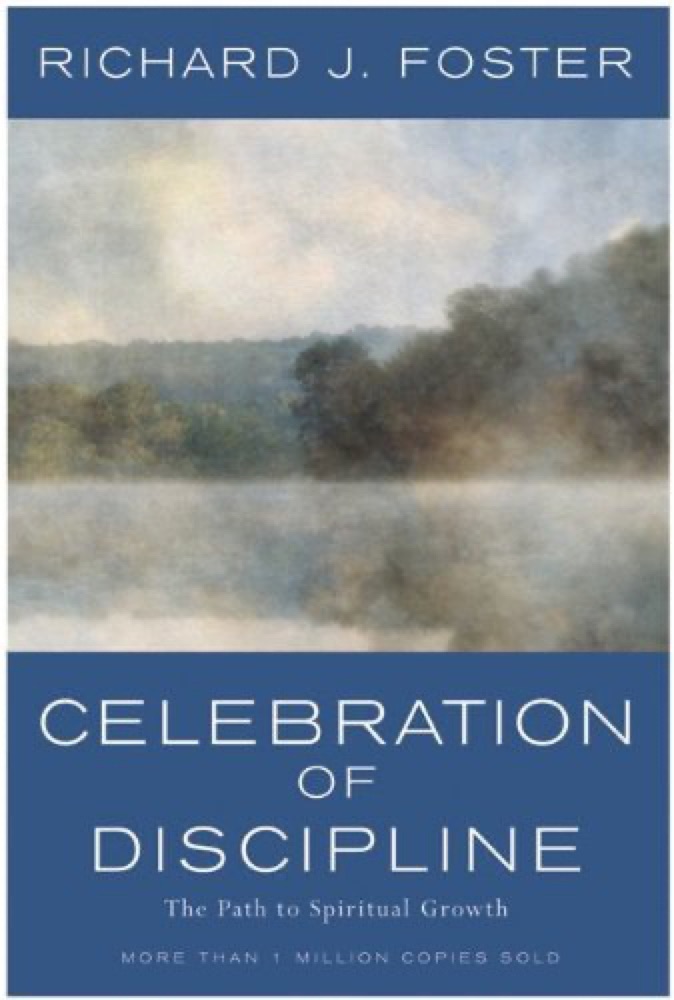 Celebration of Discipline: The Path to Spiritual Growth
 The Divine Conspiracy: Rediscovering Our Hidden Life in God
 King's Cross: The Story of the World in the Life of Jesus
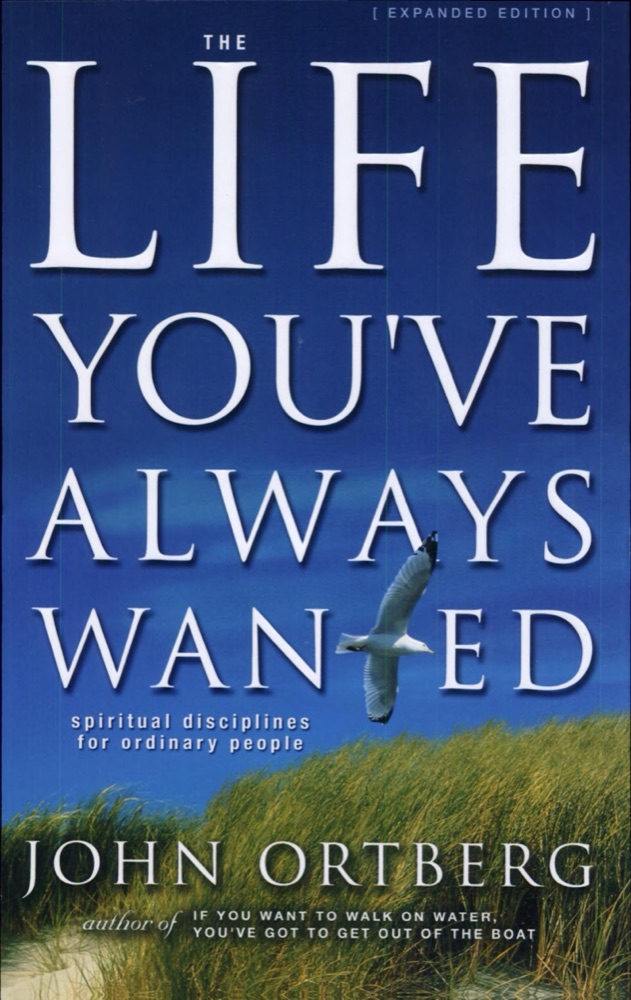 The Life You've Always Wanted: Spiritual Disciplines for Ordinary People
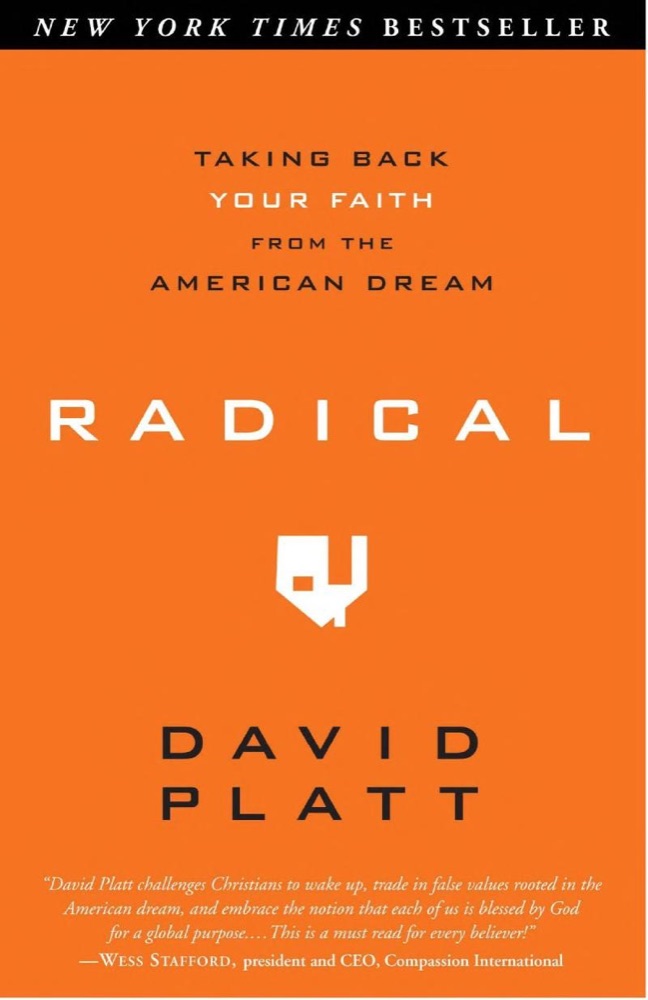 Radical: Taking Back Your Faith from the American Dream
 Encounters with Jesus: Unexpected Answers to Life's Biggest Questions
 The Prodigal God: Recovering the Heart of the Christian Faith
 Speaking of Jesus: The Art of Not-Evangelism
 40 Days of Decrease: A Different Kind of Hunger. A Different Kind of Fast.
 The Wisdom Jesus: Transforming Heart and Mind
 Discipline: The Glad Surrender
 Simply Christian
 Jesus Over Everything: Uncomplicating the Daily Struggle to Put Jesus First
 Studies in the Sermon on the Mount
 A Long Obedience in the Same Direction: Discipleship in an Instant Society
 Not a Fan: Becoming a Completely Committed Follower of Jesus
 All In: You Are One Decision Away From a Totally Different Life
 The Message Remix
 The Cost of Discipleship
 Wild Goose Chase: Reclaim the Adventure of Pursuing God
 The Grand Weaver: How God Shapes Us through the Events in Our Lives
 The Irresistible Revolution: Living as an Ordinary Radical
 The Sermon on the Mount: The Key to Success in Life
 Multiply: Disciples Making Disciples
 7: An Experimental Mutiny Against Excess
 Sitting at the Feet of Rabbi Jesus: How the Jewishness of Jesus Can Transform Your Faith
 To Hell with the Hustle
 How People Change
 Jesus > Religion: Why He Is So Much Better Than Trying Harder, Doing More, and Being Good Enough
 The Explicit Gospel
 Love Wins Low Price CD: Love Wins Low Price CD
 Jesus Among Other Gods: The Absolute Claims of the Christian Message
 Freedom of Simplicity: Finding Harmony in a Complex World
 The Deeply Formed Life: Five Transformative Values to Root Us in the Way of Jesus
 Jesus Is: Find a New Way to Be Human
 Out of Sorts: Making Peace with an Evolving Faith
 Liturgy of the Ordinary: Sacred Practices in Everyday Life
 Velvet Elvis: Repainting the Christian Faith
 Life Together: The Classic Exploration of Christian Community
 Searching for God Knows What
 Everything Belongs: The Gift of Contemplative Prayer
 Emotionally Healthy Spirituality: Unleash A Revolution In Your Life in Christ
 Seeking Allah, Finding Jesus: A Devout Muslim Encounters Christianity
 Christ Plays in Ten Thousand Places: A Conversation in Spiritual Theology
 The Secret Thoughts of an Unlikely Convert: An English Professor's Journey Into Christian Faith
 Inside Out
 The Me I Want to Be: Becoming God's Best Version of You
 The Furious Longing of God
 The Holy Longing: The Search for a Christian Spirituality
 Amazing Grace: A Vocabulary of Faith
 The Ragamuffin Gospel
 Having a Mary Heart in a Martha World: Finding Intimacy with God in the Busyness of Life
 Rediscover Catholicism
 Shameless: A Case for Not Feeling Bad About Feeling Good
 Instruments in the Redeemer's Hands: People in Need of Change Helping People in Need of Change
 Leaving Church: A Memoir of Faith