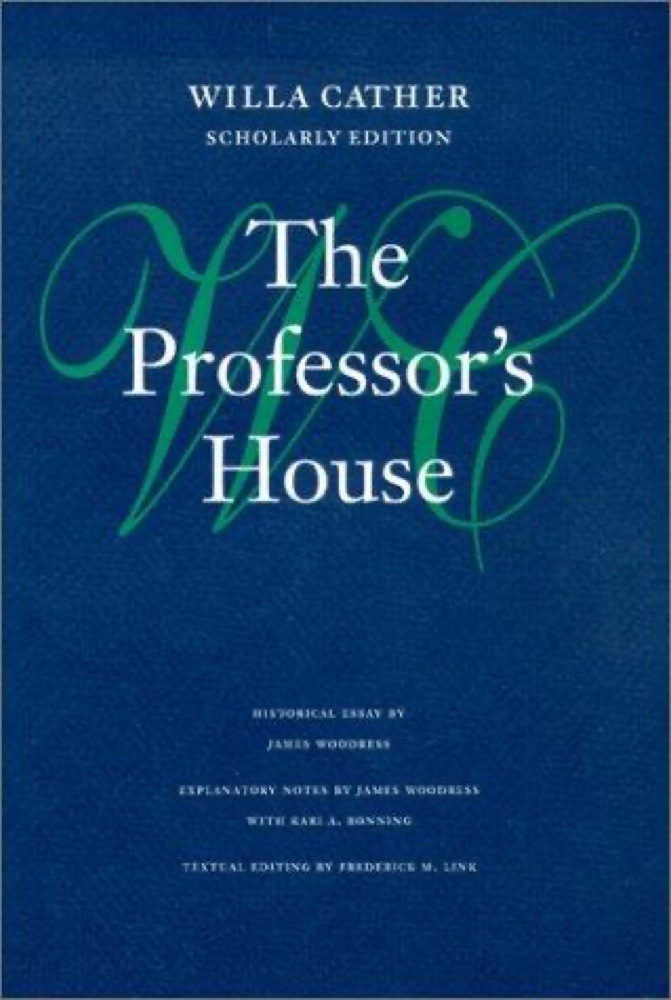
 The Professor's House
Quotes from the Book
He was suddenly thrilled to see his private, personal star arise in the east. This was a particular star his nanny had chosen for him as a child. As a child, he would sometimes talk to this star, but only when he was his most serious, real self, and not being any sort of a show-off or clown. As he grew up, the practice had somehow worn off. He looked up at his old friend as if to say, “You see my predicament.” The star seemed to respond, “I see.” Abel next put the question: “What shall I do?” The star seemed to answer, “You will do what you will do.” For some reason this reply strengthened Abel’s belief in himself. Sleep gently enfolded him. The constellations proceeded across the hushed heavens as if tiptoeing past the dreaming mouse on his high branch.
4
Rain caused one to reflect on the shadowed, more poignant parts of life—the inescapable sorrows, the speechless longings, the disappointments, the regrets, the cold miseries. It also allowed one the leisure to ponder questions unasked in the bustle of brighter days; and if one were snug under a sound roof, as Abel was, one felt somehow mothered, though mothers were nowhere around, and absolved of responsibilities.
4
Abel also kept busy taking it easy. Only when taking it easy, he'd learned, could one properly do one's wondering.
4
The stubbornness of his character stood him now in good stead. He refused to consider himself defeated.
3
Somewhere out there, in the night sky-and it could only be night-were the glittering stars, and among them his, the one he had always known. This star, his, millions of miles away, was yet closer than Amanda, because if he had the will and the strength to get up, uncover his window, and look out, he could see it. He knew, therefore, that it existed. But as for Amanda, father, mother, sisters, brothers, aunts, uncles, cousins, friends, and the rest of society and the animal kingdom, he had to believe they were there, and it was hard to have this faith. As far as he really knew, he himself was the only, lonely, living thing that existed, and in his coma of coldness, he was not so sure of that.
3
The damp occupants of the cave stood close together in the vaulted entrance like actors who had played their parts and could now watch the rest of the show from the wings.
3
[T]he conviction grew in him that the earth and the sky knew he was there and also felt friendly; so he was not really alone, and not really entirely lonely.
2
He began to develop an obstinate patience.
1
His thoughts were full of the future, but they were also full of the past.
It began to seem it had always been winter and that there was nothing else, just a vague awareness to make note of the fact. The universe was a dreary place, asleep, cold all the way to infinity, and the wind was a separate thing, not part of the winter, but a lost, unloved soul, screaming and moaning and rushing about looking for a place to rest and reckon up its woes.
Abel talked about Amanda, about her poetry, her grace, her tendency to dream. He speculated on why her movements, her gestures, her voice, her way of dressing, were so much more charming and heart-winning than those of any other female mouse he had ever known, including his own dear mother and favorite sister. It puzzled him. “It’s the magic of love,” burped Gower.
Never had he been subjected to such rude treatment. How long could it last? How long, he wondered, could he abide it?
Watch on YouTube
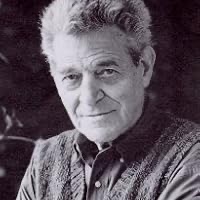
About William Steig
We have collected 12 quotes from 1 book by William Steig on BookQuoters.
More about the author →About the book
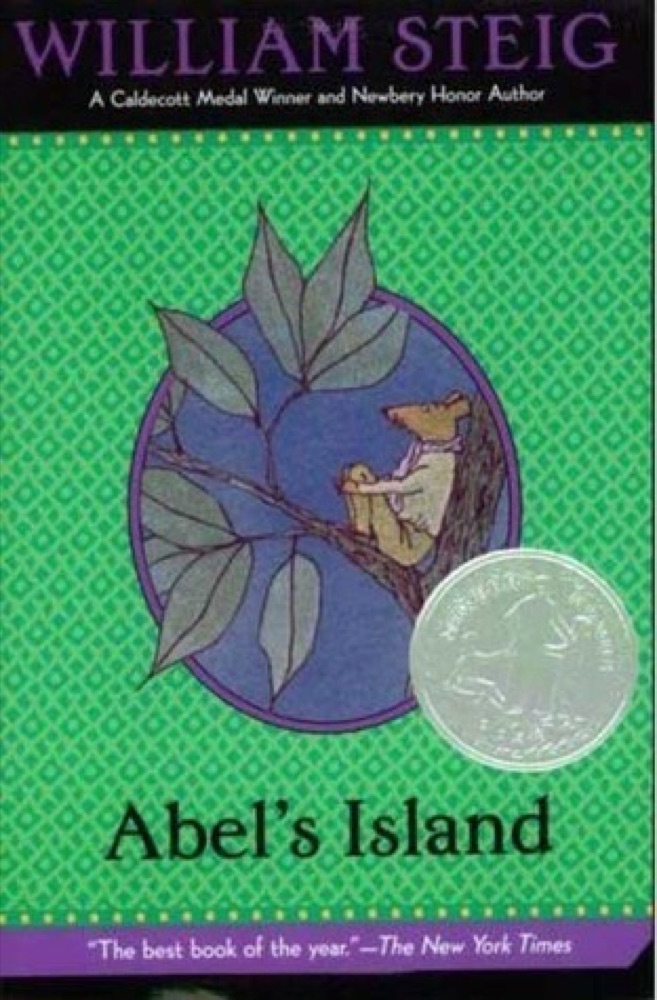
Abel's place in his familiar, mouse world has always been secure; he had an allowance from his mother, a comfortable home, and a lovely wife, Amanda. But one stormy August day, furious flood water carry him off and dump him on an uninhabited island. Despite his determination and stubborn resourcefulness--he tried crossing the river with boats and ropes and even on stepping-stones--Abel can't find a way to get back home. Days, then weeks and months, pass. Slowly, his soft habits disappear as he forages for food, fashions a warm nest in a hollow log, models clay statues of his family for company, and continues to brood on the problem of how to get across the river--and home. Abel's time on the island brings him a new understanding of the world he's separated from. Faced with the daily adventure of survival in his solitary, somewhat hostile domain, he is moved to reexamine the easy way of l
Book details
- First published
- 1976
- Author
- William Steig
- Genre
- Children's
- Goodreads rating
- 3.95 (5k ratings)
Keep reading
The Professor's House
 The Sweetness of Water
 The Dean's Watch
 Dubliners
 In a Lonely Place
 The Orchardist
 Hatchet
 The Invisible Bridge
 One of Ours
 Messenger
 Victory
 The Sword in the Stone
 The Master
 The Narrow Road to the Deep North
 Ethan Frome
 The Corrections
 Omensetter's Luck
 Death Watch
 Lincoln in the Bardo
 The Long Way Home
 Out of the Silent Planet
 The Whisper Man
 The Story of Edgar Sawtelle
 Little, Big
 Provinces of Night
 Liesl & Po
 Interpreter of Maladies
 A Portrait of the Artist as a Young Man
 Remembering
 The Eternal Wonder
 Another Country
 Dombey and Son
 The Twelve
 Unaccustomed Earth
 Stardust
 The Magician's Nephew
 Highly Illogical Behavior
 The Real Boy
 The Red Garden
 Harvesting the Heart
 About a Boy
 A Place on Earth
 Spring Snow
 Call for the Dead
 The Sailor Who Fell from Grace with the Sea
 The Little Friend
 The Amazing Adventures of Kavalier & Clay
 The Giver
 Knots and Crosses
 Light in August
 The Rainbow
 The Pillars of the Earth
 White Fang
 The Metamorphosis
 Independent People
 Autobiography of Red
 The Paper Magician
 Little Heaven
 The Clockmaker's Daughter
 The Collected Stories