

 The Namesake
Quotes from the Book
Still, there are times I am bewildered by each mile I have traveled, each meal I have eaten, each person I have known, each room in which I have slept. As ordinary as it all appears, there are times when it is beyond my imagination.
While the astronauts, heroes forever, spent mere hours on the moon, I have remained in this new world for nearly thirty years. I know that my achievement is quite ordinary. I am not the only man to seek his fortune far from home, and certainly I am not the first. Still, there are times I am bewildered by each mile I have traveled, each meal I have eaten, each person I have known, each room in which I have slept. As ordinary as it all appears, there are times when it is beyond my imagination." (from "The Third and Final Continent")
Sexy means loving someone you do not know.
She watched his lips forming the words, at the same time she heard them under her skin, under her winter coat, so near and full of warmth that she felt herself go hot.
Eventually I took a square of white chocolate out of the box, and unwrapped it, and then I did something I had never done before. I put the chocolate in my mouth, letting it soften until the last possible moment, and then as I chewed it slowly, I prayed that Mr. Pirzada’s family was safe and sound. I had never prayed for anything before, had never been taught or told to, but I decided, given the circumstances, that it was something I should do. That night when I went to the bathroom I only pretended to brush my teeth, for I feared that I would somehow rinse the prayer out as well. I wet the brush and rearranged the tube of paste to prevent my parents from asking any questions, and fell asleep with sugar on my tongue.
A woman who had fallen out of love with her life
She was like that, excited and delighted by little things, crossing her fingers before any remotely unpredictable event, like tasting a new flavor of ice cream, or dropping a letter in a mailbox. It was a quality he did not understand. It made him feel stupid, as if the world contained hidden wonders he could not anticipate, or see. He looked at her face, which, it occurred to him, had not grown out of its girlhood, the eyes untroubled, the pleasing features unfirm, as if they still had to settle into some sort of permanent expression. Nicknamed after a nursery rhyme, she had yet to shed a childhood endearment.
It was only then, raising my water glass in his name, that I knew what it meant to miss someone who was so many miles and hours away, just as he had missed his wife and daughters for so many months.
As strange as it seemed, I knew in my heart that one day her death would affect me, and stranger still, that mine would affect her.
He learned not to mind the silences.
Most of all I remember the three of them operating during that time as if they were a single person, sharing a single meal, a single body, a single silence, and a single fear.
I am not the only man to seek his fortune far from home, and certainly I am not the first. Still, there are times I am bewildered by each mile I have traveled, each meal I have eaten, each person I have known, each room in which I have slept. As ordinary as it all appears, there are times when it is beyond my imagination.
That night when I went to the bathroom I only pretended to brush my teeth, for I feared that I would somehow rinse the prayer out as well. I wet the brush and rearranged the tube of paste to prevent my parents from asking any questions, and feel asleep with sugar on my tongue.
The cosmetics that had seemed superfluous were necessary now, not to improve her but to define her somehow.
While the astronauts, heroes forever, spent mere hours on the moon, I have remained in this new world for nearly thirty years. I know that my achievement is quite ordinary. I am not the only man to seek his fortune far from home, and certainly I am not the first. Still, there are times I am bewildered by each mile I have traveled, each meal I have eaten, each person I have known, each room in which I have slept. As ordinary as it all appears, there are times when it is beyond my imagination.
In those six weeks I regarded her arrival as I would the arrival of a coming month, or season - something inevitable, but meaningless at the same time.
It was similar to a feeling he used to experience long ago when, after months of translating with the aid of a dictionary, he would finally read a passage from a French novel, or an Italian sonnet, and understand the words, one after another, unencumbered by his own efforts. In those moments Mr. Kapasi used to believe that all was right with the world, that all struggles were rewarded, that all of life's mistakes made sense in the end. The promise that he would hear from Mrs. Das now filled him with the same belief.
My wife's name was Mala. The marriage had been arranged by my older brother and his wife. I regarded the proposition with neither objection nor enthusiasm. It was a duty expected of me, as it was expected of every man. She was the daughter of a schoolteacher in Beleghata. I was told that she could cook, knit, embroider, sketch landscapes, and recite poems by Tagore, but these talents could not make up for the fact that she did not possess a fair complexion, and so a string of men had rejected her to her face. She was twenty-seven, an age when her parents had begun to fear that she would never marry, and so they were willing to ship their only child halfway across the world in order to save her from spinsterhood.
You got cats at home?" "No cats. Only a husband.
Whenever he is discouraged, I tell him that if I can survive on three continents, then there is no obstacle he can not conquer. While the astronauts, heroes forever, spent mere hours on the moon, I have remained in this new world for nearly thirty years. I know that my achievement is quite ordinary. I am not the only man to seek his fortune far from home, and certainly I am not the first. Still, there are times I am bewildered by each mile I have traveled, each meal I have eaten, each person I have known, each room in which I have slept. As ordinary as it all appears, there are times when it is beyond my imagination.
I know that my achievement is quite ordinary. I am not the only man to seek his fortune far from home, and certainly I am not the first. Still, there are times I am bewildered by each mile I have traveled, each meal I have eaten, each person I have known, each room in which I have slept. As ordinary as it all appears, there are times when it is beyond my imagination.
That year, and every year, it seemed, we began by studying the Revolutionary War. We were taken in school buses on field trips to visit Plymouth Rock, and to walk the Freedom Trail, and to climb to the top of the Bunker Hill Monument. We made dioramas out of colored construction paper depicting George Washington crossing the choppy waters of the Delaware River, and we made puppets of King George wearing white tights and a black bow in his hair. During tests we were given blank maps of the thirteen colonies, and asked to fill in names, dates, capitals. I could do it with my eyes closed.
In the end the boy had died one evening in his mother's arms, his limbs burning with fever, but then there was the funeral to pay for, and the other children who were born soon enough, and the newer, bigger house, and the good schools and tutors, and the fine shoes and the television, and the countless other ways he tried to console his wife and to keep her from crying in her sleep, and so when the doctor offered to pay him twice as much as he earned at the grammar school, he accepted.
He especially enjoyed watching Mrs. Sen as she chopped things, seated on newspapers on the living room floor. Instead of a knife she used a blade that curved like the prow of a Viking ship, sailing to battle in distant seas. The blade was hinged at one end to a narrow wooden base.
It made him shy, they way he felt the first time they stood together in a mirror.
They were all like siblings, Mr. Kapasi thought as they passed a row of date trees. Mr. and Mrs. Das behaved like an older brother and sister, not parents.
Something happened when the house was dark. They were able to talk to each other again. The
As Mr. Sen backed out of the parking lot, he put his arm across the top of the front seat, so that it looked as if he had his arm around Mrs. Sen.
The fact that the yellow chintz armchair in the living room clashed with the blue-and-maroon Turkish carpet no longer bothered her.
Each day, Shukumar noticed, her beauty, which had once overwhelmed him, seemed to fade. The cosmetics that had seemed superfluous were necessary now, not to improve her but to define her somehow.
Did you know?
- The collection contains nine short stories, including the title story "Interpreter of Maladies."
- It won the 2000 Pulitzer Prize for Fiction, a rare honor for a debut short story collection.
- It also received the PEN/Hemingway Award and was named The New Yorker's best debut of the year.
- Lahiri has said the stories "Mrs. Sen's" and "The Third and Final Continent" were modeled on her mother and father.
- The book has sold millions of copies worldwide.
- It was Lahiri's debut work and preceded her first novel, "The Namesake."
About Jhumpa Lahiri
Jhumpa Lahiri is an American author of Indian origin, born in London in 1967 and raised in the United States. Her debut story collection, "Interpreter of Maladies," won the 2000 Pulitzer Prize for Fiction, and she is also known for the novel "The Namesake."
More about the author →More by Jhumpa Lahiri
All books by Jhumpa Lahiri →
About the book
"Interpreter of Maladies" is a collection of nine short stories by Jhumpa Lahiri, first published in 1999. The stories move between India and the United States and center on Indian and Indian American characters navigating the distance between their roots and a new world. Across the collection, Lahiri follows married couples, immigrants, and families through quiet, ordinary moments in which small gestures carry large emotional weight, from a couple confronting their estrangement during nightly power outages to a tour guide who becomes an unlikely confidant for a visiting family.
Lahiri's recurring themes include the barriers to human communication, the strains and tenderness within marriage and family life, and the pull between belonging and displacement. Several of the stories draw on her own family's experience; she has said that pieces such as "Mrs. Sen's" and "The Third and Final Continent" were shaped by memories of her mother and father. The title story, in which a man who translates patients' symptoms for a doctor guides an Indian American family, gives the book its central image of interpretation and the failure to be truly understood.
The debut collection brought Lahiri immediate acclaim, winning the 2000 Pulitzer Prize for Fiction and the PEN/Hemingway Award, and it was named The New Yorker's best debut of the year. It went on to sell millions of copies worldwide and established Lahiri as a leading voice in contemporary immigrant fiction, preceding her first novel, "The Namesake."
Book details
- First published
- 1999
- Length
- 198 pages
- Reading time
- 3 hours
- Author
- Jhumpa Lahiri
- Genre
- Fiction
- Goodreads rating
- 4.18 (210k ratings) →
- First line
- “The notice informed them that it was a temporary matter: for five days their electricity would be cut off for one hour, beginning at eight P.M.”
If you liked this, read…
- 1The NamesakeLahiri's own novel continuing her exploration of Indian American immigrant identity.
- 2Unaccustomed EarthLahiri's later story collection on family and diaspora.
- 3The Middleman and Other StoriesBharati Mukherjee's award-winning stories of immigrants remaking their lives in America.
Keep reading
 The Stories of John Cheever
 A Thousand Acres
 Her Fearful Symmetry
 The Professor's House
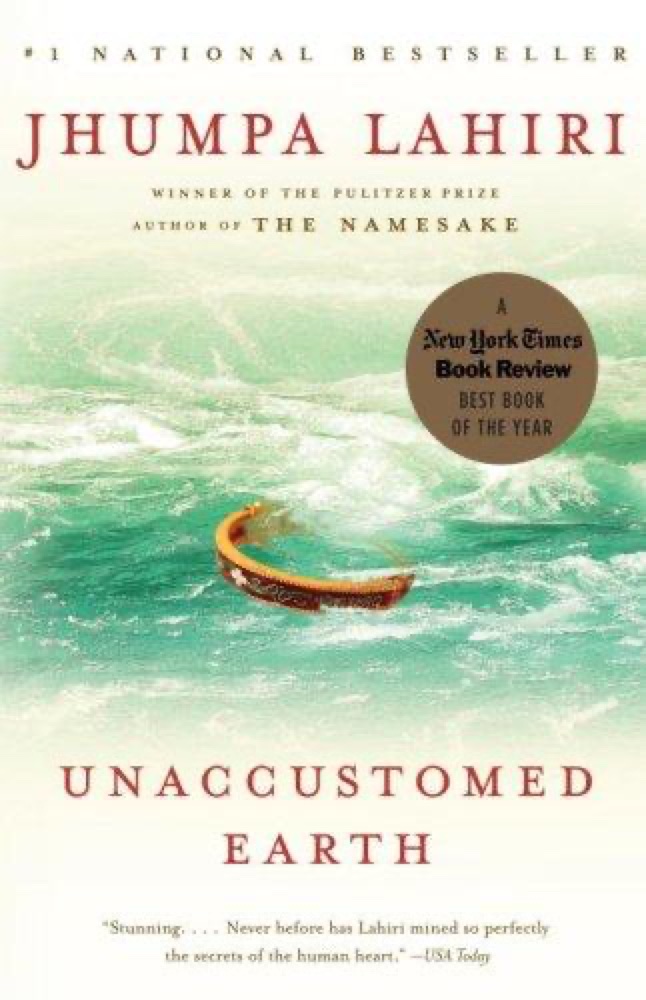 Unaccustomed Earth
 Too Much Happiness: Stories
 The Corrections
 The Aviator's Wife
 The Long Way Home
 Another Country
 The Story of a New Name
 The Go-Between
 The Round House
 A Dance to the Music of Time: 1st Movement
 The Master
 The Blindfold
 A Sport and a Pastime
 The Color Master: Stories
 Dubliners
 The Stone Diaries
 The Age of Innocence
 Longbourn
 The Ministry of Utmost Happiness
 Year of Wonders
 Still Life with Bread Crumbs
 A Home at the End of the World
 Bluebeard's Egg
 The English Patient
 Living to Tell the Tale
 Girl with a Pearl Earring
 Mr. Fox
 Winter Solstice
 The Wonder Spot
 Tar Baby
 The Lowland
 Messenger
 A Severed Head
 Anatomy of a Disappearance
 The Sweetness of Water
 The Transit of Venus
 Like Life: Stories
 The Reluctant Fundamentalist
 Follow You Home
 Harvesting the Heart
 Everything That Rises Must Converge: Stories
 The Post-Birthday World
 Those Who Leave and Those Who Stay
 The Orchardist
 American Wife
 Sweet Tooth
 The Custom of the Country
 A Wolf at the Table
 A Lion Among Men
 My Cousin Rachel
 Singin' and Swingin' and Gettin' Merry Like Christmas
 What I Loved
 Capital
 The Little Friend
 Remarkable Creatures