

 Wonder Boys
Quotes from the Book
In the immemorial style of young men under pressure, they decided to lie down for a while and waste time.
The true magic of this broken world lay in the ability of the things it contained to vanish, to become so thoroughly lost, that they might never have existed in the first place.
Forget about what you are escaping from. Reserve your anxiety for what you are escaping to.
They lay there for a few seconds, in the dark, in the future, listening to the fabulous clockwork of their hearts and lungs, and loving each other
We have the idea that our hearts, once broken, scar over with an indestructible tissue that prevents their ever breaking again in quite the same place...
The magician seemed to promise that something torn to bits might be mended without a seam, that what had vanished might reappear, that a scattered handful of doves or dust might be reunited by a word, that a paper rose consumed by fire could be made to bloom from a pile of ash. But everyone knew that it was only an illusion. The true magic of this broken world lay in the ability of things it contained to vanish, to become so thoroughly lost, that they might never have existed in the first place.
As he watched Joe stand, blazing, on the fire escape, Sammy felt an ache in his chest that turned out to be, as so often occurs when memory and desire conjoin with a transient effect of weather, the pang of creation. The desire he felt, watching Joe, was unquestionably physical, but in the sense that Sammy wanted to inhabit the body of his cousin, not possess it. It was, in part, a longing--common enough among the inventors of heroes--to be someone else; to be more than the result of two hundred regimens and scenarios and self-improvement campaigns that always ran afoul of his perennial inability to locate an actual self to be improved. Joe Kavalier had an air of competence, of faith in his own abilities, that Sammy, by means of constant effort over the whole of his life, had finally learned only to fake.
Poor little librarians of the world, those girls, secretly lovely, their looks marred forever by the cruelty of a pair of big dark eyeglasses!
No; he could be ruined again and again by hope, but he would never be capable of belief.
Every universe, our own included, begins in conversation. Every golem in the history of the world, from Rabbi Hanina's delectable goat to the river-clay Frankenstein of Rabbi Judah Loew ben Bezalel, was summoned into existence through language, through murmuring, recital, and kabbalistic chitchat -- was, literally, talked into life.
Every golden age is as much a matter of disregard as of felicity.
A surprising fact about the magician Bernard Kornblum, Joe remembered, was that he believed in magic. Not in the so-called magic of candles, pentagrams, and bat wings. Not in the kitchen enchantments of Slavic grandmothers with their herbiaries and parings from the little toe of a blind virgin tied up in a goatskin bag. Not in astrology, theosophy, chiromancy, dowsing rods, séances, weeping statues, werewolves, wonders, or miracles. What bewitched Bernard Kornblum, on the contrary, was the impersonal magic of life, when he read in a magazine about a fish that could disguise itself as any one of seven different varieties of sea bottom, or when he learned from a newsreel that scientists had discovered a dying star that emitted radiation on a wavelength whose value in megacycles approximated π. In the realm of human affairs, this type of enchantment was often, though not always, a sadder business—sometimes beautiful, sometimes cruel. Here its stock-in-trade was ironies, coincidences, and the only true portents: those that revealed themselves, unmistakable and impossible to ignore, in retrospect.
Only love could pick a nested pair of steel Bramah locks.
His dreams had always been Houdiniesque: they were the dreams of a pupa struggling in its blind cocoon, mad for a taste of light and air.
Having lost his mother, father, brother, an grandfather, the friends and foes of his youth, his beloved teacher Bernard Kornblum, his city, his history—his home—the usual charge leveled against comic books, that they offered merely an escape from reality, seemed to Joe actually to be a powerful argument on their behalf… The escape from reality was, he felt—especially right after the war—a worthy challenge… The pain of his loss—though he would never have spoken of it in those terms—was always with him in those days, a cold smooth ball lodged in his chest, just behind his sternum. For that half hour spent in the dappled shade of the Douglas firs, reading Betty and Veronica, the icy ball had melted away without him even noticing. That was the magic—not the apparent magic of a silk-hatted card-palmer, or the bold, brute trickery of the escape artist, but the genuine magic of art. It was a mark of how fucked-up and broken was the world—the reality—that had swallowed his home and his family that such a feat of escape, by no means easy to pull off, should remain so universally despised.
He had no idea of how long his life would one day seem to have gone on; how daily present the absence of love would come to feel. “Just watch me,” he said.
Take care-there is no force more powerful than that of an unbridled imagination.
There was something unmistakably exultant about the mess that Rosa had made. Her bedroom-studio was at once the canvas, journal, museum, and midden of her life. She did not “decorate” it; she infused it.
It was, in part, a longing – common enough among the inventors of heroes – to be someone else; to be more than the result of two hundred regimens and scenarios and self-improvement campaigns that always ran afoul of his perennial inability to locate an actual self to be improved
Back in the summer of 1941, they had stood to lose so much, it seemed, through the shame and ruination of exposure. Sammy could not have known that one day he would come to regard all the things that their loving each other had seemed to put at so much risk – his career in comic books, his relations with his family, his place in the world – as the walls of a prison, an airless, lightless keep from which there was no hope of escape….He recalled his and Tracy’s parting at Penn Station on the morning of Pearl Harbor, in the first-class compartment of the Broadway Limited, their show of ordinary mute male farewell, the handshake, the pat on the shoulder, carefully tailoring and modulating their behavior through there was no one at all watching, so finely attuned to the danger of what they might lose that they could not permit themselves to notice what they had
And then the man reminded Max, with a serious but suave and practiced air, that freedom was a debt that could be repaid only by purchasing the freedom of others.
What would she be saying if she did? That she did want to marry him? For ten years, at least, since she was twelve or thirteen, Rosa had been declaring roundly to anyone who asked that she had no intention of getting married, ever, and that if she ever did, it would be when she was old and tired of life. When this declaration in its various forms had ceased to shock people sufficiently, she had taken to adding that the man she finally married would be no older than twenty-five. But lately she had been starting to experience strong, inarticulate feelings of longing, of a desire to be with Joe all the time, to inhabit his life and allow him to inhabit hers, to engage with him in some kind of joint enterprise, in a collaboration that would be their lives. She didn't suppose they needed to get married to do that, and she knew that she certainly ought to not want to. But did she?
Nothing that had ever happened to him, not the shooting of Oyster, or the piteous muttering expiration of John Wesley Shannenhouse, or the death of his father, or internment of his mother and grandfather, not even the drowning of his beloved brother, had ever broken his heart quite as terribly as the realization, when he was halfway to the rimed zinc hatch of the German station, that he was hauling a corpse behind him
When he walked outside again, the sky was shining like a nickel and the air was filled with the smell of sugared nuts.
With patience and calm, persistence and stoicism, good handwriting and careful labeling, they would meet persecution, indignity, and hardship head-on.
And yet in her eyes there was something unreadable, something that did not want to be read, the determined blankness that in predator animals conceals hostile calculation and in prey forms part of an overwhelming effort to seem to have disappeared.
The two dozen commonplace childhood photographs - snowsuit, pony, tennis racket, looming fender of a Dodge - were an inexhaustible source of wonder for him, at her having existed before he met her, and of sadness for his possessing nothing of the ten million minutes of that black-and-white scallop-edged existence save these few proofs.
See you in the funny papers," he said. Jaunty, he reminded himself; always jaunty. In my panache is their hope for salvation.
Her correspondence had been like the pumping of a heart into a severed artery, wild and incessant at first, then slowing down with a kind of muscular reluctance to a stream that became a trickle and finally ceased; the heart had stopped.
The devolution of American culture takes another great step forward
Did you know?
- The novel won the Pulitzer Prize for Fiction in 2001.
- It was first published by Random House in September 2000.
- The story is set largely during the Golden Age of American comic books, beginning in 1939.
- The cousins' signature creation is an anti-fascist superhero called the Escapist.
- Joe Kavalier is both an artist and a trained escape artist who flees Nazi-occupied Prague.
- The novel was adapted into an opera that premiered at the Metropolitan Opera in 2025.
About Michael Chabon
Michael Chabon is an American novelist, screenwriter, and essayist born in 1963, known for richly detailed, genre-blending fiction. He won the Pulitzer Prize for Fiction in 2001 for The Amazing Adventures of Kavalier & Clay.
More about the author →More by Michael Chabon
All books by Michael Chabon →

About the book
The Amazing Adventures of Kavalier & Clay is Michael Chabon's sweeping historical novel about two Jewish cousins in the Golden Age of American comic books. It opens in 1939 when nineteen-year-old Josef "Joe" Kavalier, an artist and trained escape artist, flees Nazi-occupied Prague and arrives in New York to stay with his Brooklyn cousin, seventeen-year-old Sammy Clay. Together they invent "the Escapist," an anti-fascist superhero who becomes a runaway commercial success, while Joe pours his earnings and energy into the desperate hope of rescuing the family he left behind in Europe.
Ranging from 1939 through the postwar years, the book braids the cousins' rise in the comics industry with their private struggles: Joe's love for the artist Rosa Saks and his grief over the fate of his family, and Sammy's concealment of his sexuality in a hostile era. Chabon uses the invented medium of superhero comics to explore escape in all its forms, artistic ambition, fascism, immigration, and identity, threading real history and figures of the comics world through his fiction.
Published by Random House in 2000, the novel won the Pulitzer Prize for Fiction in 2001 and stands among the most celebrated American novels of its generation. Its blend of meticulous period detail, emotional depth, and affectionate treatment of comic-book culture helped elevate the critical standing of the medium and cemented Chabon's reputation as a major contemporary literary voice.
Key characters
- Josef "Joe" KavalierCzech artist and escape artist who flees Nazi-occupied Prague for New York
- Sammy Clay (Klayman)Joe's Brooklyn-born cousin and writing partner who hides his sexuality
- Rosa SaksBohemian artist and Joe's romantic partner
- Tracy BaconRadio actor who voices the Escapist and has a secret relationship with Sammy
- TommyJoe's son, raised by Sammy and Rosa
- Thomas KavalierJoe's younger brother left behind in Europe
Book details
- First published
- 2000
- Length
- 639 pages
- Reading time
- 11 hours
- Author
- Michael Chabon
- Genre
- Literature
- Goodreads rating
- 4.19 (216k ratings) →
Movie & TV adaptations
- IMDb
If you liked this, read…
- 1The Yiddish Policemen's UnionAnother genre-blending, richly imagined novel by Michael Chabon.
- 2MiddlesexA sweeping, award-winning multigenerational American novel of identity and immigration.
- 3The Fortress of SolitudeJonathan Lethem's coming-of-age novel steeped in comic-book culture and New York.
Keep reading
 City on Fire
 The Narrow Road to the Deep North
 One Hundred Years of Solitude
 Bag of Bones
Wonder Boys
Bag of Bones
Wonder Boys
 The Damnation Game
 Weaveworld
 Ada, or Ardor: A Family Chronicle
 The Ministry of Fear
 Wizard and Glass
 The Age of Innocence
 Call for the Dead
 Brideshead Revisited: The Sacred and Profane Memories of Captain Charles Ryder
 Orlando
 Swann's Way
 20th Century Ghosts
 The Sailor Who Fell from Grace with the Sea
 The Untouchable
 Dubliners
 A Lion Among Men
 The Clockmaker's Daughter
 The Invisible Bridge
 The Corrections
 Tuesday Nights in 1980
 A Dance to the Music of Time: 1st Movement
 The Passage
 The Captive & The Fugitive
 A Constellation of Vital Phenomena
 Dreamcatcher
 The Distant Hours
 Out of the Silent Planet
 The Casual Vacancy
 The Secret Keeper
 Little Monsters
 Look Homeward, Angel
 The Real Life of Sebastian Knight
 The Stone Diaries
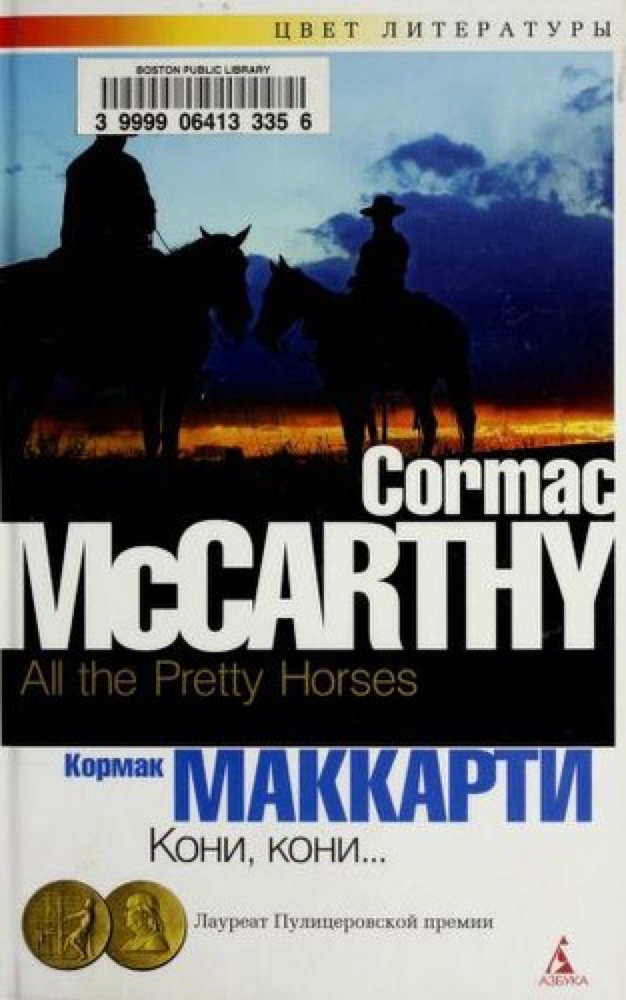 All the Pretty Horses
 The Luminaries
 The Magician's Land
 Miss Lonelyhearts
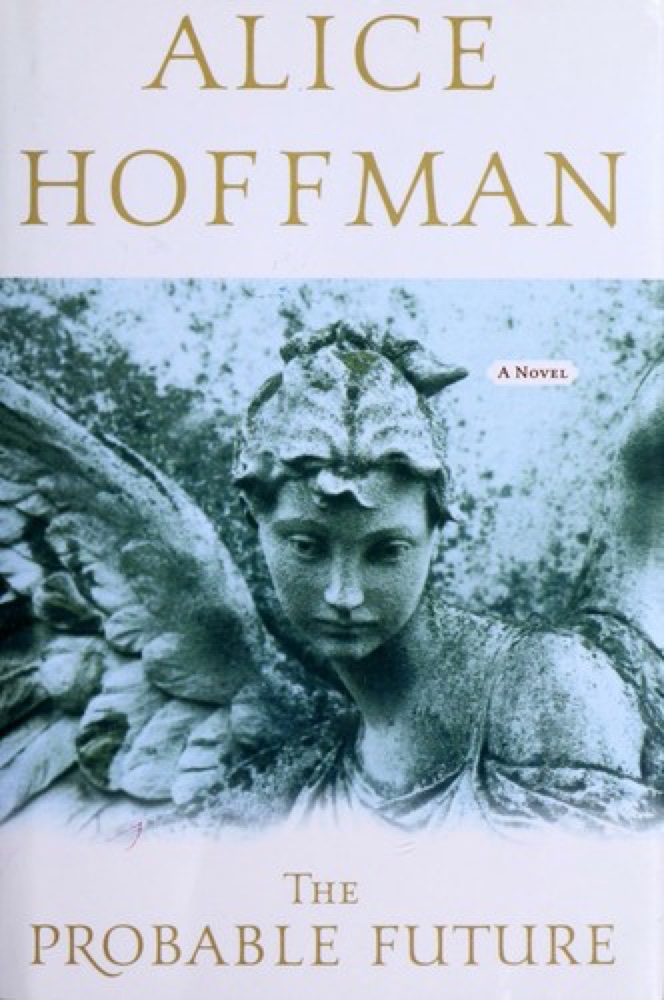 The Probable Future
 The Great Mistake
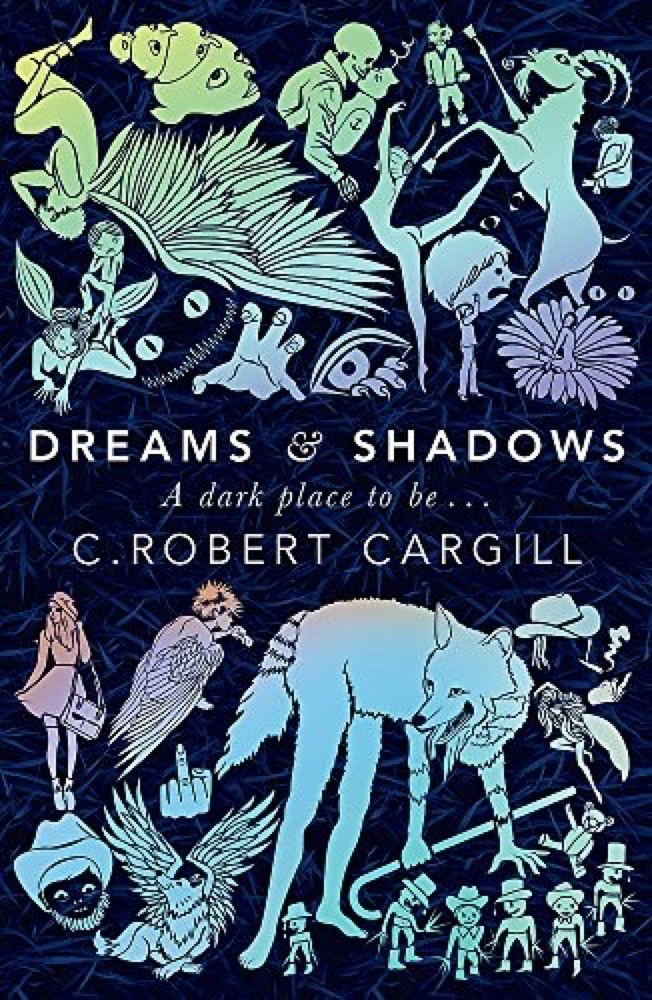 Dreams and Shadows
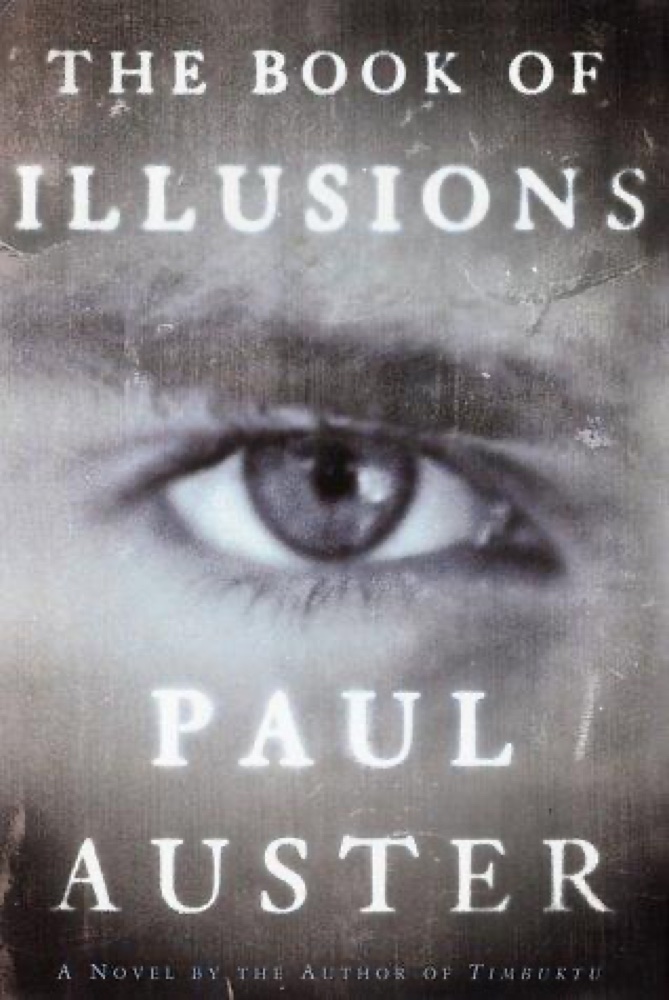 The Book of Illusions
 The Map of Time
 The Hellbound Heart
 The House of the Seven Gables
 The Brutal Telling
 A Sport and a Pastime
 Moonglow
 Moonbound
 The Quick and the Dead
 The Map of the Sky
 The Dean's Watch
 Library of Souls
 The Sweetness of Water
 Victory
 Ragtime
 The Tsar of Love and Techno