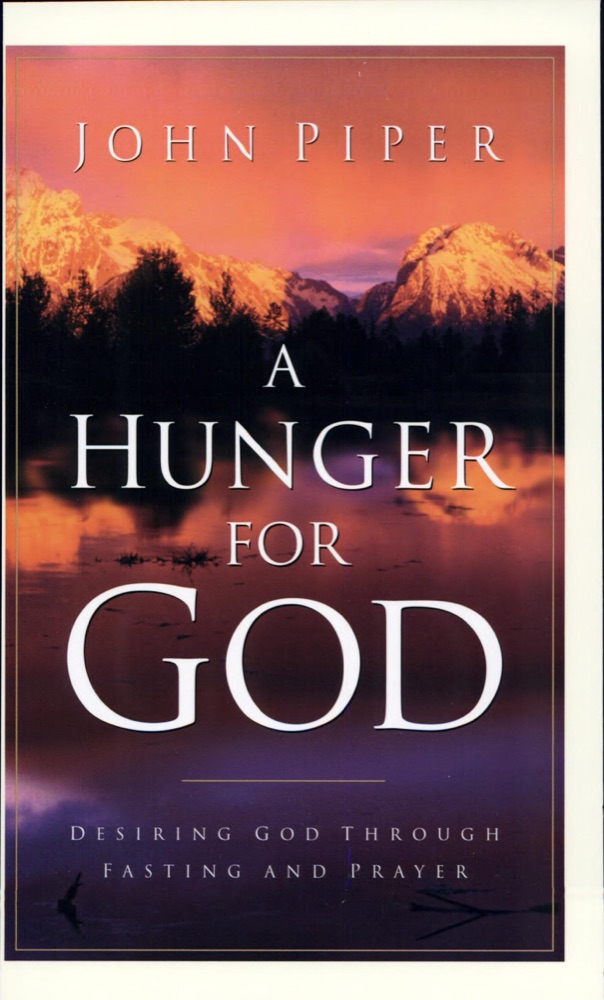

 Don't Waste Your Life
Quotes from the Book
If you don't feel strong desires for the manifestation of the glory of God, it is not because you have drunk deeply and are satisfied. It is because you have nibbled so long at the table of the world. Your soul is stuffed with small things, and there is no room for the great.
359
The greatest enemy of hunger for God is not poison but apple pie. It is not the banquet of the wicked that dulls our appetite for heaven, but endless nibbling at the table of the world. It is not the X-rated video, but the prime-time dribble of triviality we drink in every night.
127
Therefore bread was created for the glory of Christ. Hunger and thirst were created for the glory of Christ. And fasting was created for the glory of Christ. Which means that bread magnifies Christ in two ways: by being eaten with gratitude for his goodness, and by being forfeited out of hunger for God himself. When we eat, we taste the emblem of our heavenly food—the Bread of Life. And when we fast we say, “I love the Reality above the emblem.” In the heart of the saint both eating and fasting are worship. Both magnify Christ.
14
Will I find spiritual communion with God sweet enough, and hope in his promises deep enough, not just to cope, but to flourish and rejoice in him?
10
But it would be a great mistake to think that the awakening of desire for the Bridegroom would produce a wave of monastic withdrawal into the fasting and prayer of passive waiting. That is not what the awakening of desire for Christ would produce. It would produce a radical, new commitment to complete the task of world evangelization, no matter what the cost. And fasting would not become a pacifistic discipline for private hopes, but a fearsome missionary weapon in the fight of faith.
7
One might think that those who feast most often on communion with God are least hungry. They turn often from the innocent pleasures of the world to linger more directly in the presence of God through the revelation of his Word. And there they eat the Bread of Heaven and drink the Living Water by meditation and faith. But, paradoxically, it is not so that they are the least hungry saints. The opposite is the case. The strongest, most mature Christians I have ever met are the hungriest for God. It might seem that those who eat most would be least hungry. But that’s not the way it works with an inexhaustible fountain, and an infinite feast, and a glorious Lord. When you take your stand on the finished work of God in Christ, and begin to drink at the River of Life and eat the Bread of Heaven, and know that you have found the end of all your longings,
4
The final answer is that God rewards fasting because fasting expresses the cry of the heart that nothing on the earth can satisfy our souls besides God. God must reward this cry because God is most glorified in us when we are most satisfied in him.
3
But fasting, for Ezra, was not only an expression of humility and desperation; it was an expression of desiring God with life-and-death seriousness. “So we fasted and implored our God.” Fasting comes in alongside prayer with all its hunger for God and says, “We are not able in ourselves to win this battle. We are not able to change hearts or minds. We are not able to change worldviews and transform culture and save 1.6 million children. We are not able to reform the judiciary or embolden the legislature or mobilize the slumbering population. We are not able to heal the endless wounds of godless ideologies and their bloody deeds. But, O God, you are able!
3
O, how easy it is to do religious things if other people are watching! Preaching, praying, attending church, reading the bible, acts of kindness and charity-they all take on a certain pleasantness of the ego if we know that others will find out about them and think well of us. It is a deadly addiction for esteem that we have.
3
What masters us has become our god; and Paul warns us about those whose “god is their belly” (Philippi- ans 3:19).
3
O, the lessons here for us! Name your discouraging setback—personal, political, scholarly, ecclesiastical, cultural, global. Dare any Christian say that God is not in this for the good of his people and the glory of his name? Not if our God is the God of Ezra! Do you think these setbacks are not without some great purpose of righteousness bigger and more stunning than any of us can imagine?
3
The supremacy of God in all things is the great reward we long for in fasting. His supremacy in our own affections and in all our life-choices. His supremacy in the purity of the church. His supremacy in the salvation of the lost. His supremacy in the establishing of righteousness and justice. And his supremacy for the joy of all peoples in the evangelization of the world.
3
God is committed to rewarding those acts of the human heart that signify human helplessness and hope in God.
2
We want people to like us and admire us and speak well of us. It is a deadly drive. Jesus warned us, “Whoever exalts himself will be humbled; and whoever humbles himself will be exalted” (Matthew 23:12).
2
If you don’t feel strong desires for the manifestation of the glory of God, it is not because you have drunk deeply and are satisfied. It is because you have nibbled so long at the table of the world. Your soul is stuffed with small things, and there is no room for the great.9 God did not create you for this.
2
Prayer is not for the enhancement of our comforts but for the advancement of Christ’s kingdom.
1
There is something that assaults God even more directly. It is the subtle sense that grows in us, usually unconsciously, that the real effectiveness of our spiritual acts is at the horizontal level among people, not before the face of God. In other words, if my children see me pray at meals, it will do them good. If the staff sees me fasting, they may be inspired to fast. If my roommate sees me read my Bible, he may be inspired to read his. And soon. Now that’s not all bad. Jesus’ public prayers certainly inspired the disciples (Luke 11:1). But the danger is that all of our life—including our spiritual life—starts to be justified and understood simply on the horizontal level for the effects it can have because others see it happening. And so God subtly and slowly can become a secondary Person in the living of our lives. We may think that he is important to us because all these things that we are doing are the kinds of things he wants us to do. But, in fact, he himself is falling out of the picture as the focus of it all.
1
Paul says that one weapon in this ongoing fight of faith is the practice of “disciplining” the body. He was not unaware that the desires of the body are deceitful as well as delightful. He said that the “old self” is “being corrupted in accordance with the desires of deceit ” (Ephesians 4:22, AT ). The nature of this deceit is to lure us subtly into living for the “fleeting pleasures” of body and mind, rather than the spiritual delights of knowing and serving God. These pleasures start as innocent delights in food and reading and resting and playing, but then become ends in themselves and choke off spiritual hunger for God.
1
God is ruling the world. He is ruling history. “Oh, the depth of the riches and wisdom and knowledge of God! How unsearchable are his judgments and how unscrutable his ways!” (Romans 11:33). We cannot understand the infinite wisdom of his ways. Ours is to trust and obey and pray—and as we shall see, to fast.
But there in one verse was what we all need and want—both being watered and the power to water others: “a watered garden” and “a spring of water.” It is a paradoxical spiritual principle in Scripture: as you pour yourself out, you become full. As you give away, you getmore.
I am aware that what the text actually says is, “bring the homeless poor into your house.” And I do believe that the more relational our care for the poor can be, the better. But it would be wooden and unchristlike to say that all care short of bringing the homeless into our own home is hypocritical. That may be what we should do in some cases, but not necessarily in all. And it is often an all-or-nothing attitude that paralyzes God’s people.
Though the fig tree should not blossom, nor fruit be on the vines, the produce of the olive fail and the fields yield no food, the flock be cut off from the fold and there be no herd in the stalls, yet I will rejoice in the LORD; I will take joy in the God of my salvation. (Habakkuk3:17–18)
Food is good. But God is better. Normally we meet God in his good gifts and turn every enjoyment into worship with thanksgiving. But from time to time we need to test ourselves to see if we have begun to love his gifts in place of God.
This is one way that fasting serves all our acts of love to God. It keeps the preferring faculty on alert and sharp. It does not let the issue rest. It forces us to ask repeatedly: do I really hunger for God? Do I miss him? Do I long for him? Or have I begun to be content with his gifts?
What’s new about Christian fasting is that it rests on all this finished work of the Bridegroom. It assumes that. It believes that. It enjoys that. The aching and yearning and longing for Christ and his power that drive us to fasting are not the expression of emptiness. Need, yes. Pain, yes. Hunger for God, yes. But not emptiness. The firstfruits of what we long for have already come. The down payment of what we yearn for is already paid. The fullness that we are longing for and fasting for has appeared in history, and we have beheld his glory. It is not merely future. We do not fast out of emptiness. Christ is already in us the hope of glory (Colossians 1:27). We have been “sealed with the promised Holy Spirit, who is [now!] the guarantee of our inheritance” (Ephesians 1:13–14; see also 2 Corinthians 1:22;5:5). We have tasted the powers of the age to come, and our fasting is not because we are hungry for something we have not experienced, but because the new wine of Christ’s presence is so real and so satisfying. We must have all that it is possible to have. The newness of our fasting is this: its intensity comes not because we have never tasted the wine of Christ’s presence, but because we have tasted it so wonderfully by his Spirit, and cannot now be satisfied until the consummation of joy arrives. The new fasting, the Christian fasting, is a hunger for all the fullness of God (Ephesians 3:19), aroused by the aroma of Jesus’ love and by the taste of God’s goodness in the gospel of Christ (1 Peter 2:2–3).
Father, I am empty, but you are full. I am hungry, but you are the Bread of Heaven. I am thirsty, but you are the Fountain of Life. I am weak, but you are strong. I am poor, but you are rich. I am foolish, but you are wise. I am broken, but you are whole. I am dying, but your steadfast love is better than life” (see Psalm63:3). When God sees this confession of need and this expression of trust, he acts, because the glory of his all-sufficient grace is at stake.
God responds to prayer because when we look away from ourselves to Christ as our only hope, that gives the Father an occasion to magnify the glory of his grace in the all-providing work of his Son. Similarly, fasting is peculiarly suited to glorify God in this way. It is fundamentally an offering of emptiness to God in hope.
Who am I, and what is my people, that we should be able thus to offer willingly? For all things come from you, and of your own have we given you” (1Chronicles 29:14). This is the way we should speak of fasting. There is no ground of boasting here. Who am I that I should be able to fast? Nobody. There is nothing in me that would choose this for your glory apart from your transforming grace.
appeal to you to seek the Lord with me concerning the place of fasting and prayer in breaking through the darkened mind that engulfs the modern world, in regard to abortion and a hundred other ills. This is not a call for a collective tantrum that screams at the bad people, “Give me back my country.” It is a call to aliens and exiles in the earth, whose citizenship is in heaven and who await the appearance of their King, to “engage in business” until he comes (Luke 19:13). And the great business of the Christian is to “do all to the glory of God” (1Corinthians 10:31), and to pray that God’s name be hallowed and his kingdom come and his will be done in the earth (Matthew 6:9–10). And to yearn and work and pray and fast not only for the final revelation of the Son of Man, but in the meantime, for the demonstration of his Spirit and power in the reaching of every people, and the rescuing of the perishing, and the purifying of the church, and the putting right of as many wrongs as God will grant.
In the flood of the loss of humanness in our age—including the flow from abortion-on-demand to infanticide and on to euthanasia—the only thing that can stem this tide is the certainty of the absolute uniqueness and value of people. And the only thing which gives us that is the knowledge that people are made in the image of God. We have no other final protection. And the only way we know that people are made in the image of God is through the Bible and the incarnation of Christ, which we know from the Bible. If people are not made in the image of God, the pessimistic, realistic humanist is right: the human race is an abnormal wart on the smooth face of a silent and meaningless universe. In this setting, abortion, infanticide, and euthanasia (including the killing of mentally deranged criminals, the severely handicapped, or the elderly who are an economic burden) are completely logical.... Without the Bible and without the revelation in Christ (which is only told to us in the Bible) there is nothing to stand between us and our children and the eventual acceptance of the monstrous inhumanities of theage.
Watch on YouTube
About John Piper
We have collected 259 quotes from 14 books by John Piper on BookQuoters.
More about the author →More by John Piper
Don't Waste Your Life
 Seeing and Savoring Jesus Christ
 The Passion of Jesus Christ
 God Is the Gospel: Meditations on God's Love as the Gift of Himself
About the book
There is an appetite for God. And it can be awakened. I invite you to turn from the dulling effects of food and the dangers of idolatry, and to say with some simple fast: "This much, O God, I want you."
Our appetites dictate the direction of our lives--whether it be the cravings of our stomachs, the passionate desire for possessions or power, or the longings of our spirits for God. But for the Christian, the hunger for anything besides God can be an arch-enemy. While our hunger for God--and Him alone--is the only thing that will bring victory.
Do you have that hunger for Him? As John Piper puts it: "If we don't feel strong desires for the manifestation of the glory of God, it is not because you have drunk deeply and are satisfied. It is because we have nibbled so long at the table of the world. Our soul is stuffed with small things, and there is no room for the great." If we are fu
Book details
- First published
- 1997
- Author
- John Piper
- Genre
- Nonfiction
- Goodreads rating
- 4.14 (5k ratings)
Keep reading
 Breaking Free: Discover the Victory of Total Surrender
 When I Don't Desire God: How to Fight For Joy
 Desiring God: Meditations of a Christian Hedonist
 A Long Obedience in the Same Direction: Discipleship in an Instant Society
 The Pursuit of God: The Human Thirst for the Divine
 40 Days of Decrease: A Different Kind of Hunger. A Different Kind of Fast.
 Praying God's Word: Breaking Free From Spiritual Strongholds
 Moving Mountains: Praying with Passion, Confidence, and Authority
 Discipline: The Glad Surrender
 Absolute Surrender
 The Holiness of God
 In His Image: 10 Ways God Calls Us to Reflect His Character
 The Furious Longing of God
 The Grand Weaver: How God Shapes Us through the Events in Our Lives
 Praying Like Monks, Living Like Fools: An Invitation to the Wonder and Mystery of Prayer
 Erasing Hell: What God Said About Eternity, and the Things We've Made Up
 The Joy of Fearing God
 Girl Meets God
 Believing God
 My Utmost for His Highest
 Celebration of Discipline: The Path to Spiritual Growth
 The Great Omission: Reclaiming Jesus's Essential Teachings on Discipleship
 The Normal Christian Life
 The Explicit Gospel
 Hope for Each Day: Words of Wisdom and Faith
 All In: You Are One Decision Away From a Totally Different Life
 The Divine Conspiracy: Rediscovering Our Hidden Life in God
 The Pursuit of Holiness
 Anything: The Prayer That Unlocked My God and My Soul
 The Rare Jewel of Christian Contentment
 Counterfeit Gods: The Empty Promises of Money, Sex, and Power, and the Only Hope That Matters
 The Attributes of God: A Journey Into the Father's Heart
 Prayer: Experiencing Awe and Intimacy with God
 Gentle and Lowly: The Heart of Christ for Sinners and Sufferers
 Having a Mary Heart in a Martha World: Finding Intimacy with God in the Busyness of Life
 A Little Book on the Christian Life
 Time for God
 Just Like Jesus: Learning to Have a Heart Like His
 Because He Loves Me: How Christ Transforms Our Daily Life
 Wild Goose Chase: Reclaim the Adventure of Pursuing God
 Prayer in the Night: For Those Who Work or Watch or Weep
 The Autobiography of George Müller
 Knowing God
 All of Grace
 Radical: Taking Back Your Faith from the American Dream
 Simply Christian
 7: An Experimental Mutiny Against Excess
 How People Change
 Letters to Malcolm: Chiefly on Prayer
 Encounters with Jesus: Unexpected Answers to Life's Biggest Questions
 Gospel: Recovering the Power that Made Christianity Revolutionary
 Pastrix: The Cranky, Beautiful Faith of a Sinner & Saint
 Ten Words to Live By: Delighting in and Doing What God Commands
 The Pleasures of God: Meditations on God's Delight in Being God
 Jesus Among Other Gods: The Absolute Claims of the Christian Message
 The Sovereignty of God