 Crime and Punishment
Quotes from the Book
People really do like seeing their best friends humiliated; a large part of the friendship is based on humiliation; and that is an old truth,well known to all intelligent people.
144
I wanted to fathom her secrets; I wanted her to come to me and say: "I love you," and if not that, if that was senseless insanity, then...well, what was there to care about? Did I know what I wanted? I was like one demented: all I wanted was to be near her, in the halo of her glory, in her radiance, always, for ever, all my life. I knew nothing more!
74
Do you know that one day I'll kill you? I won't do it because I'm no longer in love with you, or because I'm jealous, but—I'll just kill you for no better reason that I sometimes long to devour you.
64
Nothing could be more absurd than moral lessons at such a moment! Oh, self-satisfied people: with what proud self-satisfaction such babblers are ready to utter their pronouncements! If they only knew to what degree I myself understand all the loathsomeness of my present condition, they wouldn't have the heart to teach me.
42
Know that I've forgotten precisely nothing; but I've driven it all out of my head for a time, even the memories--until I've radically improved my circumstances. Then... then you'll see, I'll rise from the dead!
37
if she had ordered me to throw myself down then, I would have done it! If she had said it only as a joke, said it with contempt, spitting on me--even then I would have jumped!
29
Russians alone are able to combine so many opposites in themselves at one and the same time.
27
But gamblers know how a man can sit for almost twenty-four hours at cards, without looking to right, or to left.
26
Can I possibly not understand myself that I'm a lost man? But--why can't I resurrect? Yes! it only takes being calculating and patient at least once in your life and--that's all! It only takes being steadfast at least once, and in an hour I can change my whole destiny!
24
Sometimes it happens that the most insane thought, the most impossible conception, will become so fixed in one's head that at length one believes the thought or the conception to be reality. Moreover, if with the thought or the conception there is combined a strong, a passionate, desire, one will come to look upon the said thought or conception as something fated, inevitable, and foreordained—something bound to happen. Whether by this there is connoted something in the nature of a combination of presentiments, or a great effort of will, or a self-annulment of one's true expectations, and so on, I do not know;
20
It's curious and ridiculous how much the gaze of a prudish and painfully chaste man touched by love can sometimes express and that precisely at a moment when the man would of course sooner be glad to fall through the earth than to express anything with a word or a look.
19
Well, what, what new thing can they say to me that I don't know myself? And is that the point? The point here is that--one turn of the wheel, and everything changes, and these same moralizers will be the first (I'm sure of it) to come with friendly jokes to congratulate me. And they won't all turn away from me as they do now. Spit on them all! What am I now? Zéro. What may I be tomorrow? Tomorrow I may rise from the dead and begin to live anew! I may find the man in me before he's lost!
19
And it all flew away like a dream--even my passion, and yet it really was strong and true, but...where has it gone now? Indeed the thought occasionally flits through my head: "Didn't I go out of my mind then and spend the whole time sitting in a madhouse somewhere, and maybe I'm sitting there now--so that for me it was all a seeming and only seems to this day.
16
No, it was not the money that I valued—what I wanted was to make all this mob of Heintzes, hotel proprietors, and fine ladies of Baden talk about me, recount my story, wonder at me, extol my doings, and worship my winnings.
15
Just try to suppose that I may not know how to behave with dignity. That is, perhaps I'm a dignified man, but I don't know how to behave with dignity. Do you understand that it may be so? All Russians are that way, and you know why? Because Russians are too richly and multifariously endowed to be able to find a decent form for themselves very quickly. It's a matter of form. For the most part, we Russians are so richly endowed that it takes genius for us to find a decent form. Well, but most often there is no genius, because generally it rarely occurs. It's only the French, and perhaps some few other Europeans, who have so well-defined a form that one can look extremely dignified and yet be a most undignified man. That's why form means so much to them. A Frenchman can suffer an insult, a real, heartfelt insult, and not wince, but a flick on the nose he won't suffer for anything, because it's a violation of the accepted and time-honored form of decency. That's why our young ladies fall so much for Frenchmen, because they have good form. In my opinion, however, there's no form there, but only a rooster, le coq gaulois. However, that I cannot understand, I'm not a woman. Maybe roosters are fine. And generally I'm driveling, and you don't stop me. Stop me more often; when I talk with you, I want to say everything, everything, everything. I lose all form. I even agree that I have not only no form, but also no merits. I announce that to you. I don't even care about any merits. Everything in me has come to a stop now. You yourself know why. I don't have a single human thought in my head. For a long time I haven't known what's going on in the world, either in Russia or here. I went through Dresden and don't remember what Dresden is like. You know yourself what has swallowed me up. Since I have no hope and am a zero in your eyes, I say outright: I see only you everywhere, and the rest makes no difference to me. Why and how I love you--I don't know. Do you know, maybe you're not good at all? Imagine, I don't even know whether you're good or not, or even good-looking? Your heart probably isn't good; your mind isn't noble; that may very well be.
11
Or perhaps it is because it is so NECESSARY for you to win. It is like a drowning man catching at a straw. You yourself will agree that, unless he were drowning he would not mistake a straw for the trunk of a tree.
8
I had come there not only to look at, but also to number myself sincerely and wholeheartedly with, the mob. As for my secret moral views, I had no room for them amongst my actual, practical opinions.
7
If the spirit has passed through a great many sensations, possibly it can no longer be sated with them, but grows more excited, and demands more sensations, and stronger and stronger ones, until at length it falls exhausted.
6
most men love to see their best friend in abasement; for generally it is on such abasement that friendship is founded.
6
Des Grieux was like all Frenchmen, that is, cheerful and amiable when it was necessary and profitable, and insufferably dull when the necessity to be cheerful and amiable ceased. A Frenchman is rarely amiable by nature; he is always amiable as if on command, out of calculation. If, for instance, he sees the necessity of being fantastic, original, out of the ordinary, then his fantasy, being most stupid and unnatural, assembles itself out of a priori accepted and long-trivialized forms. The natural Frenchman consists of a most philistine, petty, ordinary positiveness--in short, the dullest being in the world. In my opinion, only novices, and Russian young ladies in particular, are attracted to Frenchmen. Any decent being will at once notice and refuse to put up with this conventionalism of the pre-established forms of salon amiability, casualness, and gaiety.
6
El caballero auténtico, aunque pierda cuanto tiene, no debe alterarse. El dinero está tan por bajo de la dignidad de un caballero que casi no vale la pena pensar en él.
5
Sí, a veces la idea más delirante, la que parece más imposible, se le clava a uno en la cabeza con tal fuerza que acaba por juzgarla realizable... Más aún, si esa idea va unida a un deseo fuerte y apasionado acaba uno por considerarla a veces como algo fatal, necesario, predestinado, como algo que es imposible que no sea, que no ocurra.
4
I believe he was feeling a bit nervous. Possibly it was my costume that took him aback. I was dressed quite well, even elegantly, and looked as if I belonged to the best society.
4
You have disgraced the name of Russia, madam!" shouted the general, "and there are police for that!
4
Know that I've forgotten precisely nothing; but I've driven it all out of my head for a time, even the memories--until I've radically improved my circumstances. Then...then you'll see, I'll rise from the dead!
Well, yes, yes, to be enslaved to you is a pleasure. There is, there is pleasure in the ultimate degree of humiliation and insignificance!" I went on raving. "Devil knows, maybe there is in the knout, too, when the knout comes down on your back and tears your flesh to pieces...But maybe I want to try other pleasures as well.
I haven’t been here long, but, nevertheless, all the same, what I’ve managed to observe and verify here arouses the indignation of my Tartar blood. By God, I don’t want such virtues! I managed to make a seven-mile tour here yesterday. Well, it’s exactly the same as in those moralizing little German picture books: everywhere here each house has its Vater, terribly virtuous and extraordinarily honest. So honest it’s even frightening to go near him. I can’t stand honest people whom it’s frightening to go near. Each such Vater has a family, and in the evening they all read edifying books aloud. Over their little house, elms and chestnuts rustle. A sunset, a stork on the roof, and all of it extraordinarily poetic and touching…
Yes; even if a gentleman should lose his whole substance, he must never give way to annoyance. Money must be so subservient to gentility as never to be worth a thought. Of course, the SUPREMELY aristocratic thing is to be entirely oblivious of the mire of rabble, with its setting; but sometimes a reverse course may be aristocratic to remark, to scan, and even to gape at, the mob (for preference, through a lorgnette), even as though one were taking the crowd and its squalor for a sort of raree show which had been organised specially for a gentleman's diversion.
it's as if I'm afraid to spoil the charm of what has only just passed by a serious book or some serious occupation. As if this ugly dream and all the impressions it left behind are so dear to me that I'm even afraid to touch it with something new, lest it vanish in smoke!
Did you know?
- Dostoevsky dictated the novel to stenographer Anna Grigoryevna Snitkina, who later became his wife.
- He wrote it at speed to meet a punishing contract deadline with publisher Fyodor Stellovsky.
- The story draws heavily on Dostoevsky's own gambling addiction.
- It is set in the fictional German casino resort of Roulettenburg.
- Sergei Prokofiev adapted the novel into an opera, The Gambler, completed in the 1910s.
About Fyodor Dostoevsky
Fyodor Dostoevsky (1821-1881) was a Russian novelist whose psychologically intense works, including Crime and Punishment and The Brothers Karamazov, are landmarks of world literature. His own struggle with gambling addiction directly informed The Gambler.
More about the author →More by Fyodor Dostoevsky
All books by Fyodor Dostoevsky →
About the book
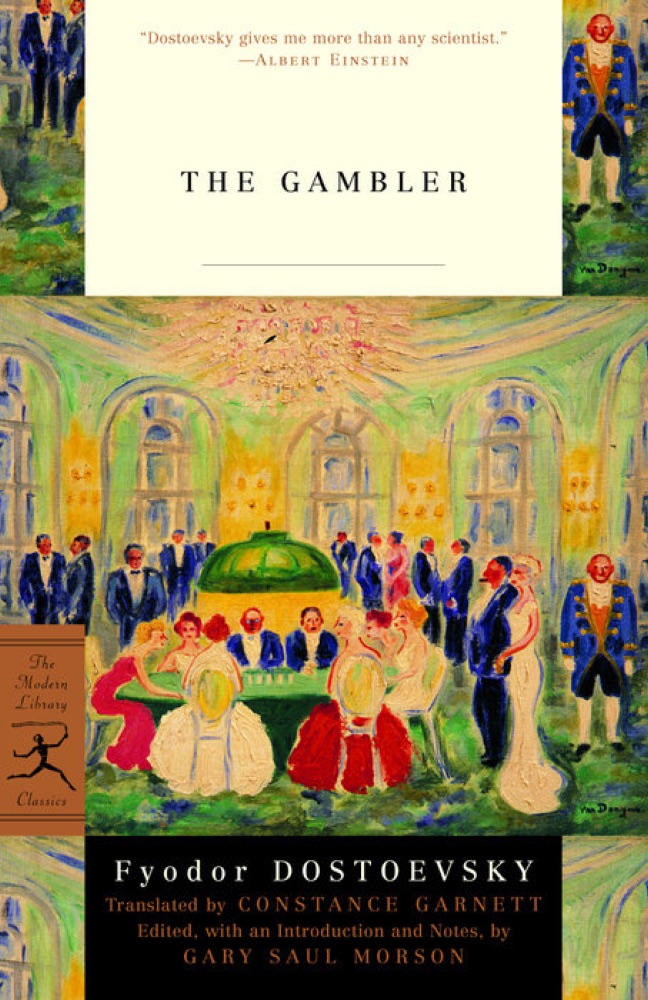
"The Gambler" is a short novel by Fyodor Dostoevsky narrated by Alexei Ivanovich, a young tutor in the household of a debt-ridden Russian general staying at the German casino resort of Roulettenburg. Hopelessly in love with the general's stepdaughter Polina, Alexei is drawn to the roulette tables, while the whole entourage waits anxiously on the death of a wealthy aunt whose inheritance might rescue the general from ruin. When the formidable old grandmother instead arrives in person and begins losing a fortune at the wheel, the household's schemes unravel and Alexei is pulled ever deeper into compulsive play.
Dostoevsky uses the casino as a stage for his enduring preoccupations: the psychology of addiction, the recklessness of desire, financial desperation, and the clash between Russian temperament and European manners. Gambling becomes a study in obsession and self-destruction, where the thrill of risk corrodes love, dignity, and reason alike. The book is also notable for its autobiographical charge, drawing directly on the author's own ruinous experiences at the roulette table.
The novel was written under extraordinary pressure: bound by a punishing contract with the publisher Fyodor Stellovsky, Dostoevsky dictated the work in a matter of weeks to the young stenographer Anna Grigoryevna Snitkina, who soon afterward became his wife. The result has endured as one of literature's sharpest portraits of compulsive gambling and has been adapted repeatedly, most famously in Sergei Prokofiev's opera, securing its place among Dostoevsky's most widely read shorter works.
Key characters
- Alexei IvanovichThe narrator, a tutor in the general's household, in love with Polina and drawn to gambling
- Polina AlexandrovnaThe general's stepdaughter, whom Alexei loves and who manipulates him
- The GeneralA debt-ridden widower awaiting his aunt's inheritance
- Mademoiselle BlancheAn opportunistic Frenchwoman pursuing the general's expected fortune
- Mr. AstleyA wealthy, reserved Englishman also devoted to Polina
- Marquis des GrieuxA Frenchman to whom the general is indebted
- Antonida Vasilevna (the Grandmother)The general's wealthy aunt, whose arrival and gambling upend the household's plans
Book details
- First published
- 1866
- Length
- 191 pages
- Reading time
- 3 hours
- Author
- Fyodor Dostoevsky
- Genre
- Classics
- Goodreads rating
- 3.91 (131k ratings)
- First line
- “At last I have come back from my fortnight's absence.”
Critical reception
- The novel is widely regarded as a vivid psychological portrait of gambling addiction, rooted in Dostoevsky's own experiences.
- It has been adapted across opera, film, radio, and television, including Prokofiev's opera and the 1949 film The Great Sinner.
- The circumstances of its rapid composition with stenographer Anna Snitkina are frequently cited in accounts of Dostoevsky's life.
Movie & TV adaptations
- IMDb
- IMDb
If you liked this, read…
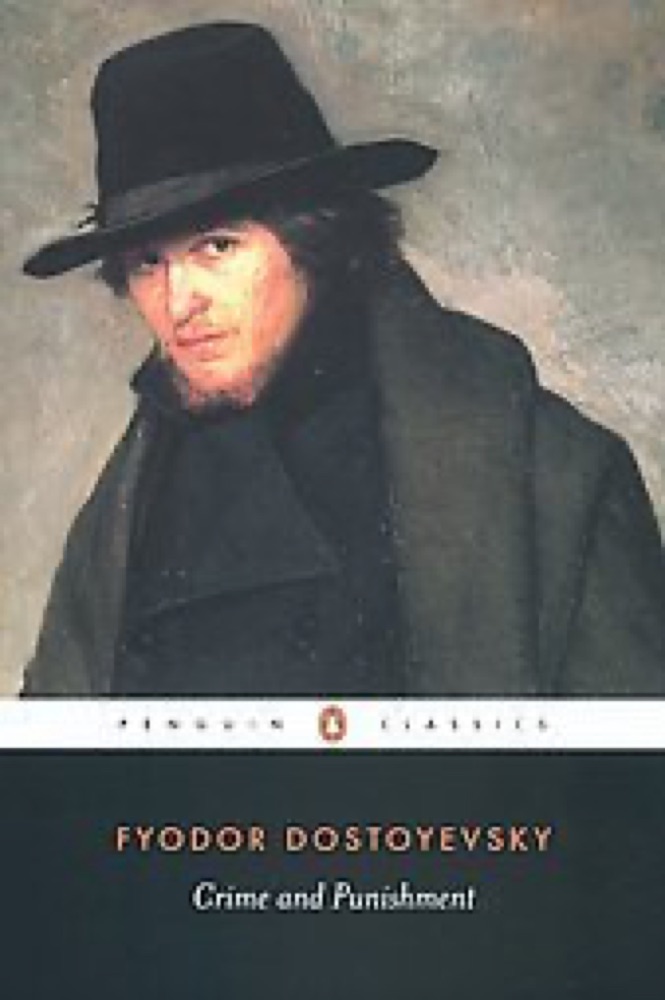
- 1Crime and PunishmentDostoevsky's deeper study of guilt, compulsion, and a troubled mind
- 2Notes from UndergroundAnother short Dostoevsky work driven by a self-destructive, confessional narrator
Keep reading
 Christmas Holiday
 The Manticore
 The Fall
 Selected Stories of Anton Chekhov
 Selected Stories
 The Adolescent
 Gaudy Night
 The Good Soldier
 The Golden Notebook
 Kokoro
 The Joke
 Laughable Loves
 Jakob von Gunten
 Cocaine
 A Hero of Our Time
 Sexus
Sexus
 Jude the Obscure
 Notes from Underground
 Giovanni's Room
 Laura
Laura
 Fifth Business
 A Perilous Undertaking
 Confessions
 The Moonstone
 Riding the Elephant: A Memoir of Altercations, Humiliations, Hallucinations, and Observations
 The Tale of the Body Thief
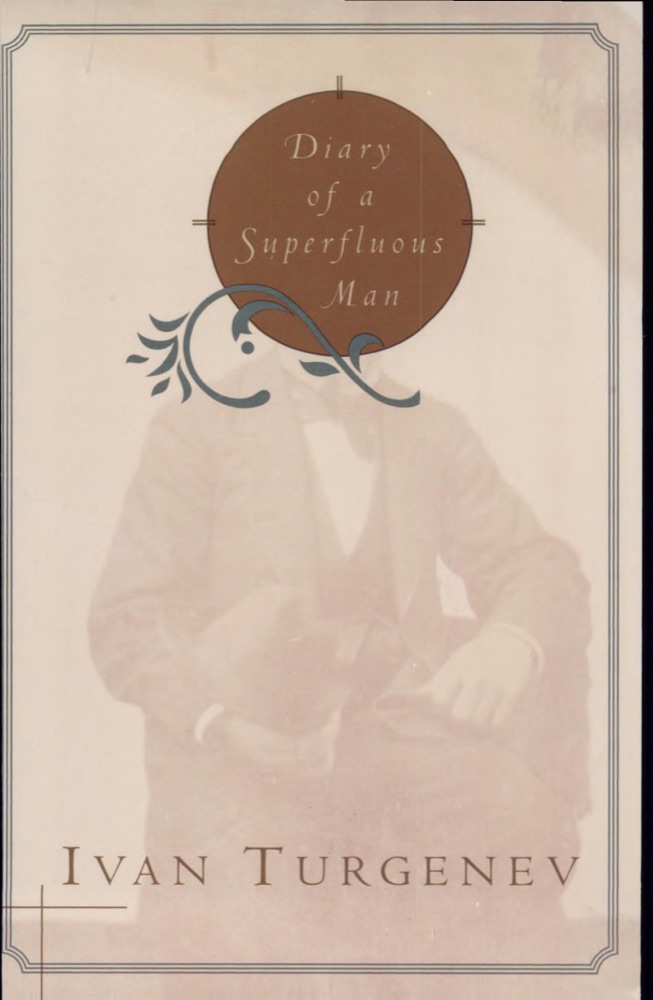 Diary of a Superfluous Man
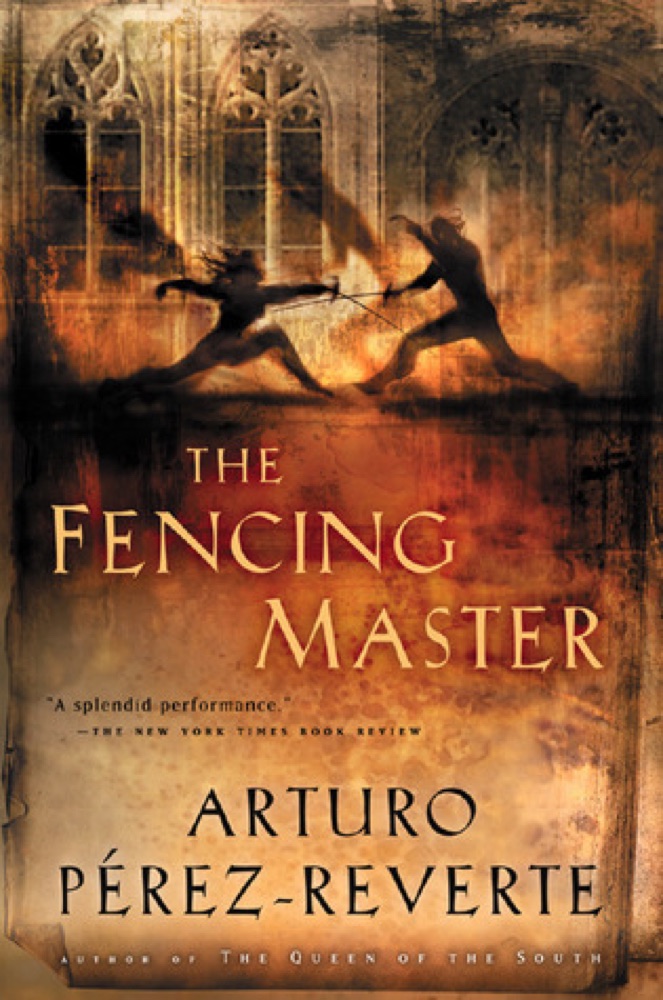 The Fencing Master
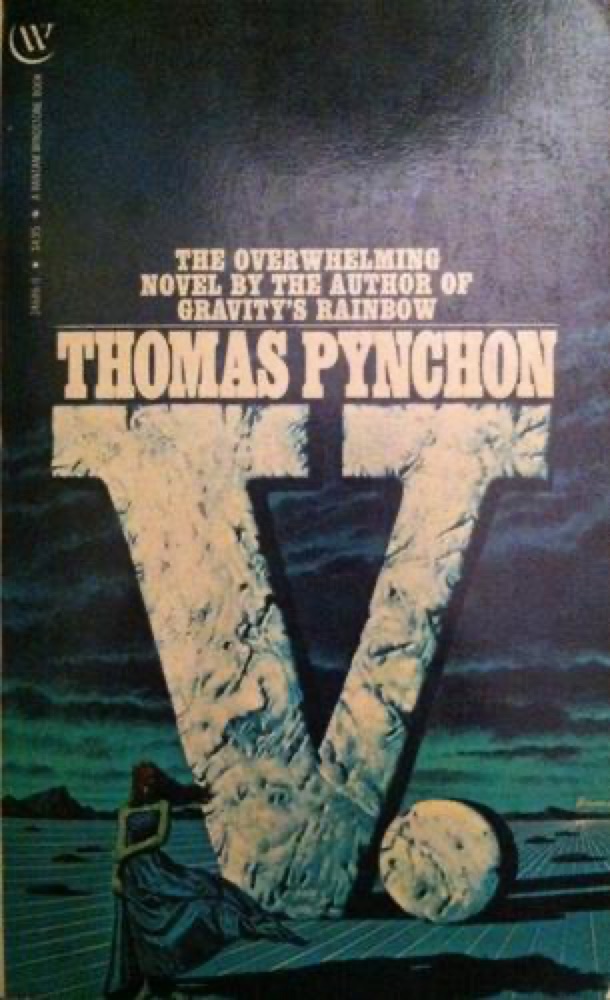 V.
V.
 The Story of the Lost Child
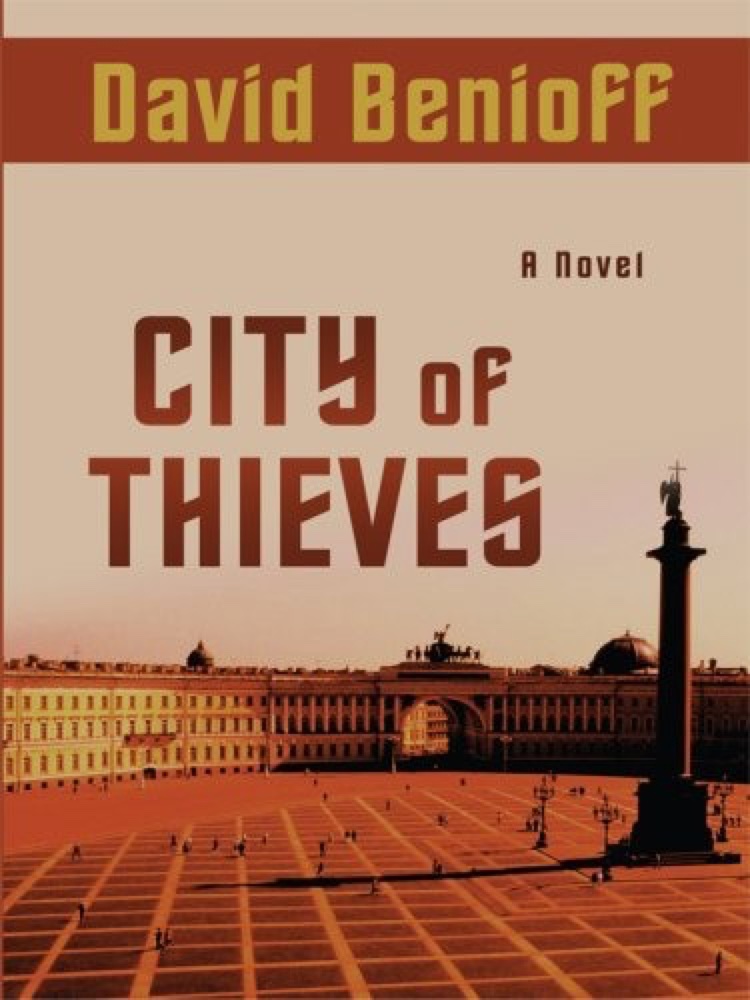 City of Thieves
 Sixty Stories
 Disgrace
 The Story of a New Name
 Jailbird
 The Untouchable
 The Liar
 The Memoirs of Cleopatra
 My Booky Wook
 The Razor's Edge
 Flappers and Philosophers
 The Fall of Babel
 The Gentle Spirit
 The Damnation Game
 The Professor
 A Fraction of the Whole
 The Complete Stories
 Senlin Ascends
 Of Human Bondage
 The Volcano Lover: A Romance
 The Naked and the Dead
 Super Sad True Love Story
 No Exit and Three Other Plays
 Tales of Ordinary Madness
 The Naked Civil Servant
 Humboldt's Gift
 Alias Grace
 Tropic of Cancer
 Lost in the Funhouse
 The Idiot