 Discipline: The Glad Surrender
Quotes from the Book
If I throw out a boathook from the boat and catch hold of the shore and pull, do I pull the shore to me, or do I pull myself to the shore? Prayer is not pulling God to my will, but the aligning of my will to the will of God.
8
Dietrich Bonhoeffer made the observation that when lust takes control, “At this moment God . . . loses all reality. . . . Satan does not fill us with hatred of God, but with forgetfulness of God.
5
Some fathers exasperate their children by being overly strict and controlling. They need to remember that rearing children is like holding a wet bar of soap — too firm a grasp and it shoots from your hand, too loose a grip and it slides away. A gentle but firm hold keeps you in control.
5
Many believers use truth as a license to righteously diminish others’ reputations.
3
Men, it is the “legal” sensualities, the culturally acceptable indulgences, which will take us down. The long hours of indiscriminate TV watching, which is not only culturally cachet but is expected of the American male, is a massive culprit of desensitization. The expected male talk — double entendre, coarse humor, laughter at things which ought to make us blush — is another deadly agent. Acceptable sensualities have insidiously softened Christian men, as statis- tics well attest. A man who succumbs to desensitization of the “legal” sensualities is primed for a fall.
3
When we are in the grip of lust, the reality of God fades.
3
Our devotion must culminate in a conscious yielding of every part of our personality, every ambition, every relationship, and every hope to Him. This done, we have reached the apex of personal devotion
2
Men, on the most elementary level, you do not have to go to church to be a Christian. You do not have to go home to be married either. But in both cases if you do not, you will have a very poor relationship.
2
But none of us can claim an innate spiritual advantage. In reality, we are all equally disadvantaged. None of us naturally seeks after God, none is inherently righteous, none instinctively does good (cf. Romans 3:9-18). Therefore, as children of grace, our spiritual discipline is everything — everything! I repeat . . . discipline is everything!
2
Thus we understand that giving ourselves for our brides involves prayerful intercession. Men, do you pray for your wives with something more than, “Bless good old Margaret in all she does”? If not, you are sinning against her and against God. Most Christian men who claim to love their wives never offer more than a perfunctory nod to their wives’ needs before God. Men, you ought to have a list of her needs, spoken and unspoken, which you passionately hold up to God out of love for her. Praying is the marital work of a Christian husband!
2
We are accustomed to thinking of Ernest Hemingway as a boozy, undisciplined genius who got through a quart of whiskey a day for the last twenty years of his life but nevertheless had the muse upon him. He was indeed an alcoholic driven by complex passions.2 But when it came to writing, he was the quintessence of discipline! His early writing was characterized by obsessive literary perfectionism as he labored to develop his economy of style, spending hours polishing a sentence, or searching for the mot juste—the right word. It is a well-known fact that he rewrote the conclusion to his novel A Farewell to Arms seventeen times in an effort to get it right. This is characteristic of great writers. Dylan Thomas made over two hundred handwritten(!) manuscript versions of his poem “Fern Hill.”3 Even toward the end, when Hemingway was reaping the ravages of his lifestyle, while writing at his Finca Vigia in Cuba he daily stood before an improvised desk in oversized loafers on yellow tiles from 6:30 A.M. until noon every day, carefully marking his production for the day on a chart. His average was only two pages — five hundred words.4 It was discipline, Ernest Hemingway’s massive literary discipline, which transformed the way his fellow Americans, and people throughout the English-speaking world, expressed themselves.
1
Few things exasperate a child more than inconsistency. Pity the horse that has a rider who gives it mixed signals, digging his heels into its side and pulling the reins at the same time. Even more, pity the child who has the rules changed by a capricious father, and who is always exasperated because of the conflicting messages he receives.
1
a Christian mind demands conscious negation; a Christian mind is impossible without the discipline of refusal.
1
The true test of a man’s spirituality is not his ability to speak, as we are apt to think, but rather his ability to bridle his tongue.
1
We must begin with the discipline of commitment. I have grown tougher with the years in my demands on couples who want me to perform their wedding ceremonies. I tell them that wedding vows are a volitional commitment to love despite how one feels. I explain that it is rubbish to think one can break one’s vows because one does not “feel” in love. I point out that the Scriptures call us to “put on love” (Colossians 3:14) — and despite the canard about such love being hypocritical, it is never hypocrisy to put on a Christian grace. I tell them that if there is the tiniest thought in the back of their minds that they can get out of the marriage if the other person is not all they expected, I will not perform the ceremony. The truth is, marriages which depend on being “in love” fall apart. Those which look back to the wild promises they vowed in the marriage ceremony are the ones who make it. There is no substitute for covenant plus commitment.
1
Train yourself to be godly. For physical training is of some value, but godliness has value for all things, holding promise for both the present life and the life to come.
1
God can have our money and not have our hearts, but He cannot have our hearts without having all our money.
1
Brothers, the Scriptures tell us that in the Church "you have come" (right now!) to these seven sublime realities: 1) to the city of God, 2) to myriads of angels, 3) to fellow believers, 4) to God, 5) to the Church Triumphant, 6) to Jesus, and 7) to forgiveness! If this does not create a wellspring of thanksgiving in your hearts and a longing for fellowship in the visible Church, nothing will!
1
If we confuse legalism and discipline, we do so to our soul’s peril.
1
The difference is one of motivation: legalism is self-centered; discipline is God-centered. The legalistic heart says, “I will do this thing to gain merit with God.” The disciplined heart says, “I will do this thing because I love God and want to please Him.
1
No manliness no maturity! No discipline no discipleship! No sweat no sainthood!
1
François Fenelon urged: Tell [God] all that is in your heart, as one unloads one’s heart to a dear friend. . . . People who have no secrets from each other never want for subjects of conversation; they do not . . . weigh their words, because there is nothing to be kept back. Neither do they seek for something to say; they talk out of the abundance of their heart — without consideration, just what they think. . . . Blessed are they who attain to such familiar, unreserved intercourse with God.
1
A child who grows up with the realization that his parents are lovers has a wonderful basis of stability.
1
Legalism is man-centred; discipline is God-centred.
Givers for God disarm the power of money.
Work that is truly Christian is work well done.
No sweat, no sanctification!
Watch on YouTube
About R. Kent Hughes
About the book
Our churches and homes need men willing to follow the path of godliness no matter what the cost. This inspiring, popular book has been speaking to the hearts of men for the past 10 years, and its words are still relevant. Using engaging illustrations, scriptural wisdom, practical suggestions and study questions, Kent Hughes offers a frank biblical discussion on major areas of Christian manhood: family, godliness, leadership, ministry and more. This newly revised edition is for every man who wants to know what it means to be a Christian in today's world.
Book details
- First published
- 1991
- Author
- R. Kent Hughes
- Genre
- Nonfiction
- Goodreads rating
- 4.21 (7k ratings)
Keep reading
Discipline: The Glad Surrender
 Celebration of Discipline: The Path to Spiritual Growth
 Studies in the Sermon on the Mount
 The Spirit of the Disciplines: Understanding How God Changes Lives
 A Long Obedience in the Same Direction: Discipleship in an Instant Society
 Sacred Marriage: Celebrating Marriage as a Spiritual Discipline
 The Pursuit of God: The Human Thirst for the Divine
 The Normal Christian Life
 Desiring God: Meditations of a Christian Hedonist
 The Life You've Always Wanted: Spiritual Disciplines for Ordinary People
 Institutes of the Christian Religion, 2 Vols
 The Prodigal God: Recovering the Heart of the Christian Faith
 Renovation of the Heart: Putting On the Character of Christ
 The Secret Thoughts of an Unlikely Convert: An English Professor's Journey Into Christian Faith
 Passion and Purity: Learning to Bring Your Love Life Under Christ's Control
 Knowing God
 Freedom of Simplicity: Finding Harmony in a Complex World
 Emotionally Healthy Spirituality: Unleash A Revolution In Your Life in Christ
 The Holy Longing: The Search for a Christian Spirituality
 The Explicit Gospel
 Shadow of the Almighty: The Life and Testament of Jim Elliot
 The Imitation of Christ
 The Divine Conspiracy: Rediscovering Our Hidden Life in God
 Counterfeit Gods: The Empty Promises of Money, Sex, and Power, and the Only Hope That Matters
 Shameless: A Case for Not Feeling Bad About Feeling Good
 A Little Book on the Christian Life
 My Utmost for His Highest
 The Ragamuffin Gospel
 Breaking Free: Discover the Victory of Total Surrender
 To Live Is Christ: Joining Paul's Journey of Faith
 The Bible Jesus Read
 The Message Remix
 Time for God
 When I Don't Desire God: How to Fight For Joy
 The Sermon on the Mount: The Key to Success in Life
 The Holiness of God
 The Cost of Discipleship
 No Man Is an Island
 The Pursuit of Holiness
 Life Together: The Classic Exploration of Christian Community
 The Kingdom of God Is Within You
 Letters to Malcolm: Chiefly on Prayer
 The Furious Longing of God
 Mere Christianity
 The Reason for God: Belief in an Age of Skepticism
 In His Image: 10 Ways God Calls Us to Reflect His Character
 When God Writes Your Love Story
 What He Must Be …If He Wants to Marry My Daughter
 Waking the Dead: The Glory of a Heart Fully Alive
 Introduction to the Devout Life
 Total Truth: Liberating Christianity from its Cultural Captivity
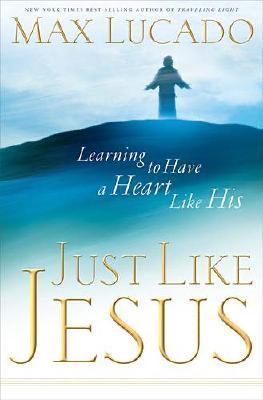 Just Like Jesus: Learning to Have a Heart Like His
 The Rare Jewel of Christian Contentment
 The Grand Weaver: How God Shapes Us through the Events in Our Lives
 All In: You Are One Decision Away From a Totally Different Life
 Crazy Love: Overwhelmed by a Relentless God
 Thoughts for Young Men