
 Under the Banner of Heaven: A Story of Violent Faith
Quotes from the Book
Getting to the top of any given mountain was considered much less important than how one got there: prestige was earned by tackling the most unforgiving routes with minimal equipment, in the boldest style imaginable.
It was titillating to brush up against the enigma of mortality, to steal a glimpse across its forbidden frontier. Climbing was a magnificient activity, I firmly believed, not in spite of the inherent perils, but precisely because of them.
Everest has always been a magnet for kooks, publicity seekers, hopeless romantics and others with a shaky hold on reality.
With enough determination, any bloody idiot can get up this hill,” Hall observed. “The trick is to get back down alive.
But at times I wondered if I had not come a long way only to find that what I really sought was something I had left behind.
Above the comforts of Base Camp, the expedition in fact became an almost Calvinistic undertaking. The ratio of misery to pleasure was greater by an order of magnitude than any mountain I'd been on; I quickly came to understand that climbing Everest was primarily about enduring pain. And in subjecting ourselves to week after week of toil, tedium and suffering, it struck me that most of us were probably seeking above all else, something like a state of grace.
This forms the nub of a dilemna that every Everest climber eventually comes up against: in order to succeed you must be exceedingly driven, but if you're too driven you're likely to die.
If you're bumming out, you're not gonna get to the top, so as long as we're up here we might as well make a point of grooving. (Quoting Scott Fischer)
We were too tired to help. Above 8,000 meters is not a place where people can afford morality
...I quickly came to understand that climbing Everest was primarily about enduring pain. And in subjecting ourselves to week after week of toil, tedium, and suffering, it struck me that most of use were probably seeking, above else, something like a state of grace.
There were many, many fine reasons not to go, but attempting to climb Everest is an intrinsically irrational act—a triumph of desire over sensibility. Any person who would seriously consider it is almost by definition beyond the sway of reasoned argument.
It seems more than a little patronizing for Westerners to lament the loss of the good old days when life in the Khumbu was so much simpler and more picturesque. Most of the people who live in this rugged country seem to have no desire to be severed from the modern world or the untidy flow of human progress. The last thing Sherpas want is to be preserved as specimens in an anthropological museum.
Thus the slopes of Everest are littered with corpses.
But there are men for whom the unattainable has a special attraction. Usually they are not experts: their ambitions and fantasies are strong enough to brush aside the doubts which more cautious men might have. Determination and faith are their strongest weapons. At best such men are regarded as eccentric; at worst, mad. . . .
I didn't doubt the potential value of paying attention to subconscious cues...problem was, my inner voice resembled Chicken Little: it was screaming that I was about to die, but it did that almost every time I laced up my climbing boots.
If you get killed,” she argued with a mix of despair and anger, “it’s not just you who’ll pay the price. I’ll have to pay, too, you know, for the rest of my life. Doesn’t that matter to you?
My hunger to climb had been blunted, in short, by a bunch of small satisfactions that added up to something like happiness.
Walter Mittys with Everest dreams need to bear in mind that when things go wrong up in the Death Zone--and sooner or later they always do--the strongest guides in the world may be powerless to save a client's life; indeed, as the events of 1996 demonstrated, the strongest guides in the world are sometimes powerless to save even their own lives. Four of my teammates died not so much because Rob Hall's systems were faulty--indeed, nobody's were better--but because on Everest it is the nature of systems to break down with a vengeance.
Unfortunately, the sort of individual who is programmed to ignore personal distress and keep pushing for the top is frequently programmed to disregard signs of grave and imminent danger as well. This forms the nub of a dilemma that every Everest climber eventually comes up against: in order to succeed you must be exceedingly driven, but if you’re too driven you’re likely to die. Above 26,000 feet, moreover, the line between appropriate zeal and reckless summit fever becomes grievously thin. Thus the slopes of Everest are littered with corpses.
Turning and turning in the widening gyre The falcon cannot bear the falconer; Things fall apart; the center cannot hold; Mere anarchy is loosed upon the world, The blood-dimmed tide is loosed, and everywhere The ceremony of innocence is drowned. William Butler Yeats “The Second Coming
Once Everest was determined to be the highest summit on earth, it was only a matter of time before people decided that Everest needed to be climbed.
Devout Buddhists believe in sonam—an accounting of righteous deeds that, when large enough, enables one to escape the cycle of birth and rebirth and transcend forever this world of pain and suffering.
The plain truth is that I knew better but went to Everest anyway. And in doing so I was a party to the death of good people, which is something that is apt to remain on my conscience for a very long time.
When I rest I feel utterly lifeless except that my throat burns when I draw breath.… I can scarcely go on. No despair, no happiness, no anxiety. I have not lost the mastery of my feelings, there are actually no more feelings. I consist only of will. After each few metres this too fizzles out in unending tiredness. Then I think nothing. I let myself fall, just lie there. For an indefinite time I remain completely irresolute. Then I make a few steps again.
The more improbable the situation and the greater the demands made on [the climber], the more sweetly the blood flows later in release from all that tension. The possibility of danger serves merely to sharpen his awareness and control. And perhaps this is the rationale of all risky sports: You deliberately raise the ante of effort and concentration in order, as it were, to clear your mind of trivialities.
The urge to catalog the myriad blunders in order to “learn from the mistakes” is for the most part an exercise in denial and self-deception.
Beidleman knew they were on the eastern, Tibetan side of the Col and that the tents lay somewhere to the west. But to move in that direction it was necessary to walk directly upwind into the teeth of the storm. Wind-whipped granules of ice and snow struck the climbers’ faces with violent force, lacerating their eyes and making it impossible to see where they were going. “It was so difficult and painful,” Schoening explains, “that there was an inevitable tendency to bear off the wind, to keep angling away from it to the left, and that’s how we went wrong.
We tell ourselves stories in order to live.… We look for the sermon in the suicide, for the social or moral lesson in the murder of five. We interpret what we see, select the most workable of the multiple choices. We live entirely, especially if we are writers, by the imposition of a narrative line upon disparate images, by the “ideas” with which we have learned to freeze the shifting phantasmagoria which is our actual experience.
Several authors and editors I respect counseled me not to write the book as quickly as I did; they urged me to wait two or three years and put some distance between me and the expedition in order to gain some crucial perspective. Their advice was sound, but in the end I ignored it - mostly because what happened on the mountain was gnawing my guts out. I thought that writing the book might purge Everest from my life. It hasn't, of course.
While tentbound high on Everest, Mallory and his companions would read aloud to one another from Hamlet and King Lear
How much of the appeal of mountaineering lies in its simplification of interpersonal relationships, its reduction of friendship to smooth interaction (like war), its substitution of an Other (the mountain, the challenge) for the relationship itself? Behind a mystique of adventure, toughness, footloose vagabondage—all much needed antidotes to our culture’s built-in comfort and convenience—may lie a kind of adolescent refusal to take seriously aging, the frailty of others, interpersonal responsibility, weakness of all kinds, the slow and unspectacular course of life itself.… [T]op
13
Achieving the summit of a mountain was tangible, immutable, concrete. The incumbent hazards lent the activity a seriousness of purpose that was sorely missing from the rest of my life. I thrilled in the fresh perspective that came from the tipping the ordinary plane of existence on end.
13
Not only during the ascent but also during the descent my willpower is dulled. The longer I climb the less important the goal seems to me, the more indifferent I become to myself. My attention has diminished, my memory is weakened. My mental fatigue is now greater than the bodily. It is so pleasant to sit doing nothing—and therefore so dangerous. Death through exhaustion is—like death through freezing—a pleasant one. Reinhold Messner The Crystal Horizon I
10
In climbing, having confidence in your partners is no small concern. One climber’s actions can affect the welfare of the entire team. The consequences of a poorly tied knot, a stumble, a dislodged rock, or some other careless deed are as likely to be felt by the perpetrator’s colleagues as the perpetrator. Hence it’s not surprising that climbers are typically wary of joining forces with those whose bona fides are unknown to them. But
9
Did you know?
- The book grew out of an article Krakauer wrote for Outside magazine, published in September 1996.
- Krakauer originally intended to report only on the commercialization of Everest rather than to write a book.
- The 1996 disaster the book recounts killed eight climbers during a single storm.
- Krakauer was a client on the guided expedition led by New Zealand mountaineer Rob Hall, who died in the disaster.
- The book reached number one on the New York Times nonfiction bestseller list.
About Jon Krakauer
Jon Krakauer (born April 12, 1954, in Brookline, Massachusetts) is an American writer and mountaineer who was introduced to climbing by his father as a boy and went on to become a contributing editor and correspondent for Outside magazine. He is best known for his bestselling nonfiction works, including Into the Wild and Into Thin Air, the latter drawn from his experience on the ill-fated 1996 Everest expedition.
More about the author →More by Jon Krakauer
Under the Banner of Heaven: A Story of Violent Faith
 Into the Wild
 Eiger Dreams: Ventures Among Men and Mountains
About the book
Into Thin Air is Jon Krakauer's firsthand account of the 1996 Mount Everest disaster, in which a sudden storm high on the mountain left eight climbers dead and others stranded. Krakauer had joined a commercial guided expedition led by Rob Hall on assignment for Outside magazine, originally intending to report on the growing commercialization of Everest, and he reached the summit only hours before the storm struck on the descent.
The book grew out of an article Krakauer wrote for Outside, and he expanded it into a book-length narrative grappling with survivor's guilt, the ethics of guiding paying clients to extreme altitude, and the chaos and impaired judgment caused by the lack of oxygen in the so-called death zone. His detailed, self-questioning reconstruction of events also drew criticism and disputes from other survivors over matters of responsibility and recollection.
Into Thin Air became a major bestseller, reaching the top of the New York Times nonfiction list, and was widely acclaimed as a landmark of adventure reporting. It was a finalist for the National Book Critics Circle Award in General Nonfiction and was named Book of the Year by Time magazine.
Book details
- First published
- 1997
- Length
- 293 pages
- Reading time
- 5 hours
- Author
- Jon Krakauer
- Genre
- History
- Goodreads rating
- 4.26 (583k ratings)
Critical reception
- Reached the top of the New York Times nonfiction bestseller list.
- Finalist for the National Book Critics Circle Award in General Nonfiction (1997).
- Named Book of the Year by Time magazine.
- Krakauer's account drew disputes from other survivors over questions of responsibility and recollection.
Movie & TV adaptations
- IMDb
If you liked this, read…
- 1The ClimbAnatoli Boukreev's account of the same 1996 Everest disaster, offering a different perspective on the events.
- 2Into the WildKrakauer's other acclaimed nonfiction narrative about risk, the wilderness, and a fatal expedition.
- 3Touching the VoidJoe Simpson's gripping firsthand survival account of a near-fatal mountaineering accident.
Keep reading
 K2: Life and Death on the World's Most Dangerous Mountain
Eiger Dreams: Ventures Among Men and Mountains
K2: Life and Death on the World's Most Dangerous Mountain
Eiger Dreams: Ventures Among Men and Mountains
 Buried in the Sky: The Extraordinary Story of the Sherpa Climbers on K2's Deadliest Day
 In the Shadow of the Mountain: A Memoir of Courage
 The Worst Journey in the World
 Between a Rock and a Hard Place
 Alone on the Wall
 No Shortcuts to the Top: Climbing the World's 14 Highest Peaks
 Into the Silence: The Great War, Mallory and the Conquest of Everest
 Endurance: Shackleton's Incredible Voyage
 AWOL on the Appalachian Trail
 The Last Englishman
 Tracks: A Woman's Solo Trek Across 1700 Miles of Australian Outback
 Peak
Peak
 Miracle in the Andes
 Matterhorn
 Journey to the Center of the Earth
 And the Mountains Echoed
 The Magic Mountain
 Travels with Myself and Another
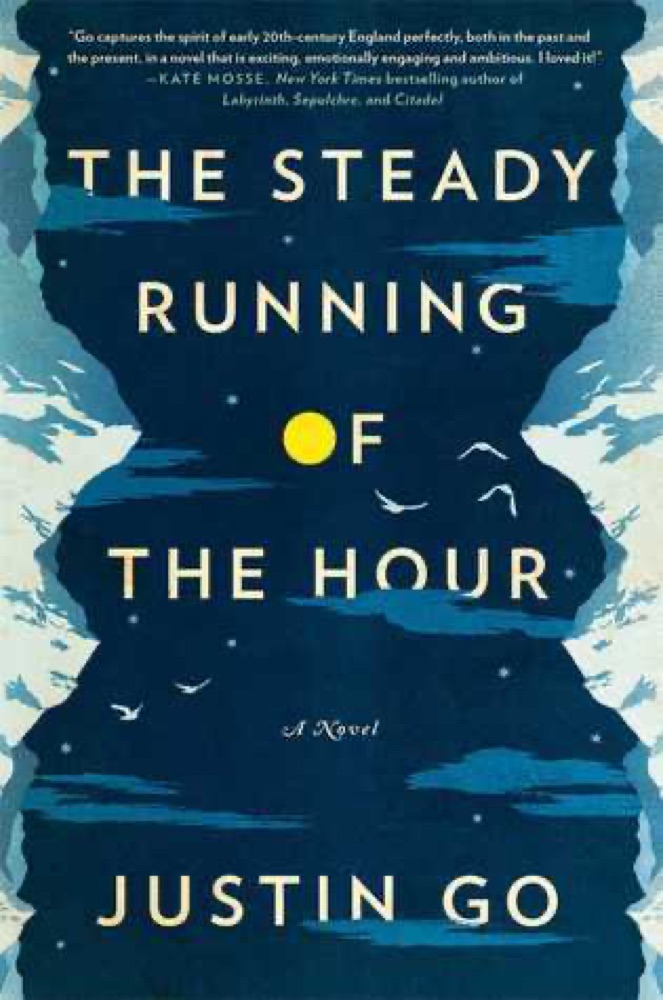 The Steady Running of the Hour
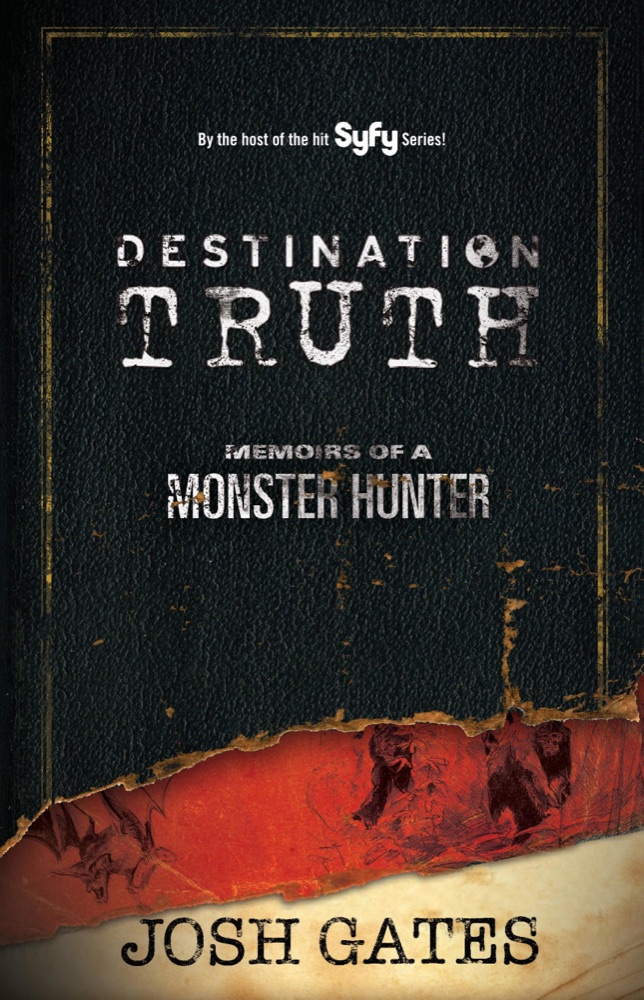 Destination Truth: Memoirs of a Monster Hunter
 The Fall of Babel
 Ultramarathon Man: Confessions of an All-Night Runner
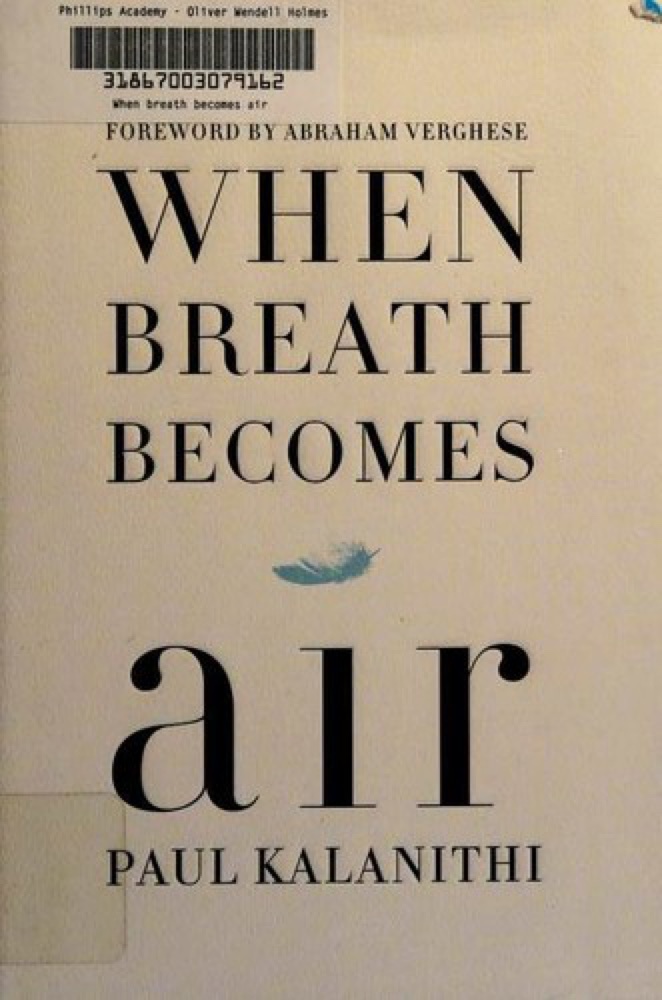 When Breath Becomes Air
Into the Wild
When Breath Becomes Air
Into the Wild
 Devolution: A Firsthand Account of the Rainier Sasquatch Massacre
 We All Looked Up
 House of the Tiger King: The Quest for a Lost City
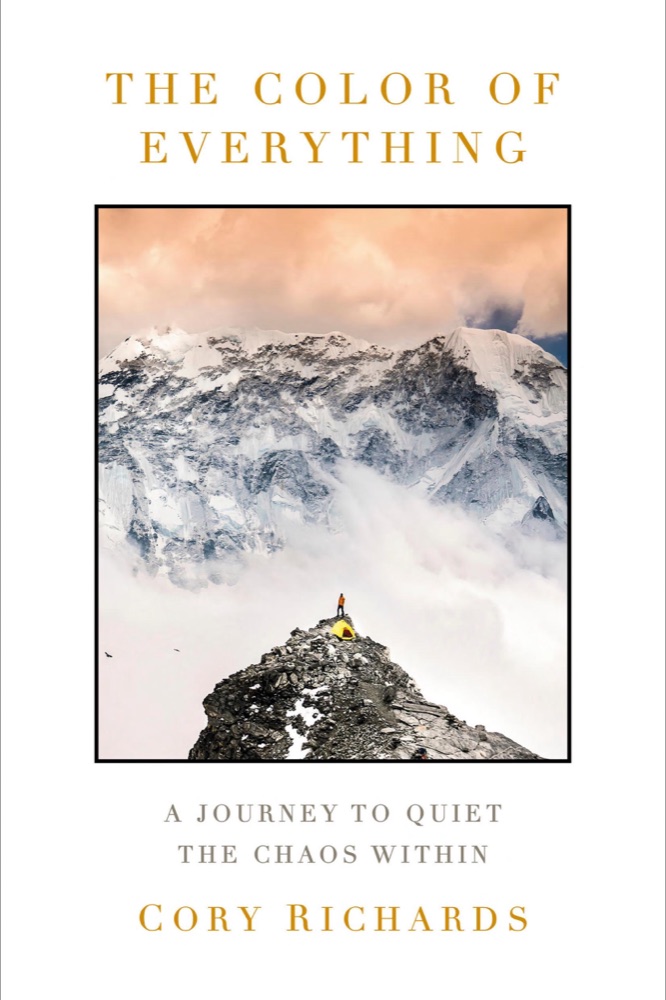 The Color of Everything: A Journey to Quiet the Chaos Within
 Extremis
 The Motorcycle Diaries: Notes on a Latin American Journey
 Lost Horizon
 A House in the Sky
 March
March
 The Quick and the Dead
 The 13½ Lives of Captain Bluebear
 To The Bright Edge of the World
 Humboldt's Gift
 Sometimes a Great Notion
 Outrun the Moon
 My Friends
 Adrift: Seventy-Six Days Lost at Sea
 The Hour I First Believed
 Seven Years in Tibet (Paladin Books)
 The Testaments
 Cold Mountain
 Wild: From Lost to Found on the Pacific Crest Trail
 West with the Night
 Arm of the Sphinx
 The Long Way Home
 This Boy's Life
 Senlin Ascends
 Shoe Dog: A Memoir by the Creator of NIKE
 Aftermath
 To Sleep in a Sea of Stars
 Travels with Charley: In Search of America
 The Damnation Game
 Wings of Fire: An Autobiography
 H is for Hawk