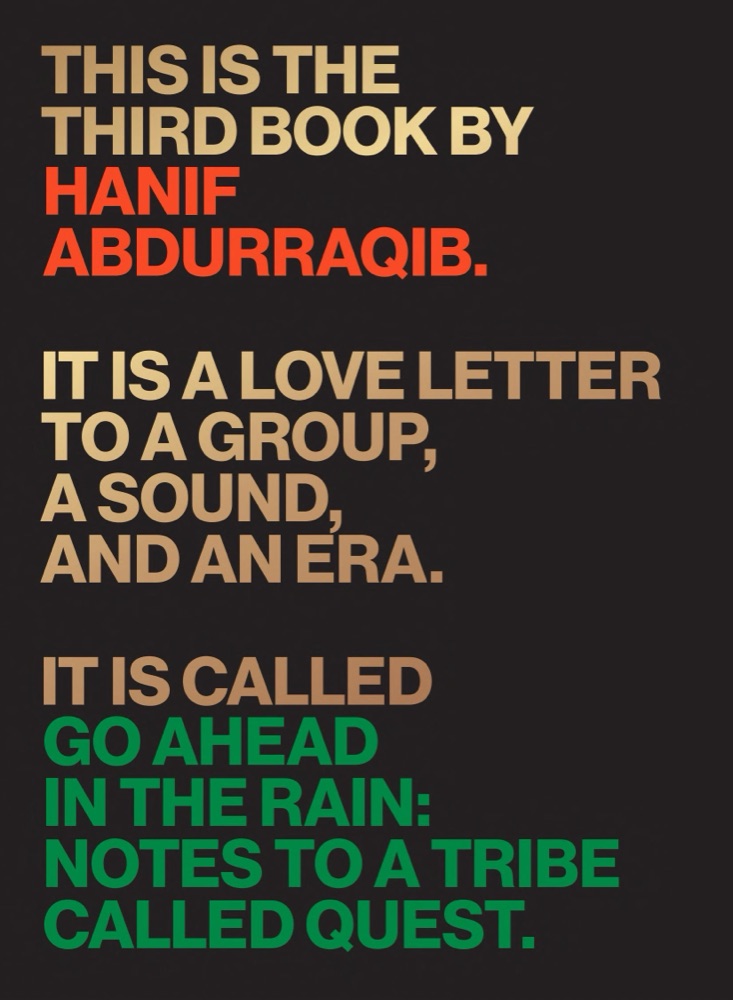

 They Can't Kill Us Until They Kill Us: Essays
Quotes from the Book
There is a way to read a poem, and then there is a way to allow the poem to exit the body and be read by everyone in the room.
6
Anger is a type of geography. The ways out of it expand the more you love a person. The more forgiveness you might be willing to afford each other opens up new and unexpected roads. And so, for some, staying angry at someone you love is a reasonable option. To stay angry at someone you know will forgive your anger is a type of love, or at least it is a type of familiarity that can feel like love.
2
It seems, Ms. Taylor, that we are nothing if not for our histories, and so much of mine is tied up in the business of ghosts. I don’t want to burden anyone, but I consider anyone who has lost someone my kin, because I think we are all faced with the same central question of how we go on. How we live the life that best reflects the people who aren’t here and are still counting on us.
2
And so it can be said that rap became political when the people making it needed it to be fed, and it became dangerous when those people being fed realized they had the power to feed themselves forever off the power they had.
2
I think, often, about love strictly as a matter of perspective. For some, it is something they are receiving from someone whom they might slowly be draining the life from.
1
When there is nothing to point to as an excuse for distance, the distance looms larger, more difficult to push.
1
The things we do to stay close to the people we think will carry us through an entire lifetime...
1
To stay angry at someone you know will forgive your anger is a type of love, or at least it is a type of familiarity that can feel like love.
1
The value of the tape was also the crafting of a mixtape. I am from an era when we learned not to waste songs. If you are creating a cassette that you must listen to all the way through, and you are crafting it with your own hands and your own ideas, then it is on you not to waste sounds and to structure a tape with feeling. No skippable songs meant that I wouldn’t have to take my thick gloves off during the chill of a Midwest winter to hit fast-forward on a Walkman, hoping that I would stop a song just in time. No skippable songs meant that when the older, cooler kids on my bus ride to school asked what I was listening to in my headphones, armed with an onslaught of jokes if my shit wasn’t on point, I could hand my headphones over, give them a brief listen of something that would pass quality control, and keep myself safe from humiliation for another day.
1
I understand more clearly now what I didn’t understand then: how The Low End Theory isn’t only about that which cannot be heard, but it is also about society’s unseen, the people who exist but may be able to navigate an entire landscape as invisible, until some violence or some tragedy deems them less so.
1
When they took the drums of slaves, the slaves simply found new drums in everything, and this is how African rhythms were retained and passed down, held close by those who knew what it was to have a culture ripped from them.
There are not enough roses in the world for me to lay at the feet of this impossible group, but I hope this effort counts. I hope Phife can see all of us still trying, from wherever he may be. I hope Q-Tip knows that he’s done something great. I hope when the time comes for the generation after mine to talk about what’s real, they’ll pull a Tribe CD out of their pockets, worn down from a decade’s use and perhaps an older sibling. I hope they’ll put it in a CD player and let a room be carried away.
May we love our brothers, Tip. May we love them after they are gone, sure. But may we love them even when they fill us with rage, or even when we don’t speak to them for years, or even when we close our fists and our eyes and swing in their direction with all we have.
It is one thing to throw your hands in the air and say “the world is burning again, oh the world is burning,” but to see a people fight for access to clean water in the face of a very particular American greed is haunting.
later fight to unlearn—from the right to the left. I think there is a very particular mercy in being born to a woman who writes, or at least to a woman who sees a world worth writing about.
I suppose there is something to be missed about a print magazine breaking big news. I’m not sure if that could happen now.
The divide between that which was commercial and that which was “real” seemed larger, and what was real didn’t always sell, so there was pressure from both sides of that divide: be real enough to stay underground, or go pop enough to get money.
It’s hard to innovate the new when thousands of voices are still singing along to the old. They
To be aware that your presence in a space is political is to sometimes assume and take on the responsibilities that come with that presence, whether or not you feel as though you should have to.
This is the thing about history and people who come from a people who have had it taken from them. They know if they don’t protect what they can, there will be nothing to pass on to their children.
There is plenty out there worth doing alone, but for everything else, there is a need for your people. It would behoove you to have a crew.
Watch on YouTube
About Hanif Abdurraqib
We have collected 77 quotes from 3 books by Hanif Abdurraqib on BookQuoters.
More about the author →More by Hanif Abdurraqib
They Can't Kill Us Until They Kill Us: Essays
 A Little Devil in America: Notes in Praise of Black Performance
About the book
How does one pay homage to A Tribe Called Quest? The seminal rap group brought jazz into the genre, resurrecting timeless rhythms to create masterpieces such as The Low End Theory and Midnight Marauders. Seventeen years after their last album, they resurrected themselves with an intense, socially conscious record, We Got It from Here . . . Thank You 4 Your Service, which arrived when fans needed it most, in the aftermath of the 2016 election. Poet and essayist Hanif Abdurraqib digs into the group's history and draws from his own experience to reflect on how its distinctive sound resonated among fans like himself. The result is as ambitious and genre-bending as the rap group itself.
Abdurraqib traces the Tribe's creative career, from their early days as part of the Afrocentric rap collective known as the Native Tongues, through their first three classic albums, to their eventual breaku
Book details
- First published
- 2019
- Author
- Hanif Abdurraqib
- Genre
- Nonfiction
- Goodreads rating
- 4.45 (7k ratings)
The buzz
- The New York TimesReview in The New York Timesprofessional review (via Book Marks)
- The Washington PostReview in The Washington Postprofessional review (via Book Marks)
- The GuardianReview in The Guardianprofessional review (via Book Marks)
- NPRReview in NPRprofessional review (via Book Marks)
- SlateReview in Slateprofessional review (via Book Marks)
- Kirkus ReviewsReview in Kirkus Reviewsprofessional review (via Book Marks)
Keep reading
A Little Devil in America: Notes in Praise of Black Performance
They Can't Kill Us Until They Kill Us: Essays
 White Tears
 Born to Run
 Good Dirt
 Surrender: 40 Songs, One Story
 Mo' Meta Blues: The World According to Questlove
 The Book That Broke the World
 The Devil Takes You Home
 Becoming
 The Bee Sting
 Leonard and Hungry Paul
 Varina
 The Sea Keeper's Daughters
 The Book of Koli
 A Song Flung Up to Heaven
 The House of Hidden Meanings
 Dream Count
 My Government Means to Kill Me
 Aftershocks
 The Source
 The Island of Missing Trees
 Here for It; Or, How to Save Your Soul in America: Essays
 Anthills of the Savannah
 Ayoade on Top
 The City in the Middle of the Night
 Hell of a Book
 The Fall of Babel
 The Source of Self-Regard: Selected Essays, Speeches, and Meditations
 Hana Khan Carries On
 Liberation Day
 The Kite Runner
 A Fraction of the Whole
 Broken Horses
 The Library of the Dead
 All This Could Be Different
 The Book of Love
 Lullaby
 The Handmaid's Tale
 Oranges Are Not the Only Fruit
 Just Above My Head
 Wandering Stars
 Wide Awake
 Underworld
 All Over But the Shoutin'
 A Promised Land
 Creation Lake
 Colorless Tsukuru Tazaki and His Years of Pilgrimage
 Homegoing
 The Bone Clocks
 How Long 'til Black Future Month?
 Chances Are...
 Scenes from My Life: A Memoir
 Special Topics in Calamity Physics
 The Hour I First Believed
 Tricks for Free
 Orphan Train
 Out of Oz
 When Michael Met Mina
 I Take My Coffee Black: Reflections on Tupac, Musical Theater, Faith, and Being Black in America