 No Exit and Three Other Plays
Quotes from the Book
I spit on your happiness! I spit on your idea of life--that life that must go on, come what may. You are all like dogs that lick everything they smell. You with your promise of a humdrum happiness--provided a person doesn't ask much of life. I want everything of life, I do; and I want it now! I want it total, complete: otherwise I reject it! I will not be moderate. I will not be satisfied with the bit of cake you offer me if I promise to be a good little girl. I want to be sure of everything this very day; sure that everything will be as beautiful as when I was a little girl. If not, I want to die!
181
It bothered me that whatever was waiting wasn't waiting for me
32
The spring is wound up tight. It will uncoil of itself. That is what is so convenient in tragedy. The least little turn of the wrist will do the job . . . The rest is automatic. You don’t need to lift a finger. The machine is in perfect order; it has been oiled ever since time began, and it runs without friction . . . Tragedy is clean, it is restful, it is flawless . . . In a tragedy, nothing is in doubt and everyone’s destiny is known. That makes for tranquility . . . Tragedy is restful; and the reason is that hope, that foul, deceitful thing, has no part in it. There isn’t any hope. You’re trapped.
27
You disgust me, all of you, with your happiness! With your life that must be loved at all costs. […] I spit on your idea of life! […] You are all like dogs that lick everything they smell! […] I do not want to understand. I am here for something other than understanding. I am here to tell you no, and to die. To tell you no and to die.
24
Vous me dégoûtez tous avec votre bonheur ! Avec votre vie qu’il faut aimer coûte que coûte… Moi, je veux tout, tout de suite, et que ce soit entier, ou alors je refuse! Je ne veux pas être modeste , moi, et de me contenter d’un petit morceau, si j’ai été bien sage.
19
A happy love is full of quarrels, you know.
18
Et puis, surtout, c'est reposant, la tragédie, parce qu'on sait qu'il n'y a plus d'espoir, le sale espoir ; qu'on est pris, qu'on est enfin pris comme un rat, avec tout le ciel sur son dos, et qu'on n'a plus qu'à crier, - pas à gémir, non, pas à se plaindre, à gueuler à pleine voix ce qu'on avait à dire, qu'on n'avait jamais dit et qu'on ne savait peut-être même pas encore. Et pour rien : pour se le dire à soi, pour l'apprendre, soi.
14
The garden was still asleep. I caught it unawares. A garden that hasn't yet begun to think about people. Beautiful.
9
My part is not a heroic one, but I shall play my part.
8
Oui, j'aime Hémon. J'aime un Hémon dur et jeune; un Hémon exigeant et fidèle, comme moi. Mais si votre vie, votre bonheur doivent passer sur lui avec leur usure, si Hémon ne doit plus pâlir quand je pâlis, s'il ne doit plus me croire morte quand je suis en retard de cinq minutes, s'il ne doit plus se sentir seul au monde et me détester quand je ris sans qu'il sache pourquoi, s'il doit devenir près de moi le monsieur Hémon, s'il doit appendre à dire «oui», lui aussi, alors je n'aime plus Hémon.
7
What will my happiness be like? What kind of happy woman will Antigone grow into? What base things will she have to do, day after day, in order to snatch her own little scrap of happiness? Tell me – who will she have to lie to? Smile at? Sell herself to? Who will she have to avert her eyes from, and leave to die?
6
Life's not what you think. It's like water – the young let it slip through their fingers without thinking. Shut your hands, Antigone, shut them tight and hold it back. You'll see – it'll turn into something small and hard that you can sit and munch in the sun.
6
Nothing is true but what is never said.
5
The mighty words of the proud are paid in full with mighty blows of fate, and at long last those blows will teach us wisdom.
4
I don’t mind being killed, but I don’t want them to touch me.
4
ANTIGONE: Tell me the truth! I beg you to tell me the truth! When you think about me, when it strikes you suddenly that I am going to belong to you―do you have the feeling that―that a great empty space is being hollowed out inside you, that there is something inside you that is just―dying? HAEMON: Yes, I do, I do.
4
Vous me dégoutez tous avec votre bonheur ! Avec votre vie qu'il faut aimer coûte que coûte. On dirait des chiens qui lèchent tout ce qu'ils trouvent. Et cette petite chance pour tous les jours, si on n'est pas trop exigeant. Moi, je veux tout, tout de suite, et que ce soit entier ou alors je refuse ! Je ne veux pas être modeste, moi, et me contenter d'un petit morceau si j'ai été bien sage. Je veux être sûre de tout aujourd'hui et que cela soit aussi beau que quand j'étais petite ou mourir !
4
CREON: Am I to rule for others, or myself? HAEMON: A State for one man is no State at all. CREON: The State is his who rules it, so 'tis held.
4
Creon devoted himself to music, ancient manuscripts, long afternoons browsing in the antique shops of Thebes. But now Oedipus and his sons are dead. So Creon put away his books and his antiques, he rolled up his sleeves, and he took their place. Sometimes, in the evenings, when he's very tired, he wonders if it isn't pointless, leading men. He wonders if he shouldn't leave the sordid job to someone else, someone less refined, less sensitive... And then, in the morning, the more immediate problems present themselves, waiting to be solved, and he gets up, calmly, like any workman at the start of a new day.
2
L'humain vous gêne aux entournures dans la famille. Il vous faut un tête-à-tête avec le destin et la mort. Et tuer votre père et coucher avec votre mère et apprendre tout cela après, avidement, mot par mot. Quel breuvage, hein, les mots qui vous condamnent ? Et comme on les boit goulûment quand on s'appelle Œdipe, ou Antigone.
2
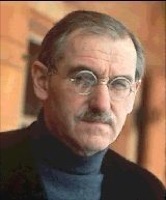
About Jean Anouilh
We have collected 20 quotes from 1 book by Jean Anouilh on BookQuoters.
More about the author →About the book
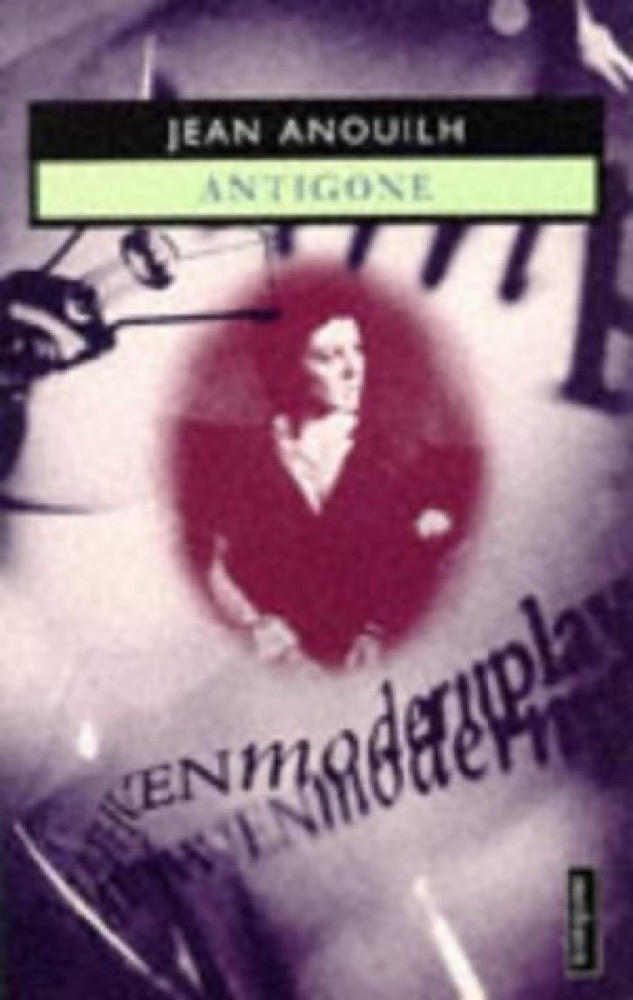
Antigone was originally produced in Paris in 1942, when France was occupied and part of Hitler's Europe. The play depicts an authoritarian regime which mirrors the predicament of the French people of the time. Based on Sophocles' ancient Greek tragedy, Antigone which was first performed in Athens in the 5th century BC, its theme was nevertheless topical. For in Antigone's faithfulness to her dead brother and his proper burial and her reiterated "No!" to the dictator Creon, the French audience saw its own resistance to the German occupation. The Germans allowed the play to be performed presumably because they found Creon's arguments for dictatorship so convincing. The play is regularly performed and studied around the world. "Anouilh is a poet, but not a poet of he is a poet of words-acted, of scenes-set, of players-performing" Peter Brook
Book details
- First published
- 1944
- Author
- Jean Anouilh
- Genre
- Classics
- Goodreads rating
- 3.77 (31k ratings) →
Keep reading
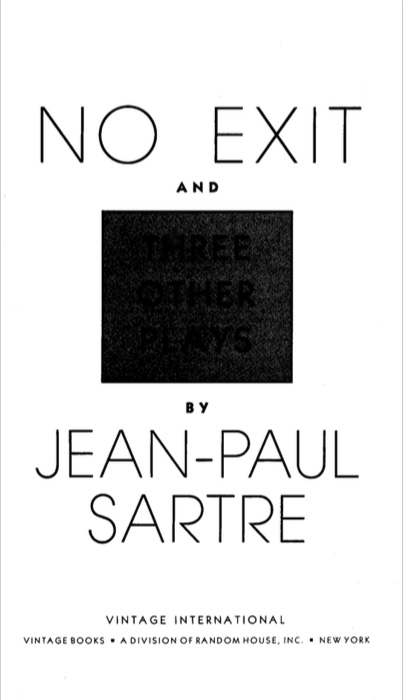
No Exit and Three Other Plays
 The Kindly Ones
 Grief Lessons: Four Plays by Euripides
 Death on the Installment Plan
 Either/Or: A Fragment of Life
 Arch of Triumph
 Letter to a Child Never Born
 The Sandman: Endless Nights
 Sword & Citadel
 The Seagull
 The Vampire Lestat
 Danse Macabre
 Phaedo
 Much Ado About Nothing
 The Words: The Autobiography of Jean-Paul Sartre
 Fool's Errand
 Plainwater: Essays and Poetry
 Juliet
 The Magus
 The Memoirs of Cleopatra
 Born of Silence
 Eragon
 The Broken Eye
 Time of Contempt
 Ashes of Honor
 Late Eclipses
 The Devil in the Flesh
 Flight To Arras
 The Last of the Wine
 Night Watch
 The Burning Maze
 The Fall
 Lord of the Silver Bow
 Selected Stories
 The Penelopiad
 Black Leopard, Red Wolf
 Time Untime
 Beautiful Losers
 Trust: Betrayed
 The Setting Sun
 The Hymn to Dionysus
 Brodeck
 Iron Gold
 Selected Stories of Anton Chekhov
 Children of the Mind
 As You Wish
 The Broken Kingdoms
 Sweep in Peace
 Gargantua and Pantagruel
 The Name of the Wind
 The Attack
 Spoon River Anthology
 Arm of the Sphinx
 Styxx
Styxx
 We the Living
 The Hod King
 Liberation Day
 Emerald Green
 Assassin's Quest
 The Burial at Thebes: A Version of Sophocles' Antigone