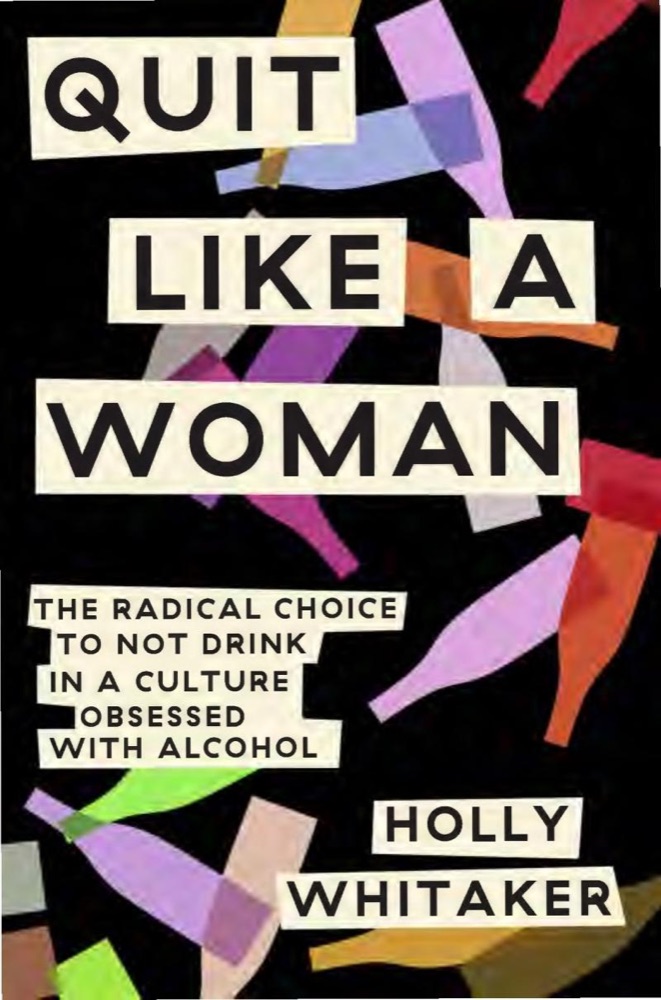
 Quit Like a Woman: The Radical Choice to Not Drink in a Culture Obsessed with Alcohol
Quotes from the Book
When people become addicted to alcohol, it’s seen as their failure. They didn’t pass the ‘moderate use of an addictive drug’ challenge. They failed at drinking! Society expects us to regularly use an addictive drug, without becoming addicted to it. Alcohol is the only drug where, the second you stop taking it, you’re seen as being too weak to handle it. It’s truly bizarre.
9
One of my sober friends once said, ‘Feelings are like children. You don’t want them driving the car, but you shouldn’t stuff them in the boot either.’ Let them chit-chatter away in the back, and get on with your life. Amazing, right?
8
When you no longer need approval from others like the air you breathe, the possibilities in life are endless. What an interesting little prison we build from the invisible bricks of other people’s opinions.’ – JACOB NORDBY
5
I didn’t have a drinking problem as such. I was great at drinking! It was the stopping. I had a stopping problem.
5
Nothing good ever happens in a blackout. I’ve never woken up and been like, “What is this Pilates mat doing out?”‘ –AMY SCHUMER
3
What I was really thinking was: Don’t even for a minute think I’m vanilla because the truth is I am so hardcore I had to quit. I drank so much it was a matter of life and death. I’m like a rock star compared with you… you should look at me with a touch of fear and awe because I am such a badass you would quiver just to think about the amount of rot gut I’ve ingested over the years. So step off with your preconceived notions, okay?
3
Richard Wiseman, a psychologist and author of 59 Seconds: Think a Little, Change a Lot, says, ‘When you gossip about another person, listeners unconsciously associate you with the characteristics you are describing, ultimately leading to those characteristics being transferred: to you. So, say positive and pleasant things about friends and colleagues, and you are seen as a nice person. In contrast, constantly complain about their failings, and people will unconsciously apply the negative traits and incompetence to you.
3
I found myself with dozens more hours in the week, heaps more energy, £23,000 more money over four years, deepened friendships, revived family relationships, better skin, a tighter body, tanned legs for the first time ever, the ability to sleep for eight uninterrupted hours, a bone-deep sense of well-being, a totally turned-around positive outlook and an infinitely more successful career. What’s not to like?!
3
I'm free from all of that "where's the next drink coming from?" stress. At one point I mislay my water. So what? If that had been wine, I would have been crushed, and annoyed for the next hour. I probably would have regaled my friend with how miffed I was, for an hour too.
2
He gave me so many anti-anxiety techniques. Reciting the alphabet backwards if I'm walking to a boozy party and feel my heart start to jackhammer. Tapping along to a song, which does something fancy in the brain. Or holding somebody's hand. I still use these tools to this day.
2
You have your way. I have my way. As for the right way, the correct way and the only way, it does not exist.’ – NIETZSCHE
2
As Annie Grace says, ‘We protect alcohol by blaming addiction on a person’s personality rather than on the addictive nature of alcohol… The concept of addictive personality lets us close our minds to the fact that alcohol is addictive, period.
2
The eternally epic Anne Lamott says, ‘There is almost nothing outside of you that will help in any kind of lasting way, unless you’re waiting for an organ. You can’t buy, achieve or date serenity and peace of mind. This is the most horrible truth, and I so resent it. But it’s an inside job.’ (Watch Anne’s TED talk on the 12 truths she’s learned, it’s glorious.)
2
The act of making a decision feels scary, since you may fail, but once you make a decision and set a definitive goal, the brain likes it more.
2
A big report published in 2015 showed why the government is so keen to silence the Professor David Nutts of this world. It showed that the total costs of alcohol use in England (including the NHS, police and welfare) amount to £3.9 billion. While alcohol taxation in England rakes in £10.4 billion. So, heavy drinkers make the country £6.5 billion, after the costs of taking them to hospital, policing them or giving them benefits. A tidy profit indeed. Now it becomes clear why the British government don’t want people to stop drinking. ‘Shut it, Professor Nutt.
2
If I drink one, I want five. So now, I just don’t have any. *Cheery shrug*
2
THEY SAY: ‘CAN’T YOU JUST HAVE ONE?’ Oh, man, I never thought of that! You’re a genius! Just one, you say? Rather than five or six? Thanks, Captain Obvious.
2
He says it’s all about the bounty-hunting, rather than the actual finding. ‘It’s not finding gratitude that matters most; it’s remembering to look in the first place. Remembering to be grateful is a form of emotional intelligence.’ As the brain gets used to seeking out the positives, it becomes more efficient at finding them, he explains. ‘Then, it simply takes less effort to be grateful. Everything is interconnected. Gratitude improves sleep. Sleep reduces pain. Reduced pain improves your mood. Improved mood reduces anxiety.’ It’s a daisy-chain of benefits.
2
We're not meant to drink, despite what the world tries to tell us. We're meant to eat, exercise, shag, sleep, love people, stroke animals and drink things that hydrate us rather than dehydrate us.
1
Even drinkers that would be classified as "normal" in the eyes of a doctor, would find it unimaginable and horrifying to never drink again. That, friends, is a sure sign of addiction. It may only be a thrice-a-week psychological addiction, or an "I have to drink at parties" dependence, but it's a bet-your-bottom-dollar dependence nonetheless. If you can't live without something, it's an addiction. The inconvenient truth that we conveniently ignore is this: it's practically impossible to drink alcohol without getting its hooks into you. Because it's addictive.
1
Betty White of The Golden Girls would say. ‘Why do people say “grow some balls?” Balls are weak and sensitive. If you wanna be tough, grow a vagina. Those things can take a pounding.’)
1
The limbic system is responsible for anxiety itself, but the pre-frontal cortex provides the worry scripts, formulating potential problems. When our mind races and catastrophizes, that’s the pre-frontal cortex.
1
A team of British scientists controversially announced in 2009 that alcohol is more dangerous than crack or heroin, and almost three times as deadly as cocaine or tobacco.
1
toxins overloading it, it often pushes them out through the skin. Hence, heavy drinking shows on your skin. Also, beer and cocktails are loaded with candida; a fungus that leads to outbreaks. Booze shrinks the pores, making them more prone to blockages.
1
Over time, only the user’s substance of choice is capable of triggering major dopamine release (or reception) in the brain regions responsible for motivation and meaning,’ says Marc Lewis. ‘Other goals such as work, self-care and healthy relationships generally fade into insignificance. Particularly if they interfere with the addictive goal.
1
Something I wish more people would realize, is that addiction is not the brain being irrational,’ says Korb. ‘It’s the brain doing its job. When you have anxiety, your brain says “alcohol is the solution to that”, because it has worked in the past. With many years of repetition, that sticks, so that the brain then automatically suggests it. Your brain is merely trying to solve your problem.
1
A person who has good thoughts cannot ever be ugly. You can have a wonky nose and a crooked mouth and a double chin and stick-out teeth, but if you have good thoughts they will shine out of your face like sunbeams and you will always look lovely.’ – ROALD DAHL
1
Addiction is all about seeking external relief from mental pain; whether you use cocaine, online poker, shopping, sex, razors, cake or exercise.
1
As much as we try to separate alcohol from other drugs by saying ‘alcohol and drugs’ (which makes no actual sense: it’s like saying ‘foxgloves and flowers’ or ‘BMWs and cars’), alcohol is a drug.
1
Watch on YouTube
About Catherine Gray
About the book
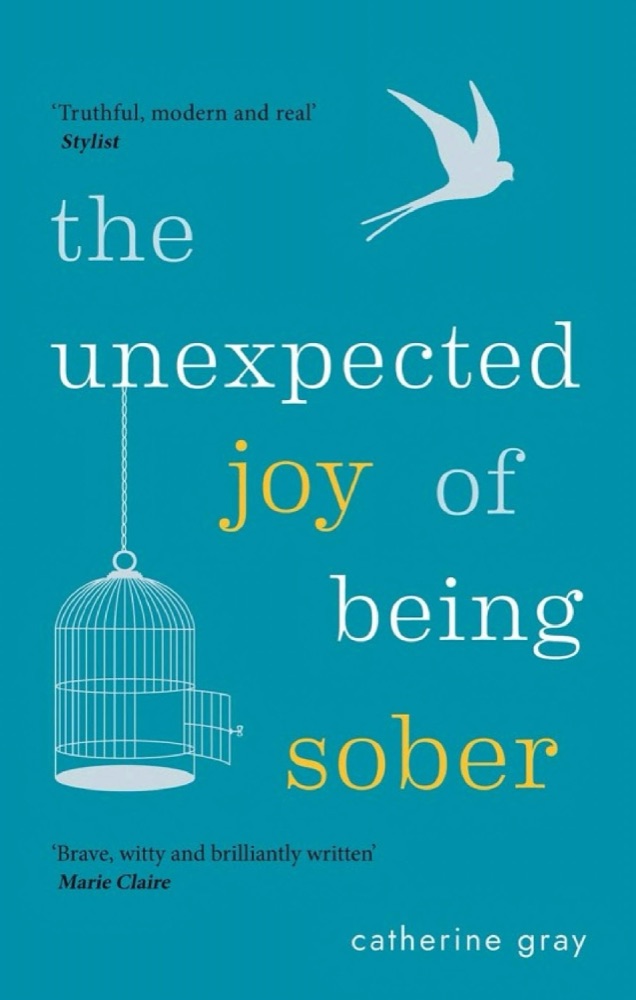
Ever sworn off alcohol for a month and found yourself drinking by the 7th? Think there's 'no point' in just one drink? Welcome! There are millions of us. 64% of Brits want to drink less.Catherine Gray was stuck in a hellish whirligig of Drink, Make horrible decisions, Hangover, Repeat. She had her fair share of 'drunk tank' jail cells and topless-in-a-hot-tub misadventures. But this book goes beyond the binges and blackouts to deep-dive into uncharted territory: What happens after you quit drinking? This gripping, heart-breaking and witty book takes us down the rabbit-hole of an alternative reality. A life with zero hangovers, through sober weddings, sex, Christmases and breakups.In The Unexpected Joy of Being Sober, Catherine Gray shines a light on society's drink-pushing and talks to top neuroscientists and psychologists about why we drink, delving into the science behind what it does
Book details
- First published
- 2017
- Author
- Catherine Gray
- Genre
- Nonfiction
- Goodreads rating
- 4.32 (16k ratings)
Keep reading
Quit Like a Woman: The Radical Choice to Not Drink in a Culture Obsessed with Alcohol
 Scarcity Brain: Fix Your Craving Mindset and Rewire Your Habits to Thrive with Enough
 Drinking: A Love Story
 More, Now, Again: A Memoir of Addiction
 Money
Money
 Wishful Drinking
 First, We Make the Beast Beautiful: A New Story About Anxiety
 Unfuck Your Brain: Using Science to Get Over Anxiety, Depression, Anger, Freak-Outs, and Triggers
 I'm Fine...And Other Lies
 In the Realm of Hungry Ghosts: Close Encounters with Addiction
 Smashed: Story of a Drunken Girlhood
 I'll Have What She's Having
 Before & Laughter: A Life Changing Book
 Attempting Normal
 My Booky Wook
 Burnout: The Secret to Unlocking the Stress Cycle
 All the Way to the River
 To Throw Away Unopened
 We Are the Luckiest: The Surprising Magic of a Sober Life
 Self-Inflicted Wounds: Heartwarming Tales of Epic Humiliation
 The Intern's Handbook
 Broken
 The Long Run
 Friends, Lovers, and the Big Terrible Thing
 Drunk: How We Sipped, Danced, and Stumbled Our Way to Civilization
 Infinite Jest
 Magical Thinking: True Stories
 Scar Tissue
 Alcoholics Anonymous
 Hardcore Self Help: F**k Anxiety
 Beautiful Boy: A Father's Journey Through His Son's Addiction
 The Color of Everything: A Journey to Quiet the Chaos Within
 Furiously Happy: A Funny Book About Horrible Things
 Riding the Elephant: A Memoir of Altercations, Humiliations, Hallucinations, and Observations
 The 7 Habits Of Highly Effective Teens
 Possible Side Effects
![It's Not OK to Feel Blue [and other lies]](/i/book/g/ed/its-not-ok-to-feel-blue-and-other-lies.jpg) It's Not OK to Feel Blue [and other lies]
It's Not OK to Feel Blue [and other lies]
 The Answer Is…: Reflections on My Life
 Bono: In Conversation with Michka Assayas
 Feeling Good: The New Mood Therapy
 Monkey Mind: A Memoir of Anxiety
 Pihkal: A Chemical Love Story
 Come as You Are: The Surprising New Science that Will Transform Your Sex Life
 The Bedwetter: Stories of Courage, Redemption, and Pee
 Can't Hurt Me: Master Your Mind and Defy the Odds
 Again, Rachel
 Notes on a Nervous Planet
 Player One: What Is to Become of Us
 What Comes Next and How to Like It
 Tribe Of Mentors: Transformative Wisdom From Icons and Innovators to Help You Navigate Life's Challenges
 The Gum Thief
 Reasons to Stay Alive
 A Room Called Earth
 Like Streams to the Ocean: Notes on Ego, Love, and the Things That Make Us Who We Are
 Sweetbitter
 Drinking and Tweeting and Other Brandi Blunders
 A Long Way Down
 Ten Steps to Nanette
 Fierce Invalids Home from Hot Climates
 Suspect