
 Hotel du Lac
Quotes from the Book
It was then that I saw the business of writing for what it truly was and is to me. It is your penance for not being lucky. It is an attempt to reach others and to make them love you. It is your instinctive protest, when you find you have no voice at the world's tribunals, and that no one will speak for you. I would give my entire output of words, past, present and to come, in exchange for easier access to the world, for permission to state "I hurt" or " I hate" or " I want". Or indeed, "Look at me". And I do not go back on this. For once a thing is known it can never be unknown. It can only be forgotten. And writing is the enemy of forgetfulness, or thoughtlessness. For the writer there is no oblivion. Only endless memory.
47
For once a thing is known, it can never be unknown. It can only be forgotten.
25
The trouble with good manners is that people are persuaded that you are all right, require no protection, are perfectly capable of looking after yourself.
7
But it was a significant exercise, for it meant that I considered myself worthy, as I had never done before. That change in my consciousness was so bewildering that I looked back on my previous life with a sort of amazed pity. That narrowness, those scruples, that prolonged childhood... I even, and this is a great test, began to consider journeys I might make, for my own pleasure, without him. I had never been to Greece and I thought I might go now, some time soon. And I knew that if I went I should enjoy it, as I had never enjoyed a journey before. Because I should have James to come back to. By the very fact of his existence, he had given the validity to my entire future.
5
The evening passes somehow; I watch television with Nancy, or I write. It is difficult, not having a family, and it is difficult to explain. I always go to bed early. And I am always ready for Monday morning, that time that other people dread.
5
I have been aware of a boredom, a restlessness, that no ordinary friendship can satisfy: only an extraordinary one.
3
I could not, somehow, make contact with any familiar emotion. As I lingered in front of a lighted window, apparently beguiled by a pair of burgundy leather shoes, I could only identify a feeling of exclusion. I felt as if the laws of the universe no longer applied to me, since I was outside the normal frames of reference. A biological nonentity, to be phased out. And somewhere, intruding helplessly and to no avail into my consciousness, the anger of the underdog, plotting bloody revolution, plotting revenge.
3
I wanted, more than anything, a chance to be simple, once again, as I was meant to be, and as I had been long ago, a long, long time ago.
2
It seemed to me that I, rather than he, had brought this about, and my despair was extreme. For now that I knew that I loved him, it was his whole life that I loved. And I would never know that life. Changes would no doubt take place, and I would not even know what they were. 'How is he?' I would long to ask. But there would be no one to ask. If I were to pass him in the corridor, or in the Library, I would have to smile like the stranger he wanted me to be. And if I wished to please him, I must simply go away. And his life, his life...would go on without me. And I would have no knowledge of it. And since I had apparently understood so little, I could not even blame him. I get things wrong, you see.
2
You get a lot of borderline cases in libraries.
2
I, who found it so difficult to shed my beady isolation, must in fact never appear to be lonely.
1
I saw the business of writing for what it truly was and is to me. It is your penance for not being lucky. It is an attempt to reach others and to make them love you.
1
Of course, the spectacle of two people's happiness is always something of a magnet for the unclaimed.
1
The men in my mother’s life were like priests, ministering to her. They loved her in a way I hope I am never loved, my father, Sydney Goldsmith, and Dr. Constantine, who looked after her for so many years. It is why I seek the company of the young, the urbane, the polished, the ambitious, the prodigiously gifted, like Nick and his friends. In my mother’s world, at least in those latter days, the men were kind, shy, easily damaged, too sensitive to her hurts. I never want to meet such men again. In a way I prefer them to be impervious to me. I can no longer endure the lost look in the eye, the composure too easily shattered, the waning hope. I now require people to be viable, durable. I try to catch hold of their invulnerability and apply it to myself. I want to feel that the world is hard enough to withstand knocks, as well as to inflict them. I want evidence of good health and good luck and the people who enjoy both. These priestly ministrations, that simple childish cheerfulness, that delicacy of intention, that sigh immediately suppressed, that welcoming of routine attentions, that reliance on old patterns, that fidelity, that constancy, and the terror behind all of these things…No more.
1
It is strange how this fails to annoy me, although as a rule I am sensitive to bad manners. It is just that occasionally, very occasionally, one meets someone who is so markedly a contrast with the general run of people that one’s instinctive reaction is one of admiration, indulgence, and, no doubt, if one is not very careful indeed, of supplication. I am not arguing the rights and wrongs of this: I am simply stating the facts as they appear to me. And not only to me, for I have noticed that extremely handsome men and extremely beautiful women exercise a power over others which they themselves have no need, or indeed no time, to analyse. People like Nick attract admirers, adherents, followers. They also attract people like me: observers. One is never totally at ease with such people, for they are like sovereigns and one’s duty is to divert them. Matters like worth or merit rarely receive much of their attention, for, with the power of choice which their looks bestow on them, they can change their minds when they care to do so. Because of their great range of possibilities, their attention span is very limited. And their beauty has accustomed them to continuous gratification. I find such people – and I have met one or two – quite fascinating. I find myself respecting them, as I would respect some natural phenomenon: a rainbow, a mountain, a sunset. I recognize that they might have no intrinsic merit, and yet I will find myself trying to please them, to attract their attention. ‘Look at me,’ I want to say. ‘Look at me.’ And I am also intrigued by their destinies, which could, or should, be marvelous. I will exert myself for such people, and I will miss them when they leave. I will always want to know about them, for I tend to be in love with their entire lives. That is a measure of the power they exert. That is why I join Nick in a smile of complicity when he spares himself the boredom of a conversation with Dr. Simek. It is a kind of law, I suppose.
1
was then that I saw the business of writing for what it truly was and is to me. It is your penance for not being lucky. It is an attempt to reach others and to make them love you. It is your instinctive protest
I would give my entire output of words, past, present and to come, in exchange for easier access to the world, for permission to state "I hurt" or " I hate" or " I want". Or indeed, "Look at me". And I do not go back on this.
would give my entire output of words, past, present and to come, in exchange for easier access to the world, for permission to state "I hurt" or " I hate" or " I want". Or indeed, "Look at me". And I do not go back on this. would give my entire output of words, past, present and to come, in exchange for easier access to the world, for permission to state "I hurt" or " I hate" or " I want". Or indeed, "Look at me". And I do not go back on this.
It had to be funny. For if one is serious, one is rarely a welcome guest. Everything must be converted, somehow, into entertainment. And I could do that. I might not want to, but who cared about that? I could do it.
There is absolutely no need for me ever again to pretend everything is all right. It is not, nor was it ever. It was unendurable, and I trained myself to endure it.
Where I had once thought to say, Look at me, I must now turn the attention of others away from myself.
It no longer seemed to me important that I had been duped. I was so tired of not apportioning blame that I could no longer see where it was due.
[...] I saw the business of writing for what it truly was and is to me. It is your penance for not being lucky. It is an attempt to reach others and to make them love you. It is your instinctive protest, when you find you have no voice at the world’s tribunals, and that no one will speak for you. I would give my entire output of words, past, present, and to come, in exchange for easier access to the world, for permission to state ‘I hurt’ or ‘I hate’ or ‘I want’. Or, indeed, ‘Look at me’. And I do not go back on this. For once a thing is known it can never be unknown. It can only be forgotten. And writing is the enemy of forgetfulness, of thoughtlessness. For the writer there is no oblivion. Only endless memory.
If, as we have it on the highest authority, there is more joy in Heaven over one sinner that repenteth, why not sin, provisionally? Why not break the rules, like that Prodigal Son (so much more amusing than his tedious brother) who must have attended so many parties like this evening’s, and who still came home to enjoy the fatted calf? Because they had felt so dull without him. So extremely bored with only the spectacle of virtue and hard work to beguile them.
In any event I kept this to myself, for I learned very quickly that I must never criticize. For happy and successful people, Nick and Alix were extraordinarily sensitive to criticism, and I learned not to look askance at her when she claimed to have come down in the world or complained of Maria or even of Nick, whose work occupied a good deal of his attention, attention which she thought should have been devoted entirely to herself.
In old prints melancholy is usually portrayed as a woman, disheveled, deranged, surrounded by broken pitchers, leaning casks, torn books. She may be sunk in unpeaceful sleep, heavy limbed, overpowered by her inability to take the world's measure, her compass and book laid aside. She is very frightening, but the person she frightens most is herself. She is her own disease. Miter shows her wearing a large ungainly dress, winged, a garland in her tangled hair. She has a fierce frown and so great is her disarray that she is closed in by emblems of study, duty, and suffering: a bell, an hourglass, a pair of scales, a globe, a compass, a ladder, nails. Sometimes this woman is shown surrounded by encroaching weeds, a conweb undisturbed above her head. Sometimes she gazes out of the window at a full moon for she is moonstruck. And should melancholy strike a man it will because he is suffering from romantic love: he will lean his padded satin arm on a velvet cushion and gaze skywards under the nodding plume of his hat, or he will grasp a thorn or a nettle and indicate that he does not sleep. These men seem to me to be striking a bit of a pose, unlike women, whose melancholy is less picturesque. The women look as if they are in the grip of an affliction too serious to be put into words. The men, on the other hand, appear to have dressed up for the occasion, and are anxious to put a noble face on their suffering. Which shows that nothing much has changed since the sixteenth century at least in that respect.
About Anita Brookner
We have collected 47 quotes from 3 books by Anita Brookner on BookQuoters.
More about the author →More by Anita Brookner
Hotel du Lac
 The Debut
About the book
A lonely art historian absorbed in her research seizes the opportunity to share in the joys and pleasures of the lives of a glittering couple, only to find her hopes of companionship and happiness shattered.
Book details
- First published
- 1983
- Author
- Anita Brookner
- Genre
- Fiction
- Goodreads rating
- 3.95 (3k ratings) →
Keep reading
 The Story of a New Name
 One's Company
 The Story of the Lost Child
 The Golden Notebook
 The Muse
 Schoolgirl
 Eleanor Oliphant Is Completely Fine
 Outline
 Acts of Desperation
 Those Who Leave and Those Who Stay
 The Blindfold
 The Black Prince
 Conversations with Friends
 A Hero of Our Time
 The Woman Destroyed
 Sybil: The Classic True Story of a Woman Possessed by Sixteen Personalities
 Agnes Grey
 Tonight I'm Someone Else: Essays
 The Dud Avocado
 Great House
 The Princess Diarist
 The Reader
 The Immoralist
![What Was She Thinking? [Notes on a Scandal]](/i/book/g/08/what-was-she-thinking-notes-on-a-scandal.jpg) What Was She Thinking? [Notes on a Scandal]
What Was She Thinking? [Notes on a Scandal]
 A Small Indiscretion
 Just Ignore Him
 What I Loved
 The Girl Before
 The Folded Clock: A Diary
 Notes of a Crocodile
 Biography of X
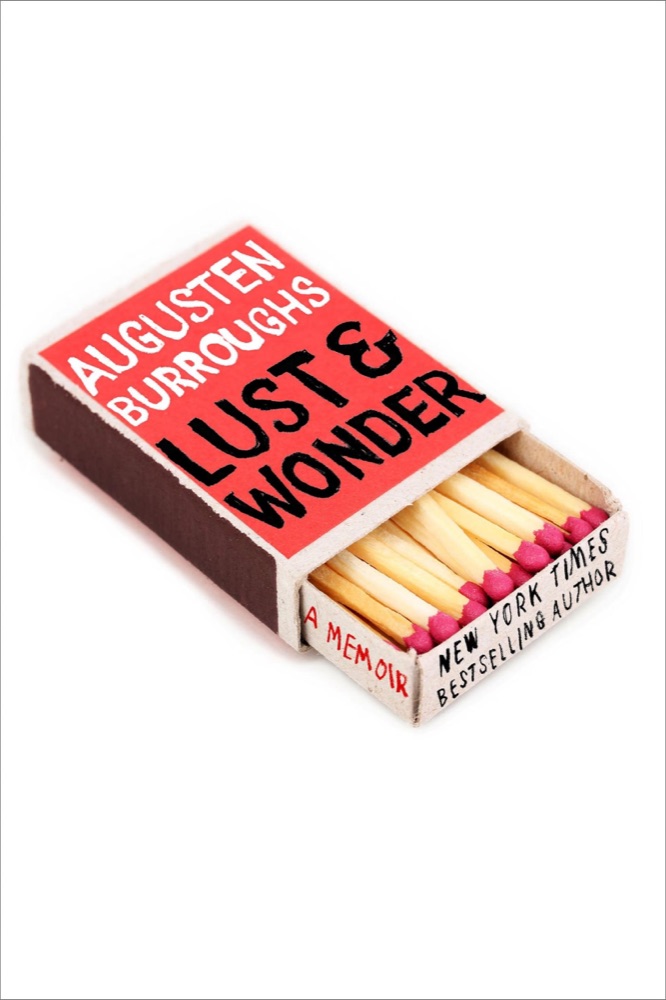 Lust & Wonder
 Couplets
 Autobiography of a Face
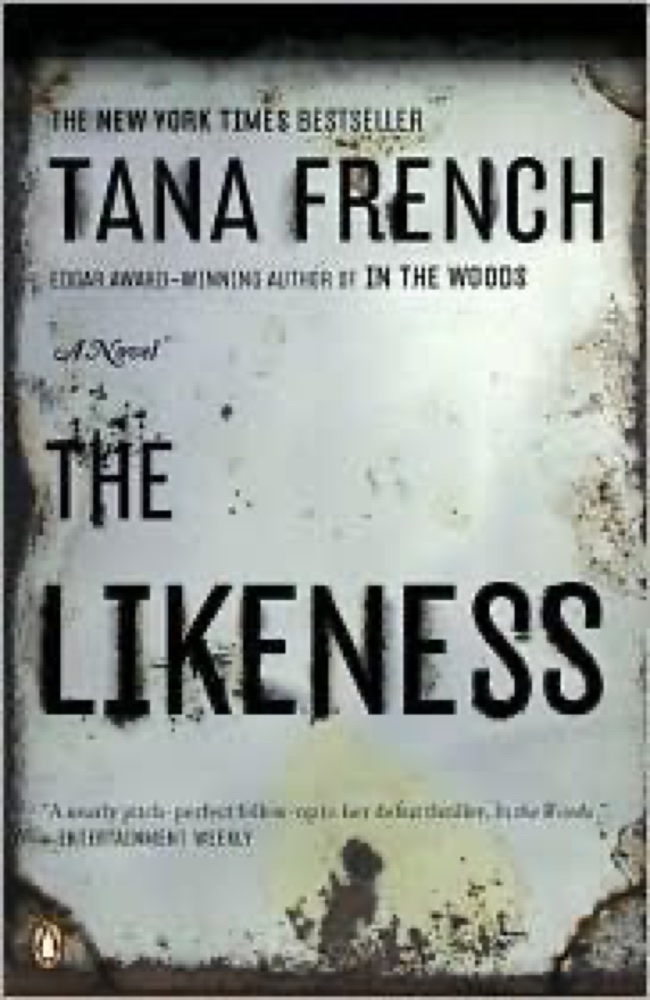 The Likeness
 The Lifted Veil
 American Wife
 Mr. Fox
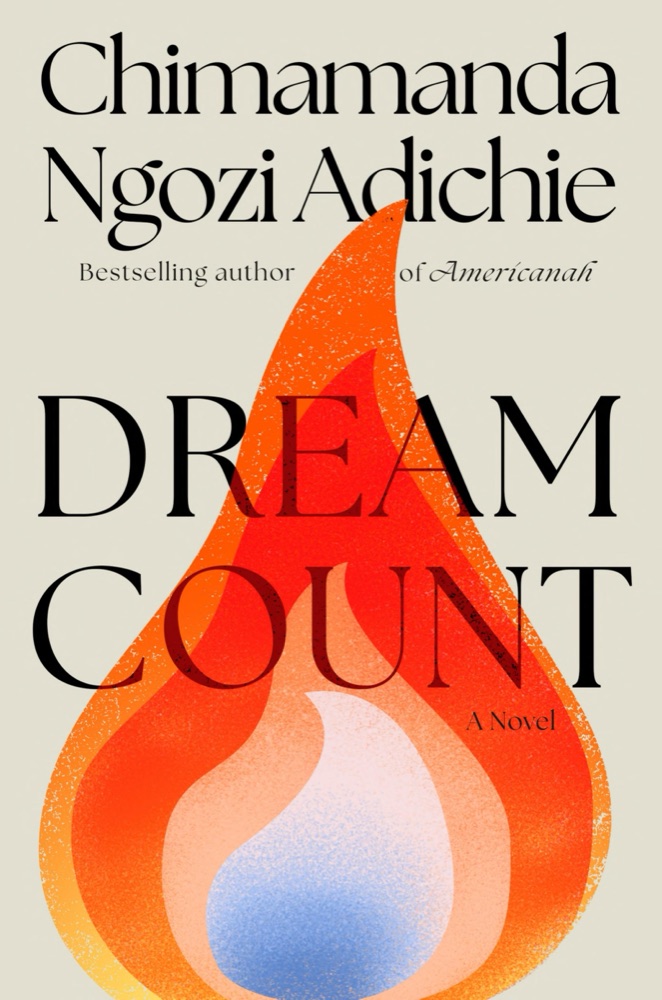 Dream Count
 The Mandarins
 Swimming in the Dark
 The Case for Jamie
 Prime of Life
 The Untouchable
 The Book of the Most Precious Substance
 Brideshead Revisited: The Sacred and Profane Memories of Captain Charles Ryder
 How to Be Good
 Fifth Business
 The End of the Affair
 The Echo Wife
 The Cocktail Party
 The Nice and the Good
 Shoko's Smile: Stories
 Rebecca
 The Swan Thieves
 Hot Milk
 Confessions
 Giovanni's Room
 The Fall
Hotel du Lac
The Fall
Hotel du Lac