
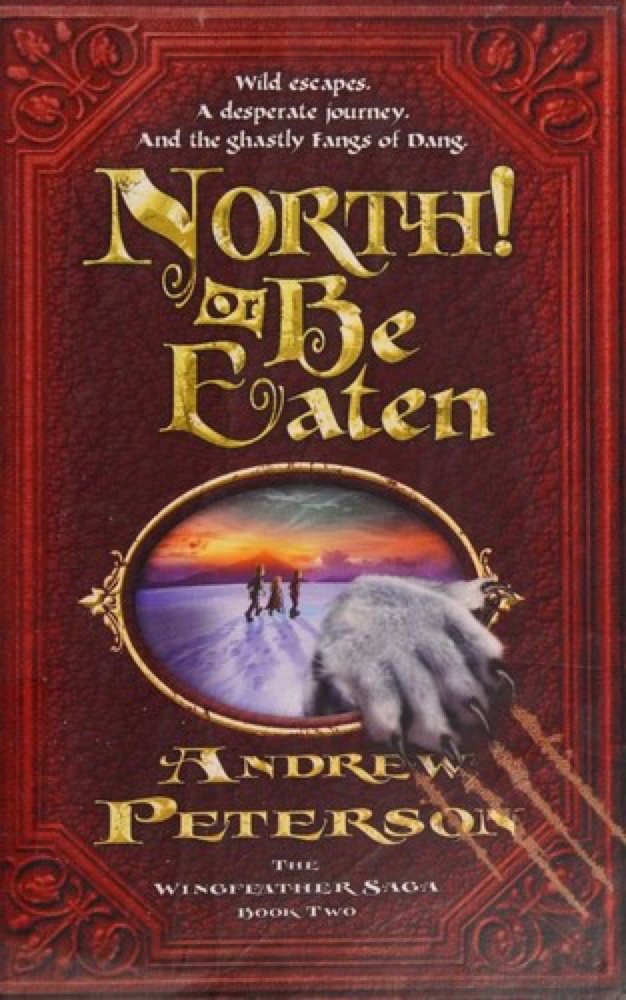
 North! or Be Eaten
Quotes from the Book
Those of us who write, who sing, who paint, must remember that to a child a song may glow like a nightlight in a scary bedroom. It may be the only thing holding back the monsters. That story may be the only beautiful, true thing that makes it through all the ugliness of a little girl’s world to rest in her secret heart. May we take that seriously. It is our job, it is our ministry, it is the sword we swing in the Kingdom, to remind children that the good guys win, that the stories are true, and that a fool’s hope may be the best kind.
47
Since we were made to glorify God, worship happens when someone is doing exactly what he or she was made to do.
33
I want you, dear reader, to remember that one holy way of mending the world is to sing, to write, to paint, to weave new worlds. Because the seed of your feeble-yet-faithful work fell to the ground, died, and rose again, what Christ has done through you will call forth praise from lonesome travelers long after your name is forgotten. They will know someone lived and loved here.
25
This is why the Enemy wants you to think you have no song to write, no story to tell, no painting to paint. He wants to quiet you. So sing. Let the Word by which the Creator made you fill your imagination, guide your pen, lead you from note to note until a melody is strung together like a glimmering constellation in the clear sky. Love the Lord your God, and love your neighbor, too, by making worlds and works of beauty that blanket the earth like flowers. Let your homesickness keep you always from spiritual slumber. Remember that it is in the fellowship of saints, of friends and family, that your gift will grow best, and will find its best expression. And until the Kingdom comes in its fullness, bend your will to the joyful, tearful telling of its coming. Write about that. Write about that, and never stop.
23
O God," you pray, "I'm so small and the universe is so big. What can I possibly say? What can I add to this explosion of glory? My mind is slow and unsteady, my heart is twisted and tired, my hands are smudged with sin. I have nothing—nothing—to offer." Write about that. "What do you mean?" Write about your smallness. Write about your sin, your heart, your inability to say anything worth saying. Watch what happens.
18
Maybe the song you’re writing is for one specific heartbroken soul who won’t be born for another four hundred years.
13
When we manage to make something pretty, it's only because we are ourselves a flourish on a greater canvas.
13
We’re not invited into this because God needs us, but because he wants us.
12
Once he told me that the hard part is finding the clay, the raw material of the story. It takes work to harvest clay. You have to go to a stream and grab a bucket of mud, mix it with water, sift out the rougher sediment, pour off the water, allow the moisture to seep through a cloth for days. That’s your first draft. After that you get to flop the clay onto the pottery wheel and turn it into something better than mud, hopefully something both useful and beautiful. That’s revision. Whether you’re writing a song or a story, you have to shape it and reshape it, scrap it and start over, always working it as close as it can get to the thing it wants to become. But first you need that muddy lump, the first draft.
12
You can not blame your equipment. You can't blame your lack of time. You can't blame your upbringing. Either you're willing to steward the gift God gave you by stepping into the ring and fighting for it, or you spend your life in training, cashing in excuse after excuse until there's no time left, no fight left, no song, no story.
11
Agenda is bad when it usurps the beauty. Christian art should strive for a marriage of the two, just as Christ is described as being “full of grace and truth” (John 1:14). Truth without beauty can be a weapon; beauty without truth can be spineless. The two together are like lyric and melody. This is not to say that beauty itself isn’t a kind of truth, nor that truth itself isn’t beautiful. It’ll take a better philosopher than me to parse all that out. (I commend to you authors like Steve Guthrie and Jeremy Begbie if you want to swim in those deep but lovely waters.)
11
I don't know what's wrong with me." I said with a sniffle. "My brother and sisters don't seem to carry this same pain, and we were all there at the same time, in the same house." Al said, "If I were to interview four siblings about their childhoods, they would each describe a completely different family." Your story, then, is yours and no one else's. Each sunset is different, depending on where you stand.
11
I carry a persistent fear that my thoughts are incorrect, or silly, or so obvious they aren’t worth saying. Suddenly I’m a little boy, sitting in class like a solemn ghost. Mrs. Larson asks me a question, all the seven-year-old eyes in the room turn to me with expectation, and I’m frozen in place, terrified by the sudden realization that I’m expected to contribute. My cheeks flush and I want to go away to someplace safe—someplace like the woods or the eternal fields of green Illinois corn where I can watch and experience and listen without any demand to justify my existence. I’ve always been happy to be alone. God, however, never takes his eyes off me, and on my good days I believe that he is smiling, never demanding an answer other than the fact of myself. I exist as his redeemed creation, and that is, pleasantly, enough for him.
8
Steven Pressfield's book The War of Art describes what he calls "Resistence," a mysterious force in the world that seems to challenge every creative act. Pressfield isn't a Christian, as far as I know, but when he talks about the way we have to fight an opposing force in order to bring something beautiful into the world, I resonate. I believe there's a Resistance, and it's made up of what Paul called the rulers, the authorities, the cosmic powers over this present darkness, the spiritual forces of evil in the heavenly places (Eph. 6:12). If you're called to speak light into the darkness, then believe this: the darkness wants to shut you up.
8
As surely as you dedicate your heart to him, dedicate your front porch.
7
It’s one of the best working examples I know of C. S. Lewis’s principle of sneaking past “watchful dragons.” Lewis wrote in an essay called “Sometimes Fairy Stories May Say Best What’s to be Said,” I thought I saw how stories of this kind could steal past a certain inhibition which had paralysed much of my own religion in childhood. Why did one find it so hard to feel as one was told one ought to feel about God or the sufferings of Christ? I thought the chief reason was that one was told one ought to. An obligation to feel can freeze feelings. And reverence itself did harm. The whole subject was associated with lowered voices; almost as if it were something medical. But supposing that by casting all these things into an imaginary world, stripping them of their stained-glass and Sunday School associations, one could make them for the first time appear in their real potency? Could one not thus steal past those watchful dragons? I thought one could.
7
Fear is a mighty wind, and some of us merely have a creative spark.
7
See how the questions of career choices and demo CDs and relocating diminish in the light of God's Kingdom? Sail by the stars, not the flotsam.
7
Here’s the point. If I had waited until the songs were finished, this thing might never have happened. If I had merely tinkered with these songs for all the years it took to finally record them, chances are I would have moved on to other things and never given it a try. It wouldn’t have grown into what it was meant to be. You can think and plan and think some more, but none of that is half as important as doing something, however imperfect or incomplete it is. Intention trumps execution, remember? Sometimes you book the tour before the songs are written. Sometimes you stand at the altar and say “I do” without any clue how you and your wife are going to make it. Sometimes you move to Nashville with no money in the bank and no real prospects. Sometimes you start with nothing and hope it all works out. Not sometimes—every time. All you really have is your willingness to fail, coupled with the mountain of evidence that the Maker has never left nor forsaken you.
7
Sometimes you have to do the work even if you don’t feel like it. Sometimes you have to put away your wants and do what needs to be done, which really means dying to self in order to find life. This is a way of practicing resurrection.
7
The best thing you can do is to keep your nose to the grindstone, to remember that it takes a lot of work to hone your gift into something useful, and that you have to learn to enjoy the work—especially the parts you don’t enjoy.
6
A book is made up of sentences and paragraphs, and one look at the bookstore shelves should be enough to tell anyone that quality of writing is no prerequisite for being published.
6
Sail by the stars, not the flotsam.
5
In The Terrible Speed of Mercy, Jonathan Rogers’s wonderful biography of Flannery O’Connor, he writes about her willingness to tell the stories she was called to tell, even if it meant the critics and the audience sometimes missed her point entirely. She took a long view, and though it was painful, stayed true to her calling and trusted that it was God’s business what he did with her stories after they were written. She wrote, “God may use my work to save some people and to test the faith of others, but that’s His business and none of mine.
5
..through you will call forth praise from lonesome travelers long after your name is forgotten. They will know someone lived and loved here. 'Whoever they were,' they will think, 'they belonged to God. It's clear that they believed the stories of Jesus were true, and it gave them a hope that made their lives beautiful in ways that will unfold for ages among the linnea that shimmers in the moonlit woods.
5
The Christian’s calling, in part, is to proclaim God’s dominion in every corner of the world—in every corner of our hearts, too. It isn’t that we’re fighting a battle in which we must win ground from the forces of evil; the ground is already won. Satan is just an outlaw. And we have the pleasure of declaring God’s Kingdom with love, service, and peace in our homes and communities. When you pray, dedicate your home, your yard, your bonus room and dishwasher and bicycle and garden to the King. As surely as you dedicate your heart to him, dedicate your front porch. Daily pledge every atom of every tool at your disposal to his good pleasure. It’s all sacred anyway if old Wendell is right (and I think he is).
4
[T]he steady resonance of your work might move someone closer to the Kingdom—and compared to a human heart, planets are small potatoes.
4
Sounds strange, I know, but it couldn’t be more true to my experience. It’s like there’s a platonic form of the song out there somewhere, and you get a tiny glimpse of that true form at some stage in the creative act. Half the job is fighting to get the feeble work of your hands as close as possible to that flash of beauty. You have the sense that you aren’t the one who conceived of the thing but are a surrogate mother helping to birth something new into the world. That doesn’t mean we turn off our brains, or that we forfeit our agency in shaping the art. There’s a paradox at work here. Serving the work doesn’t mean we don’t have an agenda, but that the agenda works in partnership with the wild, creative spirit—not as an overlord.
4
I’ve sat at the piano for hours already, looking for lyrics and melodies, but everything sounds the same and I feel as uninspired as ever. Does it mean I’m finished? A more sobering thought: if I’m finished, would I miss it? But the truth is, I’ve been here before. Many times. We all have. So how do we find the faith to press on? Remember. Remember, Hebrew children, who you once were in Egypt. Remember the altars set up along the way to remind yourselves that you made the journey and God rescued you from sword and famine, from chariots and pestilence, that once you were there, but now you are here. It happened. Our memories are fallible, residing in that most complex and mysterious organ in the human body (and therefore the known universe), capable of being suppressed, manipulated, altered, but also profoundly powerful and able to transport a person to a place fifty years ago all because of a whiff of your grandfather’s cologne or an old book or the salty air. As often as you do this, do it in remembrance of me. Remember with every sip of wine that we shared this meal, you and I. Remember. So I look at the last album, the last book, and am forced to admit that I didn’t know anymore then than I do now. Every song is an Ebenezer stone, evidence of God’s faithfulness. I just need to remember. Trust is crucial. So is self-forgetfulness and risk and a measure of audacity. And now that I think about it, there’s also wonder, insight, familiarity with Scripture, passion, a good night’s sleep, breakfast (preferably an egg sandwich), an encouraging voice, diligence, patience. I need silence. Privacy. Time—that’s what I need: more time. But first I need a vacation, because I’ve been really grinding away at this other stuff and my mental cache is full. A deadline would be great. I work best with deadlines, and maybe some bills piling up. Some new guitar strings would help, and a nice candle. And that’s all I need, in the words of Steve Martin’s The Jerk. This is the truth: all I really need is a guitar, some paper, and discipline. If only I would apply myself.
4
Watch on YouTube
About Andrew Peterson
We have collected 74 quotes from 5 books by Andrew Peterson on BookQuoters.
More about the author →More by Andrew Peterson
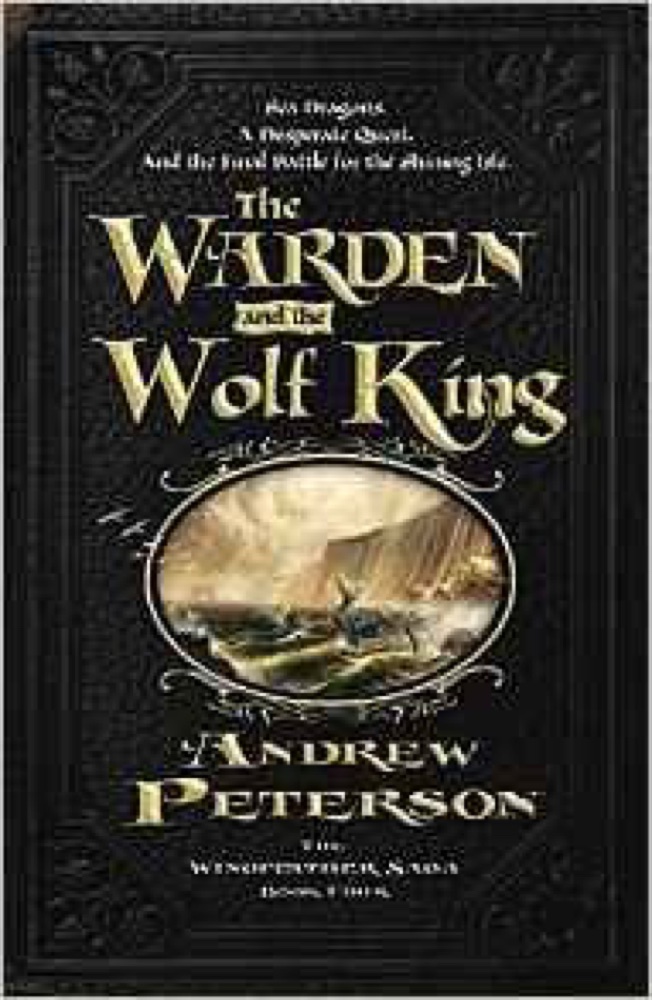
About the book
Making something beautiful in a broken world can be harrowing work, and it can’t be done alone. Over the last twenty years, Andrew Peterson has performed thousands of concerts, published four novels, released ten albums, taught college and seminary classes on writing, founded a nonprofit ministry for Christians in the arts, and executive-produced a film—all in a belief that God calls us to proclaim the gospel and the coming kingdom using whatever gifts are at our disposal. He’s stumbled along the way, made mistake after mistake, and yet has continually encountered the grace of God through an encouraging family, a Christ-centered community of artists in the church, and the power of truth, beauty, and goodness in Scripture and the arts. While there are many books about writing, none deal first-hand with the intersection of songwriting, storytelling, and vocation, along with nuts-and-bo
Book details
- First published
- 2019
- Author
- Andrew Peterson
- Genre
- Nonfiction
- Goodreads rating
- 4.50 (7k ratings)
Keep reading
 Walking on Water: Reflections on Faith and Art
 Out of Sorts: Making Peace with an Evolving Faith
 Of Mess and Moxie: Wrangling Delight Out of This Wild and Glorious Life
 Christy
 Help Thanks Wow: The Three Essential Prayers
 Blue Like Jazz: Nonreligious Thoughts on Christian Spirituality
 Plan B: Further Thoughts on Faith
 Leaving Church: A Memoir of Faith
 Restless: Because You Were Made for More
 Wholehearted Faith
 The Cloister Walk
 Notes From The Tilt-A-Whirl: Wide-Eyed Wonder in God's Spoken World
 The Message Remix
 Bird by Bird
 Waking the Dead: The Glory of a Heart Fully Alive
 Van Gogh Has a Broken Heart: What Art Teaches Us About the Wonder and Struggle of Being Alive
 7: An Experimental Mutiny Against Excess
 Jayber Crow
 Searching for God Knows What
 The Good Man Jesus and the Scoundrel Christ
 The Seven Storey Mountain
 This Here Flesh: Spirituality, Liberation, and the Stories That Make Us
 Reflections on the Psalms
 Prayer in the Night: For Those Who Work or Watch or Weep
 Jesus Over Everything: Uncomplicating the Daily Struggle to Put Jesus First
 Born to Run
 All My Knotted-Up Life: A Memoir
 Blessed Are the Misfits: Great News for Believers who are Introverts, Spiritual Strugglers, or Just Feel Like They're Missing Something
 Have a Little Faith: a True Story
 Letter to My Daughter
 For the Love: Fighting for Grace in a World of Impossible Standards
 Children of God
 What We Talk about When We Talk about God
 The Life You've Always Wanted: Spiritual Disciplines for Ordinary People
 Shadow of the Almighty: The Life and Testament of Jim Elliot
 Having a Mary Heart in a Martha World: Finding Intimacy with God in the Busyness of Life
 Pastrix: The Cranky, Beautiful Faith of a Sinner & Saint
 Gilead
 A Sudden Light
 The Weight of Glory
 Upstream: Selected Essays
 Don't Waste Your Life
 The Stranger in the Lifeboat
 Surrender: 40 Songs, One Story
 It's Not Supposed to Be This Way: Finding Unexpected Strength When Disappointments Leave You Shattered
 Barking to the Choir: The Power of Radical Kinship
 If You Want to Write: A Book about Art, Independence and Spirit
 Like Streams to the Ocean: Notes on Ego, Love, and the Things That Make Us Who We Are
 The Artist's Way
 Evidence: Poems
 Stepping Heavenward
 The Furious Longing of God
 The Divine Conspiracy: Rediscovering Our Hidden Life in God
 These Precious Days: Essays
 The Year of Living Biblically: One Man's Humble Quest to Follow the Bible as Literally as Possible
 Velvet Elvis: Repainting the Christian Faith
 The Etched City
 The Secret Thoughts of an Unlikely Convert: An English Professor's Journey Into Christian Faith
 The Habit of Being: Letters of Flannery O'Connor