
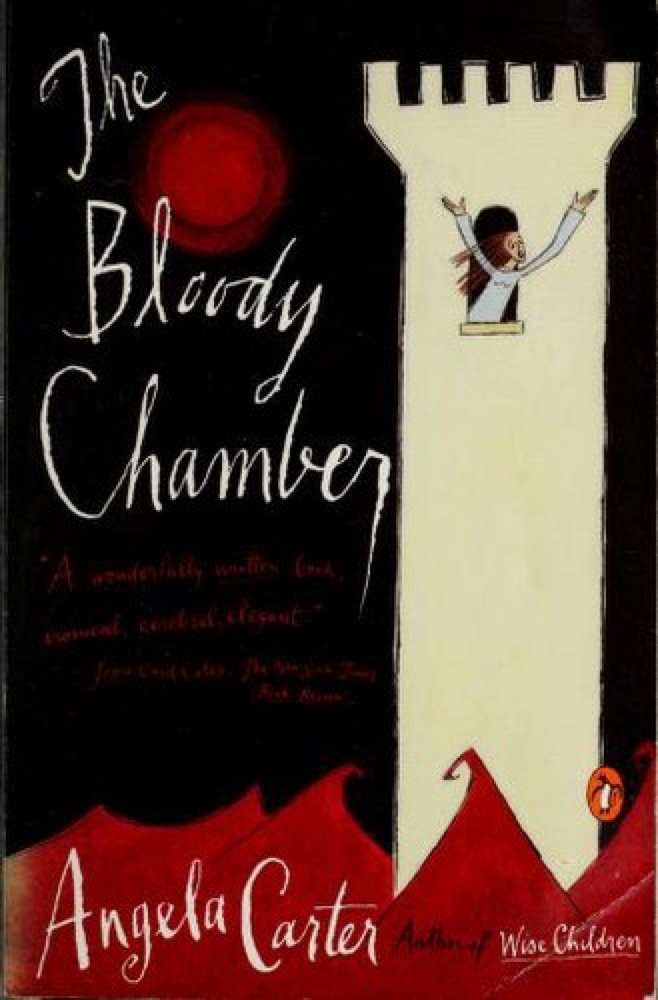
 The Bloody Chamber and Other Stories
Quotes from the Book
The bed we loved in was a spinning world of forests, castles, torchlight, clifftops, seas where we would dive for pearls. My lover’s words were shooting stars which fell to earth as kisses on these lips; my body now a softer rhyme to his, now echo, assonance; his touch a verb dancing in the centre of a noun. Some nights, I dreamed he’d written me, the bed a page beneath his writer’s hands. Romance and drama played by touch, by scent, by taste. In the other bed, the best, our guests dozed on, dribbling their prose. My living laughing love - I hold him in the casket of my widow’s head as he held me upon that next best bed. - Anne Hathaway
45
I'm not the first or the last to stand on a hillock, watching the man she married prove to the world he's a total, utter, absolute, Grade A pillock. - Mrs Icarus
30
But life, they said, means life. Dying inside. The Devil was evil, mad, but I was the Devil's wife which made me worse. I howled in my cell. If the Devil is gone then how could this be hell?
21
Went to the Zoo, I said to Him- Something about that chimpanzee over there reminds me of you.
19
Then he started his period. One week in bed. Two doctors in. Three painkillers four times a day. And later a letter to the powers-that-be demanding full-paid menstrual leave twelve weeks per year. I see him now, his selfish pale face peering at the moon through the bathroom window. The curse, he said, the curse. - Mrs Tiresias
10
It took ten years In the woods to tell that a mushroom Stoppers the mouth of a buried corpse, that birds Are the uttered thought of trees, that a greying wolf Howls the same old song at the moon, year in, year out Season after season, same rhyme, same reason.
9
Out of the forest I come with my flowers, singing, all alone.
8
Words, words were truly alive on the tongue, in the head, warm, beating, frantic, winged; music and blood.
8
At childhood’s end, the houses petered out into playing fields, the factory, allotments kept, like mistresses, by kneeling married men, the silent railway line, the hermit’s caravan, till you came at last to the edge of the woods. It was there that I first clapped eyes on the wolf. He stood in a clearing, reading his verse out loud in his wolfy drawl, a paperback in his hairy paw, red wine staining his bearded jaw. What big ears he had! What big eyes he had! What teeth! In the interval, I made quite sure he spotted me, sweet sixteen, never been, babe, waif, and bought me a drink, my first. You might ask why. Here’s why. Poetry. The wolf, I knew, would lead me deep into the woods, away from home, to a dark tangled thorny place lit by the eyes of owls. I crawled in his wake, my stockings ripped to shreds, scraps of red from my blazer snagged on twig and branch, murder clues. I lost both shoes but got there, wolf’s lair, better beware. Lesson one that night, breath of the wolf in my ear, was the love poem. I clung till dawn to his thrashing fur, for what little girl doesn’t dearly love a wolf? Then I slid from between his heavy matted paws and went in search of a living bird – white dove – which flew, straight, from my hands to his hope mouth. One bite, dead. How nice, breakfast in bed, he said, licking his chops. As soon as he slept, I crept to the back of the lair, where a whole wall was crimson, gold, aglow with books. Words, words were truly alive on the tongue, in the head, warm, beating, frantic, winged; music and blood. But then I was young – and it took ten years in the woods to tell that a mushroom stoppers the mouth of a buried corpse, that birds are the uttered thought of trees, that a greying wolf howls the same old song at the moon, year in, year out, season after season, same rhyme, same reason. I took an axe to a willow to see how it wept. I took an axe to a salmon to see how it leapt. I took an axe to the wolf as he slept, one chop, scrotum to throat, and saw the glistening, virgin white of my grandmother’s bones. I filled his old belly with stones. I stitched him up. Out of the forest I come with my flowers, singing, all alone. Little Red-Cap
8
In the convent, y'all, I tend the gardens, watch things grow, pray for the immortal soul of rock 'n' roll. They call me Sister Presley here, The Reverend Mother digs the way I move my hips just like my brother. Gregorian chant drifts out across the herbs Pascha nostrum immolatus est... I wear a simple habit, darkish hues, a wimple with a novice-sewn lace band, a rosary, a chain of keys, a pair of good and sturdy blue suede shoes. I think of it as Graceland here, a land of grace. It puts my trademark slow lopsided smile back on my face. Lawdy. I'm alive and well. Long time since I walked down Lonely Street towards Heartbreak Hotel. - Elvis's Twin Sister
8
Cold, I was, like snow, like ivory. I thought "He will not touch me", but he did. He kissed my stone-cool lips. I lay still as though I’d died. He stayed. He thumbed my marbled eyes. He spoke - blunt endearments, what he’d do and how. His words were terrible. My ears were sculpture, stone-deaf shells. I heard the sea. I drowned him out. I heard him shout. He brought me presents, polished pebbles, little bells. I didn’t blink, was dumb. He brought me pearls and necklaces and rings. He called them girly things. He ran his clammy hands along my limbs. I didn’t shrink, played statue, shtum. He let his fingers sink into my flesh, he squeezed, he pressed. I would not bruise. He looked for marks, for purple hearts, for inky stars, for smudgy clues. His nails were claws. I showed no scratch, no scrape, no scar. He propped me up on pillows, jawed all night. My heart was ice, was glass. His voice was gravel, hoarse. He talked white black. So I changed tack, grew warm, like candle wax, kissed back, was soft, was pliable, began to moan, got hot, got wild, arched, coiled, writhed, begged for his child, and at the climax screamed my head off - all an act. And haven’t seen him since. Simple as that
7
Girls, I was dead and down in the Underworld, a shade, a shadow of my former self, nowhen. It was a place where language stopped, a black full stop, a black hole Where the words had to come to an end. And end they did there, last words, famous or not. It suited me down to the ground. So imagine me there, unavailable, out of this world, then picture my face in that place of Eternal Repose, in the one place you’d think a girl would be safe from the kind of a man who follows her round writing poems, hovers about while she reads them, calls her His Muse, and once sulked for a night and a day because she remarked on his weakness for abstract nouns. Just picture my face when I heard - Ye Gods - a familiar knock-knock at Death’s door. Him. Big O. Larger than life. With his lyre and a poem to pitch, with me as the prize. Things were different back then. For the men, verse-wise, Big O was the boy. Legendary. The blurb on the back of his books claimed that animals, aardvark to zebra, flocked to his side when he sang, fish leapt in their shoals at the sound of his voice, even the mute, sullen stones at his feet wept wee, silver tears. Bollocks. (I’d done all the typing myself, I should know.) And given my time all over again, rest assured that I’d rather speak for myself than be Dearest, Beloved, Dark Lady, White Goddess etc., etc. In fact girls, I’d rather be dead. But the Gods are like publishers, usually male, and what you doubtless know of my tale is the deal. Orpheus strutted his stuff. The bloodless ghosts were in tears. Sisyphus sat on his rock for the first time in years. Tantalus was permitted a couple of beers. The woman in question could scarcely believe her ears. Like it or not, I must follow him back to our life - Eurydice, Orpheus’ wife - to be trapped in his images, metaphors, similes, octaves and sextets, quatrains and couplets, elegies, limericks, villanelles, histories, myths… He’d been told that he mustn’t look back or turn round, but walk steadily upwards, myself right behind him, out of the Underworld into the upper air that for me was the past. He’d been warned that one look would lose me for ever and ever. So we walked, we walked. Nobody talked. Girls, forget what you’ve read. It happened like this - I did everything in my power to make him look back. What did I have to do, I said, to make him see we were through? I was dead. Deceased. I was Resting in Peace. Passé. Late. Past my sell-by date… I stretched out my hand to touch him once on the back of the neck. Please let me stay. But already the light had saddened from purple to grey. It was an uphill schlep from death to life and with every step I willed him to turn. I was thinking of filching the poem out of his cloak, when inspiration finally struck. I stopped, thrilled. He was a yard in front. My voice shook when I spoke - Orpheus, your poem’s a masterpiece. I’d love to hear it again… He was smiling modestly, when he turned, when he turned and he looked at me. What else? I noticed he hadn’t shaved. I waved once and was gone. The dead are so talented. The living walk by the edge of a vast lake near, the wise, drowned silence of the dead.
5
Frau Freud Ladies, for argument’s sake, let us say that I’ve seen my fair share of ding-a-ling, member and jock, of todger and nudger and percy and cock, of tackle, of three-for-a-bob, of willy and winky; in fact, you could say, I’m as au fait with Hunt-the-Salami as Ms M. Lewinsky – equally sick up to here with the beef bayonet, the pork sword, the saveloy, love-muscle, night-crawler, dong, the dick, prick, dipstick and wick, the rammer, the slammer, the rupert, the shlong. Don’t get me wrong, I’ve no axe to grind with the snake in the trousers, the wife’s best friend, the weapon, the python – I suppose what I mean is, ladies, dear ladies, the average penis – not pretty . . . the squint of its envious solitary eye . . . one’s feeling of pity . . .
5
Just as the body is shaped for movement, the mind is shaped for poetry. Rhythm and rhyme aid recall. Poems are always rhythmic but not always rhyming. In the same way that melody became rather suspect in twentieth-century classical music – atonal fractures being the mark of seriousness – so Modernism re-branded rhyme as pastoral, lovesick, feminine, superficial. Fine for kids and tea-towels, not fine for the muscular combative voice of the urban poet. It has taken a long time for rhyme to return to favour. Rap, and the rise of performance poetry, has been part of that return.
3
The living walk by the edge of a vast lake near the wise, drowned silence of the dead.
2
C’est la vie. When I got ill, it hurt like hell. I bought a kidney with my credit card, then I got well. I keep Faust’s secret still –the clever, cunning, callous bastard didn’t have a soul to sell.
2
I think of him in certain lights, dawn, late afternoon,...
2
So I was hard on the Beast, win or lose, When I got upstairs, those tragic girls in my head, Turfing him out of bed; standing alone On the balcony, the night so cold I could taste the stars On the tip of my tongue. And I made a prayer – Thumbing my pearls, the tears of Mary, one by one, Like a rosary – words for the lost, the captive beautiful, The wives, those less fortunate than we. The moon was a hand-mirror breathed on by a Queen. My breath was a chiffon scarf for an elegant ghost. I turned to go back inside. Bring me the Beast for the night. Bring me the wine-cellar key. Let the less-loving one be me. - an excerpt from Mrs. Beast -
1
A suspicion, a doubt, a jealousy grew in my mind, which turned the hairs on my head to filthy snakes, as though my thoughts hissed and spat on my scalp. My bride’s breath soured, stank in the grey bags of my lungs. I’m foul mouthed now, foul tongued, yellow fanged. There are bullet tears in my eyes. Are you terrified? Be terrified. It’s you I love, perfect man, Greek God, my own; but I know you’ll go, betray me, stray from home. So better by far for me if you were stone. I glanced at a buzzing bee, a dull grey pebble fell to the ground. I glanced at a singing bird, a handful of dusty gravel spattered down. I looked at a ginger cat, a housebrick shattered a bowl of milk. I looked at a snuffling pig, a boulder rolled in a heap of shit. I stared in the mirror. Love gone bad showed me a Gorgon. I stared at a dragon. Fire spewed from the mouth of a mountain. And here you come with a shield for a heart and a sword for a tongue and your girls, your girls. Wasn’t I beautiful? Wasn’t I fragrant and young? Look at me now. - Medusa by Carol Ann Duffy -
1
The Devil was evil, mad, but I was the Devil’s wife which made me worse. I howled in my cell. If the Devil was gone then how could this be hell?
1
But behind each player stood a line of ghosts unable to win. Eve. Ashputtel. Marilyn Monroe. Rapunzel slashing wildly at her hair. Bessie Smith unloved and down and out. Bluebeard's wives, Henry VIII's, Snow White cursing the day she left the seven dwarves, Diana, Princess of Wales. The Sheepish Beast came in with a tray of schnapps at the end of the game and we stood for the toast -"fay wray"- then tossed our fiery drinks to the back of our crimson throats. Bad girls. Serious ladies. Mourning our dead.
1
I’m not the first or the last to stand on a hillock, watching the man she married prove to the world he’s a total, utter, absolute, Grade A pillock.
When I was done, and bloody to the wrist, I squatted down among the murdered music of the bells and pissed.
his touch a verb dancing in the centre of a noun.
Watch on YouTube
About Carol Ann Duffy
We have collected 24 quotes from 1 book by Carol Ann Duffy on BookQuoters.
More about the author →About the book
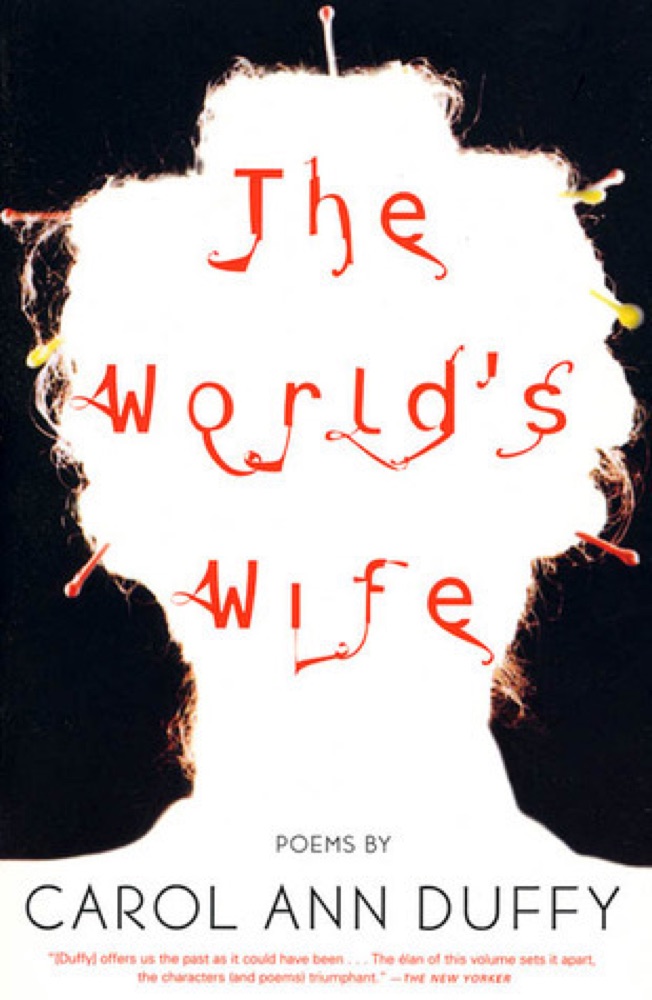
Be terrified. It's you I love, perfect man, Greek God, my own; but I know you'll go, betray me, strayfrom home.So better by far for me if you were stone.—from "Medusa"Stunningly original and haunting, the voices of Mrs. Midas, Queen Kong, and Frau Freud, to say nothing of the Devil's Wife herself, startle us with their wit, imagination, and incisiveness in this collection of poems written from the perspectives of the wives, sisters, or girlfriends of famous—and infamous—male personages. Carol Ann Duffy is a master at drawing on myth and history, then subverting them in a vivid and surprising way to create poems that have the pull of the past and the crack of the contemporary.
Book details
- First published
- 1999
- Author
- Carol Ann Duffy
- Genre
- Literature
- Goodreads rating
- 4.10 (11k ratings)
Keep reading
The Bloody Chamber and Other Stories
 Burning Your Boats: The Collected Short Stories
 Ballad: A Gathering of Faerie
 The Dream Songs
 All of Us: The Collected Poems
 Morning in the Burned House: Poems
 The Collected Poems
 Merrick
 In the Heart of the Heart of the Country and Other Stories
 Her Body and Other Parties
 Good Bones and Simple Murders
 The People Look Like Flowers at Last
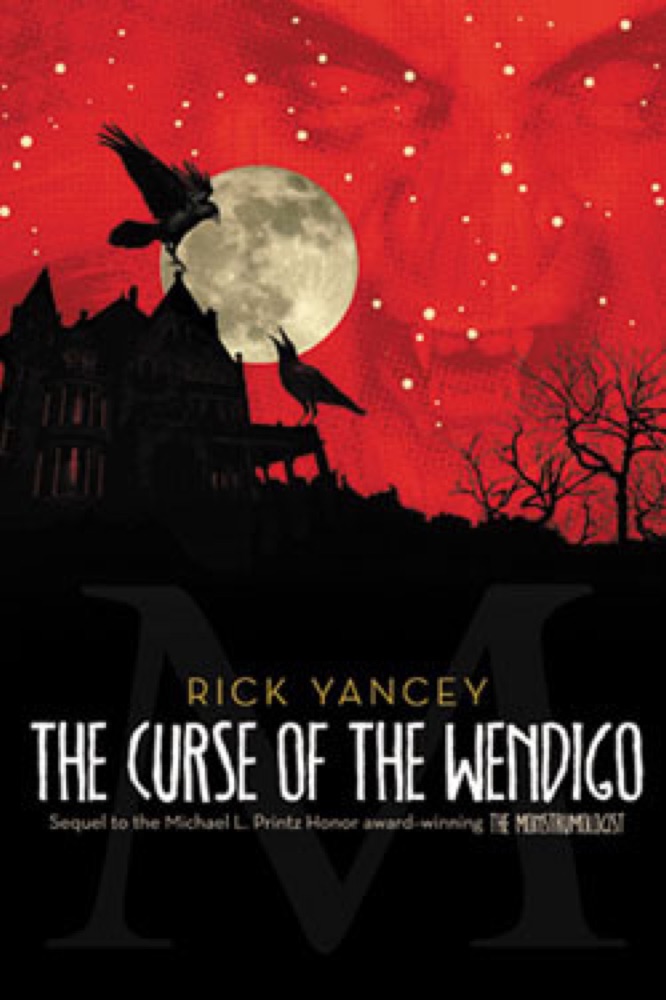 The Curse of the Wendigo
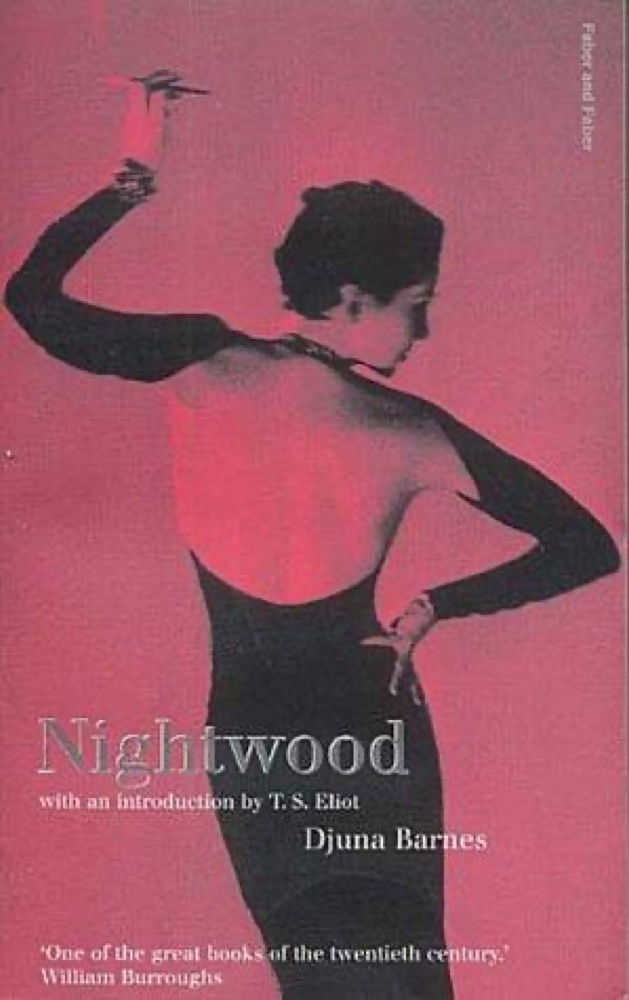 Nightwood
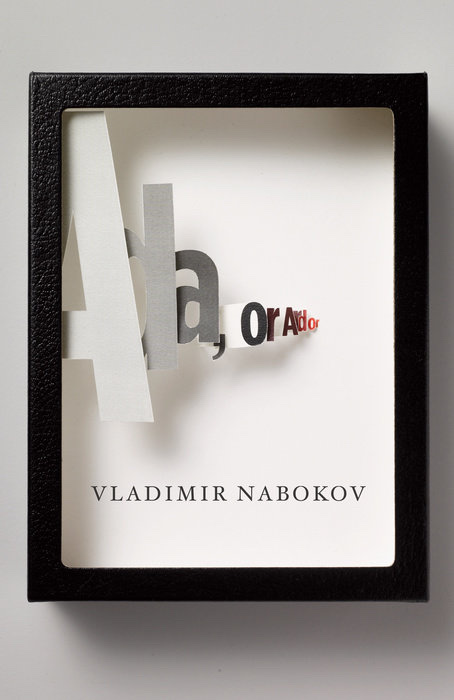 Ada, or Ardor: A Family Chronicle
 Phantastes
 By Grand Central Station I Sat Down and Wept
 Winter Trees
 Singin' and Swingin' and Gettin' Merry Like Christmas
 Shadowsong
 The Complete Poems
 I Have No Mouth & I Must Scream
 The Madness Vase
 Plainwater: Essays and Poetry
 In the Night Garden
 Inferno
 Selected Poems
 The Complete Poems of Anna Akhmatova
 Selected Poems
 Briefly, A Delicious Life
 Kissing the Witch: Old Tales in New Skins
 Howl and Other Poems
 Lament: The Faerie Queen's Deception
 Sword & Citadel
 A Court of Mist and Fury
 Tar Baby
 Poems, 1962-2012
 Juliet
 Shirley
 The Collected Poems of W.B. Yeats
 Wintersong
 Glass, Irony and God
 Collected Poems
 Dracula in Love
 Feversong
 A Season in Hell/The Drunken Boat
 Titus Groan
 Johnny Panic and the Bible of Dreams: Short Stories, Prose and Diary Excerpts
 Sexus
Sexus
 Memnoch the Devil
 Daughter of No Worlds
 Affinity
 Abarat
 The English Patient
 The Complete Stories and Poems
 The Tunnel
 Wuthering Heights
 The Gargoyle
 The Rose and the Beast: Fairy Tales Retold
 Les Fleurs du Mal