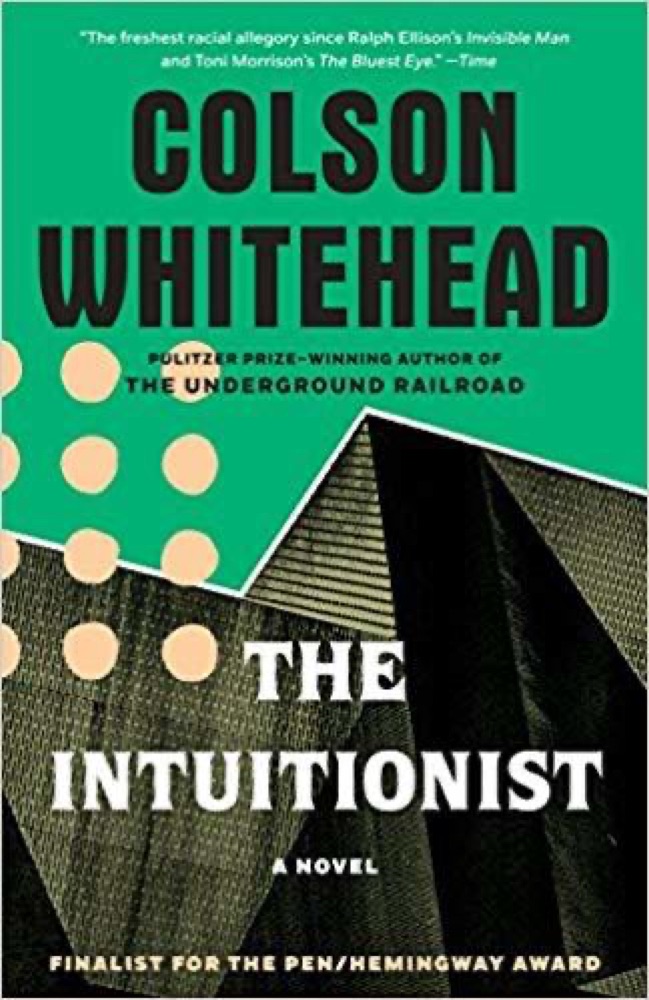

 Apex Hides the Hurt
Quotes from the Book
It is failure that guides evolution; perfection provides no incentive for improvement, and nothing is perfect.
40
What does the perfect elevator look like, the one that will deliver us from the cities we suffer now, these stunted shacks? We don't know because we can't see inside it, it's something we cannot imagine, like the shape of angels' teeth. It's a black box.
9
There will be no redemption because the men who run this place do not want redemption. They want to be as near to hell as they can.
8
The Four Questions?” “As put forth by Mettleheim: How did this happen? How could this happen? Is it exceptional? How will it be avoided in the future?
5
But who can resist the seductions of elevators these days, those stepping stones to Heaven, which make relentless verticality so alluring?
5
At intersections and crowded areas between sedans and trucks the gutter reflected the bitter pastels of metropolitan neon, rainbows hacked down to earth and dirt.
4
No, Fulton was colored. She understands this luminous truth. Natchez did not lie about that: she has seen it in the man’s books, made plain by her new literacy. In the last few days she has learned how to read, like a slave does, one forbidden word at a time.
4
At ninety, everything is air and the difference between you and the medium of your passage is disintegrating with every increment of the ascension.
4
They will have to destroy this city once we deliver the black box. The current bones will not accommodate the marrow of the device. They will have to raze the city and cart off the rubble to less popular boroughs and start anew.
4
She watches the people through the sooted panes. They walk slower than they do when she reports to work and when she leaves work, and differently still from weekend strolling. They are the tin men and rag dolls who wake after hours in the toy store.
4
The lobby of the Fanny Briggs Memorial Building was almost finished when she arrived. As if to distract from the minuscule and cramped philosophy of what would transpire on the floors above, the city offered visitors the spacial bounty of the lobby. The ersatz marble was firm underfoot like real marble, sheer, and produced trembling echoes effortlessly. The circle of Doric columns braced the weight above without complaint. The mural, however, was not complete. It started out jauntily enough to Lila Mae’s left. Cheerless Indians holding up a deerskin in front of a fire. The original tenants, sure. A galleon negotiating the tricky channels around the island. Two beaming Indians trading beads to a gang of white men—the infamous sale of the Island. Big moment, have to include that, the first of many dubious transactions in the city’s history. (They didn’t have elevators yet. That’s why the scenes look so flat to Lila Mae: the city is dimensionless.) The mural jumped to the Revolution then, she noticed, skipped over a lot of stuff. The painter seemed to be making it up as he went along, like the men who shaped the city. The Revolution scene was a nice setpiece—the colonists pulling down the statue of King George III. They melted it down for ammunition, if she remembers correctly. It’s always nice when a good mob comes together. The painting ended there. (Someone knocks at the door of her room in 117 Second Avenue, but she doesn’t open her eyes.) Judging from the amount of wall space that remained to Lila Mae’s right, the mural would have to get even more brief in its chronicle of the city’s greatest hits. Either the painter had misjudged how much space he had or the intervening years weren’t that compelling to him. Just the broad strokes, please.
4
Everything in the garden is dying, that’s what time of year it is. The leaves blaze and desiccate in their dying before twisting to the ground as ash.
3
An elevator doesn’t exist without its freight. If there’s no one to get on, the elevator remains in quiescence. The elevator and the passenger need each other.
3
Dressed, she’s in front of the mirror. Armed. She puts her face on. In her case, not a matter of cosmetics, but will. How to make such a sad face hard? It took practice. Not in front of a mirror or in front of strangers, gauging her success by their expressions of horror, disgust, etc. She did it by lying in her bed, feeling and testing which muscles in her face pained under application of concerted tension. To choose the most extreme pain would be to make a fright mask. A caricature of strength. She achieved calibration one night while testing a small muscle attached to her upper lip hitting upon a register of pain a few inches below the high-tide mark of real pain. This register of discomfort became the standard for all the muscles in her face, above the eyebrows under the jaw, across the nostrils. She didn’t check with the small mirror in the janitor’s closet, didn’t need to. She knew she’d hit it.
3
She is alone with an unattended desk light whose electricity is an expenditure waiting to be itemized and eliminated in the next budget of Lift magazine, Covering the Elevator Industry for Thirty Years.
3
He is fat and pink. On the United Elevator Co. advertisements, they airbrush away the pocks in his cheeks, the red slivers in his nose. In person he is too flesh, a handful of raw meat. Dogs have been known to follow him, optimistic.
3
Rumors have flourished in worse soil than this.
3
eccentric” being a word, Lila Mae notes dryly, that white people use to describe crazy white people of stature),
2
She has always considered herself an atheist, not realizing she had a religion.
2
The publicity of the present day causes that no sooner is a discovery or an invention made than it is already improved upon and surpassed by competing efforts.
2
You have to stand up real close to the posters to see the swirls, and even then they’re easy to miss: Lila Mae had to have Jimmy point them out to her. Horns, boiling cysts, the occasional cussword inked in across Chancre’s slat teeth—they add up after a while, somehow more personal and meaningful than the usual cartoons and pinups of office homesteading.
2
Let one colored in and you're integrated. Let two in, you got a race war as they try to kiss up to whitey.
1
There was no hope for him as a colored man because the white world will not let a colored man rise, and there was no hope for him as a white man because it was a lie.
1
The Uncle Tom, the grinning nigger, the house nigger who is to blame for her debased place in this world. Pompey gave them a blueprint for colored folk. How they acted. How they pleased white folks. How eager they would be for a piece of the dream that they would do anything for massa.
1
It's not so different up there, Lila Mae. They have the same white people up there they got down here. It might look different. It might feel different. But it's the same.
1
Understanding that something is always lost when it comes to human beings.
1
She understood that the library would be empty if these scholars knew Fulton was colored. No one would have worshipped him, his books probably would never have been published at all, or would exist under a different name, the name of the plagiarizing white man Fulton had been fool enough to share his theories with.
1
The white people do not see colored people, even in broad daylight, in the middle of town.
1
He was a curious boy. He wanted to be a dentist, a pragmatic choice. Teacher, doctor, preacher, undertaker. What a colored boy can aspire to in a world like this. Colored people always got bad teeth, always got a soul needed tending. Always dying.
1
I'm all for your people. You might not think so, but I am. I'm all for colored progress, but gradual. You can't do everything overnight--that would be chaos.
1
Watch on YouTube
About Colson Whitehead
We have collected 243 quotes from 9 books by Colson Whitehead on BookQuoters.
More about the author →More by Colson Whitehead
All books by Colson Whitehead →
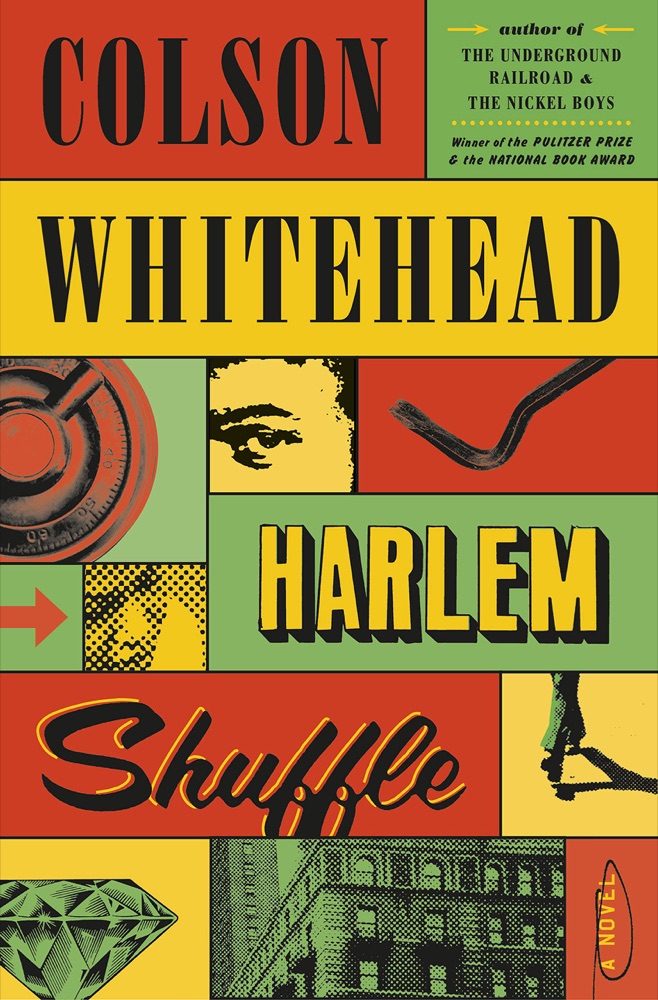
About the book
Librarian note: Click here for alternate cover edition Two warring factions in the Department of Elevator Inspectors in a bustling metropolis vie for dominance: the Empiricists, who go by the book and rigorously check every structural and mechanical detail, and the Intuitionists, whose observational methods involve meditation and instinct.
Lila Mae Watson, the city’s first black female inspector and a devout Intuitionist with the highest accuracy rate in the department, is at the center of the turmoil. An elevator in a new municipal building has crashed on Lila Mae’s watch, fanning the flames of the Empiticist-Intuitionist feud and compelling Lila Mae to go underground to investigate. As she endeavors to clear her name, she becomes entangled in a web of intrigue that leads her to a secret that will change her life forever.
A dead-serious and seriously funny feat of the imaginatio
Book details
- First published
- 1999
- Author
- Colson Whitehead
- Genre
- Fiction
- Goodreads rating
- 3.61 (17k ratings)
The buzz
- The New YorkerReview in The New Yorkerprofessional review (via Book Marks)
- Kirkus ReviewsReview in Kirkus Reviewsprofessional review (via Book Marks)
- Publishers WeeklyReview in Publishers Weeklyprofessional review (via Book Marks)
- BooklistReview in Booklistprofessional review (via Book Marks)
- BookPageReview in BookPageprofessional review (via Book Marks)
- Movies2Review in Movies2professional review (via Book Marks)
Keep reading
 Edge of Eternity
 Blow Fly
 Turning Angel
 Sky Full of Elephants
 How Long 'til Black Future Month?
 Skinny Legs and All
 A Song Flung Up to Heaven
 The Gone-Away World
 The Bone Tree
 Mason & Dixon
 The Underground Railroad
 Senlin Ascends
 Anthills of the Savannah
 The Diamond Age
 Sixty Stories
 The Fall of Babel
 Lovecraft Country
 Everything's Eventual
 The Fifth Season
 The House at the End of the World
 The Hod King
 The Broom of the System
 A Drink Before the War
 Against the Day
 Gold Fame Citrus
 Libra
Libra
 Blackfish City
 Sleeping Beauties
 Hush
Hush
 The Water Knife
 White Teeth
 The Imperfectionists
 Gravity's Rainbow
 Selected Poems
 The Confessions of Frannie Langton
 We Are All the Same in the Dark
 Everything's Eventual
 Children of Time
 Flight Behavior
 Axiom's End
 Green Mars
 That Hideous Strength
 God Help the Child
 Narcopolis
 Mercury Pictures Presents
 Stone Mattress: Nine Tales
 The Devil Takes You Home
 Creation Lake
 The Absolute Book
 Equal Rites
 Americanah
 The Madness of Crowds
 Reaper Man
 Nobody Knows My Name
 The Ground Beneath Her Feet
 NW
NW
 Make Something Up: Stories You Can't Unread
 The Golden House
 Orient
 Beautyland