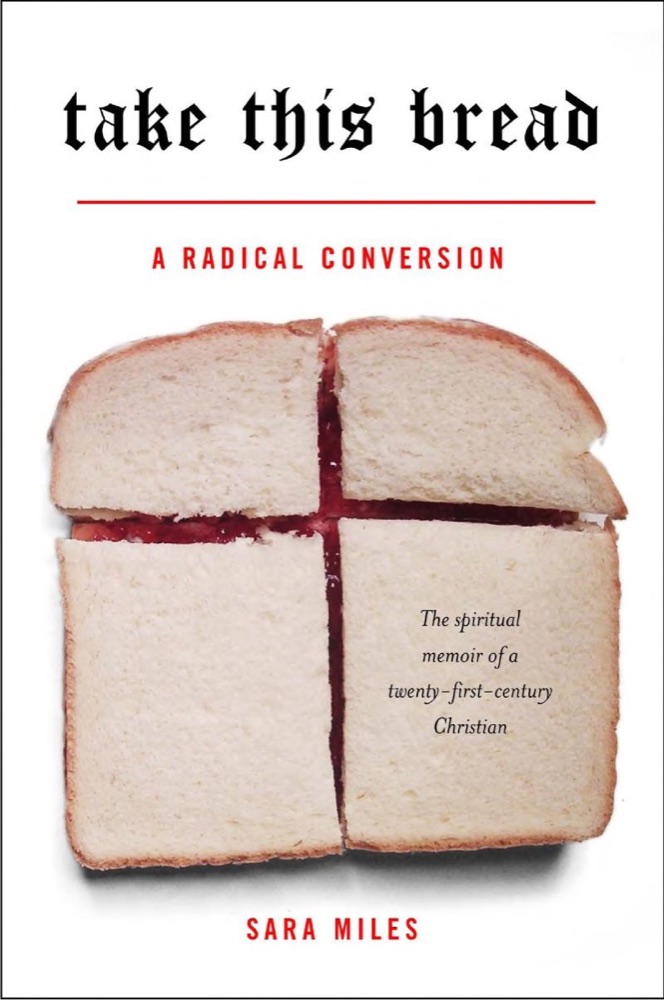
 Leaving Church: A Memoir of Faith
Quotes from the Book
Faith, for me, isn't an argument, a catechism, a philosophical “proof.” It is instead a lens, a way of experiencing life, and a willingness to act.
18
It doesn't promise to solve or erase suffering but to transform it, pledging that by loving one another, even through pain, we will find more life. And it insists that by opening ourselves to strangers, the despised or frightening or unintelligible other, we will see more and more of the holy, since, without exception, all people are one body: God's.
14
There's a hunger beyond food that's expressed in food, and that's why feeding is always a kind of miracle.
11
Feed my sheep, feed my sheep," I repeated. "He didn't say, 'Feed my sheep after you check their ID.
11
I'm not always able to think about so much loss without bitterness and anger. I don't know if I'll ever be capable of loving my enemies; I'm not always capable of forgiving myself.
6
I was, as the prophet said, hungering and thirsting for righteousness. I found it at the eternal and material core of Christianity: body, blood, bread, wine, poured out freely, shared by all.
5
Thank God for Jesus. Because, you know, he was here like us, so he knows how hard it is to be a person. He must have a sense of humor about us.
3
Imperialism and exploitation,” he wrote, “spheres of influence, trade barriers, unequal distribution of the world's goods, starvation in the midst of plenty, slums with gold coasts next door, poverty supporting luxury: These are marks of an unChristian world.
3
Just like the strangers who'd fed me in El Salvador or South Africa, I was going to have to see and understand the hunger of other, different men and women, and make a gesture of welcome, and eat with them. And just as I hadn't "deserved" any of what had been given to me—the fish, the biscuits, the tea so abundantly poured out back in those years—I didn't deserve communion myself now. I wasn't getting it because I was good. I wasn't getting it because I was special. I certainly didn't get to pick who else was good enough, holy enough, deserving enough, to receive it. It wasn't a private meal. The bread on that Table had to be shared with everyone in order for me to really taste it.
2
What happened once I started distributing communion was the truly disturbing, dreadful realization about Christianity: You can't be a Christian by yourself.
2
I began to understand why so many people chose to be “born-again” and follow strict rules that would tell them what to do, once and for all. It was tempting to rely on a formula— “accepting Jesus Christ as your personal Lord and savior,” for example—that became itself a form of idolatry and kept you from experiencing God in your flesh, in the complicated flesh of others. It was tempting to proclaim yourself “saved” and go back to sleep.
2
What I heard, and continue to hear, is a voice that can crack religious and political convictions open, that advocates for the least qualified, least official, least likely; that upsets the established order and makes a joke of certainty. It proclaims against reason that the hungry will be fed, that those cast down will be raised up, and that all things, including my own failures, are being made new. It offers food without exception to the worthy and unworthy, the screwed-up and pious, and then commands everyone to do the same. It doesn't promise to solve or erase suffering but to transform it, pledging that by loving one another, even through pain, we will find more life. And it insists that by opening ourselves to strangers,
2
Before I knew anything about church, I'd assumed that most Christians spoke the same language, shared a sense of fellowship, and beyond minor differences had a faith in common that could transcend political boundaries. But if I had imagined that, initiated as a Christian, I was going to achieve some kind of easy bond with other believers, that fantasy was soon shot. Just a few months after I began going to St. Gregory's, I found myself at a restaurant counter in the Denver airport, waiting for a flight home from a reporting trip. A woman—perhaps noticing the silver crucifix I had recently and self-consciously started to wear around my neck—caught my eye and smiled as she took the stool next to me. She had short blond hair and a cross of her own, and was wearing some kind of sexless denim jumper that reeked of piety. I smiled back, and we exchanged small talk about the weather and flight delays, and then she asked me what I was reading. I showed her the little volume of psalms that I'd borrowed from Rick Fabian. “From my church,” I said proudly. “What church is that?” the woman asked. She leaned forward, in a friendly way. “Saint Gregory of Nyssa Episcopal Church, in San Francisco,” I said, as her face rearranged itself, froze, and closed. It may have been the “San Francisco,” I realized later, but the city's name was a reasonable stand-in, by that point, for everything conservative Christians had come to hate about the Episcopal Church as a whole: homosexuality; wealth; feminism; and morally relativist, decadent, rudderless liberalism. The church I'd unknowingly landed in turned out to be a scandal, a dirty joke at airport restaurants, a sign—in fact, thank God, a sure bet—that I was going to eat with sinners.
2
This was where I found my faith: a faith expressed in the wild conceit that a helpless, low-caste baby could be God. That ugly, contaminated, and unimportant people embodied holiness. That my own neediness and misfitting, not my goodness or piety, were what God intended to use.
1
But the Christianity that called to me, through the stories I read in the Bible, scattered the proud and rebuked the powerful. It was a religion in which divinity was revealed by scars on flesh. It was an upside-down world in which treasure, as the prophet said, was found in darkness; in which the hungry were filled with good things, and the rich sent out empty; in which new life was manifested through a humiliated, hungry woman and an empty, tortured man. It
1
Charity had always slightly creeped me out: There was nothing quite as condescending as the phrase "helping the less fortunate" rolling off the tongue of a white professional, as if poverty were a matter of luck instead of the result of a political system.
1
Conversion was turning out to be quite far from the greeting-card moment promised by televangelists, when Jesus steps into your life, personally saves you, and becomes your lucky charm forever. Instead, it was socially and politically awkward, as well as profoundly confusing. I wasn't struck with any sudden conviction that I now understood the "truth." If anything, I was just crabbier, lonelier, and more destabilized.
1
While the classic conversion story involves desperation, hitting bottom, and a plea for help, I think now that it was gratitude, as well as the suffering I'd seen, that made room for me to open my heart to something new.
1
In big ways and small, I knew exactly how selfish a war could make me, and I saw all around me how fear and need drove other people to terrible betrayals. Yet over and over, I also saw how war created a community, a people, and how that community was nourished by gestures of sharing. It was sharing that didn't depend on personal intimacy, and a community that didn't depend on everyone's being friends; it foreshadowed what I would come to understand as church, at its best.
1
sufferings and loveliness were imagined, not incarnate in a specific body. But as I got to know them, I started to see more clearly how the people who came to the pantry were like me: messed up, often prickly or difficult, yearning for friendship. I saw how they were hungry, the way I was. And then, I had a glimpse of them being like Jesus again: as God, made flesh and blood.
1
on a volunteer's shoulders to see Donald break the English muffin. I understood why Christians imagined the kingdom of heaven as a feast: a banquet where nobody was excluded, where the weakest and most broken, the worst sinners and outcasts, were honored guests who welcomed one another in peace and shared their food. “Let this broken bread and shared wine be a foretaste of your kingdom,” we sang, “and bring us finally to your heavenly Table, where no one is left behind, and we will join with saints and angels at the feast you have prepared from the beginning.
1
All of it pointed to a force stronger than the anxious formulas of religion: a radically inclusive love that accompanied people in the most ordinary of actions—eating, drinking, walking—and stayed with them, through fear, even past death. That love meant giving yourself away, embracing outsiders as family, emptying yourself to feed and live for others. The stories illuminated the holiness located in mortal human bodies, and the promise that people could see God by cherishing all those different bodies the way God did. They spoke of a communion so much vaster than any church could contain: one I had sensed all my life could be expressed in the sharing of food, particularly with strangers.
1
The Bible is not a set of instructions that can give us simple answers,” wrote Webber, “nor a text with which to prove points… . The guidance the Bible gives was provided for a society very different from ours … and any set of words is open to different interpretations.
1
God was not manageable. Human beings might want rituals, but it was dangerous to confuse the rituals with an ultimately unknowable God. That led to crusades, sectarian killings, the casting-out of heretics—in fact, to the murder of Jesus, who dared to challenge the religious authorities with raw truth. “The message of Jesus,” Paul told me, mixing a black bean salad, “is the only sure cure for religion.
But this is my belief: that at the heart of Christianity is a power that continues to speak to and transform us. As I found to my surprise and alarm, it could speak even to me: not in the sappy, Jesus-and-cookies tone of mild-mannered liberal Christianity, or the blustering, blaming hellfire of the religious right. What I heard, and continue to hear, is a voice that can crack religious and political convictions open, that advocates for the least qualified, least official, least likely; that upsets the established order and makes a joke of certainty. It proclaims against reason that the hungry will be fed, that those cast down will be raised up, and that all things, including my own failures, are being made new. It offers food without exception to the worthy and unworthy, the screwed-up and pious, and then commands everyone to do the same. It doesn't promise to solve or erase suffering but to transform it, pledging that by loving one another, even through pain, we will find more life. And it insists that by opening ourselves to strangers, the despised or frightening or unintelligible other, we will see more and more of the holy, since, without exception, all people are one body: God's.
As an activist, whenever I heard church people saying that you had to listen to both sides, I thought they were trying to be “balanced” or broad-minded, above the fray. It made me nuts. It reminded me of the kind of journalism I hated—an on-the-one-hand, on-the-other-hand fetishization of the middle road—and the kind of liberal politics I hated even more, a willfully myopic “fairness” that ignored the real and violent facts of power. How could you not choose sides?
God couldn't care less about the church. We don't understand the Eucharist, or that bread and wine live within us, so we ritualize the things that hold the mystery. We focus on the container and formalize the mystery. But you don't have to do that.
I had a strong sense of the mystery: I'd seen Donald physically shudder at the altar as the familiar words he was chanting suddenly gripped him. I'd heard my spiritual director say his breath was still taken away every time he celebrated the Eucharist. “The Table's a threshold, a paper-thin place, luminous, where heaven and humans meet,” Jeff told me. “It could be anywhere—a room, a jail cell; I could be ego-focused or doing a shitty job remembering the prayers; but I still cross that threshold.
Communion. I chewed and swallowed it. It was at the absolute center of my faith: wheat and water and yeast and heat; grape and sun and time; bread and wine, transformed into life. I ate it up. I kept coming back for more. And yet, even though church was where I found communion, church couldn't, finally, contain it.
I tried to remember my own passionate spiritual feelings as a child, when I had no religion and no language to understand them. There had been one early spring afternoon, raw and chilly, when I lay by myself in the muddy backyard in my snow-suit examining a fallen log, looking and looking and looking. There were patches of snow on the wet wood and, around it, spears of onion grass just beginning to poke up, and I sat up after half an hour contemplating the log. The cloudy sky above me was so huge, and I was so small. The phrase “the whole universe” occurred to me. I must have been in third grade, and no amount of papier-mâché solar system models had prepared me for the vast, heart-beating calm I felt, or for the inarticulate desire to just stay there, suspended, looking and breathing my tiny puffs of the whole universe's air, until I had to pee and went inside, shedding my wet mittens.
Watch on YouTube
About Sara Miles
About the book
“Mine is a personal story of an unexpected and terribly inconvenient Christian conversion, told by a very unlikely convert.” –Sara Miles
Raised as an atheist, Sara Miles lived an enthusiastically secular life as a restaurant cook and a writer. Then early one winter morning, for no earthly reason, she wandered into a church. “I was certainly not interested in becoming a Christian,” she writes, “or, as I thought of it rather less politely, a religious nut.” But she ate a piece of bread, took a sip of wine, and found herself radically transformed.
The mysterious sacrament of communion has sustained Miles ever since, in a faith she’d scorned, in work she’d never imagined. In this astonishing story, she tells how the seeds of her conversion were sown, and what her life has been like since she took that bread.
A lesbian left-wing journalist who covered revolutions around the world, Miles wa
Book details
- First published
- 2007
- Author
- Sara Miles
- Genre
- Biography
- Goodreads rating
- 4.01 (5k ratings)
Keep reading
Leaving Church: A Memoir of Faith
 Amazing Grace: A Vocabulary of Faith
 Searching for Sunday: Loving, Leaving, and Finding the Church
 7: An Experimental Mutiny Against Excess
 Shameless: A Case for Not Feeling Bad About Feeling Good
 The Irresistible Revolution: Living as an Ordinary Radical
 Pastrix: The Cranky, Beautiful Faith of a Sinner & Saint
 Holy Envy: Finding God in the Faith of Others
 Seeking Allah, Finding Jesus: A Devout Muslim Encounters Christianity
 Out of Sorts: Making Peace with an Evolving Faith
 The Jesus I Never Knew
 Miracles and Other Reasonable Things: A Story of Unlearning and Relearning God
 The Long Loneliness: The Autobiography of the Legendary Catholic Social Activist ― A Memoir about the Worker Movement and Spiritual Conversion
 Girl Meets God
 Searching for God Knows What
 Still: Notes on a Mid-Faith Crisis
 Jesus > Religion: Why He Is So Much Better Than Trying Harder, Doing More, and Being Good Enough
 The Spiral Staircase: My Climb Out of Darkness
 Finding God in the Waves: How I Lost My Faith and Found It Again Through Science
 The Ragamuffin Gospel
 The Case for Faith: A Journalist Investigates the Toughest Objections to Christianity
 Blessed Are the Misfits: Great News for Believers who are Introverts, Spiritual Strugglers, or Just Feel Like They're Missing Something
 Encounters with Jesus: Unexpected Answers to Life's Biggest Questions
 The Devil's Advocate
 The Secret Thoughts of an Unlikely Convert: An English Professor's Journey Into Christian Faith
 Tortured for Christ
 The Furious Longing of God
 The Prodigal God: Recovering the Heart of the Christian Faith
 Wholehearted Faith
 Children of God
 Washed and Waiting: Reflections on Christian Faithfulness and Homosexuality
 The Explicit Gospel
 The Reason for God: Belief in an Age of Skepticism
 Gay Girl, Good God: The Story of Who I Was and Who God Has Always Been
 All My Knotted-Up Life: A Memoir
 What's So Amazing About Grace?
 Hallelujah Anyway: Rediscovering Mercy
 What We Talk about When We Talk about God
 Velvet Elvis: Repainting the Christian Faith
 40 Days of Decrease: A Different Kind of Hunger. A Different Kind of Fast.
 A Severe Mercy: A Story of Faith, Tragedy and Triumph
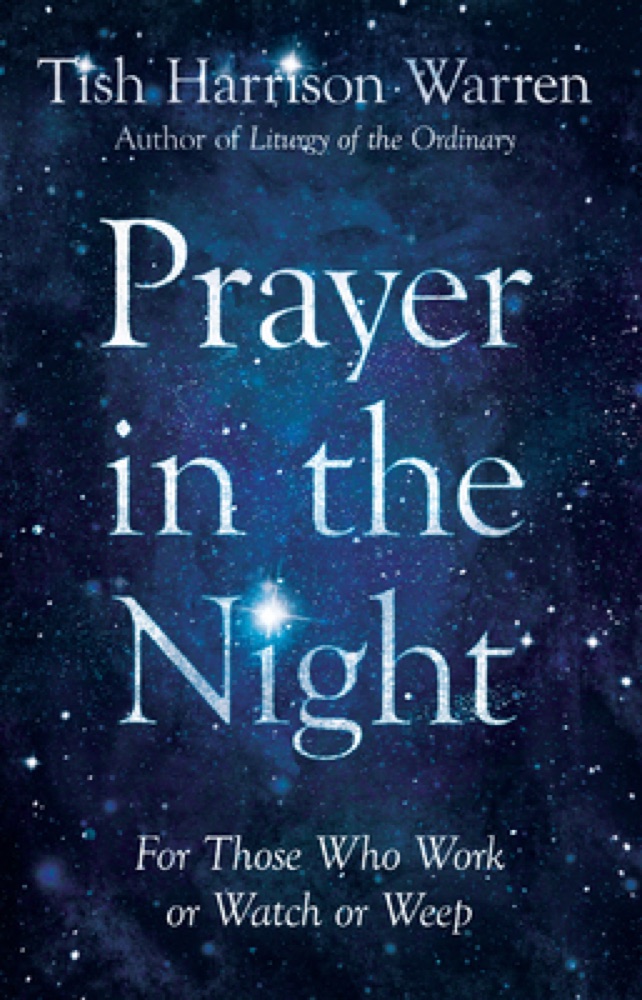 Prayer in the Night: For Those Who Work or Watch or Weep
 The Year of Living Biblically: One Man's Humble Quest to Follow the Bible as Literally as Possible
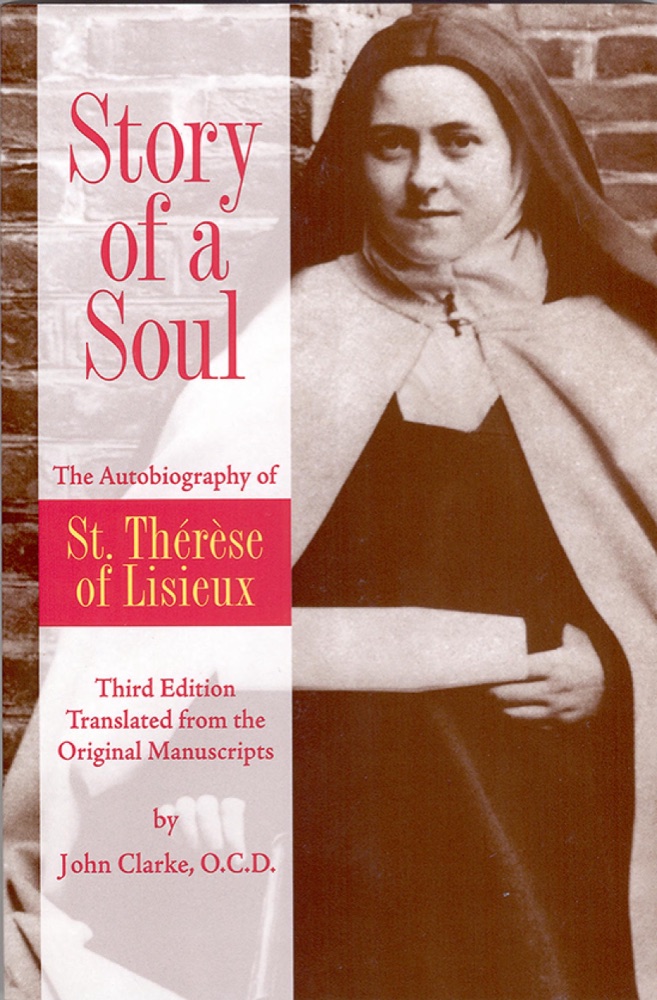 Story of a Soul: The Autobiography of St. Therese of Lisieux
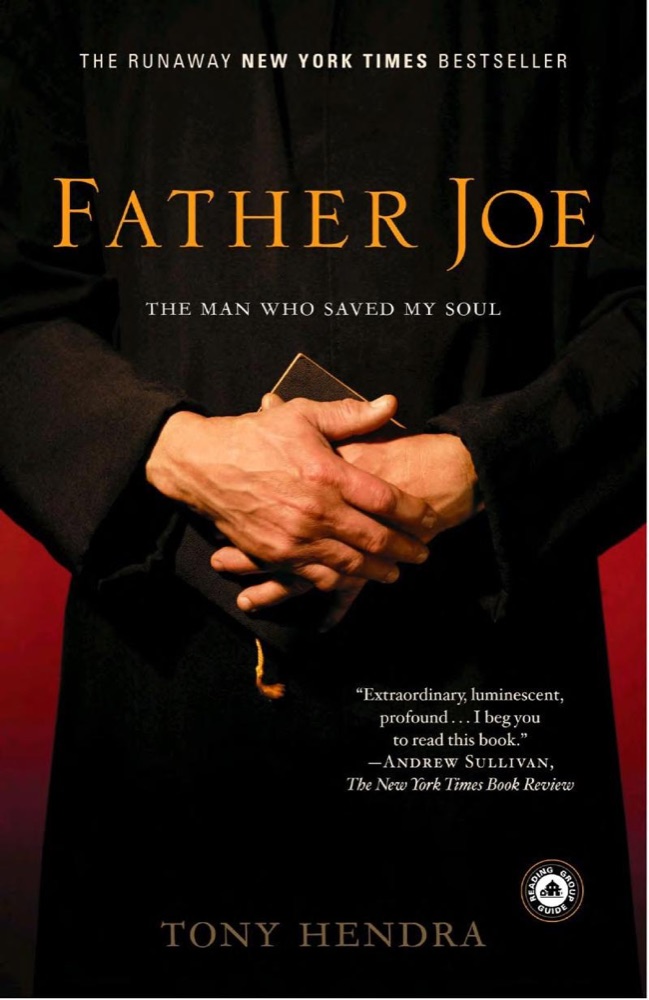 Father Joe: The Man Who Saved My Soul
 The Normal Christian Life
 A Generous Orthodoxy
 A Pilgrimage to Eternity: From Canterbury to Rome in Search of a Faith
 The Sparrow
 The Cloister Walk
 Stepping Heavenward
 Beautiful Outlaw: Experiencing the Playful, Disruptive, Extravagant Personality of Jesus
 A Year of Biblical Womanhood
 Liturgy of the Ordinary: Sacred Practices in Everyday Life
 Barking to the Choir: The Power of Radical Kinship
 The Holy Longing: The Search for a Christian Spirituality
 Everything Happens for a Reason: And Other Lies I've Loved
 Jesus Over Everything: Uncomplicating the Daily Struggle to Put Jesus First
 Radical: Taking Back Your Faith from the American Dream
 Traveling Mercies: Some Thoughts on Faith