
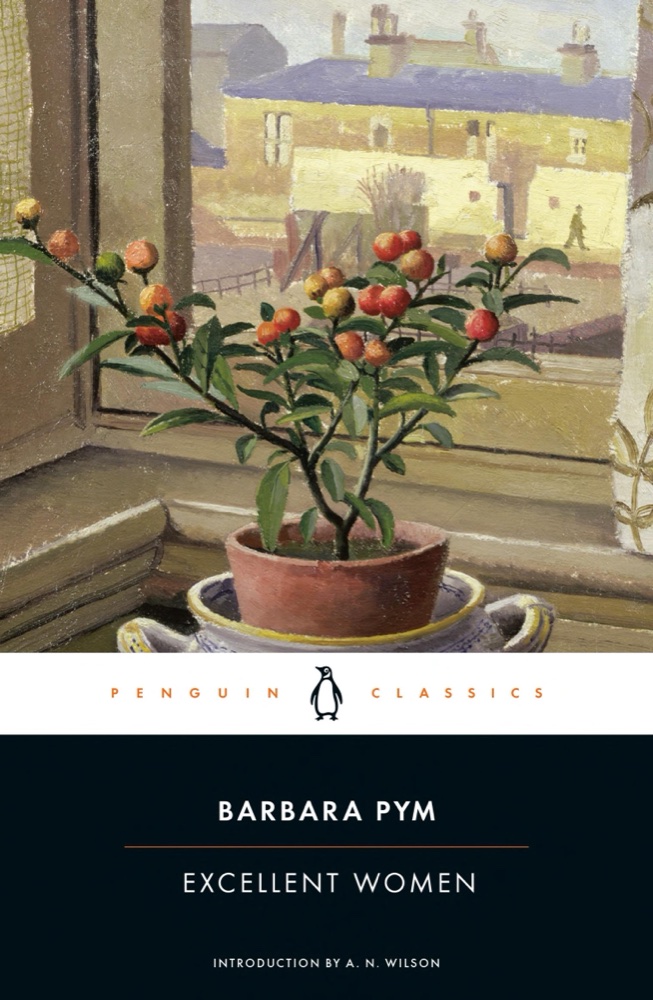
 Excellent Women
Quotes from the Book
Of course it's alright for librarians to smell of drink.
209
The small things of life were often so much bigger than the great things . . . the trivial pleasure like cooking, one's home, little poems especially sad ones, solitary walks, funny things seen and overheard.
152
Like so many men, he needed a woman stronger than himself, for behind the harsh cragginess of the Easter Island façade cowered the small boy, uncertain of himself.
3
What was the point of living in a suburb if one couldn’t show a healthy curiosity about one’s neighbours?
3
Esther Clovis might not be much of a tea-maker but she had considerable organizing ability and knew how to act in a crisis, as at this moment, confronted with the anthropologists who would not go.
3
Not that the making of tea can ever really be regarded as a petty or trivial matter and Miss Clovis did seem to have been seriously at fault.
3
It would be a reciprocal relationship—the woman giving the food and shelter and doing some typing for him and the man giving the priceless gift of himself,’ said Mark, swaying a little and bumping into a tree. ‘It is commoner in our society than many people would suppose.
3
I’m so glad you write happy endings,’ said Mabel. ‘After all, life isn’t really so unpleasant as some writers make out, is it? she added hopefully. ‘No, perhaps not. It’s comic and sad and indefinite—dull, sometimes, but seldom really tragic or deliriously happy, except when one’s very young.
2
A young man in a white coat was pouring some rich fragrant liquid into her cup. She accepted it with gratitude and resignation, for it was strong and bitter, almost medicinal, and as she drank she was conscious that it was doing her good. Tea is more healthy than alcohol and much cheaper, she reflected, and there must be thousands of people who know this.
2
Well, I shouldn’t like my wife to do housework in the evenings, would you?’ ‘No, I suppose not, but women usually have their own way.
2
The circumstances of her daily life, less usual now than fifty or a hundred years ago, were not conducive to an easy forgetting. While Delia and Felicity had been trained for careers, Elaine had been the one to stay at home. She might, if she had come upon them, have copied out Anne Elliot’s words, especially as she was the same age as Miss Austen’s heroine: ‘We certainly do not forget you so soon as you forget us. It is, perhaps, our fate rather than our merit. We cannot help ourselves. We live at home, quiet, confined, and our feelings prey upon us. You are forced on exertion. You have always business of some sort or other to take you back into the world immediately, and continual occupation and change soon weaken impressions.’ But Elaine was not much of a reader; she would have said that she had no time, which was perhaps just as well, even if she missed the consolation and pain of coming upon her feelings expressed for her in such moving words.
2
It’s Tom’s thesis,’ said Deirdre in a reverent tone. ‘He’s just given me a copy to read. Look,’ she unwrapped the paper, ‘four hundred and ninety seven pages. How does he do it?’ ‘Well,’ said Catherine, ‘writers of fiction would tell you that one just goes on and on until one reaches page four hundred and ninety seven, but of course we don’t have to write at such prodigious length and might well find it a bit of an endurance test. A thesis must be long. The object, you see, is to bore and stupefy the examiners to such an extent that they will have to accept it—only if a thesis is short enough to be read all through word for word is there any danger of failure.
2
She pottered round now, a tall vague woman in her early fifties, with a long pale face and brown eyes which her daughter Deirdre had inherited. As she pottered she murmured to herself, ‘large knives, small knives, pudding spoons, will they need forks too? Oh, large forks, serving spoons, mats, glasses, well two glasses in case Deirdre and Malcolm want to drink beer, Rhoda probably won’t … and now, wash the lettuce …’ It was nice when the warm weather came and they could have salads for supper, she thought, though why it was nice she didn’t really know. Washing a lettuce and cutting up the things to go with it was really almost as much trouble as cooking a hot meal, and she herself had never got over an old-fashioned dislike of eating raw green leaves. When her husband had been alive they had always had a hot meal in the evenings, winter and summer alike. He needed it after a day in the City. But now he was gone and Rhoda had been living with them for nearly ten years now and everyone said how nice it was for them both, to have each other, though of course she had the children too. Malcolm was a good solid young man, very much like his father, reliable and, although of course she never admitted it, a little dull. He did not seem to mind about the hot meal in the evenings. But Deirdre was different, clever and moody, rather like she herself had been at the same age, before marriage to a good dull man and life in a suburb had steadied her.
2
It was odd to think that he himself had once been on the threshold of that kind of life and that he had thrown it all away, as it were, to go out to Africa and study the ways of a so-called primitive tribe. For really, when one came to consider it, what could be more primitive than the rigid ceremonial of launching a debutante on the marriage market?
1
Miss Clovis was acting as secretary to the selection committee and enjoyed the work which was congenial to her natural curiosity about people and her desire to arrange their lives for them.
1
Rhoda was not in the least envious of her sister’s fuller life, for now that they were both in their fifties there seemed to be very little difference between them.
1
It is often supposed that those who live and work in academic or intellectual circles are above the petty disputes that vex the rest of us, but it does sometimes seem as if the exalted nature of their work makes it necessary for them to descend occasionally and to refresh themselves, as it were, by squabbling about trivialities.
1
It would need the pen of a Dostoyevsky to do justice to their dreadful lives,
Obviously...' she looked down at the tablecloth. 'I heard you were attached too.' 'I? Don't you believe it," said Tom heartily. 'I'm wedded to my work.
But when they were walking in the gardens one of them, or perhaps both, began a sentence with 'Do you remember...', that powerful insidious phrase which can upset the most carefully formal conversation.
Writers like to think that they can imagine everything,
Going on a journey always makes me feel sick and nervous,' he explained rather apologetically, 'and one needs strengthening to face the good-byes.
Watch on YouTube
About Barbara Pym
We have collected 125 quotes from 7 books by Barbara Pym on BookQuoters.
More about the author →More by Barbara Pym
All books by Barbara Pym →
About the book
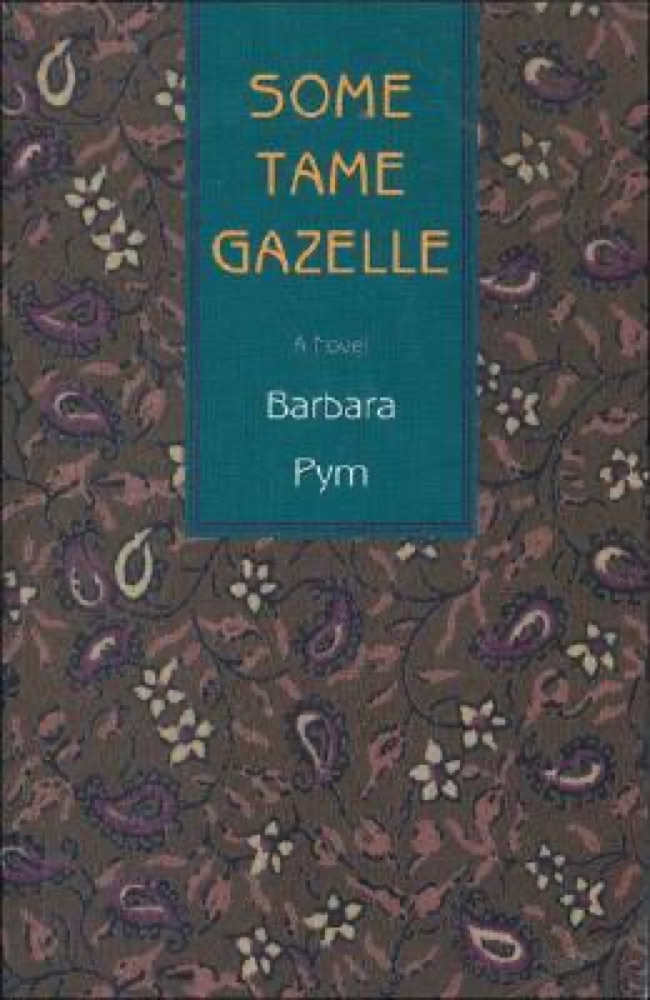
It is surely appropriate that anthropologists, who spend their time studying life and behavior in various societies, should be studied in their turn," says Barbara Pym. In a wonderful twist on her subjects, she has written a book inspecting the behavior of a group of anthropologists. She pits them against each other in affairs of the heart and mind. Academia is an especially rich backdrop. There is competition between the sexes, gender, and age groups. With Pym's keen eye for male pretensions and female susceptibilities, she exploits with good humor. Love will have its way even among the learned, one of whom is in a quandary between an adult and a young student. This is the world of research, grants, libraries and primitive cultures. Here is a particularly interesting contrast between the tribes of Africa and the social matrix of London. As the title implies, civilized society fares not
Book details
- First published
- 1955
- Author
- Barbara Pym
- Genre
- Fiction
- Goodreads rating
- 3.93 (3k ratings)
Keep reading
Excellent Women
 Too Much Happiness: Stories
 A Widow for One Year
 Cold Comfort Farm
 The Children's Book
 Gaudy Night
 What Is Not Yours Is Not Yours
 Mislaid
 Old Babes in the Wood: Stories
 The Uncommon Appeal of Clouds
 Can You Forgive Her?
 The Body in the Library
 Down Cemetery Road
 The Complete Saki
 Equal Rites
 A Dance to the Music of Time: 1st Movement
 The Novel Habits of Happiness
 A Curious Beginning
 The Life of Charlotte Brontë
 Far from the Madding Crowd
 The Children Act
 Main Street
 The Full Cupboard of Life
 Murder at the Vicarage
 The Christie Affair
 Wives and Daughters
 Summer Darlings
 The God of the Woods
 Mrs. Miniver
 Gingerbread
 Murder in Mesopotamia
 Foreign Affairs
 Birds of America
 The Way We Live Now
 American Wife
 The Wife
 The Golden Tresses of the Dead
 The Rebel Angels
 The Paying Guests
 Shrines of Gaiety
 The Portrait of a Lady
 The House of Mirth
 The Benevolent Society of Ill-Mannered Ladies
 The Custom of the Country
 Small Pleasures
 The Post-Birthday World
 Dr. Thorne
 NW
NW
 The Moonstone
 The Daughter of Time
 The Edible Woman
 The Familiar
 The Hidden Palace
 Tender Morsels
 Armadale
 Bluebeard's Egg
 Table for Two
 Capital
 Olive Kitteridge
 The Buccaneers